German Shepherds do not all reach the same weight at the same age. Sex, genetics, breeding line, nutrition, exercise, and health all influence growth. A working-line male and a smaller female from different lines may develop at noticeably different rates while both remain healthy.
That is why a single “ideal weight at six months” chart can be misleading. The useful question is whether your dog is growing steadily, maintaining a healthy body condition, and staying on a broadly consistent growth curve.
Adult German Shepherd weight
Published adult-weight figures depend on which breed standard you use. The Fédération Cynologique Internationale (FCI) provides sex-specific weight ranges, while the current American Kennel Club (AKC) breed standard specifies height but does not give an adult weight range.
| Reference | Male | Female |
|---|---|---|
| FCI breed standard | 30–40 kg (66.1–88.2 lb) | 22–32 kg (48.5–70.5 lb) |
| AKC Official Standard | No adult weight range specified | |
| AKC general breed-weight chart | 50–90 lb (22.7–40.8 kg) | 50–90 lb (22.7–40.8 kg) |
The FCI also lists desired height at the withers as 60–65 cm for males and 55–60 cm for females. The AKC’s Official Standard lists 24–26 inches for males and 22–24 inches for females.
Do these 3 things before closing this tab:
1Clear out junk files and repair common Windows errors2Fix the driver behind crashes, sound loss and screen glitches3Repair Windows errors before they cause bigger problems#1 Best Overall

- WIDE WEIGHING PLATFORM: This electronic scale has a large 33 x 19 inch (840 x 480mm) tempered glass weighing platform with a 0.3 inch (8mm) extra thickness, fitting most dog and cat breeds and super easy for maintenance.
- MULTIPURPOSE SCALE: This scale is versatile and can be used for weighing various items such as food, postal items, luggage, and more. It has an animal weighing mode to ensure stable readings when animals move.
- EASY TO USE: The scale has a large, backlit LCD display that makes it easy to read measurements even in low-light conditions. It has a simple, user-friendly interface with intuitive buttons for easy operation.
- PRECISE WEIGHING: This electronic scale features high-precision strain sensor technology for accurate weight readings. It offers unit conversion between pounds and kilograms, making it suitable for various applications.
- CONVENIENT FEATURES: The scale has a voice announcement (VA) feature that audibly indicates weight readings. The scale has a zero/tare function to easily reset the weight to zero. It also has a 2-minute auto shutdown feature to conserve battery life. Additionally, it has a low power alarm, an anti-interference indicator, and a USB connectivity port for easy data transfer.
The AKC’s 50–90 lb figure is a general reference range, not a sex-specific requirement in the AKC breed standard. A dog should not be judged unhealthy simply because its scale weight falls near one end of a published range. Body condition and muscle mass matter just as much as the number on the scale.
Why there is no reliable universal German Shepherd puppy chart
You will find many tables claiming that every German Shepherd should weigh a particular amount at 8 weeks, 4 months, 6 months, or 12 months. Those numbers are not dependable targets for every puppy.
Evidence-based puppy growth charts are selected according to:
- sex;
- predicted adult body weight; and
- age in weeks.
The WALTHAM Puppy Growth Charts divide predicted adult weight into categories, including 30–40 kg. German Shepherds may fall across or above that category, so a puppy’s breed name alone is not enough to select a chart. A puppy expected to exceed 40 kg may need an individualized growth chart from a veterinarian.
These charts were developed using data from approximately 50,000 healthy young dogs seen at Banfield veterinary hospitals in the United States. They are designed for plotting repeated measurements, not for assigning one correct weight to a puppy at a particular age.
German Shepherd growth timeline
| Age | What to expect and monitor |
|---|---|
| Birth to 8 weeks | Use the breeder’s or veterinarian’s records. Newborn puppies should gain weight steadily and need close monitoring. |
| 8 weeks onward | Begin regular weighing and plot the measurements on a growth chart chosen for sex and predicted adult weight. |
| 3–6 months | Growth is usually rapid. Evaluate the trend, body condition, and development rather than chasing a target number. |
| 6–12 months | Growth commonly begins to slow, although the puppy may still look lanky and continue developing. |
| 10–16 months | Large-breed skeletal maturity may still be incomplete. |
| Up to about 2 years | Some German Shepherds continue gaining adult weight and muscle after most of their height has been reached. |
This is a monitoring framework, not a promise that every German Shepherd will follow the same schedule. Height, bone development, muscle, and final body weight do not necessarily finish at the same time.
Rank #2
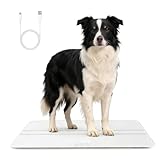
- DOG WEIGHING SCALE SIZE :27.16 x 12.99 inches, lighter and easier to carry. This dog scale size is easier to weigh dogs. Medium-sized dogs are very easy to weigh, but weighing large dogs sometimes requires good cooperation with the owner. NOTE: Not suitable for weighing giant dogs
- DOG SCALE SCALE LINE :There is a 68 cm/26.77 inch length scale line on the weighing platform to track the length of the pet's body. LARGE DOG SCALE CAPACITY 7oz-220 lbs, Measurement MEASUREMENT ACCURACY 0.35oz/10g, TARE Function, 3 UNITS: kg, lb, st
- HIGH QUALITY :The pet scale is designed with a glass weighing surface, which not only looks elegant, but also ensures that the surface is durable and easy to clean.
- RECHARGEABLE DIGITAL ANIMAL SCALE :The digital pet scale is powered by a 3.7V, 200mAh rechargeable battery. It saves the trouble of buying batteries.
- WIDELY USED: This dog weighing scale suitable for families, pet grooming care, pet clinics, pet stores and other places, it can track the weight and height of pets and monitor the health of cats and dogs,you can also keep a close eye on your child's weight and height, and continuously monitor whether your child maintains healthy standards.
How to track a German Shepherd puppy’s growth
- Record the date of birth. If the exact date is unknown, ask the breeder or rescue organization for the best available estimate.
- Weigh the puppy in kilograms. A veterinary scale is ideal. For a small puppy, weigh yourself, then weigh yourself holding the puppy and subtract the first measurement.
- Calculate age in weeks. Growth charts use weeks rather than broad labels such as “four months.”
- Estimate adult size. Parent weights are useful when available. Your veterinarian can help interpret those weights alongside the dog’s sex, build, and breed standard.
- Select the appropriate growth chart. Use the chart for the puppy’s sex and predicted adult-weight category.
- Plot several measurements. One weight shows only where the puppy is today. It does not show whether growth is normal.
- Look for a reasonably consistent channel. A healthy puppy generally tracks along a similar centile path over time, although small shifts can occur.
WALTHAM recommends weighing puppies at least every two weeks, with weekly weighing preferred. Try to use the same scale and similar conditions each time. A meal, a full bladder, a bowel movement, hydration, or a different scale can all change the recorded result.
There is no universally correct centile line. The 50th centile is not the goal for every puppy, and a puppy on a higher centile is not automatically overweight. The pattern over time is more informative than the centile number itself.
PC Slower Than It Used to Be?
A free scan shows the junk files, broken settings and background clutter dragging Windows down - then fixes them in one click.Free scan · Windows 10 & 11Outdated Drivers Are Slowing You Down
One free scan finds every outdated or missing driver and matches the right update for your exact hardware.Free scan · exact hardware matchWhen a growth pattern needs veterinary attention
Ask your veterinarian to review the growth chart if your puppy:
- moves across several centile lines;
- stops gaining weight before reaching adult size;
- loses weight unexpectedly;
- gains weight very rapidly;
- has persistent diarrhea or vomiting;
- has a poor appetite, low energy, or a swollen abdomen; or
- appears excessively thin, pot-bellied, weak, or painful when moving.
A sudden change can reflect an incorrect measurement, but it can also indicate parasites, illness, an unsuitable diet, or an orthopedic problem. Do not wait for the puppy to “grow out of it” if the change is marked or accompanied by other symptoms.
Weight is not the same as body condition
A German Shepherd can be within a published weight range and still carry too much or too little fat. Check body condition alongside the scale.
On the WSAVA nine-point body-condition scale, an ideal dog is approximately 4–5/9. At this condition:
What’s actually slowing this PC down?
Pick the symptom - the matching free tool is one click away.
Rank #3

- 880lbs Capacity Pet Scale: This is a multi-use and heavy-duty digital scale to weigh small and large items. Max. 880lbs weighing capacity.
- Stainless Steel Digital Scale: Made of the high-quality stainless steel materials, our 103 x 53cm(40.6x20.9") scales are as durable as they are functional.
- Powerful Function: 3 weighing units switch: kg/oz/lb. Over-load and low power indication. Count function support. Wall mountable or desktop free-standing digital display.
- Convenient & Portable: Four adjustable feet for uneven terrain can be easily re-calibrated at any time. Portable lifting handle for easy carrying and hidden room to storage.
- Wide Application: The pet scale is great for a veterinary office or to have on the farm. they can also be utilized in a variety of places, including postal, shipping, warehouse or it can be used as an athlete or aviation scale.
- the ribs can be felt without a thick layer of fat;
- the waist is visible when looking down from above; and
- the abdomen is tucked up when viewed from the side.
Do not rely on ribs being visibly prominent as proof that a puppy is lean. Puppies can look slim while developing normally, but sharply visible bones, a lack of muscle, or a sudden change in appearance should be discussed with a veterinarian. Body-condition scoring is useful in puppies, but it is not fully validated for them and should be interpreted with serial weights and the growth curve.
Feeding for controlled growth
Large-breed puppies should grow steadily, not as quickly as possible. Overfeeding can increase body fat and accelerate growth, which may increase stress on developing bones and joints.
Choose a complete and balanced food formulated for growth in large-size dogs. In the United States, the relevant AAFCO wording applies to food formulated for growth of large-size dogs expected to reach at least 70 lb (32 kg) as an adult.
Follow the food label as a starting point, divide the daily amount into suitable meals, and adjust it using your puppy’s weekly weight, body condition, and veterinary advice. Feeding guides are not prescriptions: two puppies of the same age and breed may need different amounts.
Do not add calcium, vitamin D, phosphorus, or other mineral supplements to a complete large-breed growth diet unless your veterinarian specifically prescribes them. Extra supplementation can unbalance the diet and may be harmful.
Keep treats, chews, and table food within the puppy’s daily calorie allowance. A puppy that is gaining too quickly does not need more food simply because it is expected to become a large adult.
Rank #4

- ✔【37" x 20" Heavy Duty Stainless Steel Platform】- Constructed with a robust stainless steel platform that is resistant to corrosion, and it includes a heavy duty mat. This combination provides durability and a non-slip surface for animals, ensuring their comfort and safety during weighing.
- ✔【660 lbs Weight Capacity in 0.2 lb / 100g increment】- Specifically designed to handle animals with a maximum weight of 660 pounds, making it suitable for a wide range of animals, including dogs, cats, smaller livestock, and more.
- ✔【Digital Wall-Mount Display】- The scale is equipped with a digital wall-mount display for easy reading and convenient operation. The large, clear digital display features high-contrast numerals for quick and accurate weight readings, and it can be mounted at a comfortable eye level for the user.
- ✔【Hygienic and Easy to Clean】- Both the stainless steel platform and the mat are easy to clean and disinfect, maintaining a sanitary environment in the veterinary clinic. This helps prevent the spread of infections and ensures the safety of animals.
- ✔【Plug in or use 4 x 1.5V AA Battery】- This setup ensures that veterinarians can confidently and consistently weigh animals without being dependent solely on electrical power. In case of power outages or when the scale needs to be moved to locations with limited access to electrical outlets, the battery backup guarantees that weighing procedures can continue without interruption.
Common German Shepherd weight myths
“A German Shepherd should weigh exactly X pounds at six months.”
There is no evidence-based universal number. Sex, genetics, adult-size potential, breeding line, health, and body condition all affect the measurement. A repeated growth pattern is more useful than a single age-based target.
“The 50th percentile is the ideal target.”
It is not. Growth charts contain centile channels to show how a puppy compares with a reference population. The middle line is not a required destination.
The Tool Desk
Outbyte PC Repair FREERepair Windows errors before they cause bigger problemsFix Now →Outbyte Driver Updater FREEFix the driver behind crashes, sound loss and screen glitchesFind Drivers →“The heavier puppy will become the larger adult.”
Not necessarily. Extra food can increase growth rate and body fat without producing a healthier or structurally larger adult dog.
“The AKC says German Shepherds must weigh 50–90 pounds.”
The AKC’s Official Standard does not specify adult weight. The 50–90 lb figure appears in the AKC’s separate general breed-weight chart and should be described as a general reference range.
“Every German Shepherd is fully grown at 12 months.”
Many reach most of their adult height during the first year, but large-breed skeletal maturity, muscle development, and final weight can take longer. Some dogs continue developing toward two years, while individual timing varies.
Independent reader supportYour contribution helps us test, update, and keep practical guides available for everyone.The practical answer
Use adult weight ranges as context, not as a pass-or-fail test. For a puppy, weigh regularly, record the results, assess body condition, and plot the measurements on a growth chart based on sex and predicted adult size. If the puppy changes growth channels, stops gaining, becomes too thin or heavy, or develops other symptoms, have a veterinarian assess the dog rather than trying to correct the number with extra food or supplements.
Best Value

- ✔【Accurate Weighing】- This highly precise digital scale is designed to deliver accurate weight measurements for a variety of items, with an impressive capacity of up to 400 lbs (180 kg). Its precision is fine-tuned to 10g/0.02lb, ensuring that even small variations in weight are captured. The large, easy-to-read LCD display provides clear and immediate weight readings, reducing the chance of errors and making it simple to monitor weights at a glance. Whether you're weighing light packages or heavy items, this scale guarantees precise results, making it perfect for professional settings where accuracy is critical.
- ✔【32" x 16" Weighing Platform】This pet scale features a spacious tempered glass weighing platform measuring 32 x 16 inches, specifically designed to accommodate large-breed dogs comfortably. The generous size provides ample room for pets to sit or stand securely during the weighing process. The sturdy construction ensures durability and stability, while the smooth, tempered glass surface is not only elegant but also easy to clean, making it ideal for maintaining hygiene.
- ✔【Anti-Slip Mat】This pet scale is equipped with a high-quality anti-slip mat, ensuring that animals can stand securely and comfortably during weighing. The mat provides excellent traction to prevent slipping, giving your pets a sense of stability and confidence. Additionally, the anti-slip surface is gentle on pets' paws, enhancing their comfort.
- ✔【Built in Display】- The built-in display offers unparalleled convenience and efficiency, combining functionality with a sleek, space-saving design. The integrated display provides instant, accurate readings, eliminating the need for separate attachments and reducing clutter in busy veterinary clinics or homes.
- ✔【Multiple Measurement Units】- The scale provides the flexibility to switch between different units in pounds or kilograms, allowing veterinarians to work with the units they are most comfortable with or that best suit their practice.
For official reference information, see the FCI German Shepherd standard, the AKC Official Standard, the WALTHAM puppy growth chart guidance, and the WSAVA body-condition chart.
FAQ
How much should an adult male German Shepherd weigh?
The FCI breed standard lists 30–40 kg (66.1–88.2 lb) for males. The AKC Official Standard does not specify an adult weight range, while the AKC general breed-weight chart lists 50–90 lb for German Shepherds without separating males and females.
How much should an adult female German Shepherd weigh?
The FCI standard lists 22–32 kg (48.5–70.5 lb) for females. This is a breed-standard range, not a guarantee that every healthy female will weigh exactly within it.
What should a German Shepherd puppy weigh at six months?
There is no reliable universal six-month target. The correct interpretation depends on sex, predicted adult weight, genetics, body condition, and the puppy’s previous measurements. Plot serial weights on an appropriate growth chart instead.
Recommended Free Tools
When is a German Shepherd fully grown?
Growth timing varies. Many German Shepherds reach most of their height during the first year, but large-breed skeletal maturity, muscle development, and final weight may continue through approximately 16 months or, in some dogs, toward two years.
How often should I weigh my German Shepherd puppy?
Weekly weighing is useful, and WALTHAM advises weighing at least every two weeks. Use the same scale and similar conditions so that meals, hydration, and equipment do not create misleading changes.
Should I give my German Shepherd puppy calcium supplements?
Not unless a veterinarian prescribes them. A complete and balanced large-breed puppy diet should provide the required nutrients. Extra calcium, vitamin D, or other minerals can unbalance the diet and may be harmful.
How can I tell whether my German Shepherd is a healthy weight?
You should be able to feel the ribs without excessive fat, see a waist from above, and see an abdominal tuck from the side. Combine this body-condition check with regular weights, growth trends, muscle condition, and veterinary examinations.
The Bottom Line
Bottom line: There is no single German Shepherd puppy weight chart that fits every dog. Adult reference ranges vary by registry, and a puppy’s healthy development is best judged through repeated weights, an appropriate growth curve, body condition, diet, and veterinary assessment—not one number at one age.
Quick Recap
Product prices and availability are accurate as of the date/time indicated and are subject to change. Any price and availability information displayed on Amazon at the time of purchase will apply.




