The Tool Desk
Outbyte Driver Updater FREEScan for outdated or missing drivers - takes under a minuteDriver Scan →Outbyte PC Repair FREEClear out junk files and repair common Windows errorsFree Scan →A dog’s dewclaw is the first digit on a limb—not just an extra nail or a skin tag. The front dewclaw is usually a bony, tendon-connected digit that can move and may help with gripping and limb control. Rear dewclaws are different: they may be fully formed toes, loose skin-attached structures, double digits, or absent altogether.
Healthy front dewclaws generally should not be removed simply for appearance or convenience. A rear dewclaw needs an individual decision based on its anatomy, the dog’s breed, injury history, and veterinary assessment. Regardless of whether a dewclaw is retained, its nail needs regular inspection and trimming because it often receives little natural wear.
What does a dog’s dewclaw look like?
Look at the inside of each limb. On the front leg, the dewclaw sits above the four main toes, on the inner side of the lower foreleg. On the hind leg, a rear dewclaw appears on the inner side of the leg near the hock.
The visible claw is only the keratin nail covering the end of the digit. Underneath it are bones, joints or connective tissue, nerves, blood vessels, and—in a normal front dewclaw—tendons and muscles that allow movement. That is why removing an adult, articulated dewclaw is surgery rather than an especially thorough nail trim.
Recommended Free Tools
#1 Best Overall
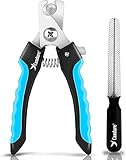
- Precise Pet Nail Trimming: Candure dog nail clipper is designed to help trim pet claws with better control. Suitable for routine grooming at home, this pet nail cutter helps keep nails neat and comfortable for dogs, cats, and similar pets.
- Suitable for Multiple Pets: This pet nail trimmer can be used for medium and large dogs, cats, rabbits, and other small animals with suitable claw size. Always trim carefully and according to your pet’s comfort level.
- Built-In Safety Guard: The dog and cat nail clipper includes a protective safety guard to help guide the nail while trimming. It supports controlled cutting and helps reduce the chance of cutting too much at once when used properly.
- Spring-Assisted Handle Design: The spring-loaded handle helps the clipper reopen smoothly after each cut, making the grooming process easier and more comfortable for regular pet nail care.
- Stainless Steel Cutting Edge: Candure pet nail clipper features a stainless steel cutting edge with an ergonomic handle for a firm and comfortable grip. A practical grooming tool for maintaining your pet’s claws at home.
A dewclaw is sometimes compared with a human thumb or big toe because it is the first digit. The comparison is useful but not exact: canine feet and human hands and feet have different anatomy. Veterinary terminology may also distinguish the normally functional front first digit from a more rudimentary rear first digit. In everyday dog care, however, both are commonly called dewclaws. The Royal College of Veterinary Surgeons describes the relevant first-digit anatomy and the ethical questions surrounding removal.
Do not confuse a front dewclaw with the carpal pad. The carpal pad is the small pad higher up on the back of the front foot; it is not a toe and does not contain a claw.
Front and rear dewclaws are not interchangeable
| Feature | Front first digit, commonly called a front dewclaw | Rear dewclaw |
|---|---|---|
| Typical location | Inner side of the foreleg, above the four ordinary toes | Inner side of the hind leg, near the hock |
| Occurrence | Usually present at birth | Highly variable; may be absent |
| Attachment | Usually bony and connected to muscles and tendons | May be fully articulated and bony, or attached mainly by skin and connective tissue |
| Potential function | Can move, help hold objects, and contribute to traction or limb control during demanding movement | Depends heavily on its structure, attachment, and breed |
| Routine removal | Difficult to justify in a healthy dog because it is generally a functional digit | Requires an individual assessment, particularly if it is loose and repeatedly injured |
| Breed considerations | Some breed standards require or permit front dewclaws | Double rear dewclaws are required or strongly valued in several breeds |
The most important practical distinction is this: describing every dewclaw as a floppy, useless piece of skin is inaccurate. Many rear dewclaws are loosely attached, but some contain bones and joints and function as additional toes.
Why do dogs have dewclaws?
The evolutionary explanation
A dewclaw is a retained first digit. Dogs evolved from animals whose limbs were modified for efficient movement on the ground, and the first digit became reduced compared with the other toes rather than remaining a fully weight-bearing part of the foot.
Quick wins for a faster PC:
Repair Windows errors before they cause bigger problemsFix Now →Fix the driver behind crashes, sound loss and screen glitchesFind Drivers →Clear out junk files and repair common Windows errorsFree Scan →Reduced does not mean useless. A structure can be smaller or less important for ordinary walking than it was in an ancestor while still retaining a present-day function. Comparative anatomy research discusses this distinction between a vestigial or reduced structure and a functionless structure.
The anatomical explanation
Front dewclaws are not simply nails hanging from the skin. A veterinary review identifies four tendons connecting the front dewclaw to muscles in the lower forelimb. Those connections demonstrate that the digit can move independently and has a meaningful anatomical relationship with the limb. The review of working-dog structure and function explains why the front dewclaw should not automatically be treated as disposable.
What dogs may use them for
Depending on the dog and the activity, front dewclaws may help with:
- Holding objects: A dog may use the dewclaws to brace a bone, toy, chew, or piece of food against the ground or between the front legs.
- Traction: During climbing or movement over steep, uneven, icy, or slippery ground, the claw may engage with the surface.
- Fast turns and jumps: The digit may help control or stabilize the lower forelimb when the dog changes direction or lands from a jump.
- Distal-limb stability: The muscles and tendons associated with the digit may contribute to control of the paw and wrist area.
These functions are supported by anatomy, observation, expert interpretation, and limited observational evidence. They should not be presented as a proven, identical benefit for every dog. A relaxed pet walking on level flooring may rarely use a front dewclaw in an obvious way, while a hiking, hunting, herding, or agility dog may place greater demands on the structures of the foot.
Do dewclaws touch the ground?
Front dewclaws usually do not touch the ground when a dog is standing normally. Because of that, their nails often do not wear down as naturally as the nails on the four main toes.
That does not mean they never contact a surface. Running, jumping, climbing, turning sharply, or placing a limb at an unusual angle can bring the dewclaw into contact with the ground or another object. This is one reason a healthy front dewclaw may contribute to movement even though it is not a normal weight-bearing toe during quiet standing. VCA’s guidance on broken nails also notes the practical problem of reduced wear and the need for regular nail care.
Rank #2
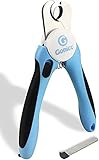
- Vet & Groomer Recommended Professional Design: Preferred by veterinarians, trainers and groomers, these clippers deliver fast, safe and precise trimming for medium and large dogs, ideal for at-home daily grooming.
- Ultra-Sharp 3.5mm Heavy-Duty Stainless Steel Blades: Thick premium stainless steel enables one-snip clean cuts. Long-lasting sharpness prevents nail splitting and crushing to protect paw health.
- Built-In Safety Stop to Avoid Over-Cutting: The integrated safety guard blocks over-cutting and protects the sensitive quick, ensuring beginner-friendly, worry-free safe trimming.
- Hidden Integrated Mini Nail File Included: Comes with a built-in mini file in the handle, letting you smooths rough edges instantly after trimming, leaving your dog's paws neat, soft and comfortable.
- Ergonomic Non-Slip Comfort Handles: Contoured anti-slip grips boost stable control and reduce hand fatigue, avoiding slips and creating a stress-free trimming experience.
Do all dogs have dewclaws?
Most dogs are born with a first digit on each front limb. If an adult dog has no visible front dewclaw, it may have been removed as a puppy, may have lost it through an injury, or may have an uncommon congenital absence.
Rear dewclaws are much less predictable. A dog may have:
What’s actually slowing this PC down?
Pick the symptom - the matching free tool is one click away.
- no rear dewclaws;
- one rear dewclaw on one or both hind legs;
- one or two rear dewclaws on each hind leg; or
- double rear dewclaws that are large, bony, and well developed.
A rear digit may be a complete toe with bones, joints, tendons, and a substantial attachment, or it may be a small structure connected mainly by skin and connective tissue. Extra digits are not automatically a defect. In some dogs they are normal breed characteristics or examples of canine polydactyly.
Do not try to determine attachment by pulling or bending a dewclaw. If you need to know whether a rear digit is articulated, a veterinarian can examine it and, when necessary, use imaging.
Do dewclaws help dogs run, turn, or compete?
The anatomy makes a functional contribution plausible, especially for front dewclaws. A dog moving quickly over uneven ground may use the digit and its associated tendons to help control the paw, maintain contact, or resist forces generated during a turn. Working-dog experts have also proposed a role in traction and wrist stability.
There is some relevant evidence, but it has limits. A 2018 survey of 1,081 dogs training or competing in agility found that the odds of reported digit injury were higher in dogs with:
- absence of front dewclaws: odds ratio 1.9;
- long nails: odds ratio 2.4;
- Border Collie breed: odds ratio 2.3; and
- a greater weight-to-height ratio: odds ratio 1.5.
The study was observational and based on survey responses. The authors noted possible respondent and recall bias and the absence of medical-record verification. The result is therefore an association, not proof that removing a dewclaw causes injury in every dog. It does, however, provide a reason to avoid assuming that healthy front dewclaws are useless and to take nail length seriously. The agility-dog digit-injury study is available through UC eScholarship.
A separate study found that most agility dogs undergoing digit amputation returned to satisfactory performance. That finding is useful when discussing recovery after a medically indicated amputation; it does not prove that elective removal from puppies is harmless, necessary, or beneficial. Read the study on digit amputation and agility performance.
There is also insufficient evidence to state that dewclaw removal inevitably causes carpal arthritis. Arthritis has been proposed as a possible long-term concern, but it is not an established outcome that can be promised or predicted for every dog.
Should a dog’s dewclaws be removed?
There is no responsible universal answer of always remove or never remove. The decision should begin with the specific digit and the dog’s medical history—not with the assumption that all dewclaws are the same.
Rank #3
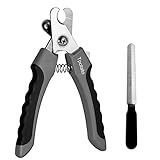
- MEDICAL STAINLESS STEEL BLADES: Say goodbye to broken, delaminated and chipped nails! The Tpotato dog nail clippers are made of high quality medical stainless steel blades with a thickness of up to 3.5mm, making them easy to cut and clean to keep you and your pet at ease. The included nail file is the icing on the cake, throwing a perfect shine on nails.2024 authoritative survey shows that 95% of veterinary clinics highly recommend this burr-free trimmer.
- NOISE REDUCTION TECHNOLOGY: Our dog nail trimmers are equipped with noise reduction technology, which channels sound waves from metal collisions into a silicone damping layer. Measured use of Tpotato dog nail clippers, the rate of pet stress reaction is reduced by 78%! The measured noise level is only equivalent to the sound of a library book turning (34.7dB), which effectively reduces your pet's nervousness due to noise, and is perfectly suited for nighttime/sensitive pet care.
- ERGONOMIC NON-SLIP GRIP: The pet nail clippers use ergonomic silicone non-slip grip, 17° golden Angle design in line with the natural grip curve of the hand, reducing hand fatigue by 55%, even elderly users or arthritis patients, can easily handle. The convenience of dog nail clipper is highly recommended by veterinarians and more than 10,000 users, and all dog breeds can enjoy the clipping service without stress, so that your favorite pet can always stay in the best condition.
- MILITARY GRADE SPRING ASSISTANCE: The dog nail clippers equipped with nickel-titanium alloy memory metal spring device, single finger press 0.03 seconds can automatically rebound, making trimming easy and labor saving.Lab tests show that our clippers have been used 100 times in a row and the hand is still fatigue-free with 70% less force applied. For senior users and multi-pet households, this nail clipper is ideal for high-frequency use scenarios.
- SAFETY TRIMMING: The pet nail clippers built-in blood line positioning baffles, accurate positioning, prevent excessive trimming and cutting blood vessels. The one-touch sliding lock feature of dog nail clippers keeps the blade closed, keeping pets away from the danger of "scissor hands." The clippers are not only the perfect dog grooming tool, but also the perfect choice for dog birthday gifts. 1,168 kennel specified supplies worldwide, 30 days no reason to return.
- Is the digit diseased or repeatedly causing substantial injury? A severely damaged, chronically infected, cancerous, or repeatedly torn digit may need medical removal after a veterinary examination.
- Is it a front, articulated dewclaw? Routine removal needs a particularly strong justification because this is generally a bony, tendon-connected digit with potential function.
- Is it a loose rear dewclaw that repeatedly snags? Removal may be reasonable for an individual dog if repeated trauma continues despite appropriate nail trimming, grooming, and management. Its actual attachment still matters.
- Is it a breed-required double rear dewclaw? Retention is generally important for breed conformity and may preserve a well-developed, functional toe.
- Is the reason mainly cosmetic convenience or show preference? This is the most ethically contested situation and should not be described as automatically improving the dog’s welfare.
Reasons to retain healthy dewclaws
- Healthy front dewclaws are usually functional and anatomically connected.
- Retention avoids an unnecessary amputation.
- In the agility survey, absence of front dewclaws was associated with increased odds of digit injury, although the study did not prove causation.
- Regular nail trimming can usually manage the main preventable problem: excessive nail length.
- Some rear double dewclaws are required by breed standards or are developed enough to function as additional toes.
Reasons a veterinarian may discuss removal
- A loose rear digit repeatedly tears on vegetation, wire, flooring, crates, or grooming equipment.
- The same dewclaw repeatedly becomes infected or painfully damaged.
- The digit is malformed, fractured, dislocated, or affected by a mass.
- There is a genuinely high, individual probability of future injury that outweighs the disadvantages of surgery.
Before deciding that amputation is needed because of injuries, review the simpler causes. Is the nail too long? Is hair matting around it? Does the dog routinely catch it on a particular fence, crate, carpet, or grooming tool? Correcting those problems may prevent further trauma without removing a healthy digit.
What veterinary organizations say
Policies differ by country, professional organization, breed registry, and clinical circumstance. The Australian Veterinary Association considers routine dewclaw removal unacceptable unless medically justified. It recommends considering removal of a forelimb first digit for disease or significant injury, and prophylactic hind-limb removal only when an individual dog has a genuinely high probability of injury.
The Canadian Veterinary Medical Association opposes non-therapeutic dewclaw removal. The New Zealand Veterinary Association states that prophylactic amputation of articulated and non-articulated first digits does not provide a net welfare benefit. The RSPCA Australia also addresses surgical alteration for human convenience.
Some breed organizations and American Kennel Club materials continue to support early removal in selected circumstances, commonly on the grounds that it may prevent later injury or conform to a breed practice. That position does not make removal necessary for every puppy. Owners should consider the local law, the applicable breed registry, the dog’s actual anatomy, and the advice of a veterinarian who is willing to discuss both benefits and harms.
Free tools Windows power users keep installed
One-click scans. No signup required.
What about removing dewclaws from puppies?
Breeders have historically removed some dewclaws when puppies are only a few days old. Early removal can be technically simpler than removing an adult digit because the structures are smaller and healing may be easier. It is not, however, automatically painless.
The direct welfare evidence specific to neonatal dewclaw removal is limited. The claim that very young puppies feel little or no pain because their nervous systems are immature should not be treated as settled fact. Veterinary anesthesia guidance supports the use of local anesthetic for minor neonatal procedures, including dewclaw removal. Appropriate pain control and veterinary oversight matter at any age. The IVIS anesthesia reference discusses local anesthesia for neonatal procedures.
In other words, early age may make a procedure technically simpler, but it does not make it automatically pain-free or ethically uncontested. The choice should not be made solely because the puppy is too young to resist or because the operation can be performed at the same time as another routine procedure.
Rules also vary by location. UK and New Zealand regulations and professional guidance distinguish very young puppies from older animals, but those provisions must not be presented as United States law. Check the law where the dog is located and ask the veterinarian what analgesia, anesthesia, follow-up, and documentation are required.
PC Slower Than It Used to Be?
A free scan shows the junk files, broken settings and background clutter dragging Windows down - then fixes them in one click.Free scan · Windows 10 & 11Outdated Drivers Are Slowing You Down
One free scan finds every outdated or missing driver and matches the right update for your exact hardware.Free scan · exact hardware matchWhat happens when an adult dewclaw is removed?
Adult removal is not equivalent to clipping off a nail. If the digit is bony and articulated, removal is a surgical amputation performed under anesthesia. The veterinarian must manage nerves and blood vessels, remove the affected structures, close and protect the wound, and provide postoperative pain control. The dog may need a bandage, an Elizabethan collar, restricted activity, and monitoring for infection or wound disruption.
The exact procedure depends on whether the digit is fully articulated, partly attached, injured, infected, or affected by disease. A loose rear dewclaw may require less extensive surgery than an articulated front or rear digit, but owners should not assume that from appearance alone. Veterinary anatomy references describe the structural variation among dewclaws.
Rank #4

- LED light: Illuminates light-colored nail's quick or claws for easier and safer cutting experience! *Note that the LED light may not work well on dark nails.
- Extra protection: The safety guard behind the blade regulates the cutting length and keeps the claw from pushing through too far.
- More safety: The blade lock prevents unwanted opening of the claw cutter.
- Less stress: Shorten your pet's claws at home in a positive atmosphere. Less time at the vet and more time to cuddle.
- Includes nail file: With integrated nail file for perfect nail care. Great for finishing sharp edges after cutting.
Never attempt to cut off a digit, remove a deeply embedded nail, or detach a partially torn dewclaw at home.
How to care for a dog’s dewclaws
Inspect them during every nail-care session
There is no single trimming interval that fits every dog. Check the dewclaws whenever you trim the other nails and after activities where a claw could have snagged. They deserve special attention because they may not touch the ground enough to wear down naturally.
Look for excessive length, a sharp hook or curl, cracks, discoloration, swelling, discharge, bleeding, a changed angle, or tenderness. Check that surrounding hair is not matting around the nail. A dog that repeatedly licks or chews one dewclaw may be reacting to pain, irritation, infection, or a split nail even if the injury is difficult to see.
Trim safely
- Use dog-specific nail clippers or a suitable grinder.
- Remove only small amounts at a time, especially when the nail is dark or curved.
- Avoid the quick, the living inner portion containing nerves and blood vessels.
- Keep styptic powder or another veterinary-approved hemostatic product nearby in case a small cut bleeds.
- Ask a veterinary technician to demonstrate the technique if the nail is black, hidden by hair, tightly curled, or difficult to handle.
If you cut into the quick, the dog may bleed and feel pain. A nail that is already split to the base, embedded in the skin, or badly curled is not a routine home-trimming problem. Have a veterinary professional handle it.
What should you do if a dewclaw breaks or bleeds?
Dewclaw injuries are common because long nails can catch on vegetation, fabric, flooring, wire, or other objects. Possible injuries include a cracked nail, a torn-off nail, partial avulsion, an exposed quick, infection around the nail bed, an ingrown nail, fracture, dislocation, and deeper soft-tissue injury. A swollen or misshapen digit can also rarely indicate a mass or tumor rather than a simple accident.
The quick contains nerves and blood vessels, so a broken nail can be very painful. It is also connected with deeper structures, meaning infection should not be dismissed as merely cosmetic. VCA’s broken-nail guidance provides similar first-aid advice.
Do these 3 things before closing this tab:
1Fix the driver behind crashes, sound loss and screen glitches2Repair Windows errors before they cause bigger problems3Scan for outdated or missing drivers - takes under a minuteLimited first aid for a minor bleeding nail
- Stop licking and chewing. Calmly restrain the dog and use a cone if needed. A painful dog may bite even if normally gentle.
- Apply firm, direct pressure. Hold clean gauze or a clean towel against the nail without repeatedly lifting it to check.
- Allow about 5–10 minutes for pressure. If bleeding continues, apply styptic powder or contact a veterinarian. Do not pack a deep wound with household materials.
- Do not yank off a partly attached nail or digit. Pulling can worsen tissue damage and pain.
- Arrange veterinary care when appropriate. A nail split to the base, significant contamination, severe pain, or bleeding that returns needs professional attention.
Merck Veterinary Manual emergency guidance is useful for general wound and bleeding principles, but a torn dewclaw may require an examination even when the bleeding stops.
Seek prompt veterinary care if:
- bleeding is heavy or does not stop with sustained pressure;
- the dewclaw is dangling, twisted, or partly torn away;
- bone or deep tissue is visible;
- the dog will not bear weight or is in severe pain;
- the toe is hot, swollen, or increasingly red;
- there is pus, a foul odor, or discharge;
- the nail is split to its base;
- the injury keeps recurring; or
- a digit becomes swollen or misshapen without an obvious accident.
Veterinary treatment may include trimming or removing damaged nail material, local anesthesia or sedation, pain medication, bandaging, antibiotics when infection warrants them, and radiographs if a fracture, joint injury, or bone involvement is suspected. PetMD’s broken-nail guidance describes common red flags and treatment options.
Independent reader supportYour contribution helps us test, update, and keep practical guides available for everyone.Breeds where rear double dewclaws matter
Some breed standards specifically preserve or require rear double dewclaws. The wording and consequences apply to the relevant registry and country, so a general breed list should not replace checking the current standard.
- Great Pyrenees: the AKC standard specifies double dewclaws on each rear leg, and absence is a fault. See the Great Pyrenees standard.
- Briard: two rear dewclaws are required on each rear leg; ideally, they form additional functioning toes. See the Briard standard.
- Beauceron: double rear dewclaws are required. See the Beauceron standard.
- Icelandic Sheepdog: front dewclaws are required and may be double; rear dewclaws are required, and well-developed double rear dewclaws are desirable. The AKC standard was approved on November 10, 2025, and became effective on March 2, 2026. See the Icelandic Sheepdog standard.
If a puppy belongs to one of these breeds, do not assume that rear dewclaws are disposable skin tags. Ask the breeder and veterinarian about the digit’s structure, the applicable registry standard, and the long-term care plan before consenting to removal.
Best Value
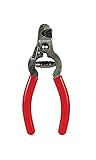
- Durable plier-style nail clipper
- Comfortable red plastic grips and a spring-loaded cutting mechanism for more positive cutting action
- Built-in guard can be moved into position to prevent the overcutting of the nails and there is a lock to hold the trimmers closed for storage and maintenance
- Nail Clippers can be used for just about all sizes of dog
- except very large breeds
Common misconceptions about dewclaws
- Dewclaws are useless.
- That is too broad. Front dewclaws are usually articulated and tendon-connected. Their contribution may be subtle in ordinary walking but relevant during gripping and demanding movement.
- All dewclaws are vestigial.
- Some rear dewclaws are reduced, but reduced does not mean functionless. Anatomy differs between front and rear digits and between individual dogs.
- All rear dewclaws are attached only by skin.
- False. Some are loose, while others are complete, bony, and articulated.
- Removing a dewclaw prevents injury.
- Some breeders and breed organizations use that rationale, particularly for selected rear digits, but prevention is not guaranteed and does not apply equally to every dog.
- Puppies do not feel dewclaw-removal pain.
- Direct welfare evidence is limited and the claim is contested. Young age does not automatically make a procedure painless; appropriate veterinary anesthesia and analgesia remain important.
- Removing dewclaws causes arthritis.
- There is not enough evidence to state that as established causation. Long-term orthopedic effects remain a concern to consider, not an inevitable result.
- A torn dewclaw is harmless.
- A torn nail can expose painful, vascular tissue and permit infection. Persistent bleeding, severe pain, swelling, discharge, or a deep split warrants veterinary care.
A practical decision guide for owners
For most owners, the clearest approach is:
- Identify the digit. Is it a front first digit, a loose rear dewclaw, or a developed rear toe? Do not make a removal decision based only on the amount of visible skin.
- Check the breed standard. This is especially important for Great Pyrenees, Briards, Beaucerons, Icelandic Sheepdogs, and any dog being shown or bred under a particular registry.
- Maintain the nail. Regular inspection and trimming reduce snagging and splitting risk.
- Track actual injury history. One isolated accident is different from repeated tears despite correct nail care and environmental changes.
- Have a veterinarian examine persistent problems. Swelling, licking, pain, infection, deformity, or a recurring injury may require more than a trim.
- Balance welfare, function, and surgery. A medically necessary removal can be appropriate; routine amputation for convenience is a different decision.
If a dewclaw is already healthy, comfortable, and manageable, retention is generally the lower-intervention choice—especially for a front, articulated dewclaw. If a particular digit repeatedly causes significant injury or is diseased, a veterinarian can explain whether removal is likely to improve that individual dog’s welfare.
Frequently Asked Questions
Are dewclaws the same as thumbs?
They are the first digits and are sometimes compared with thumbs or big toes, but the comparison is not exact. A front dewclaw is usually a bony, tendon-connected digit with independent movement; canine limb anatomy is different from human hand and foot anatomy.
Are front dewclaws useless?
Usually not. Front dewclaws have muscles and tendons and may help a dog hold objects, gain traction, or control the lower forelimb during fast turns, jumping, climbing, or uneven movement. The exact benefit varies and has not been established by large controlled trials for every type of dog.
Why does my dog have only one rear dewclaw?
Rear dewclaws are naturally variable. A dog may have none, one, or double dewclaws, and they may differ between the two hind legs. A missing digit can also reflect earlier removal or an injury. A veterinarian can assess an unusual or painful area.
The Tool Desk
Outbyte Driver Updater FREEFix the driver behind crashes, sound loss and screen glitchesFind Drivers →Outbyte PC Repair FREEClear out junk files and repair common Windows errorsFree Scan →Can dewclaws grow into the skin?
Yes. Because front dewclaw nails often receive little ground wear, they can become overgrown and curl into the skin or pad. Pain, swelling, licking, limping, discharge, or an embedded nail should be evaluated by a veterinarian rather than cut aggressively at home.
Do dewclaws need trimming?
Usually. Inspect them whenever you perform routine nail care and trim only small amounts while avoiding the quick. A veterinary technician can demonstrate the technique, particularly for dark, curved, hidden, or difficult nails.
Can I remove a dewclaw myself?
No. Do not cut off a digit or yank away a partly attached nail. Adult removal of a bony dewclaw is an amputation performed under anesthesia, with pain control and wound care. A damaged nail or digit should be handled by a veterinary professional.
Should dewclaws be removed during spay or neuter?
Not automatically. Combining procedures may avoid a separate anesthetic event, but it still adds tissue trauma and may be unnecessary. Discuss the specific digit, medical reason, breed standard, surgical risks, and aftercare with your veterinarian.
Does dewclaw removal cause arthritis?
That has not been established as a universal cause-and-effect relationship. Possible long-term orthopedic effects may be part of the discussion, but available injury evidence is limited and observational rather than proof that removal inevitably causes arthritis.
Why does my dog keep licking one dewclaw?
Possible causes include an overgrown or split nail, a torn quick, infection, a foreign object, inflammation, fracture, or another lesion. Persistent licking is a reason to inspect the area and arrange a veterinary examination, especially if there is pain, swelling, odor, discharge, or limping.
Is a missing dewclaw normal?
A missing rear dewclaw can be normal because rear digits vary naturally. A missing front dewclaw is less typical and may indicate previous removal, congenital absence, or injury. If the area is scarred, painful, swollen, or newly changed, ask a veterinarian to examine it.
The Bottom Line
A dewclaw is a first digit, not merely a nail. Healthy front dewclaws are usually functional and should not be routinely removed. Rear dewclaws vary from loose structures to complete breed-important toes, so their removal is an individual veterinary decision. Keep every retained dewclaw trimmed, and treat a torn, embedded, swollen, or persistently painful dewclaw as a medical problem rather than a cosmetic nuisance.
What’s actually slowing this PC down?
Pick the symptom - the matching free tool is one click away.
Quick Recap
Product prices and availability are accurate as of the date/time indicated and are subject to change. Any price and availability information displayed on Amazon at the time of purchase will apply.




