Do not chase a lost or frightened dog. Stop at a safe distance, turn your body sideways, soften your gaze, stay quiet, and let the dog decide whether to approach. If the dog keeps retreating, hides, appears injured or sick, acts defensively, or is near traffic, stop trying to catch it and call animal control, police, or a trained animal-capture professional.
A chase can push a scared dog farther away, into traffic, or into a defensive bite. The safest recovery is sometimes not an immediate grab but a controlled plan: record sightings, tell everyone DO NOT CHASE, establish a safe feeding station, monitor it with a camera, and arrange a humane capture with experienced help.
The one-minute response
- Protect people first. Move children, pets, and unnecessary bystanders away.
- Stop moving toward the dog. Do not run, chase, whistle repeatedly, or surround it.
- Check the surroundings. Look for traffic, rail lines, water, ice, cliffs, fences, construction, and other escape hazards.
- Stay outside the dog’s flight distance. If it starts to retreat, stop advancing immediately.
- Turn sideways and look slightly away. Lower yourself only if doing so is safe.
- Use one quiet, inviting cue. A familiar name or command may help a relaxed dog, but repeated calling can pressure a frightened dog.
- Toss small pieces of food to the side of the dog. Do not reach toward its face or move closer while it eats.
- Wait. If the dog does not come voluntarily and remain relaxed, back away and call for help.
Short version: Stop. Turn sideways. Avoid eye contact. Speak softly once. Toss food to the side. Wait. Do not chase, corner, or grab.
First decide whether you should approach
The right first step is not always capture. Before you try to make contact, decide whether approaching would put you, the dog, or other road users at risk.
Quick wins for a faster PC:
Clear out junk files and repair common Windows errorsFree Scan →Fix the driver behind crashes, sound loss and screen glitchesFind Drivers →#1 Best Overall
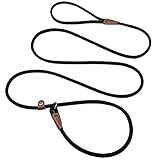
- Control for Behavior: No pull slip lead dog leash, 2 in 1 leash and collar design. Simple and easy use to correct behavior and stop dogs from pulling
- Classic colors: 13+ stylish colors for you choose to make your pets stand out. Bright colors make it easier to accurately see where it is on the pup’s neck and whether it needs to be adjusted. The slip leash make your dog safer and more fashionable
- Fit All: 7 feet long, 1/4 inch slip rope dog leash is a perfect balance between freedom and control, adjustable to fit any dog neck size, suitable for small medium dogs pets outdoor walking, hiking and training
- Sturdy Nylon Slip Lead: Slip knot rope leash is made of high density nylon rope, a sturdy leather connection and strong hardware o-ring. Flexible, lightweight yet durability
- Versatile for Training: This leash is perfect for dog training. Its length allows you to teach your dog commands like "heel" and "stay" effectively. The smooth texture of the nylon won't irritate your dog's neck during training, making the learning process more pleasant for both of you
Do not attempt a hand capture when:
- The dog is on or beside a highway, busy street, railway, bridge, or active construction area.
- The dog is in deep water, on unsafe ice, near a cliff, or in another place where you could be injured.
- It is growling, baring its teeth, lunging, snapping, stiffening, or staring intensely.
- It is injured, trapped, guarding food or puppies, guarding a confined space, or protecting another animal.
- It appears disoriented, unusually lethargic, neurologically abnormal, vomiting, unconscious, or otherwise seriously ill.
- Children, your own pets, or a crowd would have to get close.
- You do not have a safe place ready to contain the dog if you succeed.
Call the local animal-control agency, shelter, police, or another trained responder and describe exactly what you see. Animal-control staff may have the equipment and training to manage a defensive, injured, or traffic-exposed dog without turning the situation into a pursuit. The American Humane found-pet guidance also emphasizes contacting the appropriate authorities when a loose dog creates a safety risk.
What to do in the first 60 seconds
1. Move people and animals out of the situation
Ask children to come inside or stand behind you at a safe distance. Put your dog in a vehicle or behind a closed door. Do not send a child or another dog to make contact. A frightened dog may tolerate one quiet adult but react to a group or to an approaching pet.
2. Stop before you enter the dog’s flight zone
Dogs have different comfort distances. A dog may allow you to stand 30 feet away but flee when you take two steps forward. That invisible boundary is its flight distance. If the dog turns away, increases distance, crouches, or begins scanning for an escape route, you are too close.
Freeze or slowly stop. Do not try to regain the lost distance. A pause is not an invitation to advance.
3. Make yourself less threatening
Stand sideways rather than facing the dog head-on. Keep your arms loose, avoid leaning over it, and look at the ground or to the side instead of maintaining direct eye contact. Speak in a low, calm voice. You may sit or lower your body if the location is safe and you can get up without sudden movement; do not kneel in traffic, near a defensive dog, or where you could be knocked down.
4. Use food without invading the dog’s space
Toss a small amount of appealing food near the dog or slightly to its side. Tossing food away from your body gives the dog a choice and avoids the pressure of a hand coming toward its face. Then wait.
Do not advance while the dog is eating. If it refuses food, that may mean it is too frightened, stressed, ill, or distracted to engage. Food is a lure, not proof that the dog is ready to be touched.
5. Let the dog make the final approach
If the dog walks toward you, remain still and allow it to sniff. Do not suddenly crouch over it, hug it, pat its head, or reach for its collar. A dog can come close for food and still panic when a hand attempts to restrain it.
If the dog does not approach willingly, withdraw slowly and call for help. Preserving the dog’s sense of safety is more important than making one more attempt.
How to read a lost dog’s body language
A loose dog may be friendly, frightened, exhausted, injured, or conflicted. You cannot determine its bite risk from its breed, size, dirty coat, lack of a collar, or a wagging tail. As the ASPCA explains in its bite-prevention guidance, tail movement can reflect arousal or uncertainty, not necessarily comfort.
| What you may see | What it suggests | Your response |
|---|---|---|
| Loose body, soft eyes, relaxed ears, open relaxed mouth, ordinary exploratory movement, and a loose tail | The dog may be relatively comfortable, but this is not a guarantee that it accepts handling. | Stay sideways, let it approach, and move slowly. |
| Crouching, freezing, retreating, hiding, scanning for escape, lip licking, yawning, heavy panting, or pacing | Fear or stress. The dog may be in a flight, freeze, or “fret” response. | Stop closing the distance. Reduce noise and pressure. |
| Stiff body, raised hackles, hard stare, growling, bared teeth, lunging, snapping, or guarding food, puppies, an injury, or a confined area | Defensive behavior and a significant bite risk. | Back away and call animal control or another trained responder. |
| Disorientation, abnormal gait, extreme lethargy, collapse, unusual vocalization, or apparent neurological symptoms | Possible serious illness, injury, poisoning, or another medical emergency. | Do not handle it. Keep people and pets away and call emergency animal services. |
People involved in lost-dog recovery sometimes use phrases such as survival mode or describe a dog’s responses as fight, flight, freeze, or fret. These are useful descriptions of observable stress behavior, not a formal veterinary diagnosis. A dog that has been missing for days may behave very differently from the companion its family knows at home.
Should you call the dog’s name?
There is no useful universal rule that says either “always call” or “never call.” Context matters.
The Tool Desk
Outbyte Driver Updater FREEScan for outdated or missing drivers - takes under a minuteDriver Scan →Outbyte PC Repair FREEClear out junk files and repair common Windows errorsFree Scan →Rank #2

- 【EASY AND CONVENIENT】- No collar or harness needed. With the adjustable loop, extremely simple and easy to put on or off
- 【STRONG & LIGHTWEIGHT】- These Premium Slip Leads for dogs are made of high strength nylon rope, super durable metal ring, and the knots bound with leather cover. 1/2” thick rope provide maximum durability and comfortable grip
- 【Reflective for Night Safety】- The reflective straps on the entire rope leash ensures great visibility and security during night walk or jogging
- 【Great for Training】– The slip leash tightens when your dog pulls and loosens when the behavior is corrected. Great dog training leash to correct the behavior under control. Anti-choke ring is included to prevent choking hazard
- 【Perfect Size】– 1/2” x 6 ft perfect length for Outside walking, jogging, hiking or training. Suit for Large and Medium Dogs
For a relaxed dog that recognizes you, one familiar name or recall cue in a soft, cheerful voice may help. Stop if the dog’s body tightens, it turns away, or it begins to flee.
For a dog already running from people, repeated yelling, whistling, clapping, or calling its name can add pressure. Use one quiet cue from a distance. If the dog does not respond positively, become quiet and stop moving toward it.
The same principle applies to attempts to make the dog follow you. Walking away slowly, turning sideways, or tossing treats behind you can be a low-pressure option for a dog that is already interested and relaxed. It is not permission to run, play chase, or lure a frightened dog toward a road or another hazard.
When is it safe to put on a leash?
Only consider attaching a leash after the dog has voluntarily approached and is showing consistently relaxed behavior. Being close enough to touch is not the same as being ready to be restrained.
- Let the dog sniff you and the leash.
- Keep your movements slow and visible.
- Do not reach suddenly for its neck or collar.
- Do not reach over its head or pin it down.
- If it remains calm and already has a secure collar, clip a leash carefully.
- If it is calm but has no collar, a properly handled slip lead may be useful for someone who knows how to use one.
The AKC’s found-dog guidance discusses using a leash or emergency slip lead, but an improvised belt or rope is not a substitute for proper equipment or training. Do not attempt a collar grab on a dog that is backing away, freezing, stiffening, or showing any warning signal.
The most important don’ts
- Don’t chase. Pursuit can turn a manageable sighting into a long-distance flight and may push the dog into traffic.
- Don’t corner the dog. A dog that cannot escape may defend itself. The ASPCA’s aggression guidance notes that fear and feeling trapped can contribute to rapid defensive bites.
- Don’t crowd it with people or vehicles. A semicircle of well-meaning rescuers is still a trap from the dog’s perspective.
- Don’t yell, whistle, or repeatedly call. Noise and pressure may drive an elusive dog farther away.
- Don’t grab the collar, hug, or reach over the head. These actions can trigger a bite even after the dog has accepted food.
- Don’t send children or personal pets to help. They cannot reliably read warning signals or manage a sudden flight.
- Don’t leave food beside a busy road. A feeding station should keep the dog away from traffic and other hazards.
- Don’t use throw nets, catch poles, snares, lassos, tranquilizers, or human medication. These tools and substances can injure or poison the dog and require professional handling.
- Don’t improvise a muzzle. An unfamiliar or injured dog may panic, and a muzzle can interfere with breathing or vomiting.
- Don’t open a humane trap outdoors. A captured dog can escape or bite when released in an unsecured place.
- Don’t release the dog to an unverified claimant. Identification and local animal-control procedures matter.
If the dog will not come: change from capture to recovery
Once a dog is retreating or hiding, repeated capture attempts usually make the situation harder. Back away and shift to information-and-containment mode.
Create a reliable sighting system
Record the exact location, date, time, direction of travel, weather, nearby roads, and what the dog was doing. Note its size, coat color, markings, collar, limp, and any other identifying feature. Take a photograph or video only if doing so does not cause the dog to flee.
Ask witnesses to report sightings rather than approach. Put DO NOT CHASE in large, unmistakable type on flyers, neighborhood posts, and messages to volunteers. A sighting that is reported late may be much less useful than one that is calmly logged in real time.
Recommended Free Tools
Choose one point person
Assign one person to receive calls and messages, maintain the sighting log, and tell everyone the current plan. Lost Dogs of America recommends a promptly answered phone number or a voicemail that clearly identifies the call as a lost-dog report. Without a point person, important sightings can be missed while multiple volunteers give conflicting instructions.
Tell every volunteer the same rules:
- Report the time and precise location.
- Do not approach, follow, whistle, or send a pet after the dog.
- Do not create a crowd.
- Do not move food or equipment unless the recovery coordinator directs it.
- Call immediately if the dog enters traffic or becomes injured.
Keep the area quiet
If the dog repeatedly appears in one safe area, do not send a large search party into woods, brush, or its hiding place. Field-recovery organizations advise reducing human intrusion, using a food-and-water station where appropriate, and monitoring activity with a trail camera. The Missing Animal Response Network’s advice to stay out of the woods is field-practice guidance, not a universal law of dog behavior; terrain, weather, and the dog’s condition still matter.
A camera can show whether the target dog is visiting, when it arrives, whether another animal is taking the food, and whether the dog is comfortable entering a proposed trap. Place food and water only in a location that is away from roads, secure from people, and permitted by local rules. The Lost Dogs of America trail-camera guidance and MARN camera guidance describe this kind of low-pressure monitoring.
Get trained local help
Contact animal control, the local shelter, a reputable lost-dog group, or a trained missing-animal responder. Give them your sighting log and photographs. They can help decide whether the dog needs a feeding station, a humane trap, a controlled approach, or a different response.
What’s actually slowing this PC down?
Pick the symptom - the matching free tool is one click away.
Rank #3

- This slip leash acts as a leash and a collar in one. Simply slip the loop over your dogs neck and use the handle end as a leash. Leash and collar in one combination that is great for training and known for its ease of use.
- This slip leash & collar combination is a favoriate amongst dog trainers, handlers and show dogs. Soft on the hands with its Broken in Feel easy to use and pliable enough to fit in your coat pocket.
- Mendota Slip Leashes are hand made in the USA using premium quality material.
- 3/8″ x 4′ and 3/8″ x 6′ for dogs 50 pounds & under
- Brass, satin nickel or black metallic hardware and oil tanned leather splices.
Using a humane trap for a shy or panicked dog
A humane dog trap is an escalation tool, not something to place impulsively after a first sighting. A trap can be effective when a dog repeatedly visits one safe location but will not tolerate a person approaching. It can also fail if introduced too quickly, placed in an unsafe spot, left unattended, or triggered before the dog trusts it.
Use this process
- Get advice first. Ask animal control, a shelter, or an experienced lost-animal recovery group about equipment, placement, handling, and local rules.
- Use a trap sized for the dog. The dog should be able to enter and stand comfortably, while the trap remains appropriate for the target animal.
- Choose a safe, level surface. Place it where the dog already visits, away from traffic, flooding, steep slopes, extreme temperatures, and public interference.
- Monitor with a trail camera. Confirm that the target dog—not wildlife, a different dog, or a person—is visiting.
- Acclimate the dog. Initially leave the trap open or otherwise non-triggering. Let the dog investigate it without being frightened.
- Move food gradually. Place food near the entrance, then farther inside, following the dog’s comfort level.
- Set the trap only after camera footage shows relaxed entry and eating. A dog that snatches food from the doorway may not be ready for a triggered trap.
- Use bait beyond the trigger plate. Strong-smelling wet food is commonly recommended by recovery groups because it can be more attractive than dry kibble, but this is field practice rather than a universal scientific requirement. Never use bones, spoiled food, medication, sedatives, or raw bait that could create a guarding confrontation.
- Follow the manufacturer’s instructions and local animal-services rules. Trap-checking and supervision requirements vary by jurisdiction.
- Set it only when someone can respond. Do not set a trap during extreme heat, cold, storms, or a period when responsible animal care is unavailable.
- Plan the capture before you trigger it. Have gloves, a secure vehicle or room, and professional advice ready.
When the dog enters, keep people and pets away. If appropriate for the trap and dog, cover the trap to reduce visual stimulation, then move it carefully to a secure location. Do not open the door in a street, yard with an open gate, parking lot, or other public area. The Best Friends humane-trapping guidance recommends a level trap, absorbent lining, bait beyond the trigger plate, protective gloves, and transport to a secure location before opening. Its guidance is general animal-trapping advice, so use a dog-sized trap and local professional direction for this situation.
There is no nationwide trap-supervision rule. Local requirements may be strict. For example, Rowlett, Texas, tells trap users that they are responsible for a trapped animal and restricts trapping when animal services cannot respond. That is an example of a local policy, not a rule that applies everywhere.
Special situations
A dog on a highway or near traffic
The priority is preventing a human collision while giving trained responders accurate information. Do not place food or water where it encourages the dog to remain beside a road.
A dog near railway lines, water, ice, cliffs, or construction
Keep your distance and call the appropriate emergency or animal-control service. Do not climb onto tracks, walk onto unsafe ice, enter deep water, or corner the dog against a barrier. A rescue attempt that creates a second human emergency is not a safe rescue.
An injured dog
An injured dog may bite because of pain even if it is normally gentle. Do not attempt to lift, muzzle, leash, or force it into a vehicle unless a trained responder directs you and the environment is safe. Keep people and pets away, note the injury and location, and call animal control, police, or an emergency veterinary transport service.
A dog that growls, lunges, or snaps
Do not test whether it is bluffing. Back away without turning the situation into a chase. Avoid staring, yelling, waving your arms, or blocking its escape route. Call animal control or a professional capture team. Advanced tools such as catch poles may be appropriate for trained personnel, but they are not general-public equipment.
A dog guarding food, puppies, or a hiding place
Increase your distance and leave the area. Do not take away food, reach into brush, or send a person or pet toward puppies. Tell responders exactly what the dog was guarding.
A dog seen in woods or brush
Do not organize a large group to push through the hiding area. Noise, movement, and pursuit may displace the dog. Log the sighting, alert everyone to avoid chasing, and ask an experienced responder about a camera and feeding-station plan. Field conditions can change the recommendation, so the responder should consider weather, terrain, predators, nearby roads, and the dog’s health.
A dog that seems to be returning to a home
Do not assume the dog is abandoned because it is thin, dirty, or collarless. It may have been missing for days and still have an owner nearby. Watch from a safe distance, ask neighbors whether they recognize it, and contact local animal control or the shelter. If the home is identifiable and you can do so safely, a resident may be able to contain the dog without a public chase.
Is the dog definitely lost?
A loose dog may be roaming temporarily, returning home, or escaping from a nearby property. Look for a collar or identification tag from a safe distance. Ask nearby residents whether they recognize the dog. Record:
Free tools Windows power users keep installed
One-click scans. No signup required.
Rank #4

- Instant Control & Correction: Designed with zero-stretch mountain climbing rope to deliver immediate signals. Perfect for correcting pulling and teaching "heel" walking without a collar
- Slip & Go Convenience: One-size-fits-all design allows for a quick, 3-second slip-on. Ideal for dog shows, grooming sessions, or shelters where efficiency is key
- Anti-Chafe Padded Handle: Features a soft EVA foam handle that protects your hands from "leash burn" during sudden lunges by heavy pullers
- High-Visibility at Night: Integrated reflective stitching ensures your pup is seen from blocks away, providing peace of mind during late-night or early-morning walks
- Heavy Duty & Reliable: Small (up to 50 lbs), Medium (50-110 lbs), or Large (110-250 lbs) with a sturdy leather stopper to keep the lead in the correct position behind the ears for safe control
- Exact location and time.
- Direction of travel.
- Size, coat color, markings, and sex if known.
- Collar, harness, tags, or other visible equipment.
- Limping, wounds, unusual behavior, or signs of dehydration.
- Whether it approaches people, avoids them, or returns to a particular place.
Photograph or video the dog only if doing so does not make it flee. Contact local animal control or the shelter for advice, particularly if the dog is injured, aggressive, sick, or near traffic. Do not interpret a missing collar as proof of abandonment.
Rewards, tracking dogs, and volunteer searches
Should you offer a reward?
Advice differs because dogs differ. A reward may encourage useful information about a social, approachable dog. The AKC includes a reward as one possible lost-dog tactic.
For a shy, panicked, or elusive dog, Lost Dogs of America and the Missing Animal Response Network warn that publicly advertising a reward can motivate untrained people to chase it. A safer public message is REPORT SIGHTINGS—DO NOT CHASE. If a reward is used, manage it carefully so it encourages information rather than pursuit.
Should you use a tracking or trailing dog?
A trained tracking dog may help establish a direction or confirm a sighting in some cases. It may be counterproductive when the lost dog is already being seen repeatedly in a small area and is fleeing from people. A search team or tracking dog can push it out of that relatively safe area. Lost Dogs of America discusses when tracking dogs should not be used. Ask an experienced missing-animal responder to assess the situation rather than automatically adding more people and dogs.
Do these 3 things before closing this tab:
1Scan for outdated or missing drivers - takes under a minute2Clear out junk files and repair common Windows errors3Fix the driver behind crashes, sound loss and screen glitchesWhat to do after you safely contain the dog
Prepare the containment area before you handle the dog. Close gates and doors. Remove children and other animals. Use a separate room, secure garage, fenced area, or transport crate. Keep the dog away from resident pets until a veterinarian advises otherwise; you cannot assume that an unfamiliar dog is vaccinated, parasite-free, or free of contagious illness.
If you found someone else’s dog
- Check visible identification. Look at a tag without provoking the dog.
- Have it scanned for a microchip. A shelter or veterinary clinic can usually scan it. A microchip is not GPS; it helps only when it can be scanned and the registration information is current. Visible identification and a registered microchip work together. See the ASPCA’s microchip information.
- File a found-animal report. Contact local animal control and the shelter. A shelter is not merely a place where an owner might look; it may have a universal scanner, intake records, and authority to process a found animal.
- Post a found notice locally. Use a clear photograph and general location, but withhold at least one identifying detail so you can screen claimants.
- Arrange veterinary care when needed. Seek prompt care for bleeding, wounds, limping, dehydration, lethargy, breathing problems, or a dog missing for an extended period.
- Follow local stray-hold and ownership procedures. Finder responsibilities, reporting requirements, licensing, and holding periods vary by location. Do not assume that keeping the dog privately makes you its owner.
The American Humane found-pet guidance and ASPCA lost-pet resources provide additional reporting and identification steps. Do not release the dog to someone who cannot reasonably establish ownership; coordinate with animal control if a claim is disputed.
If it is your own dog
Once you regain physical control, move it into a secure room or vehicle before celebrating or removing equipment. Check for cuts, heat stress, dehydration, limping, burrs, and other injuries. Contact your veterinarian if it has been missing for a substantial period or shows any concerning sign. Update its tags and microchip information after the emergency.
If someone is bitten or scratched
Do not wait to see whether an unknown dog develops symptoms. Rabies decisions are made by healthcare and public-health professionals based on the circumstances, the animal, and local requirements. The CDC’s rabies-prevention guidance gives the 15-minute washing instruction and directs people to seek professional assessment.
How likely is a lost dog to be recovered?
Recovery is often possible, but published percentages should not be treated as a guarantee for an individual dog. A national U.S. telephone survey conducted in 2010 and published in 2015 reported that 14% of dogs in surveyed households had been lost during the preceding five years and that 93% of lost dogs were recovered. The survey used landline telephone interviews, so it is historical evidence rather than a current universal recovery rate; see the published study.
A separate Ohio study of 187 lost dogs reported between June 1 and September 30, 2005, found that 132 dogs—71%—were recovered. The median recovery time was two days, and recovery commonly involved animal agencies, license tags, and neighborhood signs. That was a local study, not a national estimate; its results are available through PubMed.
Best Friends states that most lost pets are found within one mile of home, but that is an organizational generalization, not a rule. A dog may travel much farther if it is chased, transported, lost away from home, panicked by a disaster, or moving through difficult terrain. The practical lesson is to report precise sightings and avoid pushing the dog out of the area where it is being observed.
Prevent the next escape
- Keep a current ID tag on a secure collar or harness.
- Register the microchip and update the phone number and address whenever they change. Remember that a chip is identification, not GPS.
- Check gates, latches, fencing, screens, and door-closing habits.
- Use a leash or secure harness in unfamiliar areas and during storms, fireworks, evacuations, and other high-stress events.
- Practice recall with rewards in controlled settings; do not rely on a newly trained cue during an emergency.
- Keep a small recovery kit accessible: high-value treats, a leash, a properly sized slip lead if you know how to use one, a flashlight, and current pet photographs.
- Store your veterinarian, animal-control agency, emergency clinic, microchip company, and local shelter numbers in your phone.
Preparation gives people more safe options than chasing does. A dog that is identified, observed without pressure, and recovered through a coordinated plan is less likely to be injured or displaced.
What’s actually slowing this PC down?
Pick the symptom - the matching free tool is one click away.
Best Value

- 【EASY AND CONVENIENT】- No collar or harness needed. With the adjustable loop, extremely simple and easy to put on or off
- 【STRONG & LIGHTWEIGHT】- These Premium Slip Leads for dogs are made of high strength nylon rope, super durable metal ring, and the knots bound with leather cover. 1/2” thick rope provide maximum durability and comfortable grip
- 【Reflective for Night Safety】- The reflective straps on the entire rope leash ensures great visibility and security during night walk or jogging
- 【Great for Training】– The slip leash tightens when your dog pulls and loosens when the behavior is corrected. Great dog training leash to correct the behavior under control. Anti-choke ring is included to prevent choking hazard
- 【Perfect Size】– 1/2” x 6 ft perfect length for Outside walking, jogging, hiking or training. Suit for Large and Medium Dogs
Quick-reference checklist
STOP: Do not chase or close the distance.
TURN: Face sideways, soften your gaze, and keep your movements slow.
ASSESS: Check traffic, water, railways, injuries, aggression, and escape routes.
OFFER: Use one quiet cue and toss food to the side, not toward the dog’s face.
WAIT: Leash only after a voluntary, relaxed approach.
The Tool Desk
Outbyte PC Repair FREEClear out junk files and repair common Windows errorsFree Scan →Outbyte Driver Updater FREEScan for outdated or missing drivers - takes under a minuteDriver Scan →WITHDRAW: If the dog retreats, leave the area quiet.
REPORT: Log the exact sighting and tell everyone: DO NOT CHASE.
ESCALATE: Use animal control, a shelter, or a trained recovery professional for traffic, injury, aggression, or a dog that will not approach.
Frequently Asked Questions
Should I chase a scared dog if it is almost within reach?
No. A frightened dog may tolerate food or proximity and still panic when you reach for its collar. Stop advancing, turn sideways, and let the dog approach voluntarily. If it retreats, back away and switch to a sighting-and-containment plan.
Do these 3 things before closing this tab:
1Repair Windows errors before they cause bigger problems2Scan for outdated or missing drivers - takes under a minute3Clear out junk files and repair common Windows errorsCan I use treats to catch a lost dog?
Yes, but use them as a low-pressure lure. Toss small amounts to the side of the dog and do not move closer while it eats. For a humane trap, strong-smelling wet food is commonly used beyond the trigger plate, but the dog should first be comfortable entering the open trap.
What should I do if a lost dog is near a busy road?
Do not enter traffic or chase the dog. Call 911, police, animal control, or the responsible roadway authority and provide the exact road, direction of travel, nearest exit or cross street, and dog description. If safely stopped, remain in your vehicle with hazard lights.
Can I keep a dog I found?
Do not assume that you automatically own it. Have the dog scanned for a microchip, contact the shelter and animal control, post a found notice, and follow local stray-hold and ownership procedures. Keep the dog separated from your pets while those steps are underway.
What should I do after a bite from an unknown dog?
Wash the wound immediately with soap and running water for 15 minutes, then seek medical advice promptly. Contact local or state public-health authorities about rabies risk and report the bite to animal control or police.
The Bottom Line
The safest way to catch a lost or scared dog is often to stop trying to catch it. Prevent a chase, keep people and pets back, observe from a safe distance, and let trained responders build a controlled recovery plan. A relaxed dog may accept food and a leash; a fearful, defensive, injured, or traffic-exposed dog needs distance and professional help.
Quick Recap
Product prices and availability are accurate as of the date/time indicated and are subject to change. Any price and availability information displayed on Amazon at the time of purchase will apply.




