Most flies that land on people are investigating a convenient surface, not trying to bite. For a common house fly, sweat, skin moisture, body odors, food residue, nearby garbage, pet waste, or another attractive smell may explain the visit. A person is also a large, warm, visible object that is easy to land on.
But “fly” can describe very different insects. A house fly usually scavenges and feeds on liquid or liquefied material; a stable fly is a blood-feeding pest that can bite people and pets. Identifying which insect is involved is the key to understanding why it keeps returning.
Why ordinary house flies land on people
The common house fly (Musca domestica) is generally an opportunistic scavenger rather than a blood-feeding parasite. It may land on a person because the body offers several useful cues at once:
- Moisture: Sweat and other skin secretions provide water, salts, and organic compounds that a fly can investigate or feed on.
- Odor: Body secretions, food smells, grease, garbage, animal waste, and decaying organic material can all contribute to an odor trail.
- Warmth: A living body is warmer than many nearby surfaces.
- A large landing surface: A person is conspicuous and accessible, particularly in a room where there are few other large objects.
- Nearby attractants: The fly may be following a smell from a bin, spill, pet accident, compost container, or food and simply land on the nearest suitable surface.
This means a fly landing on you does not necessarily indicate that it was attracted by your sweat specifically. The source may be in the surrounding room or yard, while your body is only an incidental stopping point.
PC Slower Than It Used to Be?
A free scan shows the junk files, broken settings and background clutter dragging Windows down - then fixes them in one click.Free scan · Windows 10 & 11Crashes, No Sound, or Screen Glitches?
Random freezes, missing sound and display glitches usually trace back to one bad driver. Find and replace yours safely.Free scan · under a minute#1 Best Overall

- REPELS MOSQUITOES: Repels mosquitoes, including those that may transmit the Zika, West Nile, Dengue and Chikungunya viruses.
- CONTAINS 98.11% DEET: Formulated for protection in severe insect conditions.
- PROTECTS FOR UP TO 10 HOURS: Provides long-lasting protection, so you don't have to limit your family’s adventure because of mosquitoes.
- ALSO REPELS TICKS, GNATS, BITING FLIES, CHIGGERS & FLEAS: Repel these annoying bugs that can spoil the outdoors.
- PUMP SPRAY: Perfect for outdoor travel – the compact size stores perfectly with whatever adventure gear you're taking that day.
Is the fly trying to bite?
Usually, no—at least not if it is a typical house fly. House flies do not normally pierce skin to drink blood. They feed on liquid food and can liquefy some solid food with saliva or digestive fluids before taking it up through their mouthparts. On skin, a house fly may be tasting or investigating sweat and other secretions, looking for food traces, or simply resting.
A house fly landing on intact skin is unpleasant but not automatically a medical emergency. The more relevant concern is hygiene: house flies can pick up microorganisms from feces, waste, animal secretions, and decaying material and transfer contamination to food or surfaces. Keep flies away from meals, cover food, and wash your hands before eating.
Why do flies circle your face?
Flies often seem especially interested in the face because it combines several strong cues:
- exhaled breath and the moisture around the mouth and nose;
- food odors or drink residue;
- moist eyes and skin;
- skin oils and hair;
- movement and visual contrast.
Carbon dioxide is an important host-finding cue for several biting insects, and research on stable flies shows increased activity in response to carbon dioxide and human breath. Breath contains more than carbon dioxide, including other odors that may help a host-seeking insect orient itself.
Quick wins for a faster PC:
Repair Windows errors before they cause bigger problemsFix Now →Fix the driver behind crashes, sound loss and screen glitchesFind Drivers →Rank #2

- Two 4 oz cans of OFF Deep Woods Insect Repellent Aerosol protect against mosquitoes
- Outdoor bug repellent is formulated with 25% DEET and provides long lasting protection from mosquitoes, making this DEET mosquito repellent an ideal bug spray for camping, hiking, running and your favorite outdoor activities
- OFF mosquito spray offers effective protection from mosquitoes that may carry the Zika, Dengue, or West Nile viruses plus ticks that may cause Lyme disease, biting flies, gnats, and chiggers
- OFF bug spray with DEET comes in a convenient aerosol spray bottle for easy application
- Mosquito repellent spray goes on powder-dry, not oily or greasy, so you don't know you're wearing it and it doesn't stain
That evidence should not be overgeneralized. It does not prove that every house fly circles a face because it is following carbon dioxide. For an ordinary house fly, nearby food, moisture, body secretions, light, visual prominence, and a convenient resting place are safer explanations.
Why does the fly come back after being swatted?
A swat changes the fly’s behavior temporarily, but it does not remove the reason the fly approached. If the attractive cue is still present, the insect may resume searching seconds later.
Possible reasons include:
- perspiration or moisture on the skin;
- food on your hands, clothing, or face;
- an uncovered garbage can or recycling container;
- pet feces, spilled food, or a dirty litter area;
- compost, rotting vegetation, or a dead animal nearby;
- an open door, damaged screen, or large local fly population.
Flies also have rapid visual escape responses. They can detect an approaching hand and launch away before the swat arrives. The apparent “return” may sometimes be the same fly circling back, but it can also be another fly entering from the same source.
House flies versus biting flies
If the insect is biting, repeatedly attacking, or drawing blood, do not assume it is a house fly. The following distinctions are useful, although exact identification may require a clear photograph or help from a local extension or environmental-health service.
Rank #3

- Non-greasy, lightweight bug repellent spray dries quickly, not sticky
- Long-lasting protection from this OFF! mosquito repellent spray lasts up to 8 hours to keep you protected from mosquito bites day or night
- Odorless formula that helps you avoid mosquito bites during mosquito season
- OFF insect repellent spray is proven to repel mosquitoes, and ticks
- Easy-to-apply aerosol bug spray makes it simple to spray, spread and go
| Type of insect | Typical behavior | What may attract it |
|---|---|---|
| House fly | Scavenges, feeds on liquid or liquefied material, lands briefly, and usually does not bite. | Garbage, feces, kitchen waste, animal waste, decaying material, food odors, sweat, and moisture. |
| Stable fly | Blood-feeding pest that can bite people, dogs, livestock, and other animals. Often persistently circles or lands to feed. | Carbon dioxide, host odors, warmth, humidity, and environmental cues associated with animals. |
| Blow fly or flesh fly | Often associated with carrion, feces, wounds, garbage, or other decaying organic material. | Strong odors from decomposing animal or plant matter. |
| Fruit fly | Small fly commonly found around fermenting fruit, alcohol, sugary residue, and drains. | Fermentation and sugary or acidic food odors. |
| Mosquito or small biting gnat | May be mistaken for a fly in casual conversation; host-seeking and biting behavior differs substantially from that of house flies. | Species-specific combinations of breath, body odor, heat, moisture, and visual cues. |
For pet owners, repeated bites around a dog’s legs or belly, flies clustering around an animal, or flies appearing near a wound deserve closer attention. Check the pet, bedding, food area, waste area, and outdoor environment, and contact a veterinarian if the animal has a wound, painful bites, skin irritation, lethargy, or signs of infection.
Why some flies are more persistent around pets
Dogs, cats, livestock, and other animals can be attractive for the same reasons people are: they produce heat, moisture, odors, and exhaled carbon dioxide. Pets may also have food residue around the mouth, damp fur, feces in the yard, or an untreated wound that attracts particular fly species.
Do not apply household insecticides, essential oils, or human insect repellents to a pet unless the product label specifically permits that use and your veterinarian agrees. Some substances that seem harmless can be toxic to cats, dogs, birds, or small mammals. Treat the environmental source first and use only species- and pet-appropriate products.
How to stop flies from landing on you
1. Remove the attraction
Source reduction is the most important step. Seal garbage and keep bins clean, remove pet waste promptly, clean food and drink spills, rinse recycling, manage compost correctly, and remove decaying plant or animal material. Indoors, inspect places that are easy to overlook, including under appliances, behind bins, around pet-feeding stations, and near drains.
Rank #4
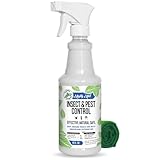
- Pet-Friendly & Family-Safe Formula – Mighty Mint is a top pick for pet parents looking for a natural pest control solution. Safe to use around dogs, cats, and kids when applied as directed—no harsh fumes or dangerous chemicals, just powerful peppermint protection you can trust.
- Powerful Plant-Based Pest Control – Formulated with extra-concentrated peppermint oil, this spray is a proven deterrent for spiders, ants, roaches, and more.
- Effective Indoor & Outdoor Use – Designed for versatile application on baseboards, entryways, patios, and other areas. Helps repel insects from kitchens, bathrooms, living spaces, and more—without staining surfaces.
- Fresh Minty Scent With Long-Lasting Effect – Infused with pure peppermint oil, this formula leaves a crisp, clean aroma that lingers without overwhelming. Free from synthetic fragrances and common allergens, making it a gentle option for scent-sensitive households.
- Ready-To-Use 16 Oz Spray For Targeted Application – Perfect for quick treatments in high-traffic areas, this 16 oz bottle delivers fast, focused pest control against spiders, ants, and other common insects. Pre-mixed and easy to use—just spray and go for natural protection wherever it’s needed most.
If flies continue appearing despite cleaning, look for a hidden breeding or feeding source rather than assuming the insects are responding to your body. A dead rodent or bird in a wall, roof space, chimney, attic, or crawl space can produce a sudden increase in larger flies.
2. Keep flies outside
Repair holes in window and door screens, close doors promptly, and check gaps around frames and utility penetrations. If damaged mesh is the entry point, a window screen repair kit can be a practical fix before you turn to insect-killing products.
Good screening is especially important in homes with pets, because it reduces insect entry without exposing animals to indoor pesticides.
3. Use moving air at problem doors
Fans and commercial air curtains can make approach and entry more difficult, especially at frequently used doors. A consumer doorway fan to keep flies away is not identical to a professionally installed air curtain, so treat it as a supplementary measure rather than a guaranteed barrier. It will not remove a breeding source or solve an infestation by itself.
Recommended Free Tools
4. Remove adult flies
For an isolated indoor fly, a swatter, vacuum, or closed-window trap may be enough. If you want a lower-contact way to remove individual adults, an electric fly swatter can help. It addresses the adult insect only; it does not remove garbage, pet waste, a hidden carcass, or another source.
For recurring indoor flies, an indoor fly trap may reduce adults, but results depend on the species, trap design, placement, and attractant. Keep traps away from children and pets, follow the product instructions, and do not place an attractant beside uncovered food.
5. Identify biting or unusually persistent flies
If insects repeatedly bite, cluster around pets or livestock, appear in large numbers outdoors, or remain focused on people despite basic sanitation, identify them before choosing a treatment. Stable flies, horse flies, mosquitoes, and house flies require different control strategies. A local pest professional, veterinarian, university extension service, or environmental-health department may be able to identify the insect from a close photograph and advise on the source.
Independent reader supportYour contribution helps us test, update, and keep practical guides available for everyone.When to investigate a bigger problem
One or two flies are usually an ordinary nuisance. Investigate further when:
Best Value
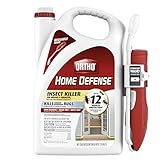
- WHERE TO USE INSECT SPRAY: Use this pest control spray indoors in kitchens and bathrooms or around doors and windows, and outdoors to the perimeter of foundations, patios, decks, garages or wherever insects are a recurring problem
- LONG-LASTING PROTECTION: This outdoor perimeter and indoor bug spray for homes creates a bug barrier that provides up to 12 month protection against ants, roaches and spiders when applied indoors on non-porous surfaces
- EASY-TO-USE APPLICATOR: This 1.33 gal. container of Ortho Home Defense Insect Killer for Indoor & Perimeter2 Ready-To-Use comes with a battery-powered Comfort Wand sprayer, which delivers a continuous spray for easy application
- INDOOR INSECT KILLER: Ortho Home Defense Insect Killer for Indoor & Perimeter2 is a bug killer spray that kills the toughest home-invading insects, including ants, cockroaches, spiders, fleas, ticks, scorpions, earwigs, silverfish, and more as listed
- WHEN TO USE: Apply this bug spray outdoors or indoors anytime as a preventative treatment or after you see evidence of insect activity
- numbers increase suddenly;
- flies appear every day despite cleaning;
- large flies emerge indoors without an obvious entry route;
- flies gather around a pet’s wound, feces, bedding, or food;
- people or animals are being bitten;
- flies are entering through a structural gap or damaged screen;
- you suspect a dead animal, sewage problem, or inaccessible waste source.
Persistent infestations may require professional fly control or screen installation, particularly when the source is inside a wall, roof space, crawl space, commercial waste area, or inaccessible part of a property. Ask for species identification and source removal, not just repeated spraying.
Frequently Asked Questions
Do flies land on people because they like dirty people?
Not necessarily. Sweat, skin moisture, body odors, food residue, and nearby garbage or animal waste can all provide cues, but a fly may simply land on the nearest large surface. There is no sound basis for treating a single landing as a reliable measure of someone’s cleanliness.
Can house flies bite people?
Common house flies generally do not bite or drink blood. If the insect pierces skin, causes repeated painful bites, or draws blood, it may be a stable fly, horse fly, mosquito, or another species rather than a typical house fly.
Do flies prefer people with a particular blood type?
That claim should not be applied to ordinary house flies. Blood-feeding species may respond to species-specific combinations of odor, breath, heat, moisture, and other cues, but the available explanation does not support saying that house flies reliably prefer a particular blood type.
The Tool Desk
Outbyte PC Repair FREEClear out junk files and repair common Windows errorsFree Scan →Outbyte Driver Updater FREEFix the driver behind crashes, sound loss and screen glitchesFind Drivers →Are flies dangerous to dogs and cats?
A house fly landing briefly on intact fur is not automatically dangerous. The concern is greater when flies are attracted to feces, food residue, wet fur, or an open wound, or when the insects are biting species. Keep pets and their surroundings clean, inspect irritated skin, and ask a veterinarian about wounds, persistent bites, or signs of infection.
The Bottom Line
In most cases, a fly lands on a person because the body is warm, moist, noticeable, and surrounded by useful odors—not because the insect is deliberately attacking. Remove nearby food and waste, improve screens and airflow, and use traps or swatters only as adult-fly control. If the insects bite or keep returning in large numbers, identify the species and find the source.
Quick Recap
Product prices and availability are accurate as of the date/time indicated and are subject to change. Any price and availability information displayed on Amazon at the time of purchase will apply.




