Outdated Drivers Are Slowing You Down
One free scan finds every outdated or missing driver and matches the right update for your exact hardware.Free scan · exact hardware matchPC Slower Than It Used to Be?
A free scan shows the junk files, broken settings and background clutter dragging Windows down - then fixes them in one click.Free scan · Windows 10 & 11The essential answer about Leonberger (Leo): Dog Breed Characteristics & Care is that this affectionate German giant needs daily coat care, structured exercise, careful puppy growth management, reward-based training, and emergency-ready veterinary planning. Adults can reach 31.5 inches and 170 pounds, so a gentle temperament never removes the need for handling skill, space, and budget.
Leonbergers can be calm, devoted, playful, and versatile family companions. The same dog can also overwhelm an unprepared household through heavy shedding, adolescent exuberance, physical strength, transport difficulties, and giant-breed medical risks. The right question is not simply whether a Leo is friendly; the right question is whether the household can meet the dog’s needs for its entire life.
This guide covers Leonberger size, temperament, children, exercise, grooming, food, puppy growth, health screening, GDV warning signs, breeder selection, adoption, and the practical demands that determine whether the breed fits a home.
Key takeaways
- Adult male Leonbergers measure 28–31.5 inches and weigh 110–170 pounds, while adult females measure 25.5–29.5 inches and weigh 90–140 pounds.
- The American Kennel Club lists the Leonberger’s life expectancy as 7 years and records AKC recognition in 2010.
- Leonbergers have a thick, heavy-shedding double coat that generally requires daily brushing and a more thorough weekly grooming session.
- Adult Leonbergers need meaningful daily exercise and interaction, but giant-breed puppies need controlled activity because growth plates may remain open much longer than those of smaller dogs.
- Breed-club health screening includes hips, elbows, thyroid, eyes, and DNA tests for LPN1, LPN2, LPPN3, and LEMP; health testing reduces uncertainty but cannot guarantee a disease-free dog.
- Suspected bloat or gastric dilatation-volvulus (GDV) is an immediate veterinary emergency, not a condition to treat with a home product or remedy.
What is a Leonberger?
The Leonberger is a very large German working and companion breed developed during the nineteenth century in Leonberg, Germany. Breed history commonly credits Heinrich Essig with developing the breed, whose lion-like appearance is associated with the lion on Leonberg’s town crest.
Quick wins for a faster PC:
Repair Windows errors before they cause bigger problemsFix Now →Fix the driver behind crashes, sound loss and screen glitchesFind Drivers →#1 Best Overall

- DUAL-SIDED DESIGN: Our Undercoat Rake Dog brush is perfect for deshedding your pet's coat. Designed with a dual-sided design, start with a 9-teeth side to tackle stubborn mats and tangles, and finish with a 17-teeth side to thin out and deshed after.
- HEALTHY COAT AND REDUCED SHEDDING: Our deshedding brush for dogs is designed with sharpened but finely rounded teeth that allow you to easily and safely remove mats, tangles, knots, and loose hair without irritation or scratching.
- EFFECTIVE DESHEDDING TOOL: This dematting and deshedding brush gently removes loose hair and eliminates tangles, knots, dander, and trapped dirt. The perfect cat grooming tool solution for pets with thick fur or dense double coats.
- COMFORTABLE TO USE: Keep your pet clean and healthy with our dog and cat brush for grooming. Designed with a lightweight, comfortable handle and a non-slip rubber base to keep the brush from moving around as you brush your pet.
- PERFECT GIFT FOR PET LOVERS: Our dog comb brush is a must-have grooming products for dogs and cats. A great gift undercoat rake dog for pet lovers who want to keep their fur buddies clean, healthy, and well-groomed!
The modern Leonberger is recognizable by substantial bone, a long double coat, a black mask, and a pronounced mane that is often especially noticeable in males. The American Kennel Club describes the Leonberger as “a lush-coated giant of German origin”. The description is accurate, but “giant” is a practical ownership issue, not merely an appearance trait: a full-grown Leo can be stronger than the person holding the leash.
Leonbergers were developed as versatile working dogs and are now kept primarily as close family companions. Individual dogs may also participate in therapy work, obedience, agility, water work, drafting, carting, scent activities, and hiking when their temperament, age, conditioning, and orthopedic health support those activities.
How big does a Leonberger get?
A Leonberger becomes a powerful giant dog that needs appropriately sized equipment, transport, housing, and veterinary facilities. According to the American Kennel Club’s current breed profile, adult males measure 28–31.5 inches at the shoulder and weigh 110–170 pounds, while adult females measure 25.5–29.5 inches and weigh 90–140 pounds.
| Sex | Adult height | Adult weight | What the range means at home |
|---|---|---|---|
| Male | 28–31.5 inches | 110–170 pounds | Plan for a dog that may exceed 31 inches and weigh as much as 170 pounds. |
| Female | 25.5–29.5 inches | 90–140 pounds | Females are smaller on average but remain large enough to overpower an unprepared handler. |
The AKC breed profile lists the Leonberger’s life expectancy as 7 years. Life expectancy is a population-level breed-profile figure, not a promise for an individual dog; genetics, preventive care, body condition, disease, accidents, and access to veterinary treatment all matter.
Before bringing home a Leonberger, measure doorways, vehicle openings, crates, sleeping areas, stairways, and any narrow passage used during an emergency. Check whether local boarding facilities, groomers, and veterinary hospitals can safely accommodate a dog of this size. Flooring that becomes slippery, fencing that is too low or weak, and a vehicle without enough loading space can become daily safety problems.
Are Leonbergers good family dogs?
Leonbergers are often good family dogs for households that want a physically imposing but affectionate companion and can provide training, supervision, grooming, and daily interaction. The AKC says Leonbergers “have a gentle nature and serene patience and they relish the companionship of the whole family,” while the FCI standard characterizes the breed as calm, self-assured, friendly, and adaptable.
A breed description does not predict every individual dog. A well-bred, appropriately socialized Leonberger may be gentle, playful, intelligent, and socially capable, but a giant dog that jumps on guests, pulls toward another animal, steals food, or ignores a recall can create a serious safety problem simply because of its size.
Are Leonbergers good with children?
Many Leonbergers can live warmly with children, but no giant breed should be treated as automatically safe with every child. Adults should supervise interactions, teach children not to climb on, corner, disturb, or take food from the dog, and provide the dog with a quiet area where children cannot follow. Young children can be knocked down accidentally by a playful 100-pound-plus dog even when the dog has no aggressive intent.
What’s actually slowing this PC down?
Pick the symptom - the matching free tool is one click away.
Rank #2
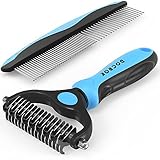
- 【Easy Dematting and Deshedding Tools】: Our Grooming brush and comb combo help effortlessly dematting and reduces shedding. A must have dog brush for shedding, pet supplies, cat supplies, dog supplies metal comb for dogs shedding.
- 【Safe Design】: Soft and protective edge brush and comb creating a comfortable feeling while detangling matted hair and deshedding without hurting your pet. Perfect metal comb for dogs, dematting comb for cats, undercoat rake for dogs double coat.
- 【2-in-1 Rake】: Our undercoat rake is perfect for medium and long-haired dogs and cats and other double coat pets. Wide side for easy dematting, dense side for deshedding. Well made deshedding tool, grooming brush and deshedder brush for dogs.
- 【2-in-1 Comb】: Wide sided for comb knot, smoothing and modeling your pet's hair, dense side for removal of loosen hair, you can use it on the legs, head or tail of your pets where the brush can’t. Perfect metal comb for dogs, dematting comb for cats deshedding tool for dogs.
- 【Sturdy and Comfortable Design】: Premium Stainless steel metal teeth and compact design make our product sturdy and durable. High-quality & lightweight TPR handle make your grooming effortlessly. High-quality undercoat rake for dogs double coat, metal comb for dogs, dematting comb for cats, dog comb for matted hair.
Early socialization should be gradual and positive. A Leonberger puppy should learn that people, animals, household sounds, different surfaces, car travel, grooming, veterinary handling, and public settings can be calm and rewarding experiences. Reward-based group obedience or private training is especially valuable because a Leonberger may eventually outweigh or physically overpower the handler.
How much exercise does a Leonberger need?
Many adult Leonbergers need vigorous exercise at least once daily plus mental interaction, training, sniffing, and opportunities to use their bodies purposefully. A large yard can help, but a yard does not replace walking, human companionship, structured training, or enrichment.
| Life stage | Appropriate emphasis | Important restriction |
|---|---|---|
| Young puppy | Short, low-impact play; gentle exploration; brief training; safe sniffing; calm handling practice. | Avoid repetitive forced exercise, jumping, and high-impact activity that exceeds the puppy’s development. |
| Adolescent Leonberger | Reward-based training, controlled walks, enrichment, and gradually increased conditioning. | Do not assume adolescent enthusiasm means the skeleton is ready for adult-distance running or repeated impact. |
| Conditioned adult | Long walks, hiking, water work, obedience, scent games, drafting, carting, or appropriately scaled agility. | Adjust intensity for age, weather, fitness, orthopedic status, and the individual dog’s recovery. |
| Senior or orthopedic patient | Frequent gentle movement, sniffing, short training sessions, and veterinarian-guided activity. | Reduce impact and seek veterinary advice when pain, stiffness, lameness, or reduced stamina appears. |
Giant-breed puppies should not be exercised like miniature adults. VCA explains that puppy growth plates can remain open much longer in giant breeds, potentially approaching a year and a half. The exact activity plan should be individualized with a veterinarian, especially for running, jumping, stair use, swimming, hiking, and dog sports.
Mental enrichment can satisfy a working-breed dog without turning every activity into high-impact exercise. Useful options include teaching short behaviors, practicing calm greetings, using food puzzles appropriately, training cooperative grooming, hiding treats for scent searches, and giving the dog safe opportunities to investigate new smells.
Do Leonbergers shed a lot, and how often should you brush one?
Leonbergers shed heavily and generally need daily brushing because their thick double coat can mat in areas such as behind the ears, around the neck, and on the backs of the legs. A more thorough grooming session should take place weekly, with additional attention during seasonal shedding.
| Grooming task | Suggested routine | Why it matters |
|---|---|---|
| Full-body brushing | Daily | Removes loose coat and catches tangles before dense areas become mats. |
| Detailed coat check | At least weekly, plus during heavy shedding | Reveals mats behind the ears, on the legs, and in other friction-prone areas. |
| Nails | Regularly, based on growth and wear | Overgrown nails can affect comfort, traction, and movement. |
| Bathing and full grooming | As needed; consider professional help | A giant, heavily coated dog can be difficult to wash, dry, and fully detangle at home. |
| Handling practice | Briefly and positively from puppyhood | Accepting paws, ears, brushing, drying, and restraint makes future care safer. |
Useful tools include a metal comb for working through coat sections, an undercoat rake for loose undercoat, a pin brush for the outer coat, a slicker brush for neatening, and nail trimmers or a professional nail-trimming service. A gentle dog undercoat rake is a practical starting point for the recurring shedding task, but the tool should match the individual coat and should never be dragged aggressively across the skin.
Line brushing means separating the coat into small sections and brushing from the skin outward instead of quickly passing over only the top layer. Check behind the ears, the backs of the legs, the armpits, the tail, and the feathering around the neck. Teach the puppy to stand, turn, lift a paw, and accept a comb in short sessions paired with rewards.
A Leonberger’s coat should not generally be shaved or substantially trimmed for convenience. The AKC advises that the coat should generally be left unaltered except for neatening the feet. Owners who cannot maintain daily brushing should arrange professional Leonberger grooming before the coat becomes matted; professional care supports routine maintenance but does not remove the need for regular home checks.
Rank #3
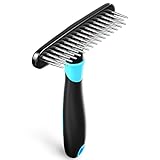
- One of the best dog brushes on the market, It has a double row of stainless steel pins/teeth to reduce pulling the coat without damaging it or hurting your pet. It is a very gentle experience for your dog, cat, rabbit, or any other furry friend that needs brushing.
- Our undercoat Rake dramatically reduces shedding by up to 90% after just 1 short session. This is compared to only 30% with the average Brush or comb. Perfect for matted, heavy shedding undercoats and fur.
- Our professional grooming brushes can be used on both dogs, cats, rabbits, or equestrian horses that have short, Medium or long hair. This professional, high quality brush is priced well, so you can buy one to keep in the house and one for the car.
- Recommended and used by veterinarians, groomers, and pet professionals. The perfect brush for removing unwanted shedding hair. Scientifically designed to promote healthy skin and a shiny top coat. Protects you and your pet from skin allergies, and minimizes irritation from build up, which reduces allergic airborne elements.
- The innovative design allows air to your pet's skin and stimulates the hair follicles, allowing the release of healthy oils. The contouring handle is strong and durable, made of a non-slip, non-toxic silicone. The stainless pins take the unnecessary ’hurt’ out of grooming your pet.
What should you feed a Leonberger puppy?
A Leonberger puppy should receive a complete, balanced diet appropriate for large or giant breed growth, with portions adjusted to body condition and veterinary guidance rather than unrestricted feeding. VCA explains that large- and giant-breed puppy foods are formulated around the distinctive growth needs of these dogs.
Rapid, uncontrolled growth can increase orthopedic concern, so a Leonberger puppy should remain lean and grow steadily rather than being pushed toward maximum size as quickly as possible. A veterinarian can help select a food, determine an appropriate feeding pattern, and reassess the plan as the puppy grows.
| Nutrition decision | Practical approach |
|---|---|
| Food type | Choose a complete and balanced diet appropriate for the puppy’s life stage and large- or giant-breed growth. |
| Portions | Use package guidance as a starting point, then adjust for body condition, growth, activity, and veterinary advice. |
| Treats | Include treats in the overall calorie plan rather than adding unlimited food on top of meals. |
| Homemade diets | Use only with veterinary supervision and approval from a qualified veterinary nutrition professional. |
| Supplements | Discuss supplements with a veterinarian instead of adding them automatically to a balanced diet. |
| Water | Provide clean drinking water at all times. |
WSAVA wellness guidance emphasizes choosing food that is complete, balanced, and appropriate for the dog’s life stage and lifestyle. No single commercial brand is universally correct for every Leonberger. Allergies, excessive weight gain, gastrointestinal problems, diet changes, homemade recipes, and supplements deserve individualized veterinary discussion.
What health problems are common in Leonbergers?
Leonberger health concerns include hip dysplasia, elbow dysplasia, bloat, certain cancers, Addison’s disease, and autoimmune thyroiditis. The Leonberger Club of America states, “Like many giant breeds, Leonbergers are prone to diseases like hip and elbow dysplasia, bloat and certain cancers.” That statement identifies important risks, but it does not establish a disease prediction or a Leonberger-specific prevalence rate for an individual dog.
The American Kennel Club’s current Working Group guidance identifies national-breed-club recommended testing for Leonbergers that includes hip evaluation, elbow evaluation, thyroid evaluation, an ophthalmologist examination, and DNA tests for Leonberger Polyneuropathy 1 (LPN1), Leonberger Polyneuropathy 2 (LPN2), Laryngeal Paralysis and Polyneuropathy 3 (LPPN3), and Leukoencephalomyelopathy (LEMP). Review the AKC Working Group health-testing requirements before evaluating a litter because registry and breed-club recommendations can change.
| Screening area | What a buyer should request |
|---|---|
| Hips | Registered hip evaluation results for both breeding dogs. |
| Elbows | Registered elbow evaluation results for both breeding dogs. |
| Thyroid | Documented thyroid evaluation results and the testing date. |
| Eyes | An ophthalmologist examination record, not just a verbal assurance that the eyes look healthy. |
| LPN1, LPN2, LPPN3, and LEMP | DNA test results for the named Leonberger conditions, with the dog’s registered identity clearly matching the documents. |
| Cardiac testing where applicable | Ask whether cardiac evaluation was performed as part of the breeder’s program and request the actual documentation. |
A CHIC number means that the required tests have been completed and made public; a CHIC number does not by itself mean that every result is normal or passing. Prospective owners should inspect the actual registered results and independently review public records when available. Health screening improves transparency and breeding decisions, but no screening program eliminates inherited disease or guarantees a healthy lifespan.
No sufficiently current, directly applicable Leonberger-specific prevalence figure for cancer, GDV, or other listed diseases was established in the supplied research. The absence of a reliable figure is a reason to ask for documentation and plan for veterinary care, not a reason to borrow statistics from another breed.
Are Leonbergers prone to bloat or GDV?
Yes. Leonbergers are a giant breed, and gastric dilatation-volvulus, commonly called bloat or GDV, is a life-threatening emergency. Merck Veterinary Manual describes GDV as “an acute, life-threatening condition that primarily affects large- and giant-breed dogs.”
Recommended Free Tools
Rank #4
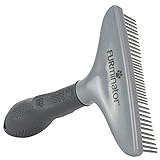
- Removes loose hair, tangles and prevents mats
- The rotating metal teeth help to remove loose hair from undercoat in dense fur
- Best for dogs and cats with thick fur or dense double coats
- Convenient daily solution for undercoat care
- The ergonomic non-slip handle gives you maximum control
Possible GDV signs: go immediately
- Restlessness, distress, or repeated inability to settle.
- Excessive drooling.
- Repeated unsuccessful attempts to vomit or dry retching.
- An enlarged, tight, or painful abdomen.
- Weakness, rapid deterioration, collapse, or difficulty breathing.
If GDV is suspected, leave for an emergency veterinarian immediately and call ahead if possible. A home product cannot diagnose or treat a twisted stomach, and waiting to see whether the signs improve can cost critical time.
Owners can discuss possible risk-reduction strategies with a veterinarian, including multiple smaller meals, preventing rapid eating, reducing mealtime stress, and avoiding intense exercise immediately around meals. These measures are not a guarantee. Prophylactic gastropexy may reduce the chance of the stomach twisting again, but Merck notes that gastropexy does not prevent every form of stomach dilation; whether surgery is appropriate is an individual veterinary decision.
Independent reader supportYour contribution helps us test, update, and keep practical guides available for everyone.How do you find a responsible Leonberger breeder?
A responsible Leonberger breeder provides actual health records, discusses temperament and socialization, explains why the breeding pair was selected, uses a clear contract, and offers meaningful lifetime support. A breeder should welcome detailed questions rather than pressuring a buyer to send a deposit before documentation and living conditions have been reviewed.
Ask for the registered hip, elbow, thyroid, eye, DNA, and applicable cardiac records for the parents. Meet adult relatives when possible and observe whether the dogs appear physically cared for, behaviorally stable, and comfortable with ordinary handling. Ask how puppies are exposed to people, surfaces, sounds, grooming, transport, and veterinary care.
Do these 3 things before closing this tab:
1Repair Windows errors before they cause bigger problems2Fix the driver behind crashes, sound loss and screen glitches3Clear out junk files and repair common Windows errorsThe Leonberger Club of America provides breed education and breeder and litter resources, but a club listing is a starting point rather than a guarantee. The club expressly does not guarantee the quality of listed puppies, so buyers should independently review health results, contracts, references, socialization practices, and the breeder’s willingness to take a dog back if circumstances change. A referral resource such as Leonberger breeders can narrow the search, but due diligence remains the buyer’s responsibility.
Adoption and rescue are also possible paths. A prospective adopter should honestly assess physical handling ability, transport, housing, fencing, finances, emergency access, and experience with giant dogs. A rescue Leonberger may arrive with unknown health, training, or behavioral history, making a gradual transition and professional support particularly important.
Is a Leonberger right for first-time dog owners?
A Leonberger can suit a well-prepared first-time owner, but the breed is not an easy first dog. The deciding issue is not whether the owner has previously owned a dog; the deciding issue is whether the owner can obtain training help early, safely manage a powerful giant dog, maintain the coat every day, control puppy growth, and fund routine and emergency veterinary care.
| A Leonberger may fit when a household can provide | A different breed may be easier when a household cannot provide |
|---|---|
| Daily brushing, weekly thorough grooming, and a plan for seasonal shedding. | Regular coat care or professional grooming is not realistically available. |
| Reward-based training, early socialization, and reliable control of a very strong adult dog. | No adult can safely handle pulling, jumping, or emergency movement by a giant dog. |
| Daily exercise, meaningful interaction, and structured enrichment. | The dog would be left alone for long periods with little activity or human contact. |
| Space and equipment for a dog up to 170 pounds, including a suitable vehicle and sleeping area. | Doorways, stairs, flooring, fencing, transport, or boarding options cannot accommodate a giant dog. |
| A budget for giant-breed food, large equipment, grooming, preventive care, and unexpected veterinary treatment. | A major veterinary emergency or professional care would be financially unmanageable. |
| A veterinary plan for orthopedic health, nutrition, and GDV discussions. | There is no accessible veterinary hospital able to evaluate and treat a giant dog promptly. |
Apartment living is not automatically impossible, but apartment ownership increases the management burden. The owner must reliably provide exercise outside the home and safely manage elevators, stairs, hallways, grooming, noise, floor traction, and the dog’s substantial physical presence. A large fenced yard is helpful, but a yard alone does not satisfy the Leonberger’s need for companionship, training, walking, sniffing, and purposeful activity.
The Tool Desk
Outbyte PC Repair FREEClear out junk files and repair common Windows errorsFree Scan →Outbyte Driver Updater FREEScan for outdated or missing drivers - takes under a minuteDriver Scan →Best Value

- COMPLETE GROOMING COMBO: Includes our dual-sided deshedding brush and a premium metal comb to effortlessly remove stubborn mats, tangles, and loose hair.
- 2-IN-1 METAL COMB: The included stainless steel comb features dual-density teeth perfect for detailed detangling on sensitive areas like the face, paws, and tail.
- DUAL-SIDED DEMATTING BRUSH: Start with the 9-teeth side for stubborn mats and tangles, then finish with the 17-teeth side for thinning and deshedding to reduce shedding by up to 95%.
- SKIN-FRIENDLY DESIGN: Both tools feature rounded, scratch-free teeth that gently massage your pet's skin, ensuring a pain-free and comfortable grooming experience.
- COMFORTABLE & DURABLE: Designed with a soft, ergonomic anti-slip grip for comfortable, long grooming sessions for both cats and dogs of all hair types.
What does Leonberger ownership require every week?
Leonberger care is manageable when divided into repeatable routines, but the routine is substantial. The following schedule is a planning framework rather than a substitute for veterinary advice or an individual dog’s needs.
| Frequency | Care plan |
|---|---|
| Every day | Brush the coat; check mat-prone areas; provide exercise and enrichment; practice calm handling or training; monitor appetite, stool, movement, and behavior; provide clean water. |
| Several times weekly | Inspect ears, paws, nails, skin, tail, and feathering; rotate enrichment; reinforce leash manners, recall, and calm greetings. |
| Weekly | Complete a more thorough grooming session with a comb and appropriate brushes; inspect for hidden mats and irritations; clean equipment and bedding. |
| Regularly with the veterinarian | Review body condition, diet, growth, orthopedic comfort, preventive care, and the household’s GDV emergency plan. |
| Before purchase or adoption | Measure transport and housing spaces; identify giant-dog services; verify breeder health records; plan for emergency veterinary access and financial contingencies. |
Giant-breed ownership also makes financial planning important without allowing a misleading universal annual-cost estimate. Food, large crates and beds, sturdy collars and harnesses, grooming tools or professional grooming, training, preventive care, diagnostics, orthopedic treatment, and emergency surgery can all cost more or require specialized providers than they would for a small dog. Some owners also investigate giant-breed pet insurance before bringing home a puppy, while checking exclusions, enrollment rules, reimbursement terms, and regional availability directly with each provider.
Leonberger characteristics and care: the practical verdict
The Leonberger is an affectionate, versatile, intelligent giant dog with a calm potential that depends on breeding, socialization, training, health, and daily management. The breed is rewarding for owners who want a close family companion and can accept heavy shedding, daily grooming, puppy-growth constraints, powerful handling demands, and serious giant-breed health responsibilities.
The Leonberger is not low maintenance, hypoallergenic, effortless with children, or suitable for every household. The best match is an owner who plans for the adult dog before choosing the puppy: safe equipment, reliable training, coat-care time, appropriate nutrition, emergency access, and a realistic ability to live with a dog that may weigh as much as a person.
Frequently Asked Questions
Are Leonbergers good family dogs and good with children?
Yes, Leonbergers can be good family dogs when they are well bred, positively socialized, trained, and supervised around children. Their size means even friendly play can knock over a child, so adults must manage interactions and teach children respectful handling.
Do Leonbergers shed a lot, and how often should you brush one?
Leonbergers shed heavily and generally need daily brushing, with a more thorough grooming session weekly. Owners should focus on mat-prone areas such as behind the ears and the backs of the legs and may need professional grooming support.
Are Leonbergers prone to bloat?
Yes. Leonbergers are a giant breed, and suspected bloat or gastric dilatation-volvulus requires immediate emergency veterinary care. Restlessness, drooling, dry retching, an enlarged or painful abdomen, weakness, collapse, or breathing difficulty are warning signs.
What should you feed a Leonberger puppy?
Feed a Leonberger puppy a complete and balanced diet appropriate for large- or giant-breed growth, and adjust portions with veterinary guidance to support steady, controlled growth. Do not select a food, supplement, or homemade diet solely from a generalized online recommendation.
Free tools Windows power users keep installed
One-click scans. No signup required.
Is a Leonberger right for a first-time dog owner?
A first-time owner can manage a Leonberger only with substantial preparation, early training support, safe handling ability, daily grooming time, appropriate housing and transport, and a plan for giant-breed veterinary expenses. The breed is not an easy first dog simply because many individuals are gentle.
The Bottom Line
Bottom line: A Leonberger can be a gentle, devoted family companion, but the breed’s size makes every care requirement consequential. Choose a Leo only if the household can consistently manage daily grooming, structured exercise, giant-breed puppy growth, reward-based training, health screening, and emergency veterinary planning.
Quick Recap
Product prices and availability are accurate as of the date/time indicated and are subject to change. Any price and availability information displayed on Amazon at the time of purchase will apply.




