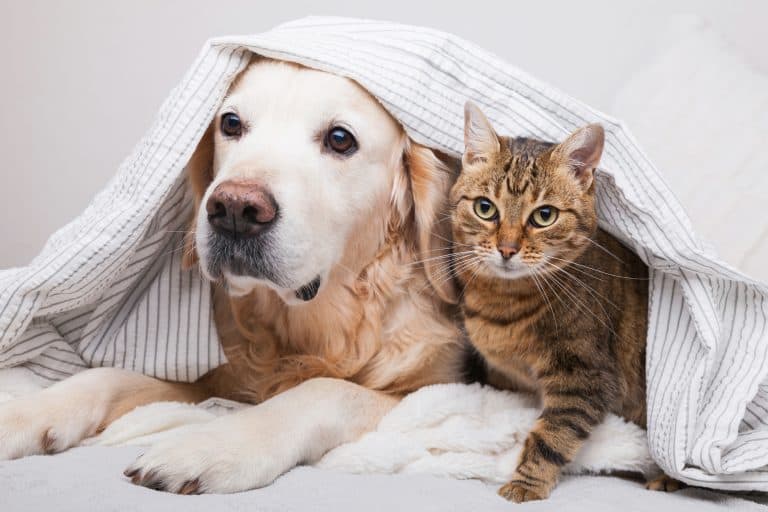
How to pet a cat the right way is to let the cat choose or clearly accept contact, begin with gentle strokes around the cheeks, chin, head, or upper body, and pause often. Stop at the first sign of discomfort; never wait for a cat to escalate from a warning into a swat or bite.
Petting works best as a conversation. The cat’s approach, posture, eyes, tail, ears, and response to pauses tell you whether contact is welcome. Individual cats differ, so expert guidance favors choice and observation over a universal “favorite spot” or fixed number of strokes.
Key takeaways
- Let the cat approach or clearly accept contact; forcing a greeting can create fear, conflict, or a bite.
- Begin with brief, gentle strokes around the cheeks, chin, head, or upper body, moving in the direction of the fur.
- A belly-up cat may be showing trust or relaxation rather than asking for a belly rub.
- Tail swishing, skin rippling, flattened ears, body tension, turning toward the hand, swatting, biting, or moving away are reasons to stop.
- There is no evidence for one universal stroke count or petting duration that suits every cat.
- New or worsening touch sensitivity can indicate pain or another medical problem and deserves veterinary attention.
How do you pet a cat properly?
How to pet a cat the right way is simple: let the cat choose or clearly accept contact, start with gentle strokes on commonly tolerated areas such as the cheeks, chin, head, or upper body, and pause often. Stop at the first sign of discomfort rather than waiting for the cat to swat or bite.
Petting is a two-way interaction, not something a person is entitled to demand. A cat that walks away, hides, crouches tensely, or keeps its body tightly folded is communicating that it does not want contact at that moment. A familiar cat may welcome touch in one situation and reject it in another, so read the cat’s behavior each time.
#1 Best Overall
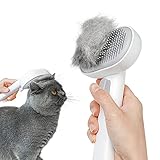
- 【Professional Cat Hair Brush】Perfect gift for pet owners, vets, and pet groomers. Using this cat brush for long haired cats on a regular basis can gently and effectively remove loose hair, tangles, knots, dander and trapped dirt. Suitable for short, medium or long, thick, thin or curly haired dogs/cats/rabbits, making your pets shiny and healthy.
- 【Skin-friendly Massage Needles】The mental pins on the cat brush with release button have round rubber tips on the ends. As a cat deshedding brush, it's perfect for shedding and massaging your pets without scratching your pet's skin, even the sensitive skin. After use, you can hang it with the silicone loop strap to protect the bent needle.
- 【Upgraded High Quality Material】The our long hair cat grooming brush made of durable 304 stainless steel and fine ABS material. Our wire bristles is 1.2 times as thick as bristles of other deshedding brush for cats. More sturdy and not easy to deform, can be used for a long time. 150° bent needles designed to penetrate deep into the coat are really easier to groom the undercoat well.
- 【One-click Cleaning Button】After brushing your pet, simply click the button. The shutter will pop out, separating the brushed hair from the metal needle, then wipe the hair off. The button of cat shedding brush on the handle saves time and energy when grooming and cleaning.
- 【SUPPORT · 365 Days】If the pet hair brush have any problems during use, we will provide you with replacement or 100% money back. And we have a professional customer service team and pet experts to provide you with the pre-sales and after-sales service. aumuca is always at your side.
What is the best way to approach a cat?
The safest approach is to make yourself available without pursuing the cat. Move calmly, avoid looming over the cat, pause nearby, and allow the cat to close the distance. An upright tail, relaxed body, soft eyes, and an approach are compatible with willingness to interact, although no single signal proves that petting is welcome.
- Pause before reaching. Give the cat room to decide whether to come closer.
- Offer a still hand. Hold your hand at a comfortable distance and let the cat investigate instead of chasing the cat’s head.
- Start briefly. If the cat remains relaxed or moves toward your hand, use a short, light stroke.
- Follow the cat’s movement. Do not keep reaching when the cat withdraws or turns away.
This choice-based approach is consistent with RSPCA cat-body-language guidance and Cats Protection’s handling advice. The RSPCA puts the point plainly: “If they approach you, try giving them a gentle stroke.”
Where do cats like to be petted?
Many cats are more comfortable with gentle contact around the cheeks, chin, head, and upper body, but individual preferences vary. Begin in these lower-pressure areas and treat the cat’s response—not a fixed list of “safe spots”—as the deciding evidence.
| Area or situation | Practical starting point | Important qualification |
|---|---|---|
| Cheeks and chin | Often reasonable areas for a first, gentle stroke when the cat accepts contact. | Stop if the cat stiffens, turns away, or shows another warning signal. |
| Head and upper body | Use light strokes and follow the direction of the fur. | A cat can tolerate one area but dislike another. |
| Belly | Usually admire the exposed belly without touching it unless the individual cat has clearly learned to welcome that contact. | Rolling over commonly signals relaxation or trust, not automatic permission for a belly rub. |
| Paws, legs, under-leg areas, and armpits | Do not use these as default petting areas. | Cats Protection lists these areas among places many cats dislike being touched, while recognizing individual variation. |
| Lower back and tail base | Approach cautiously and only if the cat consistently solicits contact there. | A 2015 study found the greatest negative behavioral responses in the caudal region under its study conditions. |
Cats Protection’s behavior guidance lists the belly, paws, legs, under-leg areas, armpits, lower back, tail base, and genital area among regions many cats may not like touched. The guidance also emphasizes that cats differ. Cats Protection advises, “When stroking your cat, always move your hand in the direction of their fur.”
The Tool Desk
Outbyte PC Repair FREERepair Windows errors before they cause bigger problemsFix Now →Outbyte Driver Updater FREEScan for outdated or missing drivers - takes under a minuteDriver Scan →The evidence does not support treating the base of the tail as universally good or universally bad. In the 2015 Applied Animal Behaviour Science study of responses to stroking, the caudal region produced the greatest negative responses under the tested conditions. The finding supports careful observation, not a rule that every cat dislikes that region.
What does it mean when a cat rolls over but does not want belly rubs?
When a cat rolls over and exposes its belly, the cat may be relaxed, displaying trust, or using a defensive posture; the position does not automatically invite a belly rub. A cat’s belly is vulnerable, and many cats react by grabbing, kicking, swatting, or biting when a hand touches it.
Rank #2

- Cat brushes for long haired cats and short haired cats
- Soft Tip Bristles:Cat comb with soft tip bristles, helping to break up tangles and mats effectively,Your pet will enjoy the gentle massaging
- Soft Gel Handle:Super soft handle with anti-skid curved silicone gel, keeps your hand comfortable while grooming
- Self-Cleaning Button:Simply push the release button, and all the fur will come off the bristles, no more digging in between bristles to get the hair out
- Premium Material:The cat grooming brush is made of resistant and durable material, free of toxins and chemicals, healthy and easy to use
Look at the whole body before deciding what the pose means. A loose posture and soft eyes suggest relaxation, but tension, pinned ears, a fixed stare, tucked limbs, or a rapidly moving tail suggest that touching the belly could create conflict. Let the cat remain belly-up without assuming that the exposed area is available.
How can you tell if a cat wants you to stop petting?
A cat wants you to stop when the cat becomes tense, creates distance, or shows an escalating warning signal. Stop immediately rather than testing whether the cat will tolerate another stroke.
Free tools Windows power users keep installed
One-click scans. No signup required.
| Possible invitation to continue | Stop signal |
|---|---|
| Relaxed body and smooth fur | Stiff, tense, or frozen body |
| Soft or partly closed eyes | Wide, fixed stare or visibly heightened alertness |
| Tail held upright, sometimes with a curved tip | Twitching, swishing, or sharply moving tail |
| Walking toward the person or nudging the hand | Turning toward the hand, swatting, or attempting to bite |
| Remaining nearby after a pause with relaxed body language | Flattened ears, skin rippling, growling, hissing, or moving away |
Signals should be read together. Purring alone does not prove that a cat is enjoying petting. The RSPCA explains that purring with relaxed body language can indicate contentment, while purring without that relaxed body language can be a sign of stress.
A useful rule is: stop at the first clear sign of discomfort, not after the cat has escalated to a bite. The RSPCA’s grooming guidance includes skin rippling, tail movement, flattened ears, tension, vocal warnings, turning to bite or swipe, and trying to move away among signs that a cat may be unhappy. Cats Protection summarizes the response as: “Stop petting them and move away.”
How long should you pet a cat?
Pet a cat only while the cat continues to show relaxed, receptive behavior; no universal number of strokes or maximum duration applies to every cat. Pause after a few gentle strokes and use the cat’s response to decide whether another brief interaction is welcome.
If the cat stays relaxed, nudges your hand, approaches, or remains beside you after the pause, continue cautiously. If the cat moves away, becomes tense, or shows a tail, ear, skin, vocal, or swatting warning, stop. The reviewed research does not establish a universal “three-stroke rule,” ideal session length, or safe number of strokes for all cats.
Rank #3

- 【Easy Desheding】: Swihauk self cleaning dog brush for long haired dogs with release bottom helps effortlessly reduce shedding. A must have dog brush for short haired dogs, cat brush for indoor cats, cat brush for shedding, slicker brush for dogs.
- 【Safe Design】: Soft and protective plastic round head bristles creating a comfortable feeling while deshedding without hurting your pet. Ideal puppy brush for small dogs, dog brush for shedding and grooming.
- 【Sturdy & Durable】: Premium stainless steel metal and compact design make our product sturdy and durable for long term use.
- 【Ergonomic Design】: Press bottom for easy cleaning, high-quality & lightweight TPR handle make your grooming effortlessly.
- 【Effective to Remove Loose Fur】: Swihauk pet grooming brush is effective to remove loose fur, suitable for dogs, cat with long and short hair, perfect for your lovely pet like puppies, golden retriever, rabbit, kitten, bunny, yokie and more.
A 2021 peer-reviewed study of practical human-cat interaction guidelines used a CAT framework built around choice and control, attention to the cat’s behavior and body language, and limiting touch, especially around the temporal regions. The study involved 100 cats available for rehoming and reported more affiliative behavior and fewer aggression or conflict indicators after the intervention. Those findings support short, responsive interactions rather than a timer-based rule.
Why does a cat bite or swat during petting?
A cat may bite or swat during petting because the interaction continued beyond the cat’s tolerance, the touched area is especially sensitive, the cat feels fear or conflict, the cat has learned that biting ends contact, or the cat is experiencing pain. Petting-related aggression does not prove that a cat is bad, ungrateful, or incapable of affection.
Handler familiarity and body region can also matter. The 2015 body-region study reported different responses depending on where the cat was stroked and whether the handler was an owner or a stranger under the study conditions. A familiar cat may therefore react differently to its owner’s touch than to a visitor’s touch, and a cat that welcomes cheek scratches may reject contact at the lower back or tail base.
Do not punish, restrain, or continue petting after a warning. Back away, give the cat space, and record what happened:
Quick wins for a faster PC:
Clear out junk files and repair common Windows errorsFree Scan →Scan for outdated or missing drivers - takes under a minuteDriver Scan →- Which body area was touched?
- Did the cat initiate contact?
- How long had the interaction lasted?
- Which body-language change appeared first?
- Was the behavior limited to one person, one location, or one type of touch?
Repeated attacks, fear, or escalating conflict may warrant help from a qualified feline behaviorist or a veterinary behavior consultation. A behavior professional can help distinguish a learned interaction pattern from fear, environmental stress, or a medical cause; professional assessment does not replace veterinary examination when pain is possible.
When should a cat with touch sensitivity see a veterinarian?
A sudden, rapidly worsening, or localized change in tolerance for touch deserves veterinary assessment because pain, discomfort, sensory changes, or another medical condition can alter behavior. Do not try to desensitize a potentially painful cat by repeatedly handling the sensitive area.
Rank #4

- WORLD’S #1 CAT HAIR BRUSH: Our cat grooming brush / cat shedding brush is the world's best patented pet grooming brush for cats, small dogs, and rabbits. It is the perfect cat deshedding brush, short hair cat brush, & cat brush for long haired cats.
- EASY AND FAST CLEANUP: SleekEZ Deshedding Grooming Tool is great for removing hair and fur from carpets, pet bedding, cat trees, and more! Our cat comb for shedding is also an amazing pet hair remover and cat fur remover / cat hair remover brush.
- ALL HAIR & FUR TYPES: It is the perfect cat comb for long haired cats and cat brush for short haired cats. SleekEZ works as a deshedding brush for cats, cat deshedding tool, undercoat brush for cats, cat fur brush, cat deshedder, & small dog brush.
- PAINLESS AND ENJOYABLE: SleekEZ serves as a versatile kitten brush, puppy brush for small dogs, & bunny brush / rabbit brush. It's the best pet hair brush on the market and is an absolute essential for cat shedding control!
- GREAT GIFT: SleekEZ makes the industry's leading cat combs for indoor cats & shedding brush cat hair. It is a must have for any cat grooming kit, cat essentials for indoor cats, & cat supplies. Also an amazing cat dander remover & cat undercoat brush
Arrange a veterinary appointment when a cat that previously accepted petting suddenly resists it, when sensitivity is focused on one body region, when touch sensitivity occurs with limping or other physical changes, or when the cat repeatedly attacks during handling. American Veterinary Medical Association guidance on senior-pet behavior identifies resisting touch or petting and unusual aggression among behavioral changes that can be associated with discomfort, pain, sensory changes, or medical conditions.
Until the cat is assessed, avoid the suspected painful area and use low-pressure interactions that the cat initiates. Keep people—especially children—away from a cat that is warning, swatting, or biting.
How should you pet an unfamiliar or stray cat?
Do not assume that an unfamiliar or stray cat wants to be touched. Pause at a distance, let the cat approach if it chooses, offer a still hand without pursuing it, and stop at any sign of fear or discomfort.
An unfamiliar cat may be frightened, injured, ill, or unable to tolerate handling even if the cat appears curious. Avoid picking up, restraining, cornering, or reaching over the cat. A cat that hides, crouches tightly, keeps its ears flattened, or refuses to approach should be left alone. If the cat appears injured or is in immediate danger, contact an appropriate local animal-welfare or veterinary service rather than trying to examine the cat yourself.
How is petting different from brushing?
Brushing is a separate handling activity, so a cat that likes affectionate stroking may still dislike a brush. Introduce a soft cat grooming brush only as an optional tool, begin in a tolerated area, move in the direction of the fur, and stop when the cat shows discomfort.
Brush grooming can be useful for a cat that clearly accepts it, but a brush is not required for ordinary affection and does not override the cat’s choice. Follow the same pause-and-read approach used for hand petting. The RSPCA’s cat-grooming guidance describes warning signs that should end a grooming session.
Recommended Free Tools
Best Value

- REMOVES LOOSE FUR & UNDERCOAT: The 5-inch EquiGroomer deshedding brush gently pulls loose hair and undercoat from cats and dogs without cutting healthy fur.
- PERFECT SIZE FOR CATS & SMALL DOGS: The compact 5-inch blade fits smaller pets and tight spots - face, legs and paws - for easy, precise grooming.
- WORKS ON SHORT & LONG HAIR: Rounded stainless-steel teeth glide through any coat, reducing shedding while keeping your pet calm and comfortable.
- LESS SHEDDING, LESS MESS: Regular use dramatically cuts loose hair on furniture, floors and clothes and leaves a softer, shinier coat.
- COMFORT-GRIP HANDLE: A lightweight, ergonomic handle gives you full control for quick, stress-free grooming sessions.
What does the research actually show?
The evidence supports choice, attention, individualized handling, and early stopping, but it does not identify a magic petting spot or a universal number of strokes. The studies also have limits that matter when applying their findings to a fearful, painful, or actively avoidant cat.
| Evidence | What it found | How to use it |
|---|---|---|
| Human-cat interaction intervention, 2021 | Choice and control, attention to behavior, and limited touch were associated with more affiliative behavior and fewer aggression or conflict indicators in 100 rehoming cats. | Let the cat participate in starting, continuing, and ending contact. |
| Body-region and handler study, 2015 | Responses varied by body region and handler familiarity; the caudal region produced the greatest negative responses under the study conditions. | Do not assume that one location or one person will be tolerated equally by every cat. |
| Shelter interaction study, 2015 | According to the Preventive Veterinary Medicine study, 96 cats rated content on admission received four 10-minute human-interaction sessions per day for 10 days, with petting, play, and grooming among the interactions studied. | Do not generalize the result to fearful, painful, or actively avoidant cats because the study began with cats rated content. |
| Behavior-treatment report, 2022 | Published behavior-treatment research addresses human-directed aggression during petting as a safety and behavior problem. | Repeated biting should be managed seriously rather than dismissed as a personality quirk. |
The strongest practical conclusion is not “find the magic spot.” Give the cat choice, start gently, read the whole body, and stop before the cat has to escalate. That approach respects the cat and reduces the chance that ordinary affection turns into a frightening interaction for either of you.
Frequently Asked Questions
Why does my cat bite me when I pet her?
A cat may bite during petting because the interaction has continued beyond the cat’s tolerance, the touched area is sensitive, the cat feels afraid or conflicted, or the cat is experiencing pain. Stop petting, do not punish the cat, give the cat space, and seek veterinary advice if the behavior is new, worsening, localized, or repeated.
Is it okay to pet a cat’s belly?
A cat rolling onto its back may be showing trust or relaxation, but the pose is not automatic permission to touch the belly. Many cats dislike belly contact and may grab, kick, swat, or bite when a hand reaches their abdomen.
How can I tell if my cat wants me to stop petting it?
Stop petting when the cat’s body becomes tense, the skin ripples, the tail twitches or swishes, the ears flatten, the cat turns toward your hand, vocalizes a warning, swats, bites, or moves away. Stop at the first clear warning rather than waiting for escalation.
Why does my cat suddenly get aggressive during petting?
A sudden change in tolerance for touch can indicate pain, discomfort, sensory change, or another medical issue. Arrange a veterinary assessment when touch sensitivity is new, rapidly worsening, focused on one body area, accompanied by limping or other physical changes, or associated with repeated attacks.
The Bottom Line
Bottom line: The right way to pet a cat is to wait for consent, begin gently around commonly tolerated areas, pause often, and stop at the first warning signal. A belly-up pose is not automatic permission for a belly rub, and sudden or repeated touch aggression should prompt veterinary or qualified behavior assessment.
Quick Recap
Product prices and availability are accurate as of the date/time indicated and are subject to change. Any price and availability information displayed on Amazon at the time of purchase will apply.