Fish found in Norwegian fjords include coastal cod, saithe, pollack, haddock, herring, mackerel, and sprat. Ling, tusk, flatfish, halibut, redfish, capelin, salmon, and sea trout may also occur, but the exact mix depends on latitude, depth, salinity, season, open-sea access, and nearby rivers.
Norwegian fjords range from shallow, sheltered inner reaches to very deep basins connected with coastal waters. Those differences determine whether a fish is a resident, a seasonal visitor, a juvenile using the fjord as a nursery, or a species encountered mainly on particular seabeds.



Key takeaways
- Coastal cod is the most important general-purpose answer because coastal cod lives in Norwegian coastal waters and spawns in most fjords or fjord arms.
- Saithe, pollack, haddock, herring, mackerel, and sprat are also well-supported Norwegian-fjord fish, but they use different habitats and may be seasonal.
- Haddock, capelin, redfish, and juvenile herring are especially relevant in northern fjords, while sprat and herring were prominent subjects of 2025 surveys in western and central fjords.
- Ling, tusk, halibut, flatfish, wolffish, monkfish, hake, and rays may occur in deeper or suitable habitats without being common in every fjord.
- Atlantic salmon and sea trout belong in a separate river-mouth category because their presence depends on nearby rivers, season, life stage, and local rules.
Which fish are found in Norwegian fjords?
Norwegian fjords contain coastal cod, saithe, pollack, haddock, herring, mackerel, and sprat, with ling, tusk, flatfish, halibut, redfish, capelin, wolffish, monkfish, hake, rays, and salmonids occurring in particular regions or habitats. No single list applies equally to every fjord: latitude, depth, salinity, season, freshwater influence, and access to the open sea all matter.
The clearest distinction is between a local coastal fish and a temporary visitor. Coastal cod may live and spawn within fjords, whereas mackerel and herring can enter or pass through fjords as part of wider migrations. A fish recorded in one fjord survey is not automatically abundant, easy to catch, or present throughout Norway.
The Tool Desk
Outbyte PC Repair FREEClear out junk files and repair common Windows errorsFree Scan →Outbyte Driver Updater FREEScan for outdated or missing drivers - takes under a minuteDriver Scan →#1 Best Overall
What are the main fish in Norwegian fjords?
| Fish | Typical fjord role | Where or when it is most relevant |
|---|---|---|
| Coastal cod (Gadus morhua) | Resident or locally associated coastal predator; uses kelp forests and deeper water | Many fjords and fjord arms, from southern and central Norway to the north |
| Saithe or pollock (Pollachius virens) | Pelagic and bottom-associated fish | Along the coast; juveniles often gather in shallower areas |
| Haddock (Melanogrammus aeglefinus) | Bottom-associated fish and important juvenile nursery species | Especially notable in northern fjords |
| Pollack (Pollachius pollachius) | Coastal fish of rocky and nearshore waters | May occur from Skagerrak to Finnmark, with variable local abundance |
| Herring (Clupea harengus) | Pelagic schooling fish | Seasonally in northern fjords; outer-fjord, nursery, and feeding areas in some western fjords |
| Mackerel (Scomber scombrus) | Fast-swimming migratory schooling fish | Inside fjords and along the coast, especially when seasonal movements bring it close to shore |
| Sprat (Sprattus sprattus) | Small pelagic schooling fish | Often concentrated in inner and middle basins of western and central fjords |
Why is coastal cod the headline fjord fish?
Coastal cod is the strongest nationwide answer because cod living in coastal areas and fjords is specifically classified as coastal cod by Norway’s Institute of Marine Research. The institute states that coastal cod spawns in most fjords or fjord arms and occupies habitats from kelp forests down toward 500 metres. As the institute puts it, “Cod living in coastal areas and fjords is called coastal cod.” The Institute of Marine Research coastal-cod species page also notes that Norway has numerous local coastal-cod stocks.
Coastal cod is not distributed evenly. According to the Institute of Marine Research (2020, updated 2025), approximately 75% of coastal-cod biomass lives north of 67°N. That figure describes the regional distribution of biomass; it does not mean that southern fjords lack coastal cod.
How do saithe, pollack, and haddock use fjords?
Saithe uses both open-water and bottom habitats, so a saithe may be present even when a survey focused on the seabed records relatively little of it. The Institute of Marine Research gives a typical bottom-depth range of about 25–400 metres and reports that young saithe often form dense, shallower concentrations where pelagic prey is plentiful. The official saithe species account explains why this mobile fish can appear in different parts of a fjord at different life stages.
Pollack is another reasonable entry on a nationwide fjord list. Pollack occurs in Norwegian coastal waters and fjords from Skagerrak to Finnmark, but local abundance varies substantially. The Norwegian Biodiversity Information Centre’s 2021 pollack assessment supports its coastal distribution without establishing that pollack is common in every fjord.
Quick wins for a faster PC:
Repair Windows errors before they cause bigger problemsFix Now →Scan for outdated or missing drivers - takes under a minuteDriver Scan →Clear out junk files and repair common Windows errorsFree Scan →Haddock is particularly important in northern fjords. In surveys of the Tana, Porsanger, and Kvænangen systems, haddock was the most frequently recorded species and had the highest density. Much of the catch consisted of fry or juvenile fish, suggesting that those fjords function mainly as haddock nursery areas rather than simply as places where adult haddock happen to pass.
Are herring, mackerel, and sprat found in Norwegian fjords?
Yes. Herring, mackerel, and sprat are all valid answers, but all three are pelagic schooling fish whose abundance can change with season, food, water conditions, and migration.
Rank #2

- FIELD GUIDE TO FRESHWATER FISH
Norwegian spring-spawning herring moves between feeding, spawning, and wintering areas. According to the Institute of Marine Research herring account, herring migrates northeastward in September and October toward wintering areas off the coast and in fjords in northern Norway. Juvenile herring were recorded year-round in the Tana, Porsanger, and Kvænangen survey, where the fjords were interpreted as nursery habitat.
Mackerel is even less like a fixed bottom-dwelling resident. Mackerel is a fast-swimming, migratory schooling fish, but it is still a legitimate answer to the question “Are there mackerel in Norwegian fjords?” The Institute of Marine Research states, “In Norway the mackerel is fished inside fjords, along the coast, in the North Sea and Norwegian Sea.” Read the official mackerel species page for that wider distribution context.
Do these 3 things before closing this tab:
1Repair Windows errors before they cause bigger problems2Scan for outdated or missing drivers - takes under a minute3Clear out junk files and repair common Windows errorsSprat is especially relevant in western and central fjords. The Institute of Marine Research recorded sprat in all four fjord systems surveyed in 2025: Hardangerfjord, Sognefjord, Nordfjord, and Trondheimsfjord. The survey reported, “Sprat were recorded in all fjords, often at high densities in the inner and middle basins, while herring were mainly observed in the outer fjord areas or in regions serving as nursery and feeding grounds.” The complete 2025 sprat and herring fjord survey also found marked geographic differences between fjords.
| 2025 surveyed fjord | Estimated sprat aged one year and older | How to interpret the figure |
|---|---|---|
| Hardangerfjord | 3,189 tonnes | Survey estimate for the surveyed system and year |
| Sognefjord | 698 tonnes | Survey estimate, not a permanent stock size |
| Nordfjord | 1,176 tonnes | Survey estimate, not a national comparison |
| Trondheimsfjord | 3,711 tonnes | Survey estimate for 2025 |
According to the Institute of Marine Research (2025), these estimates describe sprat at least one year old in the surveyed fjords; they are not permanent stock sizes or proof that one fjord is always better for fishing than another. The same 2025 survey estimated 11,388 tonnes of herring biomass in Trondheimsfjord.
Which fish are found in northern Norwegian fjords?
Northern fjords can contain coastal cod, haddock, saithe, herring, capelin, and redfish, with juvenile fish often revealing nursery functions that are easy to miss when looking only for large adults.
The Tana, Porsanger, and Kvænangen survey recorded capelin in greatest abundance in Porsangerfjord and found golden redfish particularly in Kvænangen and Tanafjord. Cod was important throughout the surveyed region; the Institute of Marine Research summarized the result by saying, “Cod is a key species in all three fjords.” The northern-fjord study recorded 158 different species and species groups in trawl surveys. That number applies to those three surveyed fjord systems and that survey method, not to all Norwegian fjords.
Accordingly, visitors around Tromsø, Finnmark, and other northern areas may encounter a different mix from visitors around Bergen or the western fjords. Northern records of haddock, capelin, redfish, and juvenile herring should not be treated as a universal ranking of abundance throughout Norway.
What fish live in deep fjord basins and near the seabed?
Deeper basins and suitable seabed habitats may support ling, tusk, European plaice, flounder, halibut, redfish, wolffish, monkfish, hake, rays, and other demersal fish. These species are habitat-dependent additions rather than a guaranteed checklist for every fjord.
A fjord’s depth, bottom type, oxygen conditions, latitude, and connection to offshore waters affect which bottom fish can live there. A bottom trawl, an acoustic survey, a shoreline observation, and a boat-fishing trip sample different parts of the ecosystem, so apparently different species lists can all be accurate. The Institute of Marine Research report on Norwegian fisheries bycatches documents these fish in Norwegian fisheries, but documentation in Norwegian waters does not prove that each species is common in every fjord.
Are salmon and sea trout found in Norwegian fjords?
Atlantic salmon and sea trout may occur near fjord heads and river mouths where nearby rivers provide spawning and rearing habitat. Salmonids should be treated separately from marine-fjord residents because their presence depends on a specific river, season, life stage, migration route, and local regulations.
What’s actually slowing this PC down?
Pick the symptom - the matching free tool is one click away.
A salmon seen in a fjord does not necessarily live there permanently. Adult salmon may be migrating between the sea and a river, while sea trout can move between coastal water and freshwater. Anyone intending to fish should check the Norwegian Directorate of Fisheries recreational-fishing rules immediately before travelling. Species, gear, minimum-size, protected-area, and other requirements can vary by location and date.
How do fish differ between Bergen, Sognefjord, Tromsø, and Lofoten?
Fish communities differ among Norwegian fjords because Norwegian fjords are not one uniform habitat. Western and central fjords have documented sprat and herring concentrations, while northern fjords show notable haddock, capelin, redfish, and juvenile-herring patterns.
| Region or example | Fish patterns supported by the research | Important qualification |
|---|---|---|
| Western and central fjords | Sprat in Hardangerfjord, Sognefjord, Nordfjord, and Trondheimsfjord; herring in outer-fjord, nursery, and feeding areas | Density and year-class contribution differed substantially among fjords in the 2025 survey |
| Northern fjords | Haddock, juvenile herring, capelin, redfish, coastal cod, and saithe | Survey results from Tana, Porsanger, and Kvænangen are regional, not nationwide |
| Fjord heads near rivers | Atlantic salmon and sea trout may occur | Presence depends on nearby rivers, migration, season, and rules |
| Deep or offshore-connected basins | Ling, tusk, halibut, redfish, wolffish, monkfish, hake, rays, and other bottom fish may occur | Depth, seabed, latitude, and ocean connection determine local suitability |
Sognefjord illustrates why depth and scale matter: according to the Institute of Marine Research (2025), Sognefjord is 205 kilometres long and 1,308 metres deep. Conditions can therefore change from the inner fjord to the mouth, and a fish recorded in one section should not automatically be expected throughout the entire fjord.
Independent reader supportYour contribution helps us test, update, and keep practical guides available for everyone.How can you identify a fish seen or caught in a Norwegian fjord?
Start with location, depth, habitat, season, body shape, mouth position, fins, colour pattern, and whether the fish was observed in open water or on the seabed. Do not identify a fish from colour alone: lighting, water depth, age, and regional variation can make similar species look different.
Free tools Windows power users keep installed
One-click scans. No signup required.
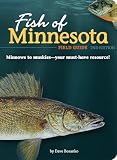
For a serious reference, the North Atlantic fish identification guide, Handbook of the Marine Fauna of North-West Europe, provides dichotomous identification keys for coastal fish and covers the continental shelf seas of north-west Europe. The book is broader than Norway’s fjords, so readers should verify the edition and use its geographic coverage as a regional aid rather than assuming that it identifies every fjord catch or uses every current species name.
A broader visitor-oriented option is Yale University Press’s A Field Guide to North Atlantic Wildlife, which covers fish, sharks, rays, and other North Atlantic wildlife. It is useful as a general marine-life guide, but it is not a Norway-only fjord reference.
Can you legally keep fish caught in a Norwegian fjord?
Fish being present in a Norwegian fjord does not mean that a visitor may legally retain the fish. Norwegian recreational fishing rules can specify permitted species, gear, minimum sizes, protected areas, seasons, and other restrictions.
Check the Norwegian Directorate of Fisheries’ current recreational-fishing guidance for the exact location, species, fishing method, and travel date. Responsible wording is “may occur,” “documented in surveyed fjords,” or “commonly associated with” unless local evidence supports a stronger statement. Presence alone does not establish abundance, catchability, food safety, or legal retention.
Frequently Asked Questions
What is the most common fish in Norwegian fjords?
The most reliable nationwide answer is coastal cod. Saithe, pollack, haddock, herring, mackerel, and sprat are also important, while other species depend more strongly on location and habitat.
Are mackerel found in Norwegian fjords?
Yes, mackerel are fished inside Norwegian fjords, but mackerel are migratory schooling fish rather than permanent bottom-dwelling residents. Their presence and catchability can vary by season and location.
Are salmon found in Norwegian fjords?
Atlantic salmon and sea trout may occur near fjord mouths and heads connected to rivers. Salmonids should be treated separately from marine-fjord residents because their presence depends on local rivers, migration, season, life stage, and regulations.
Can visitors keep fish caught in a Norwegian fjord?
No. Norwegian recreational-fishing rules vary by species, gear, location, protected area, minimum size, and date. Check the Norwegian Directorate of Fisheries’ current guidance before fishing or retaining a catch.
PC Slower Than It Used to Be?
A free scan shows the junk files, broken settings and background clutter dragging Windows down - then fixes them in one click.Free scan · Windows 10 & 11Outdated Drivers Are Slowing You Down
One free scan finds every outdated or missing driver and matches the right update for your exact hardware.Free scan · exact hardware matchThe Bottom Line
The best short answer is coastal cod, followed by saithe, pollack, haddock, herring, mackerel, and sprat. Northern, deep-water, offshore-connected, and river-mouth habitats add species such as capelin, redfish, ling, tusk, halibut, flatfish, wolffish, monkfish, rays, salmon, and sea trout. Treat the list as regional and seasonal rather than universal.
Quick Recap
Product prices and availability are accurate as of the date/time indicated and are subject to change. Any price and availability information displayed on Amazon at the time of purchase will apply.




