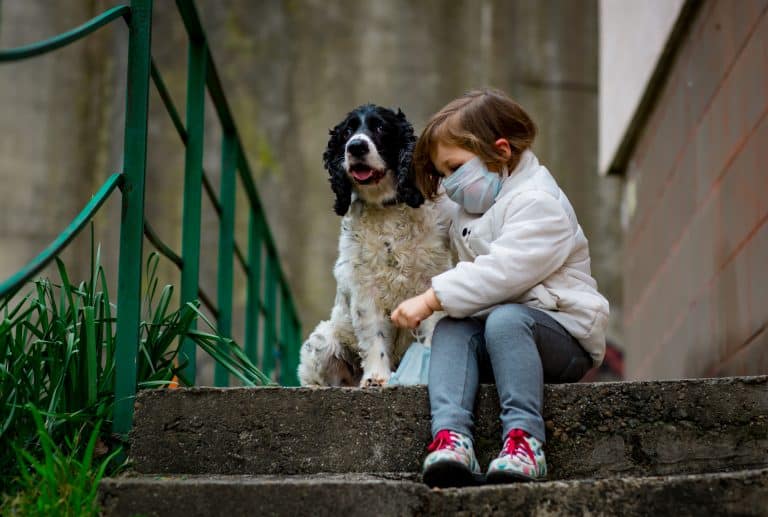
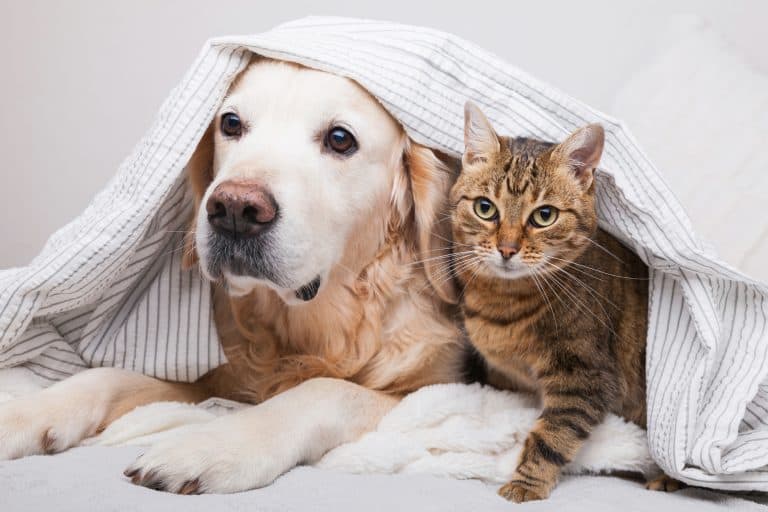
The 10 unbelievable, unlikely animal friendships in this article include a cheetah with a Labrador, a rescued hippo with an ancient tortoise, and a deformed dolphin with sperm whales. Most formed after rescue, isolation, or human-managed care, and the observed closeness is real even when “friendship” remains our interpretation.
Key takeaways
- Most reported interspecies friendships begin in zoos, rescues, nurseries, farms, or homes where animals have repeated contact.
- Observed behaviors include grooming, nuzzling, play, following, sleeping together, protection, vocal contact, and repeated non-aggressive association.
- “Friendship” is a human-friendly label, not proof that animals experience relationships exactly as people do.
- Wild examples, including a deformed bottlenose dolphin traveling with sperm whales, require more cautious wording than managed nursery or household pairings.
- Owen and Mzee’s relationship is historical: Haller Park says Owen was later relocated to live with other hippos while Mzee remained at the park.
What makes an animal friendship “unlikely”?
An unlikely animal friendship crosses a strong expectation about species, size, habitat, diet, or social behavior. A cheetah sharing a close bond with a Labrador is visually surprising; a rescued hippo following a giant tortoise is even harder to predict. Yet the useful question is not whether the animals possessed a human-style friendship. The useful question is what they repeatedly did: stayed close, touched, played, groomed, followed, protected, or tolerated one another without aggression.


Animal-behavior expert John Bradshaw wrote that “Enmity is far from inevitable, given the way that dogs and cats alike learn the difference between friend and foe.” Bradshaw’s explanation of dogs and cats helps put unusual bonds in context: animals can learn which individuals are safe or socially important, even when those individuals belong to another species.
Many of the stories below arose after an animal was orphaned, separated from its group, injured, hand-reared, or placed in human care. Those circumstances can create an available social partner, but they do not demonstrate that the same relationship would develop between healthy adults in the wild.
Free tools Windows power users keep installed
One-click scans. No signup required.
#1 Best Overall

- Unlikely Friendships
- Jennifer Holland
- 978-0761159131
- National Geographic
Want more true animal-bond stories?
Unlikely Friendships by Jennifer S. Holland is a natural next read for anyone interested in documented emotional bonds between animals of different species. The publisher describes the book as a collection of remarkable animal relationships, extending the subject beyond the examples in this article.
How do the 10 unbelievable, unlikely animal friendships compare?
| Animals | Setting | Reported relationship | Evidence and duration |
|---|---|---|---|
| Kumbali and Kago | Zoo, Virginia | Surrogate companionship and close social contact | National Geographic report; duration not stated |
| Owen and Mzee | Rescue park, Kenya | Following, sleeping beside one another, surrogate companionship | Haller Park account; historical relationship, later separated |
| Themba and Albert | Wildlife-care setting | Surrogate companionship after loss | Guardian report; continued until Themba’s death |
| Torque and Shrek | Raptor and reptile centre, England | Adoptive-father-like companionship | Guardian report; duration not stated |
| Macaque and white dove | Animal-protection centre, China | Eating and sleeping together | Guardian report; about two months before release |
| Macaque and kitten | Reported domestic or rescue setting, Bali | Grooming, hugging, nuzzling, and carrying | Guardian report; duration not stated |
| Orangutan babies and tiger cubs | Zoo nursery, Indonesia | Daytime play and shared naps | Guardian report; separated at five months |
| Lucky and Coco | Home | Nuzzling and grooming-like contact | Guardian report; duration not stated |
| Sharky, Max, and chicks | Farm, Texas | Reported protection and peaceful proximity | Guardian report; duration not stated |
| Deformed dolphin and sperm whales | Open ocean | Repeated travel and non-agonistic physical contact | National Geographic and scientific reporting; repeated association |
1. How did Kumbali the cheetah become attached to Kago the Labrador?
Kumbali the cheetah was not thriving at Metro Richmond Zoo in Virginia because his mother’s nipples were not providing enough milk. Keepers began bottle-feeding the cub, but Kumbali also needed a constant companion. The zoo paired him with Kago, a yellow Labrador, and National Geographic reported that the animals quickly behaved like brothers.
This was not a naturally occurring cheetah-and-dog encounter. Human caretakers created the pairing to provide social support for a vulnerable cub, making Kumbali and Kago an example of surrogate companionship rather than evidence that cheetahs generally seek out dogs.
The pairing also points toward a practical conservation use for dogs. The Cheetah Conservation Fund says its livestock-guarding dogs reduce predation rates by more than 80% for participating farmers, according to the organization’s 2023 fact sheet. The organization says its Namibian livestock-guarding-dog program began in 1994, as described in its conservation program history. By helping protect livestock, the dogs can reduce pressure on farmers to kill cheetahs.
Readers who want to go beyond the story can support cheetah conservation, including the livestock-guarding-dog work described by the Cheetah Conservation Fund. Current support options and program availability should be checked directly with the organization.
2. Why did Owen the hippo follow Mzee the tortoise?
After a tsunami separated the young hippo Owen from his herd, rescuers took him to Haller Park in Kenya. Owen was housed with Mzee, an Aldabra tortoise described by Haller Park as about 130 years old at the time. Owen followed Mzee, slept beside him, and treated the tortoise as a substitute social companion.
The contrast is extraordinary: Owen was a young, social, semi-aquatic mammal, while Mzee was an ancient tortoise from a very different evolutionary and behavioral background. The rescue setting likely mattered because Owen had lost access to his normal herd and Mzee was the available familiar presence.
The story should be described in the past tense. Haller Park’s current account says Owen was later relocated to live with other hippos, while Mzee remained at the park. Visitors should not be told that Owen and Mzee can currently be seen living together. Haller Park’s wildlife and attractions page provides the broader park context.
Do these 3 things before closing this tab:
1Clear out junk files and repair common Windows errors2Fix the driver behind crashes, sound loss and screen glitches3Repair Windows errors before they cause bigger problems3. How did Themba the elephant and Albert the sheep become companions?
Themba, an African elephant calf, lost his mother at six months old. Caretakers gave him a surrogate companion in Albert, a sheep, and the pair reportedly became inseparable after a difficult beginning.
Themba and Albert are best understood as a grief-and-recovery story. The sheep did not replace Themba’s mother in any biological sense, but Albert offered a nearby social presence after the calf’s loss. The Guardian reported that the companionship continued until Themba died from a twisted intestine; the account is preserved in its gallery of unlikely animal friendships.
4. Why did a greyhound puppy bond with an owlet?
At the Ringwood Raptor and Reptile Centre in England, a six-month-old greyhound puppy named Torque became closely attached to Shrek, an owlet separated from her mother for protection. The Guardian described Torque as an adoptive-father-like companion.
The size difference makes the pairing memorable, but the social circumstances are more important than the appearance. A young, protected bird and a young dog were placed in repeated proximity, allowing a substitute bond to develop. “Adoptive father” is a useful description of the observed role, not proof that Torque understood parenthood as a human would.
What’s actually slowing this PC down?
Pick the symptom - the matching free tool is one click away.
5. Did a macaque and a white dove really live together?
A young macaque taken to an animal-protection centre after straying from its mother reportedly became close to a white dove also adopted by the centre’s staff. The Guardian reported that the two ate and slept together for two months before release.
The two animals were displaced young individuals in a human-care setting, not a long-term wild partnership. Their shared meals and naps are concrete signs of tolerance and companionship, while the short reported duration limits what can reasonably be inferred about the relationship.
6. What did the macaque and kitten do together?
A lonely male macaque in Bali reportedly groomed, hugged, nuzzled, and carried a stray kitten. Those specific behaviors make the story more informative than simply saying that the animals “liked” each other.
Grooming and close bodily contact are affiliative behaviors in many social animals, but the available report does not establish why the macaque behaved this way or how long the association lasted. The story is therefore best presented as reported cross-species care or companionship, not as a general pattern between macaques and cats.
Rank #3
7. How did orangutan babies and tiger cubs play together?
At Taman Safari Zoo in Indonesia, two one-month-old Sumatran tiger twins and two baby orangutans reportedly shared a nursery room. The Guardian said the young animals played together during the day and cuddled during naps before being separated at five months.
Age and management are essential context. Very young animals in a supervised nursery are not equivalent to adult tigers and orangutans choosing to share a wild habitat. The case shows how early-life proximity can produce play and resting contact across species, while the later separation reflects normal welfare and developmental needs.
8. Why did Lucky the cat and Coco the cockatoo groom one another?
Housemates Lucky and Coco reportedly enjoyed close physical contact, including nuzzling and grooming-like attention from the cockatoo. The Guardian included the pair among its documented examples of unusual animal companionship.
This domestic case demonstrates that remarkable cross-species relationships do not require a zoo or rescue centre. A shared home can provide repeated, low-threat contact, but the available report does not specify how long the bond lasted or whether the animals’ interaction was reciprocal grooming in the strict behavioral sense.
9. Could a pit bull, a cat, and chicks share a farm?
On a Texas farm, a pit bull named Sharky, a cat named Max, and a brood of chicks reportedly spent time together. Sharky was described as protective of small animals, although the report does not establish the dog’s intentions in a scientific way.
This is a three-species household grouping rather than a single pair. Peaceful proximity and apparent protection can look like friendship to human observers, but safety should never be inferred from one story: unfamiliar dogs, cats, and poultry still require careful supervision and appropriate separation.
10. Was a deformed dolphin accepted by sperm whales?
A bottlenose dolphin with a spinal deformity was observed traveling with a group of sperm whales, making the case the strongest wild example in this list. National Geographic reported repeated association and discussed possible explanations including acceptance by the whales because the dolphin was nonthreatening or a social system that includes allomaternal care.
A separate scientific report described repeated non-agonistic contact between a bottlenose dolphin and sperm whales, including physical contact initiated by the dolphin. The observations show association and tolerance; they do not establish human-like friendship, the whales’ motivation, or whether the dolphin was permanently integrated into the group. National Geographic’s report on the dolphin and sperm whales explains those competing interpretations.
Quick wins for a faster PC:
Repair Windows errors before they cause bigger problemsFix Now →Scan for outdated or missing drivers - takes under a minuteDriver Scan →Clear out junk files and repair common Windows errorsFree Scan →Rank #4
What does science say about animal consolation and social bonds?
Some animals show measurable social responses to distress, but that narrower finding should not be stretched into a claim about every unusual pairing. In a 2014 study at an elephant camp in Thailand, Joshua M. Plotnik and Frans B. M. de Waal compared Asian elephants’ behavior after distress events with control periods. The researchers found that elephants affiliated significantly more with distressed individuals through directed physical contact and vocal communication.
The study’s authors wrote: “Contact directed by uninvolved bystanders toward others in distress, often termed consolation, is uncommon in the animal kingdom.” The full PeerJ study available through PubMed Central supports the careful claim that elephants can show observable social responses to distress. It does not prove that Kumbali, Owen, or every other animal in this list experienced a human-equivalent emotion.
Research on goats offers a related but different lesson. A Biology Letters study examined goats’ human-directed gazing during a problem-solving task and found that goats can direct behavior toward nearby people depending on social context. The University of Roehampton research record concerns communication and social cognition, not a finding that goats naturally befriend every species.
How should “friendship” be defined in animal stories?
“Friendship” works as a reader-facing umbrella term, but a reliable article should immediately identify the behavior behind the label.
Recommended Free Tools
| Careful term | What it means here | Examples in this article |
|---|---|---|
| Companionship | Repeated proximity, following, sleeping together, or seeking contact | Owen and Mzee; Kumbali and Kago |
| Surrogate care | A substitute social partner after separation, orphaning, or rescue | Themba and Albert; Torque and Shrek |
| Affiliative behavior | Grooming, nuzzling, touching, vocalizing, or playing without aggression | Macaque and kitten; Lucky and Coco; tiger cubs and orangutans |
| Adoption-like behavior | Sustained care or social integration when the underlying motivation is uncertain | Torque and Shrek; Sharky and the chicks |
| Repeated association | Recurring travel or contact, especially in a wild setting | The bottlenose dolphin and sperm whales |
Evidence strength also varies. The elephant consolation research is peer-reviewed observation. Owen and Mzee’s relationship is described by the facility that housed them. Several other cases come from major-media reports or a reported gallery. That difference does not make the anecdotes meaningless, but it does change how confidently readers should interpret them.
Independent reader supportYour contribution helps us test, update, and keep practical guides available for everyone.Why do cross-species friendships happen?
Cross-species bonds most often appear when animals are repeatedly brought together and normal social options are limited. Rescue, zoo, sanctuary, nursery, farm, and household settings create opportunities for contact that would be unlikely in nature. Orphaning, isolation, injury, hand-rearing, and separation from a herd or parent can make another animal an unusually important companion.
Several mechanisms may be involved: the animals may recognize one another as safe, seek social contact, respond to shared comfort, use familiar behaviors such as grooming or play, or simply tolerate one another because there is no immediate competition. A human observer can describe what happened without claiming certainty about the animals’ private motives.
Can these stories teach us anything about conservation or pet care?
They can, provided the lesson is not that every species should be housed together. Kumbali and Kago show how carefully managed companionship may help an isolated zoo animal. The Cheetah Conservation Fund’s livestock-guarding-dog program shows a separate but related conservation principle: dogs can help people coexist with predators by reducing livestock losses. The organization reports that participating farmers experienced more than an 80% reduction in predation rates in its 2023 fact sheet.
The Tool Desk
Outbyte PC Repair FREEClear out junk files and repair common Windows errorsFree Scan →Outbyte Driver Updater FREEFix the driver behind crashes, sound loss and screen glitchesFind Drivers →Best Value
For pets, an unusual bond is never a reason to skip introductions, supervision, veterinary guidance, escape routes, or species-appropriate space. Dogs, cats, birds, and small animals can form genuine-looking attachments, but individual temperament and safety matter more than a viral photograph.
What is the most scientifically intriguing example?
The bottlenose dolphin and sperm whales stand out because the association occurred in the wild and was repeated, rather than being created in a nursery, household, or rescue facility. Even there, the strongest defensible conclusion is limited: the whales tolerated or accepted the dolphin, and the animals traveled and made non-aggressive contact. Whether that amounted to friendship remains an interpretation.
The managed examples are no less emotionally powerful. They show that animals can form substitute social relationships when their usual companions are absent. Together, the cases suggest that social flexibility is widespread, while the meaning of any individual bond must be judged from the observed behavior and the quality of the evidence.
These stories do not prove that animals feel friendship exactly as people do. They show something more solid: across species, animals sometimes tolerate, seek out, comfort, protect, and learn from one another. The label may be ours, but the closeness is observable.
Crashes, No Sound, or Screen Glitches?
Random freezes, missing sound and display glitches usually trace back to one bad driver. Find and replace yours safely.Free scan · under a minutePC Slower Than It Used to Be?
A free scan shows the junk files, broken settings and background clutter dragging Windows down - then fixes them in one click.Free scan · Windows 10 & 11Frequently Asked Questions
Are these 10 unbelievable, unlikely animal friendships real?
Yes, the 10 animal friendships are based on reported observations, but the evidence varies. The examples include peer-reviewed elephant research, official accounts from Haller Park, National Geographic reporting, and media-documented rescue, zoo, farm, and household anecdotes. “Friendship” remains a human interpretation of behaviors such as grooming, play, following, sleeping together, and non-aggressive contact.
Are Owen the hippo and Mzee the tortoise still together?
Owen and Mzee are not currently living together. Haller Park says Owen was later relocated to live with other hippos while Mzee remained at the park, so their relationship should be described as a historical rescue-era bond.
Why do animals from different species become companions?
Most of the reported bonds formed in managed settings such as zoos, rescue centres, nurseries, farms, or homes, often after one animal was orphaned, isolated, injured, hand-reared, or separated from its normal social group. The dolphin and sperm whales are the notable wild example and require especially cautious interpretation.
How common are interspecies animal friendships?
No reliable global percentage measuring how common interspecies friendships are was identified. The available evidence consists of individual observations and case reports, so these stories cannot be used to estimate how frequently cross-species bonds occur.
The Bottom Line
The best evidence in these stories is behavioral, not sentimental: animals repeatedly stayed close, played, groomed, touched, protected, or traveled together. “Friendship” is our label for that closeness, and the label should remain qualified—especially when the relationship was brief, human-managed, or observed in the wild.
Quick Recap
Product prices and availability are accurate as of the date/time indicated and are subject to change. Any price and availability information displayed on Amazon at the time of purchase will apply.