Free tools Windows power users keep installed
One-click scans. No signup required.
The best dog food for small dogs in 2026 is not one universal brand: choose a complete-and-balanced formula matched to your dog’s life stage, adult size, calorie needs, tolerance, and diagnosed conditions. The 12 foods below are use-case picks, not personal-test rankings, and prescription diets require veterinary guidance.
Small dogs range from toy breeds weighing only a few pounds to sturdier small breeds near the low-20-pound range. Puppies, adults, and seniors have different nutritional priorities, while dogs with persistent gastrointestinal or skin symptoms may need diagnosis rather than another retail-food trial.
This U.S.-focused shortlist uses manufacturer product information, AAFCO label guidance, WSAVA nutrition guidance, and FDA safety information. Exact recipes, calories, package sizes, prices, sellers, and availability should be rechecked against the current label before publication or purchase.
Key takeaways
- A complete-and-balanced nutritional-adequacy statement for the correct life stage matters more than a food’s first ingredient or marketing words such as premium, natural, or holistic.
- Royal Canin separates extra-small dogs up to approximately 8 pounds from small dogs weighing approximately 9–22 pounds, so small-dog food is not one universal size category.
- Calories per cup, can, or serving should be compared with the dog’s individual feeding needs because overfeeding can contribute to obesity.
- A sensitive-stomach retail formula is not the same as a diagnostic elimination diet, and persistent vomiting, diarrhea, weight loss, itching, or repeated ear infections warrants veterinary evaluation.
- Grain-free food is not automatically healthier for small dogs; the FDA says pulses are not inherently dangerous but continues to investigate reports of non-hereditary canine DCM.
- The 12 products below are use-case recommendations based on manufacturer information and label considerations, not rankings from personal feeding or independent palatability testing.
What is the best small breed dog food?
The best small breed dog food is a complete-and-balanced formula that matches a dog’s life stage, adult size, calorie needs, tolerance, and diagnosed medical conditions. A puppy, a 7-pound adult toy breed, a 20-pound adult small breed, and a 14-year-old dog should not automatically receive the same formula.
Recommended Free Tools
#1 Best Overall

- REAL CHICKEN FIRST: Blue Buffalo dry dog food starts with real chicken as the first ingredient to help support healthy, lean muscles in adult dogs
- COMPLETE NUTRITION: This BLUE dog food provides balanced daily nutrition for small breed dogs with chicken for protein, wholesome carbohydrates for energy, and other natural ingredients
- EXPERT-LED NUTRITION: Designed to help your pet thrive from the inside out, Blue Buffalo dog food formulas are developed by a dedicated team of veterinarians and animal nutritionists
- SUPPORTS IMMUNE SYSTEM HEALTH: BLUE Life Protection Formula dry dog food features exclusive LifeSource Bits, a precise blend of antioxidants, vitamins, and minerals that are formed at a lower temperature to ensure optimal potency
- WHOLESOME GRAINS: A delicious dry dog food made with brown rice, barley, and oatmeal to support gentle, regular digestion and steady energy for active small dogs
The shortlist below includes adult, puppy, senior, digestion-focused, sensitive-skin, and size-specific options. Product names, recipes, calorie values, package sizes, and availability can change, so check the current manufacturer label before buying. The product descriptions reflect manufacturer-stated features; no independent hands-on testing, veterinary examination, or palatability testing was conducted for this guide.
For shoppers comparing small-breed dog food, the most useful questions are whether the food is nutritionally adequate, whether the kibble or texture suits the dog, how calorie-dense the food is, and whether a veterinarian has identified a condition requiring a therapeutic diet.
Comparison of the 12 best dog foods for small dogs
The research dossier did not verify current calories, package prices, pack sizes, or seller listings. The table deliberately identifies those fields as items to check rather than inventing values that may be wrong by publication time.
| Food | Best fit | Size and life stage | Format | AAFCO or label position | Manufacturer-described features | Calories and cost per day |
|---|---|---|---|---|---|---|
| Hill’s Science Diet Adult Sensitive Stomach & Skin Small & Mini Chicken Recipe | Adult dogs needing digestion and skin-and-coat positioning | Small and mini adult dogs | Dry kibble | AAFCO feeding tests substantiate complete and balanced adult-maintenance nutrition, according to Hill’s | Highly digestible; prebiotic fiber; vitamin E; omega-6 fatty acids | Verify current kcal data, package price, and feeding amount |
| Hill’s Science Diet Adult Perfect Digestion Small & Mini Chicken & Brown Rice Recipe | Adult dogs whose owners want a digestion-focused comparison | Small and mini adult dogs | Dry formula | Verify the current nutritional-adequacy statement on the package | Positioned around digestive well-being and the microbiome | Verify current kcal data, package price, and feeding amount |
| Hill’s Science Diet Adult 7+ Small & Mini | Senior small dogs | Small and mini dogs aged 7 and older, subject to the current label | Dry formula | Confirm the exact current recipe and maintenance statement | Senior small-and-mini comparison slot from the Hill’s product family | Verify current kcal data, package price, and feeding amount |
| Purina Pro Plan Small Breed Adult | General adult small-breed nutrition | Adult small-breed dogs | Dry formula | Confirm the exact current adult formula and label | Small-dog range with life-stage and special-needs choices | Verify current kcal data, package price, and feeding amount |
| Purina Pro Plan Small Breed Sensitive Skin & Stomach Salmon & Rice | Adult dogs with sensitive-skin or sensitive-stomach positioning | Adult small-breed dogs | Dry kibble | Check the current package for the complete-and-balanced statement | Salmon first; rice; prebiotic fiber; omega-6 fatty acids; fish-oil sources of EPA and DHA | Verify current kcal data, package price, and feeding amount |
| Purina Pro Plan Small Breed Adult 7+ Senior Support+ Shredded Blend Chicken & Rice | Senior dogs that prefer or manage a shredded-blend texture | Small-breed dogs aged 7 and older, subject to the current label | Dry shredded blend | Confirm the current senior-maintenance statement | Senior Support+ positioning; chicken and rice; shredded-blend texture | Verify current kcal data, package price, and feeding amount |
| Purina Pro Plan Puppy Sensitive Skin & Stomach Lamb & Oat Meal | Puppies with sensitive-stomach positioning | Puppies; confirm suitability for projected adult size | Dry puppy food | Purina presents it as complete and balanced puppy nutrition | Lamb first; DHA from fish oil; calcium and phosphorus; antioxidants; prebiotic fiber | Verify current puppy kcal data, package price, and feeding amount |
| Royal Canin X-Small Adult | Adult toy and extra-small dogs | Dogs up to approximately 8 pounds | Dry kibble | Check the current U.S. label for adequacy and life-stage wording | Extra-small size category and size-targeted kibble | Verify current kcal data, package price, and feeding amount |
| Royal Canin Small Adult | Adult small dogs | Dogs weighing approximately 9–22 pounds | Dry kibble | Check the current U.S. label for adequacy and life-stage wording | Small-breed positioning and smaller kibble | Verify current kcal data, package price, and feeding amount |
| Royal Canin Small Aging 12+ | Older small-breed dogs | Dogs over 12 years old and up to 22 pounds | Dry kibble that can be softened with water | Formulated to meet AAFCO Dog Food Nutrient Profiles for maintenance, according to Royal Canin | Senior small-breed positioning; water-softenable kibble | Verify current kcal data, package price, and feeding amount |
| Eukanuba Adult Small Breed Dry Dog Food | Active adult small dogs | Small-breed dogs over 12 months old and up to 23 pounds | Dry kibble | Complete and balanced for the stated small-breed adult use, according to Eukanuba | Animal protein; DHA; vitamin E; glucosamine; chondroitin; dental-support kibble design | Verify current kcal data, package price, and feeding amount |
| IAMS Adult Small Breed Dry Dog Food with Real Chicken | Mainstream adult small-breed option | Adult small-breed dogs | Dry kibble | Check the current package for the exact adequacy statement | Real chicken first; omega-6 fatty acids; muscle-support and antioxidant positioning | Verify current kcal data, package price, and feeding amount |
How should you choose among these small-dog foods?
Choose in this order: medical requirements, nutritional adequacy, life stage, adult size, calorie density, texture, and then nonessential preferences such as ingredient style or marketing language.
What’s actually slowing this PC down?
Pick the symptom - the matching free tool is one click away.
1. Confirm the nutritional-adequacy statement
The AAFCO nutritional-adequacy statement is the quickest way to determine whether a food is intended to be complete and balanced for a named life stage or condition. AAFCO explains that “The nutritional adequacy statement—usually found in small print on the back or side of pet food packaging—is the key to meeting a pet’s nutritional needs.” Read the AAFCO guidance on selecting the right pet food and match the statement to the dog’s life stage.
Treats, toppers, supplements, and foods labeled for intermittent or supplemental feeding are not substitutes for a complete main diet. For puppies, confirm that the food is labeled for growth or all life stages and that the formulation is appropriate for the puppy’s expected adult size when the label makes that distinction.
2. Match the dog’s actual size and age
“Small dog” covers a broad range. Royal Canin’s U.S. size guidance separates X-Small dogs up to approximately 8 pounds from Small dogs weighing approximately 9–22 pounds; the brand’s small and very-small range shows why a toy breed and a 20-pound small breed should not automatically receive identical kibble.
Brand boundaries are not a universal scientific cutoff. Eukanuba, for example, describes its Adult Small Breed food for dogs over 12 months old and up to 23 pounds. Use the weight range on the specific package, along with body condition and veterinary advice, rather than treating one brand’s category as a rule for every food.
3. Compare calories rather than ingredient order alone
Calorie density is a practical selection and feeding issue, especially when comparing small dogs with different activity levels or body conditions. WSAVA recommends that pet owners have access to accurate caloric information because overfeeding can contribute to obesity. Compare kcal per cup for dry food or kcal per can, pouch, or serving for wet food, then use the manufacturer’s feeding guide as a starting point rather than a guaranteed prescription.
The current calorie value was not verified for every product in this shortlist. Copy the kcal value from the current package or manufacturer page, calculate the day’s food from the dog’s weight and body condition, and include treats in the daily plan. Ask a veterinarian to adjust the plan for a puppy, an underweight or overweight dog, a dog with illness, or a dog whose weight changes unexpectedly.
4. Evaluate the company and the label
Marketing terms do not establish nutritional quality by themselves. WSAVA recommends asking who formulates the food, what research supports it, how quality control works, whether the company can provide nutrient information, and whether the product is complete for the intended life stage.
Rank #2
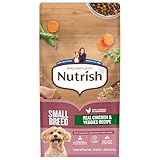
- REAL CHICKEN SMALL DOG FOOD RECIPE: Get ears perking up with every bowl of Rachael Ray Nutrish Chicken Dog Food Recipe made with real chicken as the #1 ingredient for a balanced meal
- SMALL KIBBLE PIECES: This dry dog food for adult small breed dogs features small, crunchy kibble perfect for little mouths
- VETERINARIAN REVIEWED FORMULA: This specially crafted dry dog food recipe is veterinarian reviewed and backed by our team of nutrition and dog experts
- NATURAL DOG FOOD: Natural food with added vitamins, minerals & nutrients for your dog's daily meals. Made with no artificial flavors, it offers real taste that dogs love
- RACHAEL RAY FOUNDATION: Each bag of dry dog food is made with purpose — ensuring nourishing meals while helping support animals in need through The Rachael Ray Foundation
“Pet food companies are not required to conduct or sponsor nutritional research in order to produce and sell a food, but when they do, it indicates a commitment to animal health and wellness.”
The Tool Desk
Outbyte PC Repair FREERepair Windows errors before they cause bigger problemsFix Now →Outbyte Driver Updater FREEFix the driver behind crashes, sound loss and screen glitchesFind Drivers →Special offer. See more information about Outbyte and uninstall instructions. Please review EULA and Privacy policy.
The first ingredient can be relevant to a dog’s preferences and the formula’s design, but the first ingredient alone cannot prove that a food is more nutritious, safer, or better tolerated. Do not rank foods solely by words such as natural, holistic, or premium.
Which dog food is best for adult small dogs?
The best adult small-dog choice is the formula whose adequacy statement, size range, calorie density, texture, and ingredients fit the individual dog; the adult options below serve different comparison purposes.
1. Hill’s Science Diet Adult Sensitive Stomach & Skin Small & Mini Chicken Recipe
Best for: adult small-and-mini dogs whose owners prioritize digestive and skin-and-coat positioning. Hill’s describes this formula as highly digestible, with prebiotic fiber, vitamin E, and omega-6 fatty acids. Hill’s also states that AAFCO feeding tests substantiate complete and balanced nutrition for adult maintenance. See the Hill’s Science Diet Adult Sensitive Stomach & Skin Small & Mini product information for the current label and calorie data.
This food is not a diagnosis or treatment for chronic gastrointestinal disease or food allergy. A dog with persistent symptoms needs veterinary assessment rather than repeated retail-food changes.
2. Hill’s Science Diet Adult Perfect Digestion Small & Mini Chicken & Brown Rice Recipe
Best for: an adult small-and-mini digestion-focused comparison. Hill’s product catalog positions the formula around nutrition tailored for small and mini dogs, digestive well-being, and the microbiome. Confirm the current recipe, nutritional-adequacy statement, calorie value, and feeding language on the package before purchase.
4. Purina Pro Plan Small Breed Adult
Best for: a general adult small-breed option. Purina’s Pro Plan range is organized around small-dog nutrition and includes life-stage and special-needs choices. The exact adult recipe should be confirmed at publication or purchase because product names and formulas can change; use Purina’s current Pro Plan dry-food catalog as a starting point.
5. Purina Pro Plan Small Breed Sensitive Skin & Stomach Salmon & Rice
Best for: an adult small dog whose owner wants sensitive-skin or sensitive-stomach positioning. Purina describes salmon as the first ingredient, rice as gentle on the digestive system, prebiotic fiber for digestive health, omega-6 fatty acids for skin and coat, and fish-oil sources of EPA and DHA. Those are manufacturer-described features, not independent clinical findings that every dog will improve. Check the current Purina Pro Plan Sensitive Skin & Stomach Small Breed page and package for the exact formula and adequacy statement.
8. Royal Canin X-Small Adult
Best for: adult toy and extra-small dogs up to approximately 8 pounds. Royal Canin’s separate X-Small category is useful when a very small dog needs a more size-specific comparison rather than a generic small-breed label. Verify the current U.S. package’s life-stage statement, calorie density, and feeding recommendation.
9. Royal Canin Small Adult
Best for: adult small dogs weighing approximately 9–22 pounds. Royal Canin says this food is designed for that weight range and uses a smaller kibble intended for small breeds. The product is a size-matched comparison, not proof that every dog in the range needs this particular brand or recipe.
11. Eukanuba Adult Small Breed Dry Dog Food
Best for: active adult small dogs. Eukanuba describes this formula as complete and balanced for small-breed dogs over 12 months old and weighing up to 23 pounds. The manufacturer highlights animal protein, DHA, vitamin E, glucosamine, chondroitin, and a dental-support kibble design. Review the Eukanuba Adult Small Breed information for current feeding and calorie details.
Rank #3

- REAL CHICKEN SMALL DOG FOOD RECIPE: Get ears perking up with every bowl of Rachael Ray Nutrish Chicken Dog Food Recipe made with real chicken as the #1 ingredient for a balanced meal
- SMALL KIBBLE PIECES: This dry dog food for adult small breed dogs features small, crunchy kibble perfect for little mouths
- VETERINARIAN REVIEWED FORMULA: This specially crafted dry dog food recipe is veterinarian reviewed and backed by our team of nutrition and dog experts
- NATURAL DOG FOOD: Natural food with added vitamins, minerals & nutrients for your dog's daily meals. Made with no artificial flavors, it offers real taste that dogs love
- RACHAEL RAY FOUNDATION: Each bag of dry dog food is made with purpose — ensuring nourishing meals while helping support animals in need through The Rachael Ray Foundation
12. IAMS Adult Small Breed Dry Dog Food with Real Chicken
Best for: a mainstream adult small-breed option for owners comparing widely distributed formulas. IAMS says the food was created for small-breed nutritional needs and highlights real chicken as the first ingredient, omega-6 fatty acids, muscle support, and antioxidants. These are manufacturer-described features; check the current IAMS Small Breed product information for the label and feeding directions.
What is the best sensitive-stomach dog food for a small dog?
The best sensitive-stomach dog food for a small dog depends on the cause of the symptoms; a retail sensitive-stomach formula may be reasonable for a veterinarian-approved nutrition trial, but it is not equivalent to diagnosing or treating food allergy.
Quick wins for a faster PC:
Scan for outdated or missing drivers - takes under a minuteDriver Scan →Repair Windows errors before they cause bigger problemsFix Now →Fix the driver behind crashes, sound loss and screen glitchesFind Drivers →Hill’s Science Diet Adult Sensitive Stomach & Skin Small & Mini and Purina Pro Plan Small Breed Sensitive Skin & Stomach Salmon & Rice are the clearest adult comparison slots in this list. Their digestive, skin, coat, fiber, and ingredient features come from the manufacturers. A dog with chronic diarrhea, repeated vomiting, blood in stool, weight loss, severe itching, or repeated ear infections needs a veterinary workup.
When should a small dog use a prescription diet?
A small dog should use a prescription diet when a veterinarian recommends it for a suspected or confirmed medical problem; prescription nutrition is not a casual upgrade from ordinary sensitive-stomach food.
Hill’s Prescription Diet z/d Small Bites Hydrolyzed Chicken Flavor is designed for adverse food reactions and uses highly hydrolyzed proteins. Hill’s recommends consulting a veterinarian, and the Hill’s Prescription Diet z/d product page should be read together with veterinary instructions.
A retail food that mentions sensitive skin or digestion does not perform the same role as a properly managed elimination diet. If food sensitivity is suspected, ask your veterinarian about hydrolyzed dog food rather than switching between multiple retail formulas without a diagnostic plan.
What should you feed a toy-breed puppy?
Feed a toy-breed puppy a complete-and-balanced puppy formula whose life-stage and expected-adult-size language fits the puppy, with veterinary help when growth or health is complicated.
7. Purina Pro Plan Puppy Sensitive Skin & Stomach Lamb & Oat Meal
Best for: a puppy formula with sensitive-stomach positioning. Purina describes lamb as the first ingredient and highlights DHA from fish oil, calcium and phosphorus, antioxidants, and prebiotic fiber. The product page presents it as complete and balanced puppy nutrition; review the current Purina Pro Plan puppy-food information and confirm whether the specific puppy’s projected adult size and veterinary needs make the formula appropriate.
Do not substitute an adult small-breed food simply because the kibble is small. Growth nutrition and adult-maintenance nutrition are different label categories.
What is the best senior food for a small dog?
The best senior food for a small dog is a complete-and-balanced senior or maintenance formula that matches the dog’s age, size, calorie needs, dental ability, and medical status; age alone does not diagnose a nutritional problem.
3. Hill’s Science Diet Adult 7+ Small & Mini
Best for: a senior small-dog comparison slot. The Hill’s catalog identifies an Adult 7+ Small & Mini product family, but the exact current recipe, calorie density, nutritional-adequacy statement, and age language should be confirmed before publication or purchase rather than copied from older SKU material.
Rank #4
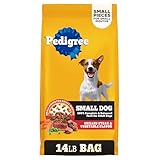
- Complete and Balanced: Pedigree Adult Small Breed Dry Dog Food is 100% complete and balanced food for adult dogs, bringing a nutritious meal to your pet
- Supports Everyday Health: This Pedigree Adult Dry Dog Food recipe for small dogs is made with 36 vitamins, minerals, and amino acids to support your dog’s health and vitality Highly
- Highly Digestible Dog Food Recipe: Pedigree Adult Dry Dog Food for small dogs is made with only natural flavors and includes natural fibers to support healthy digestion
- Supports Healthy Skin and Coat: This dry Pedigree Dog Food recipe for adult small dogs is enriched with Omega 6 Fatty Acid and Zinc to help nourish a healthy skin and coat
- Supports Immune Health: This Pedigree Dry Dog Food for adult dogs recipe is fortified with vitamins & minerals to support a healthy immune system
6. Purina Pro Plan Small Breed Adult 7+ Senior Support+ Shredded Blend Chicken & Rice
Best for: a senior small-breed dry-food option with a shredded-blend texture. Purina’s current Pro Plan catalog lists this Small Breed Adult 7+ Senior Support+ Shredded Blend Chicken & Rice formula. Verify the exact current label, calorie density, package size, and availability in the Pro Plan catalog.
10. Royal Canin Small Aging 12+
Best for: senior small-breed dogs over 12 years old and up to 22 pounds. Royal Canin states that the food is formulated to meet AAFCO Dog Food Nutrient Profiles for maintenance and describes a kibble that can be softened with water. See the Royal Canin Small Aging 12+ product page for the current details.
Royal Canin also lists a separate X-Small Aging 12+ product. An older dog under approximately 8 pounds should not automatically be given the Small Aging formula simply because both products are senior foods; check the size category.
Crashes, No Sound, or Screen Glitches?
Random freezes, missing sound and display glitches usually trace back to one bad driver. Find and replace yours safely.Free scan · under a minuteWindows Errors? Fix Them Before They Spread
Repair common Windows errors and clear accumulated junk for a smoother, more stable PC - no reinstall needed.Free scan · no reinstallIs grain-free dog food better for small dogs?
Grain-free dog food is not automatically better for small dogs, and grain-containing food is not automatically better either; select a complete-and-balanced diet for the individual dog and discuss diet changes with a veterinarian.
The FDA says, “Legumes, including pulse ingredients, have been used in pet foods for many years, with no evidence to indicate they are inherently dangerous.” The agency also says pulses are common in many grain-free diets and continues to receive reports and investigate non-hereditary dilated cardiomyopathy in dogs. Read the FDA’s questions and answers about potential causes of non-hereditary DCM before treating grain-free marketing as a health claim.
Ingredient exclusions can be useful when they address a confirmed allergy or a veterinarian-directed trial. They are not automatically beneficial merely because a package says grain-free.
How do you switch a small dog to a new food?
Switch a small dog gradually by mixing increasing amounts of the new food with decreasing amounts of the old food over seven days, unless a veterinarian gives different instructions. Hill’s provides this seven-day transition guidance for its food; see the manufacturer’s transition guidance.
Do these 3 things before closing this tab:
1Scan for outdated or missing drivers - takes under a minute2Repair Windows errors before they cause bigger problems3Fix the driver behind crashes, sound loss and screen glitchesMonitor appetite, stool, vomiting, itching, and body weight during the change. Stop treating a persistent or severe reaction as a normal transition problem: contact a veterinarian for repeated vomiting, ongoing diarrhea, blood in stool, weight loss, severe itching, repeated ear infections, or other illness.
What should you check before buying?
- Read the adequacy statement. Confirm complete-and-balanced status for the correct life stage or veterinary purpose.
- Check the size range. Compare the food’s stated adult-weight range with the dog’s actual and expected adult weight.
- Record calories. Write down kcal per cup, can, or serving from the current label.
- Check the texture. Very small kibble, shredded blend, or kibble that can be softened may matter for toy breeds, senior dogs, or dogs with dental limitations.
- Review the company information. Look for formulation expertise, research, quality control, and accessible nutrient information, as recommended by WSAVA.
- Separate preference from medical need. A first ingredient or grain-free claim does not replace a veterinary diagnosis or an adequacy statement.
- Recheck the product at purchase. Confirm the exact recipe, package size, calorie value, price, seller, and availability because these details are volatile.
Frequently Asked Questions
What is the best dog food for small dogs?
The best dog food for small dogs is a complete-and-balanced formula matched to the dog’s life stage, adult size, calorie needs, tolerance, and medical conditions. There is no single brand that is best for every small dog, and a prescription diet should be used only with veterinary guidance.
Does my small dog need small-breed dog food?
Small dogs do not all need a food labeled small breed, but size-specific food can provide a more suitable kibble size and feeding guidance. Extra-small and small categories also differ: Royal Canin separates dogs up to approximately 8 pounds from dogs weighing approximately 9–22 pounds.
Is grain-free dog food better for small dogs?
Grain-free dog food is not automatically healthier for small dogs. The FDA says pulses are not inherently dangerous by themselves but continues to investigate reports of non-hereditary canine DCM, so grain-free claims should not replace nutritional adequacy and veterinary advice.
The Tool Desk
Outbyte PC Repair FREEClear out junk files and repair common Windows errorsFree Scan →Outbyte Driver Updater FREEFix the driver behind crashes, sound loss and screen glitchesFind Drivers →Is sensitive-stomach dog food the same as food for allergies?
A retail sensitive-stomach formula is not the same as a diagnostic elimination diet. A dog with persistent vomiting, diarrhea, weight loss, severe itching, repeated ear infections, or other illness needs veterinary evaluation; a veterinarian may recommend a hydrolyzed prescription diet such as Hill’s Prescription Diet z/d.
The Bottom Line
There is no universal best dog food for small dogs. Start with complete-and-balanced nutrition, match the formula to size and life stage, compare calories, choose a texture the dog can manage, and involve a veterinarian whenever symptoms or a diagnosed condition change the decision.




