Free tools Windows power users keep installed
One-click scans. No signup required.
No. Fish are not marine mammals. Fish and mammals are different animal groups. Some mammals live almost entirely in the ocean, but they still retain mammalian traits such as lungs, warm-blooded physiology, hair at some point in life, and milk production. Fish generally obtain oxygen from water through gills.
What makes an animal a marine mammal?
A marine mammal is a mammal adapted to live in or near the ocean. Its habitat does not change its basic classification. NOAA identifies the key mammalian features as breathing air with lungs, maintaining a warm internal body temperature, having hair at some point in life, and producing milk to nurse offspring.


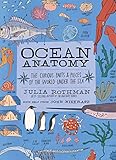


Marine mammals include several distinct groups:
- Cetaceans: whales, dolphins and porpoises
- Pinnipeds: seals, sea lions and walruses
- Sirenians: manatees and dugongs
- Marine fissipeds: polar bears and sea otters
These animals may have flippers, streamlined bodies and other aquatic adaptations, but those features evolved for movement and survival in water, not for classification as fish.
How are fish different from marine mammals?
| Feature | Fish | Marine mammals |
|---|---|---|
| Classification | Fish group, separate from mammals | Mammals adapted to marine life |
| Breathing | Generally extract dissolved oxygen from water through gills | Breathe atmospheric air with lungs and must surface when submerged |
| Nursing | Do not produce milk to nurse offspring | Produce milk for their young |
| Hair | Do not have the mammalian hair trait | Have hair at some point in life, although it can be sparse and difficult to see in adults |
| Temperature regulation | Most are ectothermic; the opah is a known fully warm-blooded exception | Warm-blooded |
| Examples | Opah, tuna and sharks | Whales, dolphins, seals, manatees and sea otters |
The table describes broad patterns rather than an exception-free test. Fish are an extremely diverse group, and their physiology and reproduction vary.
#1 Best Overall
Do fish breathe air?
Most fish use gills to extract oxygen dissolved in water. NOAA summarizes this distinction plainly: “Fish breathe oxygen, not air.” Water passes over the gills, whose blood vessels allow oxygen to diffuse into the bloodstream.
Marine mammals cannot obtain enough oxygen from water. They inhale air through their lungs, so a submerged whale, dolphin, seal or sea otter must eventually return to the surface. Dolphins, for example, breathe through lungs even though they spend their lives in the ocean.
Are dolphins fish?
No. Dolphins are cetacean mammals. Their streamlined shape and fins can make them look fish-like, but they breathe air, nurse their young with milk and have mammalian anatomy. NOAA’s educational material states that dolphins are mammals, not fish, despite living in the ocean all the time.
Are whales fish or mammals?
Whales are mammals for the same reasons as dolphins. They use lungs, maintain a warm internal temperature, produce milk and have hair during at least part of their development. A whale’s flukes and underwater lifestyle are adaptations to swimming, not evidence that it belongs to the fish group.
Quick wins for a faster PC:
Fix the driver behind crashes, sound loss and screen glitchesFind Drivers →Clear out junk files and repair common Windows errorsFree Scan →Are marine mammals always born alive?
Reproduction can help explain the difference, but “gives live birth” is not the definition of a mammal. Mammalian identity rests on the shared traits above, especially milk production. Fish also have varied reproductive strategies, and some fish give birth to live young. Conversely, egg-laying mammals exist, so birth method alone cannot classify every animal.
Are all fish cold-blooded?
Most fish are ectothermic, meaning their body temperature is strongly influenced by the surrounding water. However, “all fish are cold-blooded” is too absolute. NOAA identifies the opah as the only known fish that circulates heated blood throughout its body, making it fully warm-blooded. Some other fish can warm particular body regions without maintaining warm blood throughout the entire body.
Rank #4
A quick way to tell fish from marine mammals
When an unfamiliar ocean animal is difficult to identify, check several traits together rather than relying on shape or habitat:
- Watch how it breathes. Repeated surfacing to inhale air points to a marine mammal; continuous water flow over visible gills points to a fish.
- Look for nursing behavior. Marine mammal mothers feed their young milk. Fish do not nurse offspring with milk.
- Consider body temperature carefully. Warm-bloodedness supports a mammal identification, but do not use “cold-blooded” as a universal fish rule because of exceptions such as the opah.
- Use anatomy and classification together. Hair during some life stage, lungs and mammary glands are more reliable indicators than fins, flippers or a streamlined body.
Why the confusion is understandable
Ocean animals often evolve similar shapes because swimming efficiently favors streamlined bodies. Dolphins and sharks both have dorsal fins and tapered bodies, while seals and some fish use flipper-like structures for propulsion. These similarities are examples of adaptation to the same environment, not proof of close biological relationship.
The Tool Desk
Outbyte PC Repair FREERepair Windows errors before they cause bigger problemsFix Now →Outbyte Driver Updater FREEScan for outdated or missing drivers - takes under a minuteDriver Scan →The decisive question is not “Does it live in water?” but “What biological group does it belong to, and which defining traits does it have?” Fish and marine mammals solved similar environmental problems through separate evolutionary histories.
Key takeaway for students and families
Fish are not marine mammals. Fish generally use gills to take oxygen from water, while marine mammals breathe air with lungs, are warm-blooded, produce milk and have hair at some point in life. Whales, dolphins, seals, manatees, sea otters and polar bears are mammals even when they spend most or all of their lives in a marine environment.
Quick Recap
Product prices and availability are accurate as of the date/time indicated and are subject to change. Any price and availability information displayed on Amazon at the time of purchase will apply.




