The best gourami tankmates are peaceful, similarly sized fish that do not nip fins, overwhelm a slow feeder, or compete for the same territory. Compatibility is never guaranteed by the word “gourami” alone: dwarf, chocolate, snakeskin, kissing and giant gouramis differ greatly in size and behavior. Identify the exact species and adult size before choosing any companion.
How to judge a gourami tankmate
Aqueon describes gouramis as slow-moving and recommends similarly sized fish that are neither fin nippers nor excessively active. Use that as a screening rule, then check the complete community against the aquarium’s volume, decoration and adult fish sizes.
- Identify the species. Do not apply dwarf-gourami advice to a giant, kissing or snakeskin gourami. Confirm the adult size, not the size at the store.
- Choose a peaceful, suitable-sized fish. Avoid persistent fin nippers and fish so boisterous that the gourami cannot rest or reach food.
- Account for territory and sex. Males may fight, especially in confined aquariums. Different gourami species or color varieties need more space and dense cover if they are mixed at all.
- Evaluate the whole stocking plan. A compatible pair of species can still fail when the tank is overcrowded, lacks visual breaks or contains too many adults.
- Monitor after introduction. Separate fish if chasing is persistent or if you see intimidation, torn fins, injury or repeated food loss.
These steps are a risk screen, not a guarantee. Individual behavior, sex and the particular layout can change the outcome.
Tank size and cover by gourami type
Aqueon gives the following husbandry guidance. The figures are publisher recommendations, not a universal stocking calculator; every proposed tankmate must also fit the aquarium’s footprint and filtration capacity.
#1 Best Overall

- Bright Cardinal Tetra Live Fish: Add vibrant blue and red color to your freshwater aquarium with Cardinal Tetras, a classic tropical schooling fish loved for planted and community tanks
- Peaceful Community Aquarium Fish: Cardinal Tetras are calm, active swimmers that pair well with other small peaceful species in properly maintained freshwater aquariums
- Compatible with Community Tanks: Suitable for peaceful freshwater setups with other small, non-aggressive fish such as rasboras, small tetras, corydoras, and other gentle tank mates
- Enhances Planted Aquariums: Cardinal Tetras stand out beautifully against green plants, driftwood, and dark substrate, making them a favorite for aquascaped tanks
- Arrival Care: Fish are carefully selected and packed for safe delivery. Acclimate slowly upon arrival and place into a stable, cycled freshwater aquarium
| Gourami type | Aqueon tank guidance | Important context |
|---|---|---|
| Sparkling, croaking, honey and dwarf | 10 gallons described as a possible minimum | Small size does not remove territorial or feeding-competition concerns. |
| Pearl, blue, gold, opaline and moonlight | 30 gallons or larger | Blue, three-spot, opaline, gold and lavender are color forms of the same fish, according to Aqueon. |
| Kissing | 55 gallons or larger at full size | Plan for the adult fish rather than a juvenile. |
| Giant | 250 gallons or larger for an adult | Large-fish community rules apply; smaller companions may be prey. |
Most gouramis use the upper part of the aquarium. Tall or floating plants provide cover and break lines of sight, but plants cannot compensate for overcrowding or an undersized tank.
Compatible fish by gourami species
Dwarf gourami
Dwarf gouramis are shy and territorial. Non-threatening shoals such as harlequin rasboras and other peaceful rasboras are common candidates; some barbs may work when they are not fin nippers. Depending on the setup, profiles also identify loaches, common tetras, Corydoras, Otocinclus and smaller rainbowfish as possibilities where geography is not a concern.
Avoid bettas and other anabantoids, gaudy or highly active fish such as fancy guppies, and larger, vigorous companions that can intimidate the gourami. Seriously Fish generally discourages keeping dwarf gouramis as a group: multiple males in a small aquarium are particularly risky, and even a male–female pair can have problems.
Rank #2

- Pack of 6 Galaxy Rasboras – Add a beautiful group of Galaxy Rasboras, also known as Celestial Pearl Danios, to your freshwater aquarium for color, movement, and natural schooling behavior.
- Colorful Freshwater Aquarium Fish – Known for their spotted bodies, bright orange-red fins, and active swimming, Galaxy Rasboras bring a unique and eye-catching look to planted aquariums.
- Peaceful Community Fish – These small, calm fish are great for peaceful community tanks with other non-aggressive freshwater species of similar size.
- Perfect for Planted Tanks – Galaxy Rasboras look best in aquariums with live plants, driftwood, rocks, and open swimming areas where they can explore and display natural behavior.
- Carefully Packed for Live Delivery – Each order is prepared with care for safe live fish shipping. Slowly acclimate fish upon arrival before adding them to a fully cycled freshwater aquarium.
Thick-lipped gourami
Seriously Fish considers the thick-lipped gourami one of the better choices for a community aquarium. Danios, rasboras, smaller barbs and loaches are listed as possible companions. Do not combine it casually with banded or giant gouramis; the profile warns that hybridization can occur.
Chocolate gourami
Chocolate gouramis are slow-moving and easily intimidated or outcompeted. Favor small, peaceful cyprinids— including suitable rasboras—and carefully selected loaches. Avoid larger or boisterous fish that seize food before the chocolate gourami can feed.
Banded gourami
Peaceful rasboras, danionins, barbs and loaches may be suitable. Males can fight in smaller aquariums, and spawning can increase aggression. Avoid closely resembling fish; Seriously Fish specifically warns that banded and thick-lipped gouramis can hybridize.
Rank #3
- Pack of 6 Galaxy Rasboras – Add a beautiful group of Galaxy Rasboras, also known as Celestial Pearl Danios, to your freshwater aquarium for color, movement, and natural schooling behavior.
- Colorful Freshwater Aquarium Fish – Known for their spotted bodies, bright orange-red fins, and active swimming, Galaxy Rasboras bring a unique and eye-catching look to planted aquariums.
- Peaceful Community Fish – These small, calm fish are great for peaceful community tanks with other non-aggressive freshwater species of similar size.
- Perfect for Planted Tanks – Galaxy Rasboras look best in aquariums with live plants, driftwood, rocks, and open swimming areas where they can explore and display natural behavior.
- Carefully Packed for Live Delivery – Each order is prepared with care for safe live fish shipping. Slowly acclimate fish upon arrival before adding them to a fully cycled freshwater aquarium.
Snakeskin gourami
Possible companions include barbs, loaches, Corydoras, loricariids, larger danios, rasboras and angelfish. This species may eat smaller fish, so any companion must be large enough not to fit readily in its mouth and the aquarium must provide adequate room.
Giant gourami
Treat a giant gourami as a large-fish community project. Seriously Fish describes it as generally peaceful with other large fish when given plenty of space, but some adults become aggressive, particularly when kept in aquariums that are too small. Small fish may be eaten, so nano community species are inappropriate.
Recommended Free Tools
Can gouramis live with tetras?
Sometimes. Aqueon lists larger tetras among possible general companions, and species profiles mention common tetras for dwarf gouramis. The tetra species must be peaceful and large enough to avoid predation; avoid fin-nipping varieties and any school so active that it monopolizes food or constantly disturbs a shy gourami.
Rank #4

- Live Neon Tetra Freshwater Fish: Includes 10 live Neon Tetras plus 4 free, scientifically known as Paracheirodon innesi, a popular small tropical aquarium fish known for its bright blue and red coloration
- Peaceful Community Aquarium Fish: Neon Tetras are calm schooling fish that do well in community freshwater tanks with other peaceful species of similar size and temperament
- Suitable for Planted Tanks: Their small size and vivid color make them a beautiful choice for planted aquariums, nano tanks, and natural-style freshwater aquascapes
- Approximate Size 1 to 2 cm: Each Neon Tetra is approximately 1 to 2 cm in length, providing active and colorful movement to enhance the visual appeal of your aquarium
- Schooling Fish for Best Display: Neon Tetras thrive best in groups, creating a more natural swimming pattern and a brighter visual effect inside freshwater aquariums
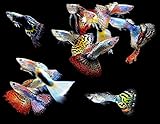
Can gouramis live with guppies?
Do not assume that guppies are safe simply because they are small community fish. Seriously Fish cautions that dwarf gouramis may be intimidated by gaudy fish such as guppies, while Aqueon’s general guide explicitly notes an exception when discussing livebearers: fancy guppies are not an automatic recommendation. Consider the exact gourami, guppy strain, sex ratio, swimming activity and available cover before attempting the combination.
Independent reader supportYour contribution helps us test, update, and keep practical guides available for everyone.Are gouramis aggressive?
Some are territorial rather than universally aggressive. Male gouramis commonly direct aggression toward other males; Aqueon therefore says they should typically be kept individually. Species profiles add that dwarf gouramis can be shy yet territorial, banded-gourami males may fight in small tanks, and giant gouramis can become aggressive when space is inadequate. Spawning can also change behavior. Watch the fish you actually keep instead of relying on a species label alone.
Can you keep two gouramis together?
There is no single safe pairing rule. Two males are a high-risk choice, especially in a small aquarium. A male and female can also have problems, and different species or color forms should only be considered in a larger, heavily structured aquarium after checking their adult sizes and behavior. Keeping one gourami is often the more conservative option when the aquarium is limited.
The Tool Desk
Outbyte Driver Updater FREEFix the driver behind crashes, sound loss and screen glitchesFind Drivers →Outbyte PC Repair FREEClear out junk files and repair common Windows errorsFree Scan →Best Value
Warning signs that a combination is failing
- One fish is chased repeatedly or cannot leave a hiding place.
- Fins are clamped, torn or progressively damaged.
- A gourami is routinely driven away from the surface or feeding area.
- A larger gourami repeatedly mouths or swallows smaller companions.
- Fish remain stressed despite adding visual barriers and rearranging territories.
At the first persistent sign, provide a separate, cycled aquarium or divider rather than waiting for an injury to worsen.
A practical shortlist
Rasboras and danios recur as possible companions across several species profiles, but they are not universally suitable. Their size, speed and fin behavior still have to fit the specific gourami. Loaches, Corydoras and other bottom-oriented fish can reduce direct competition for surface space, yet the full adult stocking plan and water requirements still need checking. No source establishes an exhaustive list of fish that are always compatible or always incompatible.
For a final decision, compare each candidate on adult size, temperament, territoriality, fin-nipping risk, activity level, feeding competition, predation risk, water and temperature needs, and the aquarium’s volume and cover. When those factors cannot be reconciled, choose a different companion or keep the gourami alone.
Quick Recap
Product prices and availability are accurate as of the date/time indicated and are subject to change. Any price and availability information displayed on Amazon at the time of purchase will apply.
Quick wins for a faster PC:
Fix the driver behind crashes, sound loss and screen glitchesFind Drivers →Clear out junk files and repair common Windows errorsFree Scan →Scan for outdated or missing drivers - takes under a minuteDriver Scan →



