What’s actually slowing this PC down?
Pick the symptom - the matching free tool is one click away.
The best silicone sealant for an aquarium is one whose exact manufacturer documentation explicitly says it is intended for aquarium use. Current manufacturer-described options include Aqueon Silicone Aquarium Sealant, SikaSeal-401 Aquarium and EVERBUILD AquaMate Sealant. They are examples of suitable formulations, not independently tested overall winners. Choose by the stated aquarium application, substrate, package format, curing information and availability in your market.
What makes a silicone sealant aquarium-suitable?
Aquarium suitability is a product-specific claim, not a synonym for “100% silicone” or “waterproof.” The formulation, additives and intended use matter. A sealant should have current label or technical documentation that names aquarium manufacture, fish tanks or safe use around aquatic life.
Do not assume that a general-purpose silicone becomes suitable after it cures. Sika USA explicitly says: “Sikasil® GP-101 is not recommended for structural glazing or use in an aquarium.” Generic silicone properties therefore cannot substitute for an aquarium-use approval.
Documented aquarium sealants to compare
| Product | Manufacturer-described fit | Format or published specification | Important qualification |
|---|---|---|---|
| Aqueon Silicone Aquarium Sealant | Aqueon’s 2024 catalog says it is formulated to be non-toxic and suitable for use on aquariums. | Package size and cure data are not stated in the cited catalog material. | Check the current package and instructions for your market before buying. |
| SikaSeal-401 Aquarium | Sika Australia describes a one-component silicone safe for aquatic life and intended for aquarium sealing; the page lists glass, aluminium and fish tanks. | Clear 75 g tube; approximately 3 mm per 24 hours curing rate in Sika Australia’s 2023 product data. | The cure figure is specific to this product and conditions, not a universal aquarium waiting time. |
| EVERBUILD AquaMate Sealant | Sika’s technical sheet says it is formulated for aquarium manufacture, free from fungicide and solvent, and suitable for continuous water immersion. | 295 ml cartridge (March 2022 technical sheet). | A cartridge requires a compatible caulk gun; confirm that the current local sheet still matches the product you purchase. |
| Sikasil GP-101 | Not recommended for aquarium use. | Not applicable. | Do not select it for a tank based on generic silicone characteristics. |
Which option fits your project?
For a small repair or a tube application
SikaSeal-401’s clear 75 g tube is a practical format for a small aquarium sealing job when it is available in your region. Its documentation identifies aquatic-life safety and lists glass, aluminium and fish tanks. Use the current instructions rather than treating the published 3 mm-per-24-hours rate as a guaranteed total cure time.
The Tool Desk
Outbyte Driver Updater FREEFix the driver behind crashes, sound loss and screen glitchesFind Drivers →Outbyte PC Repair FREEClear out junk files and repair common Windows errorsFree Scan →#1 Best Overall
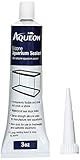
- Waterproof seal stops leaks
- Permanently flexible; does not crack or shrink
- Easy to apply long-lasting bond
- 100% Non-toxic silicone for use on freshwater or saltwater aquariums
- Clear silicone color - also available in black silicone
For aquarium manufacture or a larger reseal
EVERBUILD AquaMate is supplied in a 295 ml cartridge and is documented for aquarium manufacture and continuous water immersion. The larger cartridge format is better suited to a caulk gun and longer beads than a small tube. The sheet cited is from March 2022, so verify the current technical data and local availability.
When you want a widely recognized aquarium-labeled product
Aqueon Silicone Aquarium Sealant is specifically marketed by Aqueon as non-toxic and suitable for aquariums in its 2024 catalog. Confirm the exact package label, regional instructions and size before purchase because the cited catalog material does not establish a universal cure schedule or package size.
Rank #2

- SAFE FOR THE FISH: Selsil Aquarium Silicone is a silicone sealant used in glass bonding work. It does not contain chemicals or solvents that are not friendly to your fish or other organisms in the aquarium. This product is made from 100% silicone polymer, is used in aquarium manufacturing, and conforms with the ISO 11600 –F&G–25 LM standards.
- ADHESIVE FOR VARIOUS NON-POROUS SURFACES: This transparent silicone sealant offers an excellent grip on the glass without using an additional primer. It adheres well to acetoxy system curing glass and many non-porous surfaces. This is a silicone adhesive that also offers insulation for many kinds of materials like aluminum, glazed ceramic tiles, and glass. You may use this product for freshwater and saltwater aquariums.
- STRONG BOND: Highly elastic and flexible, this adhesive putty offers a quality adhesion effect. It is also resistant to ozone, ultra-violet radiation, and extreme temperatures. It does not lose its elasticity at high and low temperatures and it will not crack, pull, or discolor.
- FAST CURING: This aquarium glue offers quick curing time. Apply the aquarium silicone on the surfaces you need to work on and wait only a few hours for it to cure. It is, however, best to wait up to 24 hours if you want it to completely cure. Its application temperature should be between + 5 ° C and +40 ° C (41.0 ° F and 104 ° F). This product conforms to ISO 11600–F & G – 25 LM.
- MULTI-PURPOSE: This is not just a sealant for your making or repairing aquariums. You may also use this silicone glue for other applications like sealing seams, stopping leaks, or securing decorations in the aquarium. As long as the surface you will work on is non-porous, this clear silicone caulk will do its job well.
How to apply aquarium silicone safely
- Confirm the exact product. Read the package and the current technical data sheet. The aquarium-use statement must apply to that formulation and market, not merely to a brand family or another product.
- Remove unsuitable old sealant. For a reseal, cured silicone generally has to be removed from the bonding area. A glass-safe scraper or razor may help, but use a technique appropriate for your tank and avoid scratching panels.
- Prepare the surfaces. SikaSeal-401 documentation requires surfaces to be clean, dry and free of dust, grease and loose material. AquaMate documentation also says glass should be cleaned before use. Do not apply over contamination or loose material.
- Apply an even bead. Follow the product’s bead-size, tooling and assembly directions. For a cartridge, use a compatible caulk gun. Keep the sealant where the manufacturer specifies; do not introduce unapproved additives.
- Allow complete cure before filling. Cure depends on formulation, bead thickness, temperature, humidity and ventilation. Sika’s approximately 3 mm per 24 hours figure applies to SikaSeal-401 under its stated conditions only. Follow the current package or data sheet and wait for full cure before water, plants or livestock are introduced.
- Check the finished seal before stocking. Inspect for gaps, uncured areas and adhesion problems. A cautious water test with the aquarium positioned where a leak will not cause damage is preferable to placing animals in a newly sealed tank.
Common mistakes to avoid
- Choosing by the word “silicone” alone: general-purpose products can be unsuitable for aquarium use.
- Assuming “non-toxic” covers every stage: the product must be fully cured according to its own instructions before aquatic-life exposure.
- Using the wrong cure estimate: one product’s rate cannot be transferred to another formulation or project.
- Ignoring the substrate: verify that the documentation covers the surfaces you are bonding, such as glass or aluminium.
- Buying solely by package size: a 75 g tube and a 295 ml cartridge serve different project scales and may not be sold in every country.
- Resealing a structurally damaged tank without assessment: cracked panels, spreading seams or major frame damage may require an experienced aquarium or glass professional rather than a bead of sealant.
A practical buying checklist
- The exact product name appears on the package and technical documentation.
- The manufacturer explicitly states aquarium, fish-tank or aquatic-life suitability.
- The stated substrate and intended job match your tank.
- You know whether you need a tube or a cartridge and have the compatible applicator.
- The current cure instructions are available for your region.
- The product is available from a legitimate local source and has not passed its shelf-life guidance.
Bottom line
Start with an aquarium-specific formulation, not a generic silicone. Aqueon Silicone Aquarium Sealant, SikaSeal-401 Aquarium and EVERBUILD AquaMate are manufacturer-documented examples, while Sikasil GP-101 is specifically ruled out for aquarium use. Compare the exact label, substrate, format and cure instructions for the product sold in your market, then allow complete cure before exposing the seal to aquatic life.
Quick Recap
Best Value

- Fish Safety:Aquarium sealant clear is a non-toxic, solvent-free acid cured silicone sealant, 100% Silicone, which is friendly to underwater organisms, protects fish safety, and is your best repair choice.
- Quick Curing: This waterproof silicone sealant can cure quickly. Aquarium silicone sealant onto the surface that needs to be treated, and the surface will dry within 30 minutes. However, if you want to fully solidify, it's best to wait for 48 hours. Cure time will increase with lower temperature, humidity, and large bead size. The optimal surface temperature for application is+41 ° F -+104 ° F (+5 ° C -+40 ° C).
- Strong Adhesion: Aquarium silicone solidifies under the action of atmospheric moisture, forming a permanently soft silicone rubber with characteristics such as fast curing, high strength, good toughness, and compatibility with most building materials. Cured silicone rubber can maintain excellent performance within the temperature range of -50 ° C to 100 ° C.
- All Day Elasticity: Aquarium silicone sealant maintains its integrity, does not shrink, crack, or discolor, whether in tropical warm or cold water environments, ensuring that the waterproof seal can withstand temperature.
- Multipurpose: This aquarium silicone can be used not only for aquariums, but also for other purposes such as windows, door frames, kitchen sinks, bathrooms, cars, boats, pipes, etc.
Rank #4

- Fish Safety:Aquarium sealant clear is a non-toxic, solvent-free acid cured silicone sealant, 100% Silicone, which is friendly to underwater organisms, protects fish safety, and is your best repair choice.
- Quick Curing: This waterproof silicone sealant can cure quickly. Aquarium silicone sealant onto the surface that needs to be treated, and the surface will dry within 30 minutes. However, if you want to fully solidify, it's best to wait for 48 hours. Cure time will increase with lower temperature, humidity, and large bead size. The optimal surface temperature for application is+41 ° F -+104 ° F (+5 ° C -+40 ° C).
- Strong Adhesion: Aquarium silicone solidifies under the action of atmospheric moisture, forming a permanently soft silicone rubber with characteristics such as fast curing, high strength, good toughness, and compatibility with most building materials. Cured silicone rubber can maintain excellent performance within the temperature range of -50 ° C to 100 ° C.
- All Day Elasticity: Aquarium silicone sealant maintains its integrity, does not shrink, crack, or discolor, whether in tropical warm or cold water environments, ensuring that the waterproof seal can withstand temperature.
- Multipurpose: This aquarium silicone can be used not only for aquariums, but also for other purposes such as windows, door frames, kitchen sinks, bathrooms, cars, boats, pipes, etc.
Rank #3
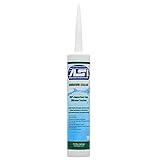
- This high modulus component RTV Silicone Sealant forms strong cohesive bonds to glass without the need of primers
- The bonds are unaffected by continuous immersion in water and, when fully cured, is non-toxic to fish
- ASI Aquarium Silicone Sealant is a non-slump sealant and can be applied to vertical surfaces without flowing or sagging
- Can be applied to surface temperatures from -18°C to +50°C (0°F to +120°F) and after curing, withstands constant operating temperatures from -57°C to +233°C (-70° F to 450°F)
- Formulated for use with fresh and salt-water aquariums or a Vivarium. This product does not have an expiry date printed on it, only batch id is there on the product.
Product prices and availability are accurate as of the date/time indicated and are subject to change. Any price and availability information displayed on Amazon at the time of purchase will apply.




