There is no single best pH buffer for every freshwater aquarium. Choose by what you need the water to do: raise carbonate hardness (KH), move toward a particular pH, or remain stable for your fish and plants. If you need to raise both pH and KH while avoiding added phosphate, Seachem Alkaline Buffer is one documented option—not a universal recommendation. Test your source water and aquarium before adjusting, and avoid chasing a generic pH number.
What does an aquarium pH buffer do?
“Buffer” can describe products with different chemistries and purposes. Some are intended to move water toward a stated pH; others add carbonate and bicarbonate, increasing carbonate alkalinity (KH) as they raise pH. These functions are not interchangeable. A product aimed at a pH set point does not necessarily raise KH.
KH helps indicate the water’s capacity to resist pH change. Before choosing a product, test the aquarium and the water you use for water changes. Consider both pH and KH, as well as whether the tank is planted and whether its existing water already suits its inhabitants. API’s educational material recommends gradual pH changes; it does not establish a single target appropriate for every freshwater aquarium. API Fishcare, “Lesson 2: Understanding pH in Your Aquarium”.
Which buffer fits your goal?
| Product | Manufacturer-described chemistry and purpose | Consider it when |
|---|---|---|
| Seachem Alkaline Buffer | Non-phosphate carbonate/bicarbonate buffer; raises pH and KH. Seachem states a pH range of 7.2–8.5. | You want to add carbonate alkalinity as well as raise pH, and avoiding phosphate is relevant, such as in a planted aquarium. Seachem product information. |
| Seachem Neutral Regulator | Phosphate-based; described as targeting pH 7.0. Seachem says it does not increase carbonate KH and describes water softening through precipitation of calcium and magnesium. | Your goal is its stated pH target, not raising carbonate KH. Seachem notes phosphate-buffer concerns for planted tanks. Seachem product information and FAQ. |
| Seachem Alkaline Regulator | Phosphate-based; stated pH range 7.1–7.6. | You are considering that pH range and do not need to avoid phosphate. Seachem says to use Alkaline Buffer if phosphate is a concern, while noting that the non-phosphate option may allow greater pH fluctuation because of CO₂ equilibrium. Seachem product information. |
| Seachem Acid Regulator / Acid Buffer | Seachem describes Acid Regulator as phosphate-based and recommends Acid Buffer for lowering pH in planted aquariums where added phosphate is a concern. | Your goal is to lower pH rather than raise KH. Check the manufacturer’s directions for the specific product. Seachem product information. |
| API PROPER pH | API’s educational material describes products for set points of 6.5, 7.0, 7.5, or 8.2 that also buffer water. | You are comparing set-point products. Confirm current label details, formulation, and availability before choosing one. API Fishcare educational material. |
When Seachem Alkaline Buffer may be a fit
Seachem describes Alkaline Buffer as a phosphate-free carbonate/bicarbonate product for raising both pH and KH. The manufacturer markets it for planted aquariums and very hard water where phosphate buffers may be undesirable. That makes it a conditional candidate when adding carbonate alkalinity is part of the goal; it is not a general-purpose solution for every pH problem.
Recommended Free Tools
#1 Best Overall
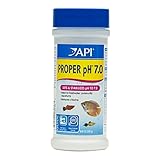
- Contains one (1) API PROPER pH 7.0 Freshwater Aquarium Water pH Stabilizer 8.8-Ounce Container Use exclusively in freshwater aquariums that DO NOT contain live plants
- Sets and stabilizes water pH to neutral to help keep fish healthy and colorful
- Removes toxic compounds from tap water to make it safe for fish
- Use exclusively in freshwater aquariums that do not contain live plants
- Use when setting up a new aquarium, adjusting pH in an established aquarium or changing water
Seachem’s product directions state 1 teaspoon (6 g) per 80 L (20 US gallons) daily until the desired pH is reached. The manufacturer says this dose raises alkalinity by about 1 meq/L (2.8 dKH). This is the product’s stated direction, not a dosing recommendation for every tank. Measure the water and follow the current package directions rather than applying the dose blindly.
How to choose and adjust safely
- Test first. Measure pH and KH in both the aquarium and the water used for water changes. A freshwater aquarium KH test kit, or a kit that measures both GH and KH, can help establish the starting point.
- Define the goal. Decide whether you need higher KH, a particular pH range, or simply stable water. Do not select a pH-set-point product when the real need is to raise carbonate KH.
- Account for the tank. Consider the existing source water, livestock, plants, and whether adding phosphate is acceptable. The cited product descriptions explain manufacturer-stated chemistry and intended uses; they do not provide independent head-to-head trial results.
- Make changes gradually and recheck. API advises gradual pH changes. Follow the selected product’s label and measure again rather than trying to force a rapid change to a generic target.
Why phosphate and carbonate buffers are not substitutes
Seachem describes phosphate buffers as providing strong pH stability, but says they can cause issues in planted tanks. Its phosphate-free carbonate/bicarbonate buffers are presented for planted aquariums where phosphate is a concern. The trade-off is that Seachem notes greater pH fluctuation may occur with the non-phosphate option because of CO₂ equilibrium. Choose based on the tank’s needs and the actual job required, rather than assuming all products labeled “buffer” behave alike.
Rank #2

- Safely decreases pH in freshwater, marine and planted aquaria.
- Gradually decreases alkalinity ("carbonate hardness") of tap water and aquarium water.
- Useful for decreasing pH of aquarium water when establishing acidic water conditions in biotope aquaria, simulating the onset of rainy seasons or for encouraging spawning in fish species indigenous to low-pH environments.
- Contains no phosphate-based buffers; will not contribute phosphate or nitrogen-based nutrients to aquarium water.
- Age range description: All Life Stages
What the product ranges do—and do not—tell you
The stated pH values are manufacturer product ranges or targets, not universal freshwater aquarium targets. They also are not evidence that one product performs better than another in a controlled comparison. Match any adjustment to the aquarium and its inhabitants, and do not infer that a nominal pH target alone makes a product suitable.
Quick Recap
Best Value
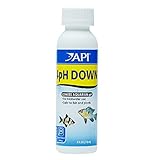
- Contains one (1) API pH DOWN Freshwater Aquarium Water pH Reducing Solution 4-Ounce Bottle
- Lowers freshwater aquarium water pH with a phosphate-free formula
- Does not promote algae growth with pH adjustments and is safe for plants and fish
- Slowly neutralizes alkaline substances that cause high water pH
- Test water weekly and use to correct pH level in freshwater aquariums
Rank #4

- Contains one (1) API PROPER pH 8.2 Freshwater Aquarium Water pH Stabilizer 7.4-Ounce Container
- Sets and stabilizes water pH to 8.2 to help keep fish healthy and colorful
- Ideal for saltwater, brackish and african cichlid aquariums
- Use exclusively in aquariums that do not contain live plants
- Use when setting up a new aquarium, adjusting pH in an established aquarium or changing water
Rank #3
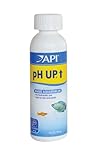
- Contains one (1) API pH UP Freshwater Aquarium Water pH Raising Solution 4-Ounce Bottle
- Raises freshwater aquarium water pH with a phosphate-free formula
- Does not promote growth with pH adjustments and is safe for plants and fish
- Slowly neutralizes acidic substances that cause low water pH
- Test water weekly and use to correct pH level in freshwater aquariums
Product prices and availability are accurate as of the date/time indicated and are subject to change. Any price and availability information displayed on Amazon at the time of purchase will apply.




