On December 6, 2024, the U.S. Department of Agriculture (USDA) ordered nationwide surveillance sampling of raw cow’s milk intended for pasteurization. The order lets the Animal and Plant Health Inspection Service (APHIS) request samples from covered farms and milk-handling businesses; it does not require testing every retail carton or every dairy cow. A positive sample from a processing-plant silo prompts investigation, but does not by itself establish that a herd or state is affected.
What the December 2024 order requires
The order is part of USDA’s National Milk Testing Strategy (NMTS). When APHIS requests it, a person responsible for a covered operation must allow APHIS or its cooperators to collect enough raw milk for highly pathogenic avian influenza (HPAI) testing. The milk must be cow’s milk intended for pasteurization and sent or held by one of these entities:
- Dairy farms
- Bulk milk transporters
- Bulk milk transfer stations
- Dairy processing facilities
The order also requires laboratories and state veterinarians to report positive influenza A nucleic acid detection results from livestock diagnostic samples, including raw milk. Owners of herds associated with positive milk tests must provide basic epidemiological information, including animal movement information. See the USDA Federal Order for the order’s requirements.
What is being tested—and what is not
This is surveillance of raw milk moving through the pasteurization supply chain. It is not a mandate to test every consumer’s milk, every retail carton, or every individual dairy cow. USDA’s National Milk Testing Strategy uses samples from processing-plant silos and other bulk milk sources to monitor for H5 and guide follow-up.
Windows Errors? Fix Them Before They Spread
Repair common Windows errors and clear accumulated junk for a smoother, more stable PC - no reinstall needed.Free scan · no reinstallOutdated Drivers Are Slowing You Down
One free scan finds every outdated or missing driver and matches the right update for your exact hardware.Free scan · exact hardware match#1 Best Overall

- Fast 5–10 Minute Results: Visual interpretation for rapid decision-making in dairy operations.
- High Sensitivity: Detects critical β-lactam antibiotics at or below industry safety thresholds.
- Multi-Analyte Coverage: Targets penicillin, cephalosporins , and other β-lactams.
- Food Safety Use Only: Intended exclusively for raw milk screening—not for medical or human diagnostic purposes.
- High Concordance (98.6%) with ELISA: Trusted accuracy for professional testing environments.
How the five NMTS stages work
- National silo monitoring: USDA monitors milk silos at processing plants nationwide to locate disease and identify trends.
- State status assessment: USDA works with states on bulk milk programs to identify affected herds or demonstrate that herds are unaffected.
- Response in affected states: The focus is case identification and response, including enhanced biosecurity, movement controls, and contact tracing.
- Demonstrating unaffected status: Sampling continues in states working to demonstrate that they remain unaffected.
- Long-term surveillance: Periodic surveillance is used to demonstrate long-term freedom from H5 in the national dairy herd.
USDA says it will consider ending the strategy when all states reach Stage 5 and demonstrate freedom from H5 in the U.S. dairy herd. The five stages describe the program’s progression; they do not mean that every state is currently at the same stage.
What happens when a raw-milk sample tests positive for H5?
A positive raw-milk sample triggers additional state investigation. Processing-plant silo samples are pooled surveillance samples, so a positive result signals that further investigation is needed; it does not identify a particular infected cow or prove that the state is affected. State and federal officials use additional herd-level testing to determine herd and state status. USDA’s NMTS frequently asked questions explain that a state is not considered affected based only on results from raw milk collected at processing-plant silos.
Rank #2
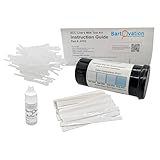
- Easy - Simple to use with objective, easy-to-read results
- Fast - 1-minute procedure, results in 15 minutes
- Affordable - Costs far less than lab testing and electronic meters
- Cowside - Test anytime, no lab required
- Versatile - Works with quarter & composite samples
How this differs from testing dairy cattle before interstate movement
The December 2024 milk order complements a separate Federal Order issued in April 2024. That earlier order requires testing of lactating dairy cattle before interstate shipment and reporting of positive results; it remains in effect. The programs have different samples, triggers, and purposes.
| Program | What is sampled | When it applies | Purpose and participation |
|---|---|---|---|
| December 2024 National Milk Testing Strategy order | Raw cow’s milk intended for pasteurization | Covered operations must provide a sample when APHIS requests one | Mandatory order obligations support surveillance and investigation |
| April 2024 interstate movement order | Lactating dairy cattle | Before interstate shipment | Requires testing to meet interstate movement requirements |
| Dairy Herd Status Program | Weekly bulk milk samples | Voluntary option for eligible herds monitoring status before interstate movement | Can serve as an alternative to testing each individual animal under the program |
Details of the movement order are available from USDA APHIS’s Federal Order page.
Quick wins for a faster PC:
Clear out junk files and repair common Windows errorsFree Scan →Scan for outdated or missing drivers - takes under a minuteDriver Scan →Repair Windows errors before they cause bigger problemsFix Now →Rank #3
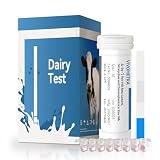
- SEE WHAT APPEARANCE CANNOT SHOW — Milk can look and smell normal while residue questions remain. This 4-in-1 strip screens one sample for four antibiotic-residue groups: beta-lactams, tetracyclines, sulfonamides, and ceftiofur, giving dairy users an on-site first check before milk moves forward.
- Universal Dairy Compatibility: Specifically formulated for a wide range of dairy matrices. Highly effective for raw cow milk, goat milk, sheep milk, camel milk, and even reconstituted milk powder. Ideal for dairy collectors, small-scale producers, and routine quality monitoring.
- Precision Screening Technology: Features industry-leading sensitivity, especially for Ceftiofur (5-10 ppb). This kit uses the Gold Immunochromatography Assay (GICA) to ensure your dairy meets your personal or facility’s quality standards.
- Fast & Simple Process: No complex laboratory equipment or specialized environment required. Get clear, visual results in just 6-10 minutes. A time-saving essential for routine dairy intake screening and pre-processing checks.
- 8-Test Value Pack: Includes 8 individually sealed test strips and 8 reagent microwells. Each strip offers multi-target screening, providing a cost-effective way to monitor the quality of your dairy supply.
What dairy producers should know about the voluntary herd-status option
The Dairy Herd Status Program is separate from the mandatory milk-surveillance order. For eligible herds, APHIS says three consecutive weekly negative results from National Animal Health Laboratory Network (NAHLN) laboratories establish Monitored Unaffected status. Continued weekly negative testing maintains that status. Producers can use weekly bulk tank samples through this voluntary program rather than testing each individual animal before interstate movement. See USDA’s Dairy Herd Status Program guidance for eligibility and program details.
Quick Recap
Best Value

- Mastitis is considered the most common and costly disease in the dairy industry. Detecting it early is easy and affordable with this cowside subclinical dipstick test.
- The Milk Mastitis LDH Test is designed to measure LDH (lactate dehydrogenase), an enzyme released into the milk when udder tissue is damaged and cells are compromised due to an infection.
- Studies show that measuring LDH activity in milk is an easy and cost-effective way to detect subclinical mastitis.
- Compared to SCC tests, testing for LDH is just as effective (if not more), is less expensive and provides earlier detection because LDH levels often increase earlier than SCC.
- While LDH is correlated to SCC, LDH is not as easily affected as SCC by other issues such as stress, nutrition, parity and stage of lactation, making it a more reliable indicator for determining an udder infection.
Rank #4

- Mastitis indicators are safe and simple colormetric cow-side tests for mastitic milk, designed to test the milk from the corresponding quarter of the cows udder
- A color-change blotter card reveals flakes and clots, and also tests for abnormally alkaline milk, all of which point to a mastitis infection
- The depth of color is usually in direct proportion to the degree of mastitis infection
- Many cases of mastitis in the early stages can be successfully treated. For the determination of curable cases and a course of treatment, consult a veterinarian
- Unused testers should be kept in a clean, dry place away from light and stable odors
Product prices and availability are accurate as of the date/time indicated and are subject to change. Any price and availability information displayed on Amazon at the time of purchase will apply.




