The Tool Desk
Outbyte Driver Updater FREEScan for outdated or missing drivers - takes under a minuteDriver Scan →Outbyte PC Repair FREEClear out junk files and repair common Windows errorsFree Scan →Yes—most cats can learn with clicker training. The clicker is not a command or a bribe; it is a precise marker that tells your cat exactly which action earned a reward. Pair the sound with something your cat values, then use it to teach tricks, recall, carrier entry, scratching-post use and cooperative handling without punishment.
What clicker training means for a cat
Clicker training is positive-reinforcement marker training. The click marks the instant a desired behavior happens; a small reward follows. Because the click is fast and consistent, it can bridge the short delay between the behavior and food. Merck Veterinary Manual describes this sound as a second-order reinforcer.
At first, the sound has no meaning. As Jeannine Berger, DVM, DACVB, DACAW, CAWA, explains in PetMD: “The clicker has no meaning to your cat unless it’s paired with a reward.”
The reward can be food, play or social interaction, but food is often easiest to deliver quickly. Your cat—not a generic treat chart—determines what is valuable.
Quick wins for a faster PC:
Scan for outdated or missing drivers - takes under a minuteDriver Scan →Clear out junk files and repair common Windows errorsFree Scan →#1 Best Overall

- New communication tool about you and your puppy.
- Pet Dog Training Clickers for Puppy, Cat, Potty, Bird, Horse, Pet, Trainer Training Tools, Behavior Aids
- Just press to mark desired behavior, then reward for faster learning.
- The spring wrist length : 16cm/6.3inches and can strength to 25cm/9.84inches.
- Package include : Black + Blue,each color 1 pcs.
Set up training so your cat wants to participate
Choose a quiet marker
Use a clicker with a volume that does not startle your cat. If the snap is intimidating, muffle it, operate it inside a pocket or choose a softer model. A spoken marker such as “Good kitty!” is a valid alternative when a mechanical click is too loud or inconvenient.
Prepare a useful reward
Use tiny, easy-to-swallow pieces of a food your cat genuinely wants. Keep rewards small enough that many repetitions do not become a meal, and account for training food in the daily ration. Have the treats ready before you begin so the reward follows the marker without a long delay.
Pick the right conditions
Train when your cat is calm, comfortable and interested in interacting. Keep sessions brief, teach one behavior at a time and finish while the cat is still engaged. Reserve the clicker for training so its sound remains informative.
Rank #2

- Cat Training Clicker Kit - Includes a finger ring clicker and a retractable target stick with yellow ball, giving you two tools for guiding and interacting with your cat during training or play.
- Finger Ring Clicker for Clear Feedback - The included finger clicker produces a crisp, easy-to-press sound, helping guide your cat during training or interactive play without startling them.
- Eye-Catching Yellow Target Ball - The bright yellow ball at the tip of the target stick catches your cat’s attention and supports guided movement for interactive sessions.
- Retractable Stick for Convenient Use - The stainless steel target stick extends and retracts smoothly, allowing adjustable length for comfort, while keeping the target clicker compact and easy to store or carry.
- Versatile Training Accessory - Suitable for kittens and adult cats, this dual clicker kit can be used for a variety of interactive play or guided training sessions, and can also be used with other small pets.
How to begin: charge the clicker and teach a first behavior
- Pair sound and reward. Click, immediately deliver a treat, and repeat across several short sessions. Do not ask for a behavior yet. Continue until your cat reliably looks for the reward after the click.
- Capture something easy. Wait for an action your cat already offers, such as sitting, looking toward you or walking closer. Click during the action—not after it has ended—then reward.
- Add a cue. Say “sit,” “touch” or another cue just before the behavior is likely to occur. When the action happens, click and reward. Do not repeat the cue continuously; give the cat a chance to respond.
- Shape the finished behavior. Reward progressively closer approximations. For a carrier, you might reinforce looking at it, approaching it, touching it, placing one paw inside and then entering fully. Each click identifies the step that earned payment.
- Fade unnecessary help. Once the behavior is reliable, reduce lures and reward the response to the cue. Continue to reinforce often enough that the behavior remains worthwhile.
If you click at the wrong moment, do not scold or try to “undo” the sound. Simply reset and mark the next correct opportunity.
Do these 3 things before closing this tab:
1Scan for outdated or missing drivers - takes under a minute2Clear out junk files and repair common Windows errors3Fix the driver behind crashes, sound loss and screen glitchesBehaviors you can teach
Recall and coming when called
Start at close range in a quiet room. Say your cat’s name or a distinct recall cue, then click the instant the cat turns or moves toward you and reward on arrival. Gradually add distance and mild distractions. Never call only for something unpleasant, such as medication or the end of outdoor time; occasionally reward a response and then release your cat to continue a pleasant activity.
Sit, stay and simple tricks
Capture a natural sit, then add the verbal cue. For a stay, click and reward very short pauses first, increasing duration or distance one change at a time. High-five can be built by marking a paw lift, then a paw moving toward your hand, and finally contact.
Rank #3

- INSIDE THE PACKAGE: Created by a professional animal behaviorist, this complete cat clicker training kit includes everything you need to get started: an all-in-one integrated clicker tool with a 22 inch extendable target stick and a 43-page illustrated training manual with 15 guided lessons to help you confidently train your cat from day one.
- TARGET STICK WITH UPDATED DESIGN: The CAT SCHOOL all-in-one clicker features a new and improved design with a quieter clicker sound and a stronger, more durable construction—perfect for sound-sensitive cats and everyday training use. This versatile tool works as both a target stick and a detachable clicker, giving you flexible training options. Extend the target stick up to 22 inches to easily guide your cat between positions. The large, bright yellow ball tip is easy for cats to see, track, and touch—boosting confidence, accuracy, and calm focus during training.
- QUIET, DETACHABLE CAT-FRIENDLY CLICKER: Designed with your cat’s sensitive ears in mind, this quiet clicker delivers a sound your cat can comfortably learn from. Use it attached to the target stick or slide it off for handheld use. The clicker fits comfortably in your hand and includes a secure finger loop to wear on your finger once removed from the base.
- IMPROVES CAT BEHAVIOR: Clicker training is a positive, rewarding way to teach skills and encourage good behavior. Regular training sessions help increase activity, reduce boredom and stress, and may curb unwanted behaviors like scratching or biting—while strengthening the bond between you and your cat.
- OUR COMMITMENT TO YOUR SUCCESS: Your cat’s training success matters to us. Gain access to supportive video tutorials created by an animal behaviorist and trusted by thousands of successful students. Our proven system helps make training fun, enriching, and rewarding—for both you and your cat.
Targeting and going to a mat
Present a target stick or another safe target. Click and reward a nose touch, then gradually move the target so your cat follows it. Targeting can guide a cat onto a mat, into position for weighing or through a room without physical pushing. Stationing on a mat is also useful during household activity and veterinary preparation.
Scratching the approved surface
Place the scratching post near the location your cat already chooses. Mark investigation, a paw touch and then an actual scratch. Reward promptly. Make the post stable and appealing; training works better when the environment makes the desired choice easy.
Counter manners
Prevent rehearsal by removing tempting food and providing an alternate station. Click and reward four paws on the floor or on a nearby mat. If the cat jumps up, calmly reset rather than punishing; the replacement behavior is what earns reinforcement.
Rank #4
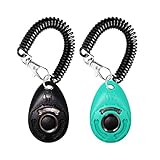
- EASY TO USE - Simple push button with distinct clicking sound.
- Comes with an elastic wrist band so you can leave it on your wrist or clip it to the leash or your pants.
- Not only train the dog but also the cat, bird, chicken, sheep a new behaviors like sit, fetch, roll over, lie down.
- For effective pet training ALWAYS reward with a treat after clicking.
- Can be used to train the dog basic obedience, small trick, and correct the bad behavior; Scientific method of training your pet safely and easily.
Using training for carriers and cooperative care
Training can make necessary handling more predictable instead of turning the carrier or examination table into a trap. Leave the carrier accessible with the door secured open. Reinforce looking toward it, approaching, entering partway and resting inside. Increase duration and close the door only while the cat remains relaxed, then reopen and reward.
Apply the same tiny-step approach to touching ears, paws or the coat, presenting a brush, accepting a towel or standing on a scale. AAHA identifies stationing as a cornerstone of cooperative care, while the Feline Veterinary Medical Association recommends shaping complex behaviors through successive small steps and describes target-stick training. If your cat freezes, hides, swats or stops taking rewards, the step is too difficult: go back to an easier approximation and reduce pressure.
Independent reader supportYour contribution helps us test, update, and keep practical guides available for everyone.Clicker versus a spoken marker
| Consideration | Clicker | Spoken marker |
|---|---|---|
| Consistency | A short, repeatable mechanical sound when used the same way each time | Can vary with voice, volume and wording |
| Startle potential | May frighten sound-sensitive cats; use a quieter model or muffle it | Usually easier to soften, though a loud or excited voice can also startle |
| Timing and distance | Fast to deliver and audible across a room, provided the cat tolerates it | Always available and useful when your hands are occupied; timing depends on speaking promptly |
| Portability | Requires carrying a device, unless kept on a wrist strap or nearby | No equipment needed |
| Cooperative-care use | Clear marking can support precise, gradual handling steps | Supports the same shaping plan when paired consistently with a reward |
A clicker is optional. AVSAB notes that food-only positive reinforcement can work. It also describes one small study in which food alone produced better progress than food preceded by a beep; the cited information does not provide a sample size, year or effect size, so it cannot establish a universal advantage for either method.
What’s actually slowing this PC down?
Pick the symptom - the matching free tool is one click away.
Best Value
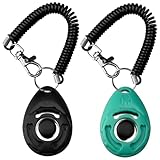
- Instant Attention & Clear Sound: This dog clicker for training produces a sharp, consistent sound that’s perfect for clicker training dogs, puppies, cats, and even birds or horses. Works great as a dog clicker to stop barking and reinforce positive behaviors quickly.
- Lightweight, Durable & Easy to Carry: Made from sturdy, lightweight materials, this pet training clicker is built to last. Comes with a convenient wrist strap so your dog training tools are always within reach during walks, obedience classes, or home sessions.
- Simple One-Button Operation: Whether you’re a new dog trainer or a pro, the large button makes this puppy training clicker and cat training clicker easy to use—just press to mark desired behavior, then reward for faster learning.
- Versatile for Multiple Pets & Purposes: More than just a dog training clicker—this tool is perfect as a cat clicker trainer, training clicker for puppies, or even a clicker cat trainer. Works for potty training, obedience, tricks, and behavior correction.
- Positive Reinforcement Training Made Easy: Trusted by professionals, this dog training & behavior aids device supports humane, reward-based training. Ideal as puppy training tools, dog training aids, or dog training clickers to create a strong bond with your pet.
Troubleshooting common problems
Your cat ignores the click
Check that the reward is genuinely valuable and delivered immediately. Re-pair the click and treat without asking for behavior. If there is still no anticipation, try a different reinforcer or a spoken marker.
Your cat runs from the sound
Stop clicking at full volume. Muffle the device, increase distance or switch to a quiet clicker or verbal marker. Pair the softer sound with rewards before resuming training.
The behavior falls apart
You may have increased duration, distance, distraction or physical difficulty too quickly. Return to the last successful step, change only one criterion and reinforce more frequently.
The cat grabs treats or loses interest
Use smaller pieces, deliver them calmly and pause. Train before—not immediately after—a large meal, but never withhold necessary food. End the session when the cat disengages.
Training turns into conflict
Do not punish, force a position or use the clicker to interrupt unwanted behavior. Punishment can harm the human–cat bond and does not teach what to do instead. Manage the environment and reinforce a workable replacement behavior.
What the evidence does—and does not—show
Clicker training is a practical application of positive reinforcement, but there is no authoritative universal success percentage, required repetition count or fixed session length for cats. Results vary with the individual cat, reinforcer, timing, environment and behavior being taught. Progress is best judged by whether your cat remains comfortable and performs the behavior more readily over successive sessions.
Quick Recap
A simple checklist
- Pair every click with a valued reward before using it as a marker.
- Click during the desired action, then reward immediately.
- Begin with an easy behavior and build complex tasks in small steps.
- Keep sessions calm and brief, and stop while participation is willing.
- Use a verbal marker when a click is frightening or impractical.
- Apply the same method to tricks, recall, carriers, mats, scratching and handling.
Product prices and availability are accurate as of the date/time indicated and are subject to change. Any price and availability information displayed on Amazon at the time of purchase will apply.




