The Tool Desk
Outbyte Driver Updater FREEScan for outdated or missing drivers - takes under a minuteDriver Scan →Outbyte PC Repair FREERepair Windows errors before they cause bigger problemsFix Now →Several fish eat sea urchins, especially triggerfish, wrasses and seabream. Documented examples include gray triggerfish, blunthead and finescale triggerfish, white seabream, ballan wrasse, and two wrasses recorded at Ningaloo Reef. The examples come from different oceans and studies, so they represent confirmed cases rather than a complete worldwide list.
Fish documented eating sea urchins
| Fish | Where the evidence comes from | Urchin or evidence type | What was found |
|---|---|---|---|
| Gray triggerfish (Balistes capriscus) | NOAA Fisheries species profile | Diet description; benthic invertebrates | Adults primarily eat benthic invertebrates, including sea urchins. Their strong jaws and teeth can crush or chisel hard shells. |
| White seabream (Diplodus sargus) | Azores stomach-content study (2005) | Diet analysis | Sea urchins appeared among the species’ varied food items. |
| Ballan wrasse (Labrus bergylta) | Azores stomach-content study (2005) | Diet analysis | The fish fed mainly on echinoderms, including sea urchins; larger fish accounted for most recorded urchin consumption in the study populations. |
| Blunthead triggerfish (Pseudobalistes naufragium) | Galápagos experiment (2017) | Large pencil urchins (Eucidaris galapagensis) and green urchins (Lytechinus semituberculatus) | Predated on pencil urchins and preferred them over green urchins in the experiment. |
| Finescale triggerfish (Balistes polylepis) | Galápagos experiment (2017) | Large pencil and green urchins | Also preyed on pencil urchins and showed the reported preference for them over green urchins. |
| Humphead wrasse relatives recorded at Ningaloo: Coris aygula and Choerodon rubescens | Ningaloo Reef observations | Tethered Echinometra mathaei | These two wrasses together made up 65% of observed predation events among seven fish species recorded. |
The Azores study is available through Fisheries Research. The Galápagos experiment is reported in PubMed, and the Ningaloo study is published at ScienceDirect.
Why triggerfish are effective urchin predators
Triggerfish have robust, projecting teeth and powerful jaws suited to breaking or chiseling hard prey. NOAA’s description of gray triggerfish says: “Adults primarily eat benthic invertebrates including crabs, sea urchins, shrimp, sand dollars, lobsters, and mollusks.” That feeding specialization helps explain why several triggerfish species appear in urchin-predation studies.
The Galápagos result was species- and prey-specific. Blunthead and finescale triggerfish preferred pencil urchins to green urchins in the reported trial, so the result should not be generalized to every triggerfish or every sea urchin.
#1 Best Overall
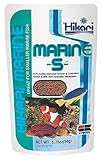
- High protein levels; consistent with the foods your fish would eat on the reef
- Soft and sponge-like, a texture your marine fish are instinctively accustomed to
- Shrimp Meal for excellent, natural color enhancing benefits
- Ideal for all smaller marine carnivores or omnivores
- Stabilized vitamin C to support immune system health
What the studies show about population control
Finding sea urchin remains in a stomach or watching a fish attack an urchin proves feeding, but it does not by itself prove that the fish controls urchin numbers.
Galápagos: an experimental reduction
In the Galápagos experiment, the two triggerfish species produced a 24-fold reduction in pencil-urchin density during the initial 21 hours. This was a result of that controlled experiment, involving particular fish behavior, reef conditions and urchin species; it is not a general estimate for all reefs.
Rank #2

- Fortified with garlic Guard, chlorella, and vitamin C for enhanced health and vitality
- High in marine protein and a rich assortment of vitamins and minerals
- Premium and nutritionally balanced
- Contains only the highest quality ingredients without low nutritional value fillers
- Formulated with pro-biotics for maximum health and vitality
Ningaloo: predation without demonstrated top-down control
At Ningaloo Reef, researchers directly observed fish preying on tethered Echinometra mathaei. Although Coris aygula and Choerodon rubescens accounted for most observed attacks, the study found no evidence that predation determined urchin population patterns among or within the habitats examined.
How to interpret different evidence
- Stomach-content studies establish that a fish consumed urchin material.
- Direct observations document attacks or successful predation in a particular setting.
- Experiments can test whether a predator changes urchin abundance under specified conditions.
These methods answer related but different questions. Species identity, location, prey species, fish size and behavior all affect the result.
Free tools Windows power users keep installed
One-click scans. No signup required.
Rank #3
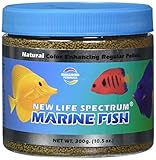
- Marine Fish Formula, 1mm Sinking Pellets - 300g
- Newest lineup from New Life Spectrum featuring the Nature series
- No artificial preservatives, flavoring, or colors
- All ingredients in the new formulas are preserved using natural preservatives
- Made in the USA.
What else eats sea urchins?
Sea urchins also have non-fish predators. Smithsonian Ocean lists lobsters, crabs, sea otters and wolf eels among animals that eat them. Sea otters are mammals, not fish; a U.S. Geological Survey record documents their predation on sea urchins in the western Aleutian Islands (Smithsonian Ocean; USGS).
How geography and prey species change the answer
A fish that eats urchins in one region may encounter different urchin species, habitat structure and competitors elsewhere. The documented examples span the Azores, Galápagos and Ningaloo Reef, while NOAA’s gray-triggerfish profile covers a broader species diet rather than a single population experiment. For that reason, there is no evidence here for ranking the world’s fish predators by overall importance.
Rank #4

- High Palatability : Sword Prawn Flavor - A blend of wild sword prawns, fresh squids, vegetables and seaweed. A perfect 8:2 meat/vegetable protein ratio even the pickiest marine fish can’t resist
- Superior Quality Ingredient : Made from carefully selected ingredients. All natural protein from fresh meat, vegetables and seaweed. Rich in calcium and vitamin D, jam-packed with a variety of vitamins (A, C, D3, E, B1, B2, B6, B12). No additives, no artificial flavors or coloring, no byproducts and other harmful ingredients. Great for marine fish's growth, keeping color vibrance and boost immunity
- Natural Coloration: The Ultra-enhanced formulation of natural seaweed, Australian spirulina, and premium fresh sword prawns enhances the natural coloration of your fish, presenting them in their most natural and vibrant colors
- Easy to Intake & Digest : 1.5mm Granule, the right granule size for small marine fishes like clownfish and blue tang to consume, safer and easier to digest. *Feed 1-3 times per day, no more than your fish can consume within 3 minutes
- 3 Million CFUs/g Probiotics : 3 million CFUs/g probiotics are within the food to help dissolve fish excrements, residuals and keeps water clean. Probiotics also increase the feed conversion rate, improve betta’s immune system and gut health
- Azores: white seabream and ballan wrasse were identified through stomach contents.
- Galápagos: blunthead and finescale triggerfish affected pencil urchins more strongly than green urchins in an experiment.
- Ningaloo Reef: wrasses were frequent predators of tethered Echinometra mathaei, without demonstrated control of natural urchin distributions.
Bottom line
Triggerfish, wrasses and white seabream are confirmed fish predators of sea urchins. The strongest documented short-term reduction came from two Galápagos triggerfish species attacking pencil urchins in an experiment, but eating urchins does not automatically mean a fish regulates their population in the wild.
Quick Recap
Best Value

- High Palatability : Sword Prawn Flavor - A blend of wild sword prawns, fresh squids, vegetables and seaweed. A perfect 8:2 meat/vegetable protein ratio even the pickiest marine fish can’t resist
- Superior Quality Ingredient : Made from carefully selected ingredients. All natural protein from fresh meat, vegetables and seaweed. Rich in calcium and vitamin D, jam-packed with a variety of vitamins (A, C, D3, E, B1, B2, B6, B12). No additives, no artificial flavors or coloring, no byproducts and other harmful ingredients. Great for marine fish's growth, keeping color vibrance and boost immunity
- Natural Coloration: The Ultra-enhanced formulation of natural seaweed, Australian spirulina, and premium fresh sword prawns enhances the natural coloration of your fish, presenting them in their most natural and vibrant colors
- Easy to Intake & Digest : 1.5mm Granule, the right granule size for small marine fishes like clownfish and blue tang to consume, safer and easier to digest. *Feed 1-3 times per day, no more than your fish can consume within 3 minutes
- 3 Million CFUs/g Probiotics : 3 million CFUs/g probiotics are within the food to help dissolve fish excrements, residuals and keeps water clean. Probiotics also increase the feed conversion rate, improve betta’s immune system and gut health
Product prices and availability are accurate as of the date/time indicated and are subject to change. Any price and availability information displayed on Amazon at the time of purchase will apply.