Yes. Discus are freshwater tropical cichlids, not saltwater fish. They come from the Amazon basin and need warm, clean, stable water. A successful aquarium provides a dependable heater, biological filtration, regular testing and partial water changes.
What kind of fish are discus?
Discus belong to the Cichlidae family and are freshwater tropical fish. Wild discus inhabit floodplain lakes, flooded forests and tributaries in the lowland Amazon basin, often in quiet water around submerged wood and vegetation. Aquarium-trade fish are collected from Amazon tributaries in Brazil, Colombia and Peru.
They are therefore not marine fish and should never be kept in saltwater or marine aquarium conditions.
Water parameters discus need
Discus are sensitive to abrupt changes, so stability matters as much as hitting a target number. Published care guidance gives slightly different ranges; the figures below show those recommendations rather than one universal rule.
Free tools Windows power users keep installed
One-click scans. No signup required.
#1 Best Overall
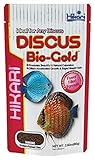
- Made from a perfect blend of proteins, indispensable amino acids and necessary vitamins and minerals
- Natural color enhancing ingredients safely produce natural brilliant colors rapidly while helping definition too!
- Porous granule immediately becomes soft and sponge-like, yet retains it's shape
- Developed to meet the discus eating routine of repeatedly taking the food in and spitting it out
| Parameter | Published guidance | Practical meaning |
|---|---|---|
| Temperature | 26–30°C (78.8–86°F) from the Ornamental Aquatic Trade Association (OATA); Aqueon lists 82–86°F (27.8–30°C) | Use a reliable aquarium heater and verify the actual temperature with a thermometer. |
| pH | 6.0–7.5 (OATA); Aqueon lists 6.0–7.0 | Avoid rapid swings. Match the fish’s established water where possible instead of making sudden corrections. |
| Hardness | 1–4 dKH (18–70 ppm), according to Aqueon | Soft to moderately soft water is the usual target; test your source water before choosing a treatment routine. |
| Ammonia | 0 | Any detectable reading indicates a problem requiring immediate investigation. |
| Nitrite | 0 | Keep it at zero through an established biofilter and appropriate stocking. |
| Nitrate | No higher than 20 mg/L, according to OATA | Control accumulation with maintenance and partial water changes. |
Do discus need a heater?
Yes. Their required temperature is higher than that of many commonly kept freshwater fish, so room temperature alone is not a dependable plan. Choose a heater with a thermostat suited to the aquarium volume, install it according to its instructions and confirm performance with a separate thermometer. Keep a replacement plan available because a failed heater can quickly make the water unsuitable.
Tank size and essential equipment
Tank volume
OATA advises an aquarium of approximately 300 litres for a shoal of six adult discus. Treat that as a starting requirement for the group, not as a reason to crowd additional fish into the same volume. A larger footprint also provides more swimming room and makes stable water quality easier to maintain.
Rank #2

- TROPICAL FORMULATION: These slow-sinking granules are specially designed for use as a staple food for larger, mid-water tropical fish.
- FOR DAILY FEEDING: Nutritionally balanced diet for optimal health, color and vitality – supports a long life.
- PROCARE FORMULA: Helps support fish’s immune system for optimal health and long life.
- CLEAR-WATER FORMULA: Will not cloud water when used as directed.
- COLOR ENHANCING: Helps promote the development of vibrant colors in larger tropical fish.
Filtration and flow
Use biological filtration capable of processing the aquarium’s waste while avoiding harsh, turbulent flow. The filter should be easy to service without disrupting the biological media. Observe the fish after setup: excessive current, poor circulation or clogged media can all undermine water quality.
Water-change equipment
A siphon or gravel cleaner makes regular partial changes and removal of settled waste practical. Always prepare replacement water so its temperature and chemistry do not differ sharply from the aquarium’s water.
Rank #3

- Carefully selected color enhancing ingredients and the scientifically blended nutrient mix help bring out the brilliant colors of your fish, rapidly!
- We developed a unique stick that readily moved with the current while slowly and randomly moving through the water column like live food would.
- The uniquely balanced formulation offers nutrition live worms simply cannot, without the parasite or bacteria risks.
- The inclusion of mealworms and other carefully selected and tasty ingredients make this a delicious offering most tropical fish immediately attack.
Testing equipment
A freshwater aquarium test kit should cover ammonia, nitrite, nitrate, pH and hardness. Test newly established aquariums more frequently, after adding fish or changing equipment, and whenever behavior or water clarity changes. Record results so gradual trends are visible rather than relying on appearance alone.
Maintenance routine for freshwater discus
- Check temperature. Confirm the heater and thermometer show a stable warm-water reading.
- Test the water. Verify zero ammonia and nitrite, check nitrate against the 20 mg/L ceiling, and monitor pH and hardness.
- Remove waste. Use a siphon or gravel cleaner while avoiding unnecessary disturbance of the biofilter.
- Perform a partial change. Aqueon recommends weekly changes of about 10–25%. Prepare replacement water to avoid a sudden temperature or chemistry shift.
- Inspect equipment. Check heater operation, filter flow and media condition; clean or replace media only as the manufacturer and maintenance plan require.
Can discus live in a freshwater community tank?
They can only be considered for a community aquarium when every inhabitant can tolerate discus conditions: warm water around the discus target, compatible water chemistry and low risk of competition or stress. The tank must also remain large and stable enough for the full stocking plan. Do not select companions merely because they are freshwater fish; a species that requires cooler water or different chemistry is not a suitable match.
Rank #4

- FLAKE BLEND: NutriDiet Discus Flakes is a premium and nutritionally balanced diet formulated to meet the requirements of all discus while also working as an effective appetite stimulant. It contains only the highest quality of ingredients including fish, squid, and earthworms.
- NUTRITIONAL ALGAE:NutriDiet Discus Flakes have Chlorella Algae as an exceptional source of a broad range of vitamins, amino acids, as well as other nutrients required for animal life. Chlorella Algae is considered a potential super food.
- PROBIOTICS: Discus Flakes also contain probiotics which helps the digestive system of fish and inverts by promoting nutrient uptake, reducing waste, and supporting the immune system.
- WASTE REDUCTION: Due to Discus Flakes being easy for ornamental fish to completely digest, unnecessary waste is reduced in the system.
- FEEDING: When feeding your ornamental fish NutriDiet Discus Flakes, feed as much as the fish will consume in three minutes of feeding up to 3 times daily.
Wild-caught and captive-bred discus
Origin affects how fish arrive at the aquarium and how carefully they must be acclimated. Wild-caught fish have a history in natural Amazonian water, while captive-bred fish may already be accustomed to a different local water supply. Ask the seller for the fish’s current temperature, pH and hardness, then transition gradually rather than making a dramatic change on arrival.
| Factor | Wild-caught | Captive-bred |
|---|---|---|
| Origin | Collected from Amazon tributaries and related habitats | Raised in aquariums or breeding facilities |
| Acclimation history | May have experienced transport and a larger change from natural conditions | May already be used to domestic aquarium water |
| Water tolerance | Confirm the collection and holding water; avoid assuming all wild fish have identical requirements | Confirm the breeder’s water; tolerance still varies between stocks |
| Temperature | Both require warm tropical conditions; use the measured range appropriate to the fish and keep it stable. | |
| Price and difficulty | These vary by fish, source and availability; no single price or difficulty ranking applies to every specimen. | |
Common mistakes to avoid
- Keeping discus in unheated water or allowing large daily temperature swings.
- Adding fish before ammonia and nitrite are consistently zero.
- Relying on clear-looking water instead of testing it.
- Making rapid pH or hardness changes to chase a number.
- Using a tank too small for a group of six adults; OATA’s approximate benchmark is 300 litres.
- Skipping partial changes until nitrate has already climbed above the recommended level.
The Bottom Line
Discus are freshwater Amazonian cichlids. Keep them in a heated, filtered aquarium at roughly 26–30°C, with soft to moderately soft, slightly acidic water, zero ammonia and nitrite, controlled nitrate and consistent maintenance.
Recommended Free Tools
Quick Recap
Best Value

- NATURAL COLOR ENHANCEMENT: Boost your discus fish's colors naturally with sera Discus Color Nature. Rich in Astaxanthin from Haematococcus algae and Spirulina, it ensures vibrant colors without artificial dyes or preservatives.
- OPTIMAL HEALTH & GROWTH: Elevate your fish's well-being. This premium food blends aquatic protein, Omega fatty acids, and essential minerals to support robust immune systems, growth, and fertility. Perfect for all discus fish varieties.
- HIGH-QUALITY INGREDIENTS: Formulated with carefully selected ingredients like Krill for palatability and nutrition, ensuring your discus fish receive the finest quality feed. Free from artificial colors and preservatives for their best health.
- EASY DIGESTION & NO WATER POLLUTION: The granules quickly become soft without swelling or losing shape, ensuring easy digestion and no water pollution. A clean tank means happy, healthy fish and less maintenance for you.
- SPECIALLY DESIGNED FOR DISCUS: Tailored to meet the unique needs of discus fish, this food promotes natural coloration, health, and vitality. Its sinking, non-expanding granules are perfect for discus feeding habits, ensuring no waste.
Product prices and availability are accurate as of the date/time indicated and are subject to change. Any price and availability information displayed on Amazon at the time of purchase will apply.