A tight cluster of tiny bubbles at the water’s surface is usually a betta bubble nest, particularly when your fish is active and eating normally. Male bettas build these floating nests as reproductive behavior. Bubbles can also come from a recent water change, a heater, or filter flow. The fish’s behavior and your water-test results determine whether you should simply observe or act immediately.
How to tell a bubble nest from other bubbles
Use the bubbles’ pattern, location and timing together with your betta’s condition.
| What you see | Most likely explanation | What to do |
|---|---|---|
| Many tiny bubbles packed into a stable patch at the surface, often beneath a leaf, floating plant or other cover | Bubble nest | Observe a normally behaving fish; do not remove the nest just to make the tank look tidy. |
| Scattered bubbles immediately after filling the aquarium or performing maintenance | Air introduced by agitation | Allow them to dissipate; check that replacement water was conditioned and temperature-matched. |
| Short-lived bubbles around a heater after new water is added | Gas coming out of warming water | Confirm the heater is functioning safely and the temperature is stable. |
| Bubbles concentrated at a filter return or spread across a strongly moving surface | Filter flow or surface agitation | Reduce excessive flow without removing necessary filtration. |
| Bubbles accompanied by a surface film, odor, repeated gasping or unusual behavior | Water-quality, equipment or health problem | Test the water promptly and correct the underlying condition. |
A nest is generally a dense, persistent surface patch. Maintenance bubbles are more random and usually fade. Strong flow can disperse either type.
What a betta bubble nest is for
Chewy defines a bubble nest as “a cluster of small air bubbles that a betta blows at the surface of the water” (Chewy, updated February 25, 2026). The behavior is most associated with male bettas, although a female can occasionally produce bubbles.
Free tools Windows power users keep installed
One-click scans. No signup required.
#1 Best Overall
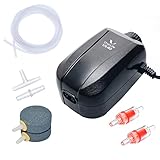
- Steady Output: Max Air Flow Rate: 64 GPH; Pressure: 0.016 MPa; Power: 4 W. Perfect for aeration in 10 - 100 gallon fresh water and marine aquariums.(The data is measured with experimental equipment and may deviate slightly from the actual data. The air volume may be insufficient due to the blocked air intake cotton. Please replace the cotton yourself if the air volume is insufficient.)
- Adjustable Air Flow: Feature a rotary knob to control the amount of air for dual outputs, allowing for your desired air flow to fully oxygenate your fish tank.
- Quiet Operation: The pump emits 25 dB sound under the “Low” mode and maximum 45 dB noise like the hum of a refrigerator under the highest air flow.
- 2 Air Stone Discs: Produce lots of dense medium bubbles bursting into the surface of water steadily. A great way to aerate your tanks and enliven the aquatic life.
- Pump Accessories: Include 2 air stones, 6.5-foot airline tubing, 2 check valves and 2 connectors. Complete accessories to build the basic aeration setup in your tank.
During breeding, eggs are placed among the bubbles. The University of Florida IFAS explains that “Placement of the eggs at the surface increases oxygen exchange, while the bubble nest also prevents the eggs from drying” (University of Florida IFAS, Evolution, Culture, and Care for Betta splendens). A fish may build under a floating leaf or another object that helps hold the bubbles together. Nest size varies between individuals and is not a reliable measure of age, happiness or breeding readiness.
Does a bubble nest prove the water is healthy?
No. Nest building can occur in a tank that still has unsafe ammonia or nitrite, an unsuitable temperature, or another husbandry problem. Treat the nest as a behavior to identify, not as a water-quality test.
Rank #2

- Steady Output: Max Air Flow Rate: 50 GPH; Pressure: 0.013 MPa; Power: 1.25 W. The pump supplies steady air flow with low power consumption. Work great for fish tanks or buckets up to 60 gallons.
- Adjustable Air Flow: There is a rotatable knob on the top to manually adjust the air volume. Greatly meet your desired air flow to keep fish or roots healthy.
- Quiet Operation: With 4 shockproof rubber feet to minimize vibration, the pump greatly reduces noise to less than 30 dB like a soft speaking voice. No disturbance to your daily life.
- Reliable Construction: The fish tank pump is well constructed with a sturdy ABS shell and a heavy-duty inner structure. Really lightweight and space-saving.
- Pump Accessories: Contain 6.5-foot 3/16" airline tubing (ID: 4 mm), 2 small air stone cylinders, 2 connectors (straight & T-shape) and 2 check valves. All build the basic aeration setup in your fish tank.
For routine care, aim for 0 ppm ammonia and 0 ppm nitrite, keep nitrate low, and test with an aquarium water-test kit. PetMD’s veterinarian-reviewed care sheet recommends having a way to test water quality and lists a 2.5-gallon aquarium as an ideal minimum setup (PetMD, updated April 27, 2026). A larger, filtered, heated aquarium is generally easier to keep stable than a very small container.
What to do when you find bubbles
1. Observe the fish before touching the nest
Healthy bettas may visit the surface to take atmospheric air because they possess a labyrinth organ. Occasional surface breathing is therefore normal. Repeated gasping, hanging at the surface, lethargy, loss of appetite, abnormal swimming, or clamped or worsening fins changes the situation from “observe” to “test and correct.”
Windows Errors? Fix Them Before They Spread
Repair common Windows errors and clear accumulated junk for a smoother, more stable PC - no reinstall needed.Free scan · no reinstallOutdated Drivers Are Slowing You Down
One free scan finds every outdated or missing driver and matches the right update for your exact hardware.Free scan · exact hardware matchRank #3

- POWERFUL AERATOR PUMP & ENERGY CONSERVATION - AQQA fish tank air pump 3 watt equipped with a high-quality pump, the pump delivers stable output while conserving energy for optimal performance. Air volume for up to 80 gallon tank, the max pressure is 18Kpa and max air volume is 100GPH, can be easily connected to different type air stones, can be used for larger fish tanks, aquariums.
- NOISE REDUCTION ULTRA QUIET FUNCTION - The aquarium air pump features a sturdy double-layer structure with a built-in air pump and thickened casing, the bottom of the pump is designed with four soft rubber pads, which not only reduce noise, the max noise does not exceed 35dB but also prevent the pump from moving excessively during operation.
- DURABLE STAINLESS STEEL DUAL OUTLET DESIGN - The fish air pump designed with 2 stainless steel outlets, long service life, that can be used in multiple fish tanks or aquariums, making it suitable for both freshwater and seawater setups.
- ADJUSTABLE AIR FLOW SWITCH - The air pump aquarium is equipped with a knob on top, allowing you to easily adjust the air volume or switch without the need for frequent unplugging and plugging, making it more user-friendly.
- PACKAGE INCLUDED - 1 × Aquarium air pump with 5.91ft power cord; 2 × Air stones; 2 × 4.92ft Air tubes; 2 × Check Valves; 1 × User Manual. And you will get a 1-year after-sale product service and 7*24H lifetime customer service.
2. Test the water
Check ammonia, nitrite, nitrate and pH with a reliable aquarium test kit. Petco specifically advises checking ammonia and nitrite when a betta repeatedly stays at the surface (Petco, updated September 23, 2025). Any detectable ammonia or nitrite warrants prompt corrective action rather than waiting to see whether the nest remains.
3. Verify temperature and stability
Chewy gives approximately 76–82°F as the recommended range associated with healthy bubble-nest conditions (Chewy, updated February 25, 2026). Use a thermometer, keep the heater appropriately sized and guarded, and avoid abrupt temperature changes when adding water. Newly added cooler water can release visible bubbles as it warms.
Rank #4
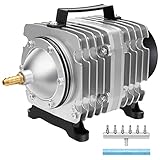
- HIGH PRESSURE, LARGE OUTPUT – This aquarium air pump delivers large output and high pressure of compressed air. Flow rate 600GPH, pressure 0.02Mpa, powered by a 18Watt electromagnetic motor.
- GREAT HEAT DISSIPATION - The housing of this air pump for aquariums is made of aluminum alloy with enlarged surface for the best heat dissipation. (Reminder – the air pump is highly recommended to be placed at a well-ventilated location. A cooling fan will help extend the life of the pump)
- EENRGY EFFICIENT, LONG LIFE – This air compressor is with lubricant free design. The high-quality cylinder and piston are made of wear-resistant materials to ensure the low consumption of power and long life.
- ACCESSORIES – Chrome coated metal air manifold. A 6-outlet manifold is provided for this pond aerator for easy access of oxygenation to anywhere you desire. The air output of each outlet is adjustable by simply turning the adjusting knob on the outlet.
- MULTIPLE APPLICATIONS – This commercial air pump is ideal for oxygenation of aquarium, pond, hydroponics, fish farm, and seafood restaurant, also great for compost tea brewing and air assist for laser cutting.
4. Check filter flow and the water surface
Bettas do best with gentle circulation. Chewy identifies low-flow sponge filters as a suitable option because strong current and surface agitation can break up a nest. Aim the outlet so the fish is not being pushed around, but do not shut off essential filtration merely to preserve bubbles.
5. Perform necessary maintenance
Use dechlorinated, temperature-matched replacement water. If testing or tank condition calls for a water change or cleaning, do it even if a nest is present; the nest will eventually break apart and can be rebuilt. Petco’s overview of tank bubbles notes that bubbles introduced during filling or cleaning commonly dissipate on their own (Petco, Bubbles in Fish Tank: Causes & What to Do).
What’s actually slowing this PC down?
Pick the symptom - the matching free tool is one click away.
Best Value

- Ultra Quiet: Made of ABS thickening engineering plastics, super silent aquarium air pump. Soft rubber foot pads, further palliation for noise.
- Long Service Life: Manually adjustable air volume, won’t cause shakes and electric field fluctuation, much safer than electronic adjustment, lower failure rate.
- Aquarium Air Pump with 2 outlets, dual hose fish tank air pump, 3W air pump fit for fish tanks from 10 to 100 gallon.
- Unique Design: The air intake cotton is replaceable, it can filter the impurities in the air and extend the service life of the air pump, also come with 1 more replacement.
- Complete Accessories: Comes with everything you need, includes: Return Valve*2, Air Stone*2,Air Tube (2 x 4.9ft)*2, Suction Cup*2, Air Regulating Valve*2, T-Connector*1, Air Intake Cotton*1. Original quality, professional manufacturer.
When bubbles signal a possible emergency
Do not assume a nest is harmless when it appears with signs of distress. Act promptly if you see:
- Repeated or labored gasping at the surface
- Lethargy, loss of appetite or inability to maintain position
- Abnormal swimming, clamped fins or rapidly worsening appearance
- A persistent oily film, foul odor or unusually cloudy water
- Detectable ammonia or nitrite
First test the water and verify temperature and equipment. Correct unsafe readings with appropriate, conditioned water changes and improved husbandry. If abnormal behavior continues after water quality and temperature are corrected, contact an aquatic veterinarian or an experienced fish-care professional.
Should you remove a betta’s bubble nest?
Usually, no. A nest is not dirty and does not need to be skimmed away. It may collapse during routine maintenance, and that is not harmful; a betta can build another one. Never postpone a needed water change, filter cleaning or safety repair to protect the bubbles. Keeping the aquarium stable is more important than preserving the nest’s shape.
Quick Recap
Quick decision checklist
- Dense surface cluster + active, eating fish: likely a bubble nest; observe and maintain the tank normally.
- Scattered bubbles after filling or cleaning: allow them to clear while confirming conditioned, temperature-matched water was used.
- Bubbles at a heater or filter return: inspect temperature and flow.
- Bubbles plus gasping or lethargy: test ammonia, nitrite, nitrate and pH immediately and correct problems.
Product prices and availability are accurate as of the date/time indicated and are subject to change. Any price and availability information displayed on Amazon at the time of purchase will apply.




