Do not feed raw soybeans to chickens or other poultry. Poultry can use soybean products safely when whole beans are properly roasted, steamed or extruded, or when you use commercially processed soybean meal. Raw beans contain trypsin inhibitors and lectins that impair protein digestion, damage intestinal tissue and reduce nutrient absorption. Mississippi State University Extension states: “Raw soybeans should never be fed to poultry or game birds.”
Why raw soybeans are unsafe
Raw soybeans contain trypsin inhibitors, which interfere with trypsin and other enzymes needed to digest protein. Lectins can injure the intestinal mucosa and reduce nutrient uptake. The result can be poorer feed utilization, reduced growth and digestive problems. These compounds are not reliably removed by simply soaking, sprouting or grinding the beans.
Heat processing is the critical safety step. University of California Agriculture and Natural Resources summarizes the requirement this way: “When feeding soybeans to poultry, soybeans must be heat-treated to destroy a trypsin inhibitor that disrupts digestion.”
Which soybean products can poultry eat?
| Product | Antinutritional-factor control | Typical nutrient profile | Practical considerations |
|---|---|---|---|
| Raw whole soybeans | Unsafe; inhibitors and lectins remain active | Not an appropriate feed ingredient | Do not feed to chickens, turkeys, ducks or other poultry |
| Roasted, steamed or extruded whole soybeans | Heat treatment deactivates trypsin inhibitors when processing is adequate | Full-fat soybeans contain about 38–42% protein and 18–22% oil, according to University of Georgia guidance | Adds substantial energy and fat; grind and mix thoroughly; protect from rancidity |
| Commercial soybean meal | Heat processed during manufacture | More concentrated protein with little residual oil | Usually easier to formulate into a complete ration; use a feed-grade product with quality specifications |
How to heat-treat whole soybeans
Roasting at small-farm scale
University of California guidance gives a practical target of 270–300°F (132–149°C) for 10 minutes, followed by medium grinding. The goal is sufficient, even heating throughout the beans—not merely browning the outside.
#1 Best Overall
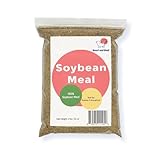
- High Protein Animal Feed: Packed with essential amino acids; ideal for chickens, goats, pigs, and other livestock requiring a plant-based protein source
- Non-GMO Plant-Based Power: Derived from high-quality soybeans; great for custom feed blends or trial use in backyard flocks and small farms
- Supports Growth and Production: Helps promote muscle development, feather quality, and consistent egg-laying cycles in poultry
- Supports Growth and Production: Helps promote muscle development, feather quality, and consistent egg-laying cycles in poultry
- Pure Soybean Meal Only: Finely ground and free from salt, preservatives, or additives; safe for storage and easy to mix with other feed components
- Use clean, dry feed-grade whole soybeans.
- Heat them evenly to 270–300°F and hold that temperature for about 10 minutes.
- Cool the beans completely before storage or grinding.
- Grind to a medium meal so the product mixes uniformly into the ration.
- Store the finished feed in a cool, dry place and use it promptly enough to limit rancidity.
Steaming and extrusion can also work when the equipment is correctly operated. Underprocessing leaves antinutritional factors active. Overheating can trigger Maillard reactions that bind amino acids—especially lysine—and lower the usable protein value.
Why color is not a reliable test
Bean color, smell or surface browning cannot confirm that the interior received the right time-and-temperature treatment. University of Georgia describes urease activity as an indirect indicator of residual antinutritional factors and discusses protein solubility and protein dispersibility index (PDI) as processing-quality measures. If homemade processing is inconsistent, a feed laboratory or a complete commercial feed is safer than guessing.
Rank #2

- Farm‑Fresh Non‑GMO Soybeans – Whole roasted soybeans grown and packaged by Ernst Grain & Livestock, a trusted 7th‑generation family farm in Clear Spring, Maryland.
- Roasted at 300°F for Quality – Heat‑treated to enhance digestibility and energy availability for poultry, livestock, and wildlife.
- Versatile High‑Energy Feed – Ideal for chickens, cattle, goats, pigs, deer, and other animals needing a nutrient‑dense protein and fat source.
- Clean, Consistent Grain – Processed in a feed‑grade facility; may require additional cleaning depending on your application.
- Convenient 10 lb Bag – Convenient, durable packaging for year‑round feeding, storage, and farm use. Proudly produced and bagged on our family farm.
How much soybean can poultry eat?
There is no single inclusion rate that applies to every poultry species, age and complete ration. The correct amount depends on the bird’s energy requirement, amino-acid balance, minerals, vitamins, salt and the other ingredients already present.
What the feeding trials show
University of Kentucky reports that research diets containing 15% roasted soybeans were used in starter turkey diets. In grower and finisher diets for female turkeys, roasted soybeans replaced 100% of soybean meal without adverse effects on growth or carcass traits in those trials. These results are specific to the tested turkey diets and should not be treated as a universal recommendation for laying hens, broilers, ducks, young chicks or every turkey program.
Rank #3

- Green growth and nitrogen provider in the garden, great animal feed.
- Typical N-P-K analysis 6-2-1
- Resealable Bag
- No added chemicals or preservatives!
Formulate the whole diet, not just the soybean ingredient
- Use a species- and age-appropriate poultry formulation or complete commercial feed as the nutritional foundation.
- Account for the oil and energy supplied by full-fat roasted soybeans; adding them without reformulating can make the ration too energy-dense.
- Check digestible amino acids, particularly lysine and methionine, rather than relying only on crude-protein percentage.
- Maintain adequate calcium, available phosphorus, salt, trace minerals and vitamins.
- Introduce any reformulated feed gradually and monitor feed intake, body weight, egg production or growth, and manure consistency.
Nutritional comparison: cooked whole soybeans and soybean meal
The following values are from a Poultry Extension composition table accessed in 2026. They are reference values for feed formulation, not a guarantee for every batch.
| Nutrient | Cooked full-fat soybeans | Solvent soybean meal |
|---|---|---|
| Energy | 3,350 kcal/kg | 2,240 kcal/kg |
| Crude protein | 38.0% | 44.0% |
| Ether extract | 18.0% | 0.5% |
| Crude fiber | 5.0% | Not stated in the cited table |
| Calcium | 0.25% | 0.25% |
| Methionine | 0.54% | 0.65% |
| Lysine | 2.40% | 2.70% |
Roasted whole beans therefore contribute both protein and considerable oil-derived energy. Soybean meal supplies more protein per unit weight and far less fat, making it simpler to use when a ration already contains enough energy or added oil.
Rank #4
- Green growth and nitrogen provider in the garden, great animal feed.
- Typical N-P-K analysis 6-2-1
- Resealable Bag
- No added chemicals or preservatives!
Storage and quality checks
- Buy feed-grade material and keep it dry, clean and protected from pests.
- Because whole roasted soybeans contain much more oil than solvent meal, watch for rancid odors, heating, mold or visible spoilage.
- Do not store warm, damp beans in sealed containers where condensation can develop.
- For purchased meal, ask the supplier about heat processing and available urease, protein-solubility or PDI results.
- Discard feed that is moldy, rancid or contaminated; do not try to salvage it by mixing it with fresh feed.
Common questions
Can chickens eat raw soybeans?
No. Raw soybeans should never be fed to poultry because their trypsin inhibitors and lectins interfere with digestion and nutrient absorption.
Do soybeans need to be cooked before feeding chickens?
Yes. Whole soybeans must be adequately heat-treated by roasting, steaming or extrusion. Commercial soybean meal has already been heat processed, but its quality still depends on correct manufacturing and storage.
The Tool Desk
Outbyte Driver Updater FREEFix the driver behind crashes, sound loss and screen glitchesFind Drivers →Outbyte PC Repair FREERepair Windows errors before they cause bigger problemsFix Now →Best Value

- Farm‑Fresh Non‑GMO Soybeans – Whole roasted soybeans grown and packaged by Ernst Grain & Livestock, a trusted 7th‑generation family farm in Clear Spring, Maryland.
- Roasted at 300°F for Quality – Heat‑treated to enhance digestibility and energy availability for poultry, livestock, and wildlife.
- Versatile High‑Energy Feed – Ideal for chickens, cattle, goats, pigs, deer, and other animals needing a nutrient‑dense protein and fat source.
- Clean, Consistent Grain – Processed in a feed‑grade facility; may require additional cleaning depending on your application.
- Bulk 46 lb Bag – Convenient, durable packaging for year‑round feeding, storage, and farm use. Proudly produced and bagged on our family farm.
Are roasted soybeans safe for poultry?
They can be, provided they are roasted evenly and thoroughly. A practical small-scale target is 270–300°F for 10 minutes, followed by cooling and medium grinding. Avoid both underprocessing and excessive heat.
Can I replace all soybean meal with roasted soybeans?
That was successful in specific grower and finisher diets for female turkeys reported by University of Kentucky, but it is not a blanket recommendation for every poultry species or life stage. Recalculate the complete ration before making a replacement.
Quick Recap
Product prices and availability are accurate as of the date/time indicated and are subject to change. Any price and availability information displayed on Amazon at the time of purchase will apply.




