A fantasy pet can live by whatever rules its story gives it; a virtual pet follows the rules programmed into its game. A real pet is a living animal whose food, environment, health, behavior, and social needs must be met every day, often for years. The practical comparison is not whether a real animal can match an imaginary one’s magic, but whether a person can provide the right care for a particular species.
What counts as a fantasy pet?
“Fantasy pet” can mean two different things. A creature from a book, film, or game is fictional: unless its creator or a reliable species-specific source establishes otherwise, it has no verified husbandry requirements. Any discussion of its care should be labeled as a hypothetical based on the story, not presented as animal-care advice.


A virtual pet is a digital character whose needs are represented by game mechanics, such as feeding it, cleaning its habitat, or responding to prompts. Those actions may make care easy to understand or entertaining to repeat, but they do not teach a complete veterinary care plan. A 2015 review of live, robotic, and virtual pets discusses one evaluation in which companionship from the screen-based game Nintendogs was significantly less than companionship from a real dog or cat. That finding concerns one reported evaluation; it does not rank every virtual pet or show that virtual pets are harmful or useless. Read the review in Frontiers in Veterinary Science.
How fictional, virtual, and living pets differ
| Care question | Fictional creature | Virtual pet | Real pet |
|---|---|---|---|
| Time and supervision | Set by the story; not established animal-care guidance. | Set by the software, including whether the pet needs attention while the game is closed. | Depends on the animal’s species, age, health, and circumstances; care and planning continue outside playtime. |
| Food and water | Invented unless the fiction specifies them. | Game resources or actions, not a real diet plan. | Must be suitable for the species and individual animal. |
| Habitat and conditions | Imagined or defined by the fictional world. | Usually represented by a screen or in-game environment. | Housing and environmental conditions must meet the animal’s needs; requirements vary by species. |
| Behavior and social needs | Written for the narrative. | Limited to programmed behavior. | Must allow for species-typical behavior and appropriate social contact or separation. |
| Health and veterinary care | No established veterinary standard. | May use a game mechanic, but has no living patient. | Requires appropriate health care and access to a veterinarian familiar with the animal. |
| Long-term responsibility | Ends or changes with the story. | Bounded by the game and its design. | Includes planning for absences, changing circumstances, and the animal’s care over its life. |
The real-pet column is not a universal schedule or checklist: the correct answer depends on the actual species. For example, the American Veterinary Medical Association’s guidance on selecting a pet dog says dog owners are responsible for food, shelter, companionship, exercise, physical and mental health, veterinary care, and arrangements for absences throughout the dog’s life. Puppies also need added time for housetraining, socialization, obedience, more frequent feeding, exercise, and supervision. Those are dog-specific responsibilities, not a template for every animal.
Quick wins for a faster PC:
Fix the driver behind crashes, sound loss and screen glitchesFind Drivers →Repair Windows errors before they cause bigger problemsFix Now →Scan for outdated or missing drivers - takes under a minuteDriver Scan →#1 Best Overall
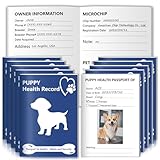
- Sufficient Quantity:When you choose our dog vaccines records, you'll receive 10 notebook.Whether you're a breeder, veterinary practice, or multi pet household, this will ensure you have enough documentation on hand for managing each pet's health history。Every puppy vaccination record book has 12-page puppy health journal has 8 dedicated pages for tracking your pup’s health, vet visits, and key details, with 4 blank pages at the end for jotting down extra notes, pet-related info, or anything else you want to record.
- .Ideal Size for Record Keeping:Each dog vaccine record book measures 5x3.5 inches folded; 5x7 inches unfolded, allowing for easy portability and storage.These handy health records notebook for dogs with double sided printing, featuring enough space and columns for all your pets important information,plus, it has dedicated spots for sticking on vaccine stickers and adding cute puppy photos.They offer a stylish and organized approach to pet health documentation, a must have addition to your pet supplies.
- Premium Quality: The puppy health record tracker’s cover features 300gsm coated paper with vibrant full-color printing and a protective laminate finish. Inside, 100gsm high-quality offset paper pages are durable and ink-resistant, ensuring no bleeding from pens or markers—so your records stay neat and easy to read.
- .Effortlessly Track Vaccinations and More:The canine health record booklets pages include:owner and puppy information,medical history and hospitalizations,vaccination record and sticker,dog service providers,fecal examinations and de-worming,heartworm screening, prevention and treatment etc.This record keeping tool will ensure every important detail is accounted for and make this task easy, organized, and straightforward.Add this essential tool to your pet supplies for a happier, healthier pet.
- Essential for Pet Owners:Designed for veterinary clinics and pet owners, these puppy vaccination record books make tracking key health details—like shots, checkups, and treatments—simple and organized. When you’re away and leave your pup with a sitter or family, the dog medical record and vaccine book serves as a quick reference for their medical history, ensuring care stays on track even in your absence. Plus, dedicated sections for photos, physical markings, and ID info prepare you for emergencies, helping you recover your friend quickly if they ever get lost.
Why species-specific care matters
Animals grouped under labels such as “exotic” or “non-traditional” are not one kind of pet. Rabbits, rodents, birds, and reptiles can have very different needs for housing, diet, behavior, and social interaction. The Merck Veterinary Manual’s review, reviewed September 2026, describes the importance of species-specific welfare and husbandry. A setup that works for one animal can be unsuitable for another.
Environmental details can be consequential. In its August 31, 2026 article, the American Animal Hospital Association (AAHA) highlights temperature and lighting as especially important for reptiles. It also quotes exotic-animal veterinarian Stephanie Lamb, DVM, DABVP: “I would say number one most helpful thing is just a good diet. For any of the species that we’re talking about.” The useful takeaway is not to buy a generic kit, but to identify the species and verify its actual diet and habitat needs with an appropriately experienced veterinarian.
“Wildlife,” “exotic,” and “non-traditional companion animal” should not be treated as interchangeable labels. The American Humane Society’s position statement notes that suitability varies: some nondomesticated species have needs that make private ownership inappropriate, while some animals bred and kept in human care for generations may thrive when responsibly sourced and provided suitable housing, nutrition, veterinary care, and opportunities for species-typical behavior. A label alone cannot determine whether an animal is a suitable pet.
What welfare means in practice
One way to turn “good care” into concrete questions is the five-needs framework described by the Scottish Animal Welfare Commission under the Animal Health and Welfare (Scotland) Act 2006. In that Scottish legal context, the needs are:
Free tools Windows power users keep installed
One-click scans. No signup required.
- A suitable environment.
- A suitable diet.
- The ability to exhibit normal behavior patterns.
- Housing with or apart from other animals, as appropriate.
- Protection from suffering, injury, and disease.
This is a framework attributed to Scotland, not a statement of law everywhere. The details behind each need depend on the animal; “normal behavior,” for instance, cannot be inferred from a fictional creature or a game animation. See the Scottish Animal Welfare Commission report.
What the veterinary figures do—and do not—show
The British Veterinary Association (BVA) reports that its 2022 Voice of the Veterinary Profession survey found 81% of vets were concerned that non-traditional companion animals’ welfare needs were not being met. The BVA also reports that over half (58%) of non-traditional companion animals seen by vets who treat them did not have their five welfare needs met. That 58% figure describes animals seen by those vets, not all non-traditional pets or all owners; neither figure is a census of every animal in a home. The figures indicate veterinary concern and the difficulty of meeting welfare needs, not that every non-traditional pet is unsuitable. The BVA’s policy page gives the figures and context.
In a separate article reporting its veterinary-profession research, the BVA quotes Sean Wensley, Past BVA President and Chair of the Working Group: “The welfare of non-traditional pets is a real concern for vets, as demonstrated by the recent BVA research.” Read the BVA article.
Independent reader supportYour contribution helps us test, update, and keep practical guides available for everyone.Questions to answer before bringing home a real pet
A game can make care look like a short sequence of tasks. A real animal requires a plan grounded in its species and your circumstances. Before committing, find answers to these questions:
Best Value
- Daily care: What feeding, cleaning, exercise, handling, or supervision does this animal need, and who will provide it each day?
- Food and habitat: What diet, housing, temperature, lighting, and other environmental conditions are right for this species?
- Behavior and company: What opportunities does the animal need for species-typical behavior? Should it live with other animals or separately?
- Veterinary access: Is there a veterinarian with relevant experience, and can you arrange appropriate preventive and illness care?
- Absences and changes: Who can care for the animal if you travel, become ill, move, or can no longer provide the usual routine?
- Source and rules: Is the animal responsibly sourced, and do local laws or permits apply to keeping or transporting it?
- Long-term resources: Can you provide suitable care as needs change over the animal’s life? The sources do not establish a universal cost or time figure; those depend on the species and circumstances.
For nontraditional pets in particular, Merck recommends attention to specialized needs, and AAHA emphasizes good sourcing and daily husbandry. Check applicable permit requirements and speak with an experienced veterinarian before bringing an animal home. If you use a care guide, choose one for the exact species and confirm husbandry details with an appropriately experienced veterinarian; a general guide or a virtual pet’s mechanics are not substitutes for species-specific advice.
Quick Recap
Product prices and availability are accurate as of the date/time indicated and are subject to change. Any price and availability information displayed on Amazon at the time of purchase will apply.




