Recommended Free Tools
Stop researching when you have met the evidence standard your decision requires—or when the likely value of another search is lower than its cost and delay. There is no universal number of sources or studies that proves you have enough. Set a stopping rule around your goal, the risk of missing important evidence, the yield of additional searches, and the consequences of being wrong; then record why stopping is reasonable.
Why there is no universal point to stop
“Enough research” depends on what you need the research to do. Someone comparing a few options for an exploratory decision may need a defensible overview. A systematic review intended to identify all eligible studies needs a much stronger coverage rationale. The cost of a missed finding also matters: when a decision has serious consequences, the threshold for stopping should be higher.


Decision research describes people searching sequentially and stopping when they reach a satisfactory level of utility, rather than following a fixed number of searches. That finding comes from a choice experiment, not a validated rule for every research task. Caplin, Dean, and Martin, “Search and Satisficing”.
Set a stopping rule before you search
Write down what the research must support and what evidence could change your conclusion. Specify the populations, dates, study designs, and source types that count. For a review, those boundaries should follow the eligibility criteria; Cochrane recommends that searching be motivated by those criteria and cover relevant periods and sources.
#1 Best Overall
- Goal: exploratory learning, choosing among options, developing qualitative themes, or comprehensive evidence identification.
- Risk of missing evidence: the likely consequences of a false negative or premature conclusion.
- Potential decision-changers: findings that would alter the conclusion, recommendation, or confidence level.
- Costs of continuing: time, money, delayed decisions, and work not done on another task.
- Auditability: whether another person could understand and, where possible, reproduce the search and stopping rationale.
Use a practical stopping sequence
- Define the decision and evidence standard. Decide whether you need a quick orientation or comprehensive coverage. Match the standard to the stakes and purpose.
- Map the search before starting. List the relevant databases or other sources, search concepts, date and population limits, and eligible designs. State what kinds of results would change your answer.
- Monitor marginal yield. Note whether new terms or sources produce relevant records. Check whether removing a term causes known relevant records to disappear. A quiet stream of results by itself does not demonstrate that a search is complete.
- For a systematic review, test coverage in several ways. Check whether key known studies are retrieved; examine references and citations; consider peer review of the search strategy; and, when the required searches and evidence sets are available, assess relative recall. A large number of newly relevant records from citation searching may indicate that the original strategy needs revision.
- For qualitative evidence work, define saturation for the analysis. Consider whether further searching adds new insight, specify what “no new information” means for this question, and document the basis for stopping. Thematic saturation is not, on its own, proof that all eligible studies have been identified.
- Weigh one more search against its value and cost. Ask whether it has a realistic chance of changing the conclusion enough to justify its time, expense, and delay. Include the opportunity cost of not working on another task. Formal models of project abandonment show how stopping can depend on success likelihood, completion and failure rates, discounting, and new opportunities; those results depend on the models’ assumptions, not on a universal formula. McCardle, Tsetlin, and Winkler, “When to Abandon a Research Project and Search for a New One”.
- Record the decision and set a review trigger. Preserve the search details and explain why further searching is unlikely to justify its cost. Reopen the search if publication is delayed or new evidence could materially affect the outcome.
What systematic-review search checks can—and cannot—show
Cochrane notes that it can be difficult to determine objectively when a search is complete. Its Handbook discusses checks such as reviewing strategy performance, verifying retrieval of known publications, checking references and citations, and considering whether new searches continue to add relevant records. These are ways to support a reasoned stopping decision, not guarantees of completeness: the Handbook says proposed stopping approaches have received limited formal evaluation.
For Cochrane intervention reviews, searches should be rerun within 12 months before publication, preferably within six months. This is a recommendation for that review context, not a general rule for all research. See Cochrane Handbook, Chapter 4: Searching for and selecting studies.
Rank #2
Document why you stopped
A useful record makes the stopping point explainable to a colleague, reviewer, or future version of yourself. Include:
- Sources searched, dates searched, and the terms or strategies used.
- Limits applied, such as dates, populations, and study designs.
- Known-item checks, reference-list and citation checks, and any strategy review performed.
- What additional evidence could change the conclusion, and what uncertainty remains.
- Why the expected benefit of further searching no longer justifies its cost or delay.
- When the search should be revisited, if circumstances change.
Cochrane recommends sufficient search-process documentation for accurate reporting and reproducibility where possible. Its guidance and stopping discussion are in Chapter 4 of the Cochrane Handbook.
Do these 3 things before closing this tab:
1Clear out junk files and repair common Windows errors2Fix the driver behind crashes, sound loss and screen glitches3Repair Windows errors before they cause bigger problemsQuick Recap
Best Value
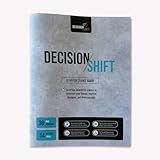
- MAKE BETTER DECISIONS, FASTER: Overcome decision fatigue and stop overthinking with a proven, science backed Productivity guidebook that keeps it simple and sharp. No dates, no Pressure just a clear flexible Undated framework. With our Playbook, gain clarity & confidence to make smarter daily choices quickly - whether at work, home or in life. “Smart decisions start here”
- DECISION QUADRANTS & GUIDED EXERCISES: Level up your decision making with tools like the Decision Quadrant & Guided Prompts. Get clear explanations of biases, heuristics and slow vs. fast thinking. Apply these insights instantly through guided exercises. This Workbook style Organizer is perfect for use as a Productivity Planner or journal - plus, it comes with a free downloadable template you can use again and again.
- TIME & ENERGY SAVING FRAMEWORK: Use this Priority Decision guide with a clear, structured system to focus on what matters most. Categorize decisions in the Time blocking planner by impact & difficulty. streamline low value choices & match your effort to their importance. This Personal Growth tracker helps you make behavior shifts that free up mental energy, reduce stress & move from reactive to proactive thinking.
- VERSATILE USAGE FOR LIFE, WORK & WELLNESS: This Life Companion brings clarity & confident decisions making to every area of life. Build stronger leadership, sharpen your strategy and make smarter career moves with this all-in-one Framework. Take control of your money by using goal setting guide & behavioural science to guide your spending, saving & investing - "For every goal and every role."
- PREMIUM 8.5” x 11” DESIGN: This elegant, compact and durable workbook is built to last. The Brain Dump notepad blends professional style with everyday functionality, making it the perfect task companion for your desk, bag or office. Lightweight and easy to carry wherever you go, this daily Reflection journal features a generous 8.5” x 11” size that fits seamlessly into your Premium collection.
Product prices and availability are accurate as of the date/time indicated and are subject to change. Any price and availability information displayed on Amazon at the time of purchase will apply.