From 3 October 2026, Scotland’s Bluetongue Restricted Zone covers the whole country, including its islands. The change removes the need for specified movement licences for susceptible livestock moving into, within or out of the former South West Scotland zone. It does not mean bluetongue has disappeared or that all movement rules have ended: licence conditions still apply, clinically affected animals must not be moved, and separate requirements remain for infected premises, Northern Ireland and some germinal products.
What changed on 3 October 2026?
The Scottish Government announced on 1 October that the Restricted Zone (RZ), previously covering parts of south-west Scotland, would extend across the whole country from Saturday 3 October. All of Scotland therefore has the same zone status. The practical benefit is simpler trade: susceptible livestock movements into, within and out of the former South West Scotland zone no longer need the licences previously required for those movements. The government said the change was agreed with industry representatives, including NFU Scotland, the National Sheep Association, the Scottish Beef Association, the Institute of Auctioneers and Appraisers Scotland, and Quality Meat Scotland. Scottish Government announcement, 1 October 2026.
| # | Preview | Product | Price | |
|---|---|---|---|---|
| 1 |
|
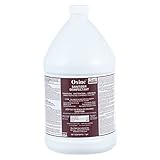
Oxine Gallon | $55.57 | Buy on Amazon |
| 2 |

|
Data Driven Smart Livestock Farming in Australia: From Design to Implementation (Earthscan Food and... | $64.99 | Buy on Amazon |
The expanded zone is a movement-control change, not a declaration that the virus has been eliminated. The Scottish Government said BTV-3 had been detected on 40 premises since the South West Scotland zone was established, including four detections outside that zone identified through tracing movements from affected farms. Those were the figures reported in the 1 October announcement, not a current case total. The government also said cooler temperatures meant there was less opportunity for onward transmission.
Do I need a licence to move sheep or cattle in Scotland now?
For a qualifying movement within Scotland’s RZ, the former South West Scotland zone boundary no longer triggers the susceptible-livestock licences that were required before the extension. The current general licence conditions still apply. For movements between the RZs in Scotland, England and Wales, official guidance describes the movement as a free move: keepers do not need to apply for or carry a copy of the EXD671 general licence, but must follow its conditions. See the Scottish Bluetongue Restricted Zone declaration and animal movement guidance for the current requirements.
#1 Best Overall
- Powerful and Proven Pathogen Control with Chlorine Dioxide Chemistry: Oxine Animal Health (AH) is a high-performance disinfectant formulated with chlorine dioxide to eliminate odors and control a wide spectrum of harmful microorganisms, including over 60 viruses, bacteria such as Salmonella, Staphylococcus, and E. coli, as well as fungi and Parvovirus, making it a trusted solution in livestock operations, poultry farms, animal boarding facilities, veterinary hospitals, and more.
- Versatile Use for Comprehensive Biosecurity in Animal Environments: This Gallon-size formulation is ideal for fogging, spraying, surface cleaning, and drinking water line disinfection, providing flexible and effective sanitation options across various animal care areas including stables, kennels, tack rooms, barns, and hatcheries; it helps reduce cross-contamination, manage infectious disease outbreaks, and maintain healthy housing conditions for animals of all kinds.
- Ultra-High Activity Level with Long-Lasting Bacteriostatic Properties: Engineered for superior performance, Oxine delivers a concentration of 2.0–2.10% available chlorine dioxide, ensuring high activity at low dilution rates; it maintains effectiveness in the presence of organic material and continues to provide residual protection with extended bacteriostatic effect, outperforming many traditional disinfectants like bleach, iodophors, or quaternary ammonium compounds.
- EPA Registered, OMRI Listed, and Certified for Organic Use in Animal Care Settings: Backed by EPA registration for animal facility use and OMRI listing for organic production, Oxine meets stringent regulatory standards, providing assurance for use in agricultural operations, organic poultry production, and commercial animal environments that demand high safety, environmental responsibility, and consistent disinfection results.
- ECONOMICAL AND SAFE WHEN USED PROPERLY: Cost-effective gallon-size solution ideal for high-volume sanitation needs. Non-flammable, low toxicity (EPA Cat III), and must be activated with citric acid before use. Always remove animals before applying; made in the USA for reliable quality.
“Free move” does not mean unrestricted movement in every circumstance. The animal’s condition, whether its premises are subject to restrictions, the destination and the movement purpose can all matter. Check the official guidance for the actual route and stock before arranging transport.
What restrictions still apply?
Animals showing clinical signs
Do not move an animal showing clinical signs of bluetongue on the day of movement. Bluetongue is notifiable: report a suspected case immediately to the Animal and Plant Health Agency (APHA). The Scottish Government’s latest-situation summary sets out current reporting and movement information.
Animals affected by bluetongue and affected premises
Under the rule announced for 3 October, an animal affected with bluetongue remains restricted to its premises for 60 days. Other susceptible animals are unrestricted unless they show clinical signs, but that does not override any premises-specific restriction. APHA initially restricts infected farms and determines the extent and duration of restrictions locally on a risk basis. If your premises or animals are affected, discuss the applicable controls with APHA rather than relying on the general movement rule.
Keeper records and legal duties
The Scottish declaration requires a premises inventory by species, including the numbers alive, dead, and alive but infected or likely infected. Keepers must update it for births and deaths, including dates. The declaration says its measures are law and non-compliance may lead to charges. Consult the declaration itself for the precise duties and the live movement page for current route-specific rules.
Recommended Free Tools
Can livestock move between Scotland, England and Wales?
Movements from, to or within the RZs in Scotland, England and Wales are described in the current Scottish guidance as free moves, subject to the general licence conditions. Keepers do not need to apply for or carry the EXD671 general licence. This simplified arrangement does not permit movement of an animal showing clinical signs, and it does not displace restrictions applying to infected premises. Because movement rules and zone information can change, confirm the route and conditions on the official movement page before dispatch.
Independent reader supportYour contribution helps us test, update, and keep practical guides available for everyone.What if the movement involves Northern Ireland?
Northern Ireland is a distinct case, not covered by the Scotland–England–Wales RZ-to-RZ free-move arrangement. The Scottish Government’s latest-situation summary says movement to Northern Ireland is not permitted under its current guidance. Movements from Northern Ireland require a DAERA export health certificate with specified bluetongue attestations. Check the live official guidance before planning any such movement, since these requirements are separate and may be amended.
Are vaccination or PCR tests required to leave a Restricted Zone?
The current 3 October guidance says animals do not need vaccination or PCR testing merely to leave an RZ. Vaccination is nevertheless recommended as protection against the disease’s worst effects; it is not the same thing as a general movement precondition. The Scottish Government calls vaccination the single most effective way to protect animals from the worst effects and advises keepers to discuss the appropriate approach and vaccine supplies with their vet. Record vaccinated cattle, sheep and goats on ScotEID; record other ruminants through the GOV.UK vaccination portal.
The policy change also involves a trade-off. National Sheep Association Policy Manager Michael Priestley said that easing restrictions and reducing bureaucracy brings an increased risk of virus spread. The government’s seasonal guidance says Scotland’s low-transmission period began on 10 September 2026 and runs until before summer 2027; midge activity generally falls as temperatures drop. Seasonal conditions do not remove the need to follow movement rules or report suspected disease.
Quick wins for a faster PC:
Repair Windows errors before they cause bigger problemsFix Now →Fix the driver behind crashes, sound loss and screen glitchesFind Drivers →Clear out junk files and repair common Windows errorsFree Scan →What are the rules for germinal products?
Unfrozen germinal products can be collected and used immediately within an RZ, or moved between RZs. For frozen germinal products collected in an RZ, donors must be tested even when the material will not be moved outside that zone. Check the movement guidance for the product and route before collection, storage or transport.
Does bluetongue affect people or food safety?
The Scottish Government says bluetongue is an insect-spread virus, mainly transmitted by Culicoides midges, and does not affect humans or food safety. These statements concern human health and food safety; they do not lessen the disease-control obligations for livestock keepers.
Quick Recap
Product prices and availability are accurate as of the date/time indicated and are subject to change. Any price and availability information displayed on Amazon at the time of purchase will apply.




