Do these 3 things before closing this tab:
1Repair Windows errors before they cause bigger problems2Fix the driver behind crashes, sound loss and screen glitches3Clear out junk files and repair common Windows errorsFish keep eggs in different places depending on the species: in open water, attached to plants or other surfaces, in a nest or buried substrate, or carried by a parent’s mouth or pouch. Some fish retain developing eggs inside the body. There is no single fish “nest” or egg-laying method.
Where fish place their eggs
Many fish lay eggs outside their bodies, but placement varies. Some release eggs into the water; others attach them to vegetation or a hard surface, deposit them in a nest, or bury them in bottom material. The Merck Veterinary Manual’s overview of fish reproduction describes this range of reproductive strategies.
- In open water: Eggs are released rather than secured to a nest or surface.
- On a surface: Eggs may stick to plants, rocks, or other available surfaces.
- In a nest or bottom material: Some fish place eggs in constructed nests or bury them in soft substrate.
- With a parent: In some species, eggs are carried in a parent’s mouth or in a brood pouch.
These are different strategies, not stages that every fish follows. Some fish guard or tend eggs; others leave them after spawning.
How nests and buried eggs work
Gravel redds made by sockeye salmon
Female sockeye salmon dig nests called redds in gravel, deposit eggs, and cover them with gravel. NOAA Fisheries reports that females deposit 2,000 to 4,500 eggs in redds; that range applies to sockeye salmon, not fish generally. Eggs hatch during winter, and young salmon remain in the gravel while using their yolk reserves before emerging. See NOAA Fisheries’ Sockeye Salmon: Science.
The Tool Desk
Outbyte Driver Updater FREEFix the driver behind crashes, sound loss and screen glitchesFind Drivers →Outbyte PC Repair FREERepair Windows errors before they cause bigger problemsFix Now →#1 Best Overall
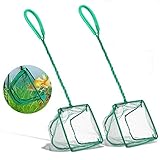
- 2 Pack Aquarium Fish Nets: This set includes two small fish nets designed for efficient use in aquariums. The compact size makes them ideal for handling smaller fish and managing your tank with ease.
- Small Mesh Fish Catch Nets: The fine mesh ensures fish are gently captured without injury. The mesh structure provides a delicate yet durable solution for safely handling fish, making it suitable for all fish tank types.
- Plastic Handle for Comfort: Each fish net features a plastic-coated handle that ensures a comfortable grip. This design helps maneuver the net effectively, whether transferring fish or cleaning the tank.
- Ideal for Various Aquatic Pets: The small net is versatile for different types of fish, including bettas and other small species. Its design is suitable for catching, transferring, or performing maintenance on your aquarium.
- Convenient and Practical: These nets are compact and lightweight, making them easy to store and use whenever needed. They help maintain a clean and organized aquarium environment.
Plant, surface, and constructed nests
Some fish attach eggs to vegetation or hard surfaces. Others build nests from plant matter or bubbles. Nest-building is one option among many, not a universal behavior; parental care also varies by species.
Eggs buried in mud
Annual killifishes that live in temporary pools provide a specialized example: they can bury eggs in mud. This strategy is associated with those fish and conditions, rather than being typical of fish as a whole.
Rank #2
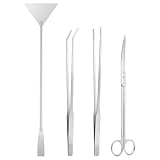
- 4 in 1 Long Aquarium Tools Kits: The aquascape tools kit contains 1 x 10" aquarium scissors, 1 x 10.6" straight long tweezer, 1 x 10.6" curved feeding tongs, and 1 x 12.56" Aquarium substrate spatula. One set of terrarium supplies to help you better manage your aquarium and terrariums. This aquascaping tools are long and slender enough to easily use in any gallon fish tank, good as fish tank accessories. It suits both beginner and experienced people.
- Rust-proof and Stainless Steel Material: The 4pcs of aquarium supplies are made of high-quality stainless steel material, rustproof and corrosion-proof, sturdy, and long-lasting. With the protection of the rustproof coating, every tool has excellent corrosion resistance.
- Multi Functions and Applications: Ohtomber aquascape tools is ideal for all types of grooming, maintaining, and sorting out aquatic plants in water as an aquarium accessories. Aquarium scissors could help you trim the plant, furnish the aquarium landscape with driftwood cornerstones, sand, and aquarium algae scraper could be applied to scrap the algae and smooth out plant stratum substrate. Do use it to maintain a comfortable environment for fish in an aquarium tank now!
- Minimizing interference: Long aquascaping tools can prevent accidental injuries to Aquarium plants and damage to the environment. Long aquarium tweezer can adjust driftwood, and feed little reptiles instead of putting your hands into water. It is very effective in precise operation and avoiding getting your hands wet. Similarly, Long aquarium scissors are suited for small or thin water plants and help trim excess parts. It won't hurt the plant's cross-section.
- Maintenance tips: In order to extend tool life and keep performing well, we recommend that you rinse off the saltwater attached to the tools surface and then wipe up to keep dry.
When a parent carries the eggs
Mouthbrooding
In some mouthbrooding species, a parent gathers fertilized eggs into its mouth and carries them there as they develop. The parent’s mouth is a temporary brood space, not a nest on the bottom.
Seahorse and pipefish pouches
Seahorses and pipefishes brood eggs in a male’s pouch. This is distinct from mouthbrooding and from laying eggs in an external nest. NOAA’s Species-suited culture methods for marine aquarium fishes describes these and other reproductive types and care patterns.
Rank #3

- New digital aquarium thermometer: LED display fish tank thermometer with professional LCD visual effect, the fish tank and aquarium water temperature can be displayed clearly, despite the night light, and can be easily read. Mini compact body design is suitable for a variety of different types of fish tanks and aquariums, is a must have fish tank accessories.
- Safe wireless touch design: The digital fish tank thermometer comes with a touch power button, which can be easily awakened by clicking. The built-in high sensor probe measures the water temperature for fish tank, well-organized wire in the fish tank to protect the fish from being swallowed or electrocuted, providing a clean and safe living environment for the pet fish axolotl turtle.
- Simple installation: The tank thermometer does not need any installation tool to remove the adhesive on the back, stick it on the outside of the tank below the tank water level, and after standing for 5 minutes, it can accurately and real-time monitor the aquarium temperature change.
- Accurate data: tank thermometer aquarium measurement range of the tank thermometer is 0°C~60°C, the accuracy is 0.18°C, and the error is ±1 °C. This is suitable for axolotl tank, turtle thermometer, saltwater fish tank accessories, betta fish tank thermometer, etc..
- Long life battery: Thermometer for aquarium fish tank is powered by a CR2032 battery (included), and the battery lasts up to 12 months. The wireless aquarium digital thermometer will automatically enter the sleep mode after 5 seconds of no operation, extend the battery life, and be more environmentally friendly and energy saving.
Can fish eggs be outside the water?
Most descriptions of fish reproduction focus on eggs released into water or placed in aquatic nests and substrates. There are exceptions: a 2018 review in Integrative and Comparative Biology describes fish that place eggs on surfaces, vegetation, or hollow objects that may later be exposed to air, as well as specialized surface nests and burrows. These examples show why egg placement should be described by species, rather than assuming every egg is submerged in the same way. See Patterns of Fish Reproduction at the Interface between Air and Water.
Independent reader supportYour contribution helps us test, update, and keep practical guides available for everyone.Do all fish lay eggs?
No. Egg-laying outside the body is common, but reproductive strategies differ: some fish retain developing eggs inside the body, while others lay eggs and may or may not provide care. “Where do fish keep their eggs?” therefore has a species-dependent answer, and not every fish builds a nest or guards its young.
Quick Recap
Best Value

- Contains one (1) API TAP WATER CONDITIONER Aquarium Water Conditioner 16-Ounce Bottle
- Neutralizes chlorine, chloramines and other chemicals to make tap water safe for fish
- Prevents tap water chemicals from causing gill destruction, tissue irritation and fish death
- Super strength, high concentration formula
- Use when adding or changing water and when adding new fish to freshwater and saltwater aquariums
Rank #4

- The aquarium brush made of high quality sponge, could remove the algae quickly and effectively, keep your fish tank a clean environment
- The brush handle made of premium plastic, sturdy and durable, with non-slip handle surface, make this clean work more easily
- Designed with a hole on the end of the handle, more convenient for you to hanging and store
- This algae scraper brush suitable for glass fish tank but not suitable for acrylic and plastic fish tank
- Dimension of sponge:3”x2.5”; Length of handle:12.5”
Product prices and availability are accurate as of the date/time indicated and are subject to change. Any price and availability information displayed on Amazon at the time of purchase will apply.