Breed-based restrictions can limit where a dog may live, what insurance its owner can obtain, or how animal-control rules apply. But the rules are not uniform: they vary by jurisdiction and setting, and a proposed bill is not the same as an enacted law. The policy choice is how to protect people while using standards that are fair, evidence-informed, and practical to enforce.
Where breed-based restrictions can affect owners
A rule that refers to a dog’s breed or appearance may arise in three distinct settings. Each has different decision-makers, legal authority, and ways to challenge a restriction.


- Animal control: State or local laws may define or regulate dangerous dogs. Some rules use breed categories; others focus on an individual dog’s conduct, history, or an incident.
- Housing: Public housing authorities, landlords, or housing providers may impose dog restrictions. Whether a particular restriction is permitted depends on the jurisdiction, the type of housing, the governing documents, and any applicable legal protections.
- Insurance: An insurer may use breed or appearance in underwriting, coverage decisions, or premiums. The NAIC describes this as a contested issue and notes that identifying a dog’s breed can be difficult without genetic testing. Its page was updated September 24, 2025 (NAIC overview of breed-specific legislation).
Do not assume that a rule in one setting applies in another. A local animal-control ordinance, a lease provision, and an insurer’s underwriting terms are separate rules to check.
What “freedom of choice” means in this debate
For owners, freedom of choice can mean being able to keep a dog, find housing, and obtain insurance without a categorical restriction based on a breed label or appearance. Animal-welfare advocates also raise the concern that restrictions can separate dogs from homes or narrow the options available to their owners. The ASPCA argues that breed-based insurance underwriting can restrict coverage or increase premiums; that is the organization’s advocacy position, not a regulator’s finding (ASPCA position on breed-specific insurance discrimination).
Recommended Free Tools
#1 Best Overall
Public-safety concerns are also real. Dog bites can cause serious injury, and rules need to address preventable risks. The policy tension is whether a restriction predicts risk accurately, whether it can be applied consistently, and whether a less categorical rule could protect people while evaluating the dog and circumstances involved.
What veterinary guidance says about breed and behavior
AVMA’s position on predicting aggression
In its 2023 revised Dog Bite Prevention policy, the American Veterinary Medical Association (AVMA) states: “The AVMA considers it inappropriate to make predictions about a given dog’s propensity for aggressive behavior based solely on its breed.” It also considers it inappropriate to label specific breeds or classes of animals as aggressive or dangerous (AVMA 2023 policy on dog-bite prevention). This is the veterinary association’s policy position; it should not be misrepresented as a law or as proof that breed is relevant in no context.
Prevention focuses on the dog and the situation
AVMA public guidance says any dog can bite and recommends considering an individual dog’s history and behavior. It identifies circumstances such as fear, being startled, territorial defense, guarding valued items, and pain or illness as relevant to understanding bite risk. Its prevention advice includes supervising children around dogs, controlled socialization and training, leash use, regular health care, and responding to signs of stress (AVMA dog-bite prevention guidance).
AVMA’s community dog-bite prevention model legislation includes the sentence, “A dog’s breed shall not be considered in determining whether or not it is ‘dangerous.’” This is model language for policymakers, not binding law by itself; a jurisdiction must adopt its own applicable law (AVMA model guidance for community dog-bite prevention).
The Tool Desk
Outbyte PC Repair FREERepair Windows errors before they cause bigger problemsFix Now →Outbyte Driver Updater FREEScan for outdated or missing drivers - takes under a minuteDriver Scan →Rank #3

- A Beautiful Puppy Keepsake Book - Your Story tells the unique story of your dog's life. Capture every minute and moment in this beautiful dog keepsake diary. Designed by dog owners and lovers, we've pawwed our heart and soul into making Your Story the ultimate companion to document the life of your dog.
- Room For Photos & Paw Prints - Your Story captures every moment of your dogs life. 65 photos slots to capture everything from their first bath and walk, up to their 5th birthday. Never miss a moment and capture all of those beautiful bonding moments.
- From Puppyhood - The book is a total of 96 pages long and starts from the moment you get your new puppy and covers every milestone. Document their weight, the fun and unique things they do, as well as each birthday and memorable moment. Dog mom gifts have never looked so beautiful.
- A Lasting Legacy - Your Story also acts as a Dog Keepsake Memorial. Capturing moments up until their passing, the effect they have had on your life, as well as how they left an impact on others. There really isnt a better gift for a dog owner than Your Story. Create a timeless dog scrapbook keepsake that your family will cherish for a lifetime.
- KEY INFO: 96 Pages - Storage Pocket - Fits 4x6 photos, Beautiful Quotes, Unique Illustrations. Sections include: Welcoming You, Welcome Home, Naming You, Puppyhood, First Photos, Paw Prints, Weight Chart, Training You, Your Favorites, Year 1-5, Your Adventures, Your Achievements, Your Senior Years, Remembering You . Dimensions: 7 1/2" x 9 1/4"
Dog-bite figures: useful context, with a qualification
In an April 9, 2026 release, the AVMA said that more than 4.5 million people are bitten by dogs each year in the United States and that children account for at least half of those injuries. The release does not identify the underlying dataset in its text, so the figures should be attributed to the AVMA rather than presented as a precisely defined or independently verified rate. In that release, AVMA president Dr. Michael Q. Bailey said: “Most dog bites are preventable, and prevention starts with understanding how dogs communicate and teaching children how to interact with them safely.” (AVMA release, April 9, 2026)
What the legislative examples do—and do not—establish
The following U.S. examples illustrate different approaches and statuses. They are not a nationwide rule, and a bill or legislative announcement should not be treated as enacted law unless its current legal status confirms that.
| Jurisdiction and setting | What the cited record says | Status established by that record |
|---|---|---|
| New York: insurance | Assembly bill A10272 concerns insurer decisions based on dog breed. The Senate record says it was substituted by S9207, passed the Assembly, and returned to the Senate. | The record reports those legislative steps on May 19, 2026; it does not show enactment. New York Senate A10272 record |
| New York: housing | A4884 proposes protections concerning denial of occupancy or eviction based on a dog’s breed, size, or weight, subject to qualifications in its text. | The record lists it in the Assembly Housing Committee for the 2025–2026 session; it does not establish enactment. New York Senate A4884 record |
| Illinois: residential rentals | HB1603 proposes limiting breed-based denials or conditions by landlords in residential buildings with more than three units, while preserving local dangerous-dog authority. | The bill text establishes what was proposed, not final enactment status. Check the current official record for any later action. Illinois General Assembly HB1603 text and status |
| Massachusetts: public housing and insurance | A Senate press release reports passage of a bill with provisions prohibiting breed-based discrimination in public housing and insurance. | The March 19, 2026 release establishes the reported Senate action, not enactment, final effective dates, or the law currently in force. Massachusetts Senate release, March 19, 2026 |
The NAIC says the National Conference of Insurance Legislators (NCOIL) adopted a model law in 2022 concerning insurers denying coverage solely on breed. A model law does not become a state statute automatically; its legal effect depends on adoption by a jurisdiction (NAIC overview).
Independent reader supportYour contribution helps us test, update, and keep practical guides available for everyone.How to assess a restriction fairly
Whether a restriction is defensible depends on more than its stated goal. A useful policy comparison asks:
Crashes, No Sound, or Screen Glitches?
Random freezes, missing sound and display glitches usually trace back to one bad driver. Find and replace yours safely.Free scan · under a minuteWindows Errors? Fix Them Before They Spread
Repair common Windows errors and clear accumulated junk for a smoother, more stable PC - no reinstall needed.Free scan · no reinstallBest Value
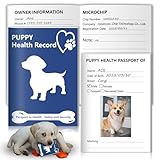
- Product Include:When you choose our dog vaccines records tracker, you'll receive one notebook.This 12-page puppy health journal has 8 dedicated pages for tracking your pup’s health, vet visits, and key details, with 4 blank pages at the end for jotting down extra notes, pet-related info, or anything else you want to record.
- Ideal Size for Record Keeping:Each dog vaccine record book measures 5x3.5 inches folded; 5x7 inches unfolded, allowing for easy portability and storage.These handy health records notebook for dogs with double sided printing, featuring enough space for all your pets important information,plus, it has dedicated spots for sticking on vaccine stickers and adding cute puppy photos.They offer a stylish and organized approach to pet health documentation, a must have addition to your pet supplies.
- Premium Quality: The puppy health record tracker’s cover features 300gsm coated paper with vibrant full-color printing and a protective laminate finish. Inside, 100gsm high-quality offset paper pages are durable and ink-resistant, ensuring no bleeding from pens or markers—so your records stay neat and easy to read.
- Effortlessly Track Vaccinations and More:The canine health record booklets pages include:owner and puppy information,medical history and hospitalizations,vaccination record and sticker,dog service providers,fecal examinations and de-worming,heartworm screening, prevention and treatment etc.This record keeping tool will ensure every important detail is accounted for and make this task easy, organized, and straightforward.Add this essential tool to your pet supplies for a happier, healthier pet.
- Essential for Pet Owners:Designed for veterinary clinics and pet owners, these puppy vaccination record books make tracking key health details—like shots, checkups—simple and organized. When you’re away and leave your pup with a sitter or family, the dog medical record and vaccine book serves as a quick reference for their medical history. Plus, dedicated sections for photos, physical markings, and ID info prepare you for emergencies, helping you recover your friend quickly if they get lost.
- What setting and authority apply? Identify whether the restriction comes from a statute, local ordinance, housing provider, lease, public housing policy, or insurer.
- What triggers the restriction? Distinguish a breed category or visual label from documented behavior, a prior incident, or a finding about an individual dog.
- What evidence supports the rule? Ask whether the standard is linked to a defined safety concern and can be applied reliably. The NAIC notes that experts, including veterinarians and shelter staff, may have difficulty identifying breeds accurately without genetic testing.
- How is it enforced? Consider whether decision-makers have clear criteria, consistent procedures, and the ability to identify the dog or conduct at issue accurately.
- Can an owner seek review? A fair process should make clear how a decision is explained, what evidence an owner can provide, and whether an appeal or reassessment is available.
- Could conduct-focused safeguards address the risk? Depending on the setting and local law, policymakers may consider requirements tied to control, leash use, registration, training, or documented dangerous behavior rather than a broad breed label. No single measure is guaranteed to prevent bites.
The NAIC also discusses alternatives such as non-breed-specific dangerous-dog laws, enforcement of cruelty laws, and spay/neuter programs. Which tools are appropriate depends on local conditions and the legal authority available; listing an alternative is not evidence that it will work equally well in every community.
What dog owners can check before making a decision
If a breed-based rule affects your dog, first identify who made the decision and which document or law governs it. Then verify the current rule for your location rather than relying on a proposal, an advocacy summary, or another state’s law.
- For animal-control restrictions: Check the relevant city or county ordinance and state law. Look for definitions, the conduct that triggers a designation, any control requirements, and the process for contesting a decision.
- For housing: Review the lease, housing-provider policy, and any applicable public-housing rules. Ask for the precise written basis for a restriction and whether an exception, review, or appeal process is available.
- For insurance: Ask the insurer directly about current eligibility, exclusions, and underwriting terms for your location and policy. Compare the actual policy documents and confirm any restriction in writing; rules and terms can differ by insurer and jurisdiction.
- For any disputed decision: Keep the relevant policy, notices, and records of your communications. If the consequences are significant, seek advice from a qualified local attorney or an appropriate consumer or housing agency.
This overview is not a determination of anyone’s legal rights or insurance coverage. The cited sources offer representative U.S. examples, not a survey of every state or local rule.
Quick Recap
Product prices and availability are accurate as of the date/time indicated and are subject to change. Any price and availability information displayed on Amazon at the time of purchase will apply.