The Norwegian Forest Cat is a large, slow-maturing Scandinavian natural breed that may take up to five years to reach full maturity. It has a dense, water-repellant double coat, usually enjoys climbing, and is often affectionate without being a guaranteed lap cat. Breeder health records matter because familial cardiomyopathy and GSD IV are documented concerns.
Known as the skogkatt in Norway and the “Wegie” in the United States, this breed is best understood as a sturdy, intelligent, interactive companion rather than simply a very fluffy cat. Its coat, size, behavior, and inherited-health questions all affect whether it fits a particular home.
Key takeaways
- A Norwegian Forest Cat is a large, muscular, slow-maturing natural breed that can take up to five years to reach full maturity.
- The breed has a dense, semi-long double coat with a woolly undercoat and water-repellant guard hairs, so regular combing is necessary even though grooming is relatively manageable for a long-haired cat.
- Norwegian Forest Cats are usually intelligent, adaptable, playful, and affectionate, but many prefer being near their people to sitting on a lap for long periods.
- Climbing is a central breed characteristic, making a stable tall cat tree, scratching post, or other safe elevated space an important part of the home.
- Familial cardiomyopathy and glycogen storage disease type IV are documented health concerns, so responsible breeders should provide meaningful health records and explain screening for the parents and their lines.
What is a Norwegian Forest Cat?
A Norwegian Forest Cat is a large, sturdy Scandinavian natural breed known in Norway as the skogkatt and often called a “Wegie” in the United States. The breed developed over many years in Scandinavia and is recognized for its muscular body, climbing ability, adaptable temperament, and weather-adapted double coat. Its exact ancient origin is not fully documented.
Registry histories describe a cat that adapted to a harsh climate rather than a breed created from a narrowly defined modern cross. The International Cat Association describes the Norwegian Forest Cat as “a healthy, robust natural breed that developed over hundreds of years of natural selection in a harsh climate” in its official breed profile. The statement is a breed-history description, not a guarantee that every individual cat is free of illness.
#1 Best Overall
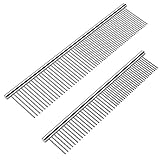
- ✅ FUNCTION -This dematting tool for dogs can removes tangles, mats, loose hair, besides, it’s perfect to promote blood circulation and massage skin.
- ✅ PREMIUM MATERIAL - Made of high quality stainless steel, this comb is durable, corrosion resistant and will not fade, good for avoiding static electricity.
- ✅ COMFORTABLE & SAFE - Rounded pin ends are gentle to the skin. This comb grooms and massages for a healthy coat, prevent snagging and pet injury.
- ✅ WHAT YOU GET- 2 Pack combs for removes both small & large areas tangles, knots. Large comb size: 7.4 x 1.65 IN, small comb size: 6.3 x 1.2 IN.
- ✅ RISK-FREE LIFETIME GUARANTEE - We firmly stand by the lasting quality of our pet grooming tool. If for any reason you're not 100% happy with it, reach out to us to receive a refund or replacement.
Norse mythology connects large forest cats with the goddess Freya. That connection is a legend and should not be treated as archaeological or genetic proof of the breed’s origin. The documented registry history is more cautious: the breed is associated with Norwegian farms, rodent control, and twentieth-century preservation efforts.
How did the Norwegian Forest Cat develop?
The modern Norwegian Forest Cat was preserved as a distinct type after interbreeding with shorthaired strays threatened to dilute the population. According to the Cat Fanciers’ Association’s breed history and standard, a Norwegian breed club and selective registration program helped protect the breed in the twentieth century.
CFA records that the first breeding pair was brought to the United States in 1979 and that the breed reached CFA championship status in 1993. Those are registry milestones; they do not establish a precise ancient genetic timeline.
What does a Norwegian Forest Cat look like?
A Norwegian Forest Cat should look substantial, muscular, and well balanced—not merely fluffy. The breed has substantial bone structure, a solid body, a long bushy tail, tufted paws, and heavily furnished ears. The hind legs are longer than the front legs, which gives the rump a noticeably higher position.
The CFA breed standard describes an equilateral-triangle head, a straight profile from the brow ridge to the nose tip, and large almond-shaped eyes. The ears are furnished with hair, while the neck and chest may show a frontal ruff. Side furnishings are sometimes described as “mutton chops,” and the longer hair on the hind legs forms full britches.
How does the Norwegian Forest Cat’s coat work?
The Norwegian Forest Cat has a dense, semi-long double coat designed for protection from cold, wet weather. A woolly undercoat provides insulation, while longer, coarser guard hairs form a water-repellant outer layer. The coat is generally fuller in winter and shorter in summer.
The Cat Fanciers’ Association summarizes the adult coat as “a luxuriantly thick double coat, marked by a silky, water-repellant overcoat and frontal ruff adorning the neck and chest.” Coat texture, fullness, and matting tendency vary between individual cats.
Many colors and patterns are accepted under the CFA standard, but colors and patterns associated with hybridization—including chocolate, sable, lavender, lilac, cinnamon, fawn, and point-restricted patterns—are excluded from that standard. Color is less important than sound structure, balance, and appropriate coat quality when assessing the breed.
What’s actually slowing this PC down?
Pick the symptom - the matching free tool is one click away.
How big do Norwegian Forest Cats get?
Norwegian Forest Cats are large-bodied cats, with males typically heavier and more imposing than females. The Cat Fanciers’ Association gives typical adult weight ranges of 12–16 pounds for males and 9–12 pounds for females in its current breed profile.
Rank #2

- ROUND & GENTLE COMB TEETH: Unlike dematting combs with sharp teeth, this dog grooming comb features round teeth that break up tangles +effectively remove loose hair, dander & dirt trapped beneath fur.
- ERGONOMIC NO-SLIP HANDLE: Finished with a rubbery grip, our grooming comb is safer & easier to use than most groom tools. The non-slip coating prevents slippery accidents to keep you & your pet safe.
- IMPROVES OVERALL PET HEALTH: Designed to gently massage your pet's coat, the anti-scratch teeth on our dog & cat comb naturally support the health of your furry best friend by boosting circulation.
- COMB COMES WITH FREE EBOOK: DIY pet grooming can be a bit tricky if tools are not used correctly, which is why every SP pet hair comb includes a download of our helpful instructional guide.
- RISK-FREE LIFETIME GUARANTEE: We firmly stand by the lasting quality of our pet grooming tool. If for any reason you're not 100% happy with it, reach out to us to receive a refund or replacement.
| Cat | Typical adult weight cited by CFA | What the number means |
|---|---|---|
| Male Norwegian Forest Cat | 12–16 pounds | A typical range, not a target or diagnostic test |
| Female Norwegian Forest Cat | 9–12 pounds | A typical range, not a target or diagnostic test |
Weight alone cannot prove that a cat is—or is not—a Norwegian Forest Cat. Sex, age, skeletal structure, nutrition, and body condition all affect weight. A healthy cat may fall outside a typical range, and a heavier cat is not necessarily healthier.
How long does it take a Norwegian Forest Cat to fully grow?
A Norwegian Forest Cat may take up to five years to reach full maturity. The breed’s slow development means a young cat can look lanky or unfinished for longer than many owners expect. The International Cat Association and CFA both describe the breed as slow maturing; TICA gives the “up to five years” figure in its official breed information.
Slow maturation does not mean a kitten should be overfed to accelerate growth. Feeding, body condition, and developmental concerns should be discussed with a veterinarian, especially for a large, slowly maturing cat.
Do these 3 things before closing this tab:
1Fix the driver behind crashes, sound loss and screen glitches2Repair Windows errors before they cause bigger problems3Scan for outdated or missing drivers - takes under a minuteAre Norwegian Forest Cats good house cats?
Norwegian Forest Cats can be good indoor house cats when the home provides climbing opportunities, play, companionship, and routine grooming. CFA describes the breed as friendly and interested in family activities while also characterizing it as an indoor homebody. Individual temperament and early socialization still matter more than the breed label alone.
A Norwegian Forest Cat is usually a poor match for a home that cannot accommodate a large cat’s vertical behavior. The breed commonly enjoys climbing and jumping to high vantage points. A stable, weight-appropriate cat tree and a robust sisal scratching surface are practical equipment rather than decorative extras. TICA specifically notes the breed’s love of climbing and ability to jump high in its breed profile.
A tall cat tree with platforms or a sisal scratching post can help direct climbing and scratching toward an approved area. Secure elevated furniture, keep windows and balconies safely managed, and make sure the structure cannot tip under the cat’s weight.
Are Norwegian Forest Cats affectionate or lap cats?
Norwegian Forest Cats are often affectionate, people-oriented, and interested in household activity, but many are interactive companions rather than guaranteed lap cats. A typical cat may follow family members, accept attention, play, or rest nearby while resisting prolonged restraint.
TICA describes the breed as intelligent, resourceful, mild-mannered, sweet, loving, playful, and adaptable. CFA describes it as independent, moderately active, sensitive, and friendly. Those descriptions support a balanced expectation: a Wegie may be warm and engaged without wanting continuous physical contact.
Temperament varies by individual cat, upbringing, and socialization. Do not choose the breed solely because you want a cat that will always sit on your lap, tolerate being carried, or behave like a dog.
Rank #3

- PREMIUM MATERIAL: This metal comb is made of high-quality stainless steel coated with zinc carefully, durable and corrosion-resistant, won’t rust after washing, withstands wear and tear in long term use. Perfect for straightening out the knotted tangles hair, as well as finishing and fluffing without causing any harm.
- COMFORTABLE & SAFE: Each comb tooth is finely polished, can be used to retouch and massage by penetrating DEEP into the coat without scratching your pets’ skin. It is seamless & smooth so that it won't snag hair, glide through the coat like butter, could effectively remove loose hair, dander & dirt trapped beneath fur and curly hair.
- UNIQUE 2-IN-1 DESIGN: Every dog comb has 2 different teeth densities, the wide teeth can be used to comb knotted fur or open the tangled hair, the dense teeth is suitable for comb the soft fur nearby eyes, ears and fine hair of the legs. Also good for avoiding static electricity when being used.
- MULTIFUNCTIONAL & SAFE: Our anti-scratch round teeth would also support the pet health by boosting blood circulation and massaging skins. The comb's coarse and fine teeth work together to remove thick or dead fur and leave your pet's coat soft, sleek, and shining no matter long haired or short haired dogs or cats with thin and thick coats or sensitive skin.
- BUY with CONFIDENCE: The cat comb is compact and portable, fitting conveniently in a handbag, preventing snagging and pet injury. We offer you No questions asked 90-DAY REFUND and 24*7 hours 100% SATISFACTION GUARANTEE. We take care of all quality-related issues with a replacement or refund. If you have any problems with the product, please contact us.
Do Norwegian Forest Cats get along with dogs and children?
Many Norwegian Forest Cats can live successfully with respectful children and cat-compatible dogs because the breed is generally adaptable and friendly, but compatibility is never automatic. Introductions should be gradual, supervised, and designed around escape routes and elevated safe spaces for the cat.
Children should learn not to chase, grab, corner, or wake the cat. Dogs should be introduced behind barriers or on controlled leads, with the cat able to retreat to a dog-inaccessible height. A breeder may be able to describe a kitten’s early socialization, but no breeder can guarantee a particular adult relationship with another animal.
Free tools Windows power users keep installed
One-click scans. No signup required.
Do Norwegian Forest Cats shed a lot?
Norwegian Forest Cats shed seasonally, and the heavy winter coat commonly requires extra attention when it changes in spring. The coat is relatively manageable for a long-haired breed, but “manageable” does not mean shed-free or maintenance-free.
Establish a calm combing routine early. Check behind the ears, around the neck ruff, in the armpits, and on the britches, where tangles can develop. Coat texture varies, so some cats will need more frequent attention than others. Do not rely on a promise that every Norwegian Forest Cat will remain mat-free.
How often should you brush a Norwegian Forest Cat?
Regular combing is the appropriate baseline, with more frequent attention during seasonal shedding. The CFA specifically advises that “Regular combing with a stainless-steel comb will help with any tangles” in its official grooming guidance.
A stainless-steel cat comb is a practical choice for routine Norwegian Forest Cat grooming, particularly during the spring coat change. No comb is universally best: coat texture, tolerance, and the location of tangles vary by individual cat. Introduce grooming gradually and stop before combing becomes a struggle.
If bathing is necessary, the water-repellant outer coat may take time to become fully wet and to dry. CFA recommends consulting the breeder about suitable products and technique. Severe mats, skin irritation, or a cat that cannot be safely groomed should be handled with veterinary or professional grooming guidance rather than force.
Are Norwegian Forest Cats hypoallergenic?
No reliable conclusion in the reviewed breed sources establishes the Norwegian Forest Cat as hypoallergenic. The breed’s dense double coat and seasonal shedding should be considered when someone in the household has allergies.
Allergy reactions vary by person and exposure. Spending time with the specific cat before adoption may provide useful personal information, but it cannot guarantee that symptoms will remain manageable. Discuss significant allergy concerns with a qualified medical professional.
Rank #4

- GENTLE DETANGLING & MAT REMOVAL – Rounded stainless steel teeth glide smoothly through mats and tangles without pulling fur, ideal for long-haired breeds like Persians and Maine Coons. Safe for sensitive skin and daily grooming use.
- ANTI-STATIC & EASY TO CLEAN – Metal comb minimizes static electricity, keeping fur smooth and manageable. Simply rinse under water for quick cleaning, no residue or rust thanks to corrosion-resistant stainless steel construction.
- DURABLE & COMFORTABLE DESIGN – Lightweight yet sturdy 6-inch comb fits comfortably in hand. Polished rounded tips ensure a pleasant grooming experience for both pets and owners, reducing grooming stress.
- SUITABLE FOR MULTIPLE PET TYPES – Effective on long-haired cats, short-haired cats, dogs, rabbits, and small pets. An essential tool for pet owners seeking to manage shedding, prevent knots, and maintain a healthy coat.
- PROFESSIONAL GROOMING RESULTS AT HOME – Captures loose fur efficiently, reducing shedding around the house. Promotes healthier skin and coat by distributing natural oils and stimulating blood circulation during brushing.
What health problems are common in Norwegian Forest Cats?
Norwegian Forest Cats are broadly described as robust, but the breed is not risk-free. Documented inherited or familial concerns include hypertrophic cardiomyopathy and glycogen storage disease type IV, which is why health records and family-history questions matter when choosing a kitten.
Quick wins for a faster PC:
Repair Windows errors before they cause bigger problemsFix Now →Fix the driver behind crashes, sound loss and screen glitchesFind Drivers →Familial hypertrophic cardiomyopathy
Hypertrophic cardiomyopathy, or HCM, involves abnormal thickening of the heart muscle. A 2015 Royal Veterinary College study of Norwegian Forest Cats reported mild left-ventricular hypertrophy in 13 of 53 cats in its prospective screening portion. That finding belongs to that screened study sample and is not a prevalence estimate for the entire breed.
The same study included 871 Norwegian Forest Cats in combined cardiomyopathy health and pedigree data. The dataset supports concern about a familial pattern in the investigated population, not a claim that every Norwegian Forest Cat has cardiomyopathy. Read the peer-reviewed familial cardiomyopathy study for the study design and limitations.
Ask what cardiac screening the breeder uses and whether a veterinary cardiologist has evaluated breeding cats when appropriate. A DNA result alone does not rule out every form of cardiomyopathy; echocardiographic screening, clinical examination, pedigree information, and veterinary advice may all be relevant.
Glycogen storage disease type IV
Glycogen storage disease type IV, or GSD IV, is a rare but serious inherited disease associated with a variant in GBE1. A peer-reviewed molecular genetics study linked a complex rearrangement in GBE1 with both perinatal hypoglycemic collapse and late-juvenile-onset neuromuscular degeneration in affected Norwegian Forest Cats.
Recommended Free Tools
PawPeds describes a Norwegian Forest Cat GSD IV health program and records that a gene test for the relevant variant was developed in 1996. The PawPeds GSD IV information and the peer-reviewed GBE1 study provide the relevant background.
Health screening is not a substitute for veterinary care. A kitten or adult cat showing weakness, collapse, breathing difficulty, poor coordination, or other concerning signs needs prompt veterinary attention; this article cannot diagnose or treat disease.
Independent reader supportYour contribution helps us test, update, and keep practical guides available for everyone.What should I ask a Norwegian Forest Cat breeder?
A responsible breeder should be willing to discuss the parents’ health, the family history, the kitten’s veterinary care, and the written terms of the sale. Ask specific questions rather than accepting a general statement that the line is “healthy.”
| Question to ask | Evidence or explanation to request | Why it matters |
|---|---|---|
| What health testing has been performed on the sire and dam? | Veterinary records and details of the tests, not only a verbal assurance | Shows what was actually evaluated in the breeding cats |
| Is there a family history of heart disease or sudden death? | A candid pedigree and health-history discussion | Familial cardiomyopathy is a documented concern |
| What testing or screening is used for GSD IV in this line? | The relevant test results and an explanation of how the breeder uses them | GSD IV is a serious inherited disease associated with an GBE1 variant |
| Can you provide veterinary records and registration documentation? | Written records for the kitten and documentation for the claimed pedigree | Allows the buyer and veterinarian to verify the kitten’s history |
| What written health guarantee and return policy are provided? | The actual contract before a deposit or purchase | Clarifies responsibilities if a serious problem emerges |
| How are kittens socialized, vaccinated, and examined before placement? | A description of handling, household exposure, veterinary examination, and vaccinations | Provides context for the kitten’s early development and current care |
Do not interpret a negative DNA result as proof that a cat cannot develop every heart disorder. Screening should be understood in the context of the specific disease, the cat’s age, the family history, and advice from a veterinarian.
PC Slower Than It Used to Be?
A free scan shows the junk files, broken settings and background clutter dragging Windows down - then fixes them in one click.Free scan · Windows 10 & 11Crashes, No Sound, or Screen Glitches?
Random freezes, missing sound and display glitches usually trace back to one bad driver. Find and replace yours safely.Free scan · under a minuteBest Value

- PREMIUM MATERIAL: The dog comb is made of premium stainless steel, this curry comb teeth is smooth and durable, corrosion resistant and will not fade, also benefit for avoiding static electricity when used.
- DETAILED DESIGN: These metal comb have two different densities of wire teeth. Wide teeth can be used for combing knotted fur, while close teeth are ideal for brushing soft hair around the eyes, ears and fine hair on the legs. Please comb the fur lightly.
- Lightweight strap: metal comb for dogs easy to carry and practical. It easily slips into a handbag and comes in handy when you need it, keeping your dog hair smooth and smooth on the go. Suitable for all short- and long-haired dogs, cats, rabbits, etc.
- Note: Please do not use this dog combs for grooming matting on wet animals as it may damage the skin if there is no hair pad. Dog combs are very effective on dry fur.
- Purchase Guarantee: If you have any questions, please contact us and we will handle it properly. Order now and rest assured that the product will meet your expectations and are guaranteed. If not, we can help you. Most likely, you will never need to lend a helping hand.
Norwegian Forest Cat vs. Maine Coon: what is the difference?
The Norwegian Forest Cat and Maine Coon are both large, long-haired breeds, but the Norwegian Forest Cat is distinguished by its angular triangular head, straight profile, climbing-oriented behavior, and water-repellant double coat. CFA notes that the Norwegian Forest Cat is generally smaller than the Maine Coon and Siberian, although individual cats vary.
| Comparison point | Norwegian Forest Cat | Maine Coon |
|---|---|---|
| Head and profile | Equilateral-triangle head with a long, straight profile | Not the Norwegian Forest Cat’s angular triangular head and straight-profile standard |
| Body | Substantial and muscular, with hind legs higher than the front legs | Large-bodied; individual size and structure vary |
| Coat | Dense double coat with woolly undercoat and water-repellant guard hairs | Long-haired coat, but not the Norwegian Forest Cat coat description |
| Maturation | Slow maturing and potentially not fully mature until up to five years | Not the Norwegian Forest Cat maturation description |
| Social style | Usually friendly and family-oriented but often independent rather than continuously lap-seeking | Individual temperament varies and should be assessed rather than assumed from breed alone |
| Home setup | High observation points and sturdy climbing structures are particularly important | Large-cat furniture and enrichment should still be chosen for the individual cat’s size and behavior |
The comparison should not become a contest over which breed is “better.” Choose based on the individual cat’s temperament, the household’s ability to provide vertical space and grooming, and the breeder’s health documentation. See CFA’s Norwegian Forest Cat article for its discussion of the breed’s personality and home behavior.
Is a Norwegian Forest Cat right for your household?
A Norwegian Forest Cat may suit a household that wants an affectionate but relatively independent companion, can accommodate a large slow-maturing cat, and is prepared to provide regular combing and vertical enrichment. The breed is less suitable for someone seeking a guaranteed lap cat, a completely non-shedding pet, or a cat that can be kept without sturdy climbing options.
- Consider the breed if: you value an interactive companion, have room for secure elevated spaces, accept seasonal shedding, and are willing to investigate breeder health records.
- Think carefully if: household allergies are significant, grooming is difficult to maintain, or your home cannot safely support a large cat that likes to climb.
- Choose the individual, not just the appearance: temperament, socialization, body condition, veterinary history, and the breeder’s transparency are more important than coat color or impressive size.
Frequently Asked Questions
Are Norwegian Forest Cats hypoallergenic?
Norwegian Forest Cats are not established as hypoallergenic. Their dense double coat sheds seasonally, especially as the heavier winter coat changes in spring, so allergy-sensitive households should spend time with the specific cat and seek medical advice about significant allergies.
The Tool Desk
Outbyte PC Repair FREERepair Windows errors before they cause bigger problemsFix Now →Outbyte Driver Updater FREEFix the driver behind crashes, sound loss and screen glitchesFind Drivers →Do Norwegian Forest Cats get along with dogs and children?
Many Norwegian Forest Cats can live with respectful children and cat-compatible dogs, but the result depends on the individual animals and the introduction. Use gradual, supervised introductions and provide the cat with elevated escape spaces.
How long does a Norwegian Forest Cat take to fully grow?
A Norwegian Forest Cat may take up to five years to reach full maturity. The breed’s slow maturation means young cats can continue developing in body size and structure well beyond the kitten stage.
What should I ask a Norwegian Forest Cat breeder?
Ask for the sire’s and dam’s health testing, family history of heart disease or sudden death, GSD IV screening information, veterinary and registration records, the written health guarantee and return policy, and details about socialization and vaccinations.
The Bottom Line
The Norwegian Forest Cat is a large, slow-maturing, affectionate-but-independent companion with a weather-adapted double coat and a strong need for safe vertical space. Regular combing, realistic expectations about lap behavior, and careful investigation of familial cardiomyopathy and GSD IV screening are central to responsible ownership.
Recommended Free Tools
Quick Recap
Product prices and availability are accurate as of the date/time indicated and are subject to change. Any price and availability information displayed on Amazon at the time of purchase will apply.




