A 2024 study argues that marks on an extinct giant armadillo relative’s bones were made by humans about 21,000 years ago. The fossil, found in Argentina, may be early evidence of people interacting with megafauna in southern South America—but it does not by itself establish when humans first arrived anywhere in the Americas.
What did researchers find?
The specimen, identified as CRS-10, belongs to Neosclerocalyptus, an extinct glyptodont related to modern armadillos. It was recovered from the banks of the Reconquista River near Merlo, in Buenos Aires Province, Argentina. Preserved remains include pelvic material, caudal vertebrae and rings, a tail tube, and part of the animal’s armored carapace. Details of the find and analysis are reported by Del Papa and colleagues in PLOS ONE (2024).
The researchers examined marks on bones and osteoderms—the bony plates in the animal’s armor. They assessed the marks’ shapes, locations, and patterns, along with the archaeological context and possible non-human explanations. They concluded that the patterned marks and associated butchering patterns were anthropic, meaning caused by human activity. The study’s account of the specimen and its modifications is the basis for that interpretation.
How old is the specimen?
Del Papa and colleagues report a direct AMS radiocarbon date on CRS-10 of 17,397 ± 52 radiocarbon years before present (BP). After calibration, the result is 21,090–20,811 calendar years BP at 95.4% probability (two sigma). Radiocarbon years and calibrated calendar years are different measures; the calibrated range is the appropriate figure when describing the specimen’s calendar age. The paper also discusses a date from bivalves in an underlying deposit and uses the surrounding stratigraphy as a contextual check.
Do these 3 things before closing this tab:
1Scan for outdated or missing drivers - takes under a minute2Repair Windows errors before they cause bigger problems3Fix the driver behind crashes, sound loss and screen glitches#1 Best Overall

- AUTHENTIC FOSSIL SPECIMEN: This is a genuine Ice Age Giant Armadillo armor scute plate, a real piece of prehistoric history dating back 75,000 to 35,000 years.
- PLEISTOCENE EPOCH ORIGIN: Belonging to the species Holmesina septentrionalis, this fossil is from one of the largest armadillos that roamed Earth during the Ice Age.
- DISCOVERED IN FLORIDA, USA: This authentic armor scute plate was unearthed in Florida, making it a remarkable find from North American prehistoric wildlife.
- DISPLAY READY: The fossil comes housed in a 3" x 4" display box with a detailed identification label, making it perfect for showcasing in any home or office.
- GREAT COLLECTOR'S PIECE: An ideal addition for fossil enthusiasts, history lovers, and natural history collectors seeking a tangible connection to Ice Age megafauna.
What does the evidence say about people?
The authors interpret the cut marks as evidence that people processed or butchered the glyptodont. This is a behavioral association inferred from modifications to the animal’s remains, not a discovery of human tools beside the fossil: the study reports no physical association between CRS-10 and artifacts at the site.
That distinction matters when weighing early-presence claims. A fossil with marks interpreted as human-made can indicate interaction, while tools physically found with animal remains would provide a different kind of association. The study considers the marks’ morphology, distribution, context, and possible alternative agents; readers should understand its conclusion as the authors’ interpretation of that evidence, rather than as a directly co-located assemblage of people, tools, and animal remains.
Rank #2

- TAKE HOME THE KING OF THE DINOSAURS: The legendary Tyrannosaurus Rex is one of the most popular dinosaurs in the world. With terrifying jaws and an immense size, this large carnivore has a collectible appeal to any dinosaur enthusiast!
- BRINGING THE PAST TO LIFE: The Smithsonian's specimen, USNM 555000 T-Rex skull, better known as, The Nation's T-Rex, is one of the largest and most complete T-Rex specimens ever discovered. Now you can take home a piece of this prehistoric treasure!
- MADE WITH CRETACEOUS QUALITY: Durably constructed with a heavyweight polystone resin. It is designed to last a lifetime and features hand-painted detailing. 1:10 replica this impressive skull replica leaves a big impact in a small desk-sized space.
- PERFECT FOR ANY DINO-ENTHUSIAST: Secured to a base and plaque, the skull will sit prominently on your shelf, desk, or table while also displaying information about the skull. This offers a unique visual display for any dinosaur collector!
- OFFICIAL SMITHSONIAN COLLECTIBLE: Full authorized and licensed by the Smithsonian Museum, this T-Rex replica skull is ideal for anyone fascinated by the Tyrannosaurus Rex. Take home your very own T-Rex skull, or gift one to the dino-lover in your home!
Does this prove people were the first in the Americas?
No. The paper presents CRS-10 as evidence relevant to early human presence and human-megafauna interaction in southern South America, especially the Pampean region. It does not establish a continent-wide first-arrival date, nor does one specimen settle the broader debate over when people reached the Americas.
For comparison, the authors place the find against other southern South American sites whose chronologies, as discussed in their paper, span roughly 8,000–15,000 calibrated years BP. That is the paper’s comparison, not a complete inventory of every proposed early site. The authors describe their contribution cautiously: “Our results provide new elements for discussing the earliest peopling of southern South America and specifically for the interaction between humans and local megafauna in the Pampean region during the Last Glacial Maximum.”
Rank #3

- Realistic Fossil Replica: Museum-quality cast of an Early Eocene bat skeleton from the Lower Green River Formation, Lincoln County, Wyoming
- Historic Specimen: Represents one of the earliest known mammals, offering a glimpse into life approximately 50 million years ago
- Great Gift for Fossil Lovers: Appropriate for fossil collectors, educators, and anyone fascinated by prehistoric life and natural history
How should this find be evaluated?
Claims about early human activity are strongest when several independent lines of evidence align. For a find like CRS-10, useful questions include:
- Association: Are tools physically present with the remains, or is human involvement inferred from marks on the bones?
- Dating: Was the specimen itself dated directly, or is its age inferred from surrounding material?
- Stratigraphy: Is the specimen’s position in the deposit intact and consistent with the dating evidence?
- Modification: Do the marks’ shape and pattern fit human cutting, and how thoroughly are other possible causes considered?
Here, the specimen has a direct radiocarbon date, while the human connection rests on the researchers’ interpretation of patterned bone modifications and their context. The lack of tools physically associated with the fossil is a relevant limit, not a reason to describe the date or the authors’ interpretation as something they did not claim.
Quick Recap
Best Value
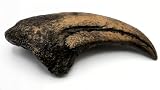
- Museum quality fossil cast replica from an acrocanthosaurus hand claw
- Claw is roughly 4.5 inches long
- Original was found at the Antlers Formation around the Oklahoma/Texas border
Rank #4

- MUSEUM-INSPIRED SABER TOOTH TIGER SKULL REPLICA: Closely modeled after the iconic Smilodon fatalis skull, this large-scale replica captures the fearsome detail of one of prehistory's greatest predators - from the elongated canine fangs to the textured bone structure. Impressive enough to anchor any shelf, desk, or display.
- PREMIUM CONSTRUCTION - A SKULL BUILT TO DISPLAY: Made from high-quality material that replicates the natural texture of fossilized bone. Durable, and fade-resistant so it looks great for years. - no setup required.
- A CONVERSATION PIECE THAT COMMANDS ATTENTION: Whether it's a man cave, home office, library, bar, or trophy room - this Smilodon skull stops people in their tracks. Saber Tooth Tigers roamed the Americas for over 2 million years and remain one of the most recognized symbols of prehistoric power. Now you can own a piece of that history.
- THE PERFECT GIFT FOR HISTORY & FOSSIL ENTHUSIASTS: An unforgettable gift for paleontology fans, natural history lovers, collectors, and anyone fascinated by prehistoric predators. Arrives ready to display straight out of the box - ideal for birthdays, Father's Day, Christmas, and graduation gifts.
- DETAILED ENOUGH FOR SKULL COLLECTORS, BOLD ENOUGH FOR DECOR: Designed with the fossil enthusiast in mind but striking enough for anyone who wants something genuinely unique on their shelf. Far more interesting than another generic sculpture - and a fraction of what a professional museum cast would cost.
Product prices and availability are accurate as of the date/time indicated and are subject to change. Any price and availability information displayed on Amazon at the time of purchase will apply.