Fish kidneys solve opposite osmotic problems depending on salinity. In freshwater, water continually enters the body while dissolved salts tend to leave, so a teleost kidney filters a large volume, recovers valuable ions and produces plentiful dilute urine. In seawater, water tends to leave and salts enter, so the kidney sharply reduces filtration, conserves water and removes excess divalent ions such as magnesium and sulfate. Gills and the intestine share this work, making the kidney part of an integrated osmoregulatory system rather than the fish’s only salt-and-water organ.
The basic freshwater–seawater comparison
| Feature | Freshwater teleost | Seawater teleost |
|---|---|---|
| Main osmotic challenge | Water enters the fish; ions tend to diffuse out | Water leaves the fish; salts tend to enter |
| Kidney filtration | Generally high glomerular filtration | Greatly reduced relative to freshwater |
| Urine | High-volume and dilute (hypo-osmotic) | Low-volume and near-isosmotic to blood plasma |
| Tubular handling | Reclaims needed ions while allowing excess water to leave | Reabsorbs water and secretes divalent ions, especially magnesium and sulfate |
| Other organs | Gills and other epithelia help recover ions | Drinking, intestinal absorption and gill salt secretion work alongside the kidney |
This broad teleost pattern is summarized in reviews of renal transport and osmoregulation by Takvam and colleagues (Frontiers in Physiology, 2021; PubMed record).
What the kidney does in freshwater
It removes the water that enters by osmosis
A freshwater fish’s body fluids contain more dissolved substances than the surrounding water. Water therefore moves inward across permeable surfaces, including the gills. The kidney responds with a high filtration rate and a large urine output. The urine is dilute compared with the fish’s blood, so the fish can eliminate water without throwing away all of its salts.
It saves ions instead of wasting them
Sodium, chloride and other ions tend to diffuse from the fish into the dilute environment. Renal tubules actively reabsorb most of the ions that were filtered, returning them to the body while water continues toward the bladder and out of the fish. Gills and other epithelia also take up ions from freshwater, so kidney recovery is one component of the overall strategy.
#1 Best Overall

- QUIET AQUARIUM FILTER: The Tetra Whisper IQ Power Filter with Stay Clean technology contains a sound shield for quiet filtration less than 40 dB.
- SELF PRIMING: Submerged motor starts up with no priming required.
- CAPACITY: The Tetra Whisper IQ 20 Power Filter works in filters up to 20 gallons (130 GPH).
- STAY CLEAN TECHNOLOGY: By maintaining healthy pH levels, creates easier maintenance for healthier fish.
- CARTRIDGE REFILLS: Change cartridges monthly; uses large-sized Tetra Whisper Bio-Bag Filter Cartridges (refills sold separately).
The 2021 review describes the freshwater pattern as “large volumes of water through high glomerular filtration rates (GFR) and low tubular reabsorption rates, while actively reabsorbing most ions at high rates” (Takvam et al., 2021).
What the kidney does in seawater
It limits water loss
Seawater is more concentrated than a teleost’s body fluids. Water consequently tends to leave the fish, while salts move inward. The fish drinks seawater and absorbs water and ions through the intestine, but that intake also creates a salt-excretion problem. The kidney reduces glomerular filtration and urine flow, limiting the amount of water lost as urine.
Rank #2

- QUIET AQUARIUM FILTER: The Tetra Whisper IQ Power Filter with Stay Clean technology contains a sound shield for quiet filtration less than 40 dB.
- SELF PRIMING: Submerged motor starts up with no priming required.
- CAPACITY: The Tetra Whisper IQ 45 Power Filter works in tanks up to 45 gallons (215 GPH).
- STAY CLEAN TECHNOLOGY: By maintaining healthy pH levels, creates easier maintenance for healthier fish.
- CARTRIDGE REFILLS: Change cartridges monthly; uses large-sized Tetra Whisper Bio-Bag Filter Cartridges (refills sold separately).
It removes ions that the gills do not handle as the main route
Marine teleost renal tubules reabsorb as much water as practical and secrete a fluid containing divalent ions, notably magnesium and sulfate; chloride is also present in the tubular secretion. This is why it is misleading to say that a marine fish simply makes highly concentrated urine. The characteristic urine flow is low and close to the osmotic concentration of plasma, while the kidney’s distinctive contribution is divalent-ion excretion with water conservation.
As the review puts it, “In SW, GFR is greatly reduced, and the tubules reabsorb as much water as possible, while actively secreting divalent ions” (Takvam et al., 2021).
PC Slower Than It Used to Be?
A free scan shows the junk files, broken settings and background clutter dragging Windows down - then fixes them in one click.Free scan · Windows 10 & 11Crashes, No Sound, or Screen Glitches?
Random freezes, missing sound and display glitches usually trace back to one bad driver. Find and replace yours safely.Free scan · under a minuteRank #3
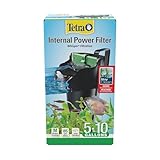
- INTERNAL POWER FILTER: Tetra Whisper Internal Power Filter for 5- to 10-gallon aquariums uses medium Whisper BioBag filter cartridges that are easy to change.
- QUIET 85 GPH MOTOR: The internal pump efficiently filters up to 85 gallons per hour.
- POWERFUL FILTRATION: Water flows through the cartridge floss, trapping debris and fish waste, while Ultra-activated carbon helps remove odor and discoloration.
- SPACE-SAVING DESIGN: Your aquarium can be 1” from the wall with the internal filter designed to clip directly on your aquarium wall and be hidden by décor.
- EASILY ADJUSTABLE: Adjustable clip allows for a variety of setups to easily adjust to high or low water levels.
How renal tubules change the final urine
Filtration creates an initial fluid, but epithelial cells lining different nephron regions determine what remains in the urine. Transport proteins move ions and water between the tubular fluid, cells and surrounding blood. In freshwater, the balance favors high water excretion and strong ion reclamation. In seawater, filtration falls, water reabsorption increases and secretion of divalent ions becomes prominent. The exact transporter locations and relative activities vary with nephron region, salinity and species; the 2021 review and its indexed record provide the comparative framework (full review; PubMed).
The kidney is only one part of osmoregulation
Gills
Gills are major sites of ion transport. In freshwater they help acquire ions lost to the environment. In seawater they help excrete excess salts, working with the kidney rather than being replaced by it.
Rank #4

- Powerful Pump: 300 GPH water pump effectively filters 55-150 gallons; ideal for large aquariums, turtle tanks, and ponds.
- Enhanced Aeration: Equipped with an adjustable valve to increase oxygen levels, promoting healthier, more active fish and turtles.
- Double Deep Filtration: Dual-stage black biochemical sponge removes odors and impurities; keeps water clear and fresh.
- Dynamic Water Flow: Boosts wave size and surface movement; improves circulation for a healthier aquatic environment.
- Adjustable Body: The aquarium filter features a detachable design. For tanks under 15 inches tall, you can lay the filter flat or remove the lower half of the filter sponge for a better fit.
Intestine and drinking
Marine teleosts drink seawater. The intestine absorbs water, and specialized transport processes move ions so that usable water can enter the body. The kidney then handles a low-volume, ion-rich waste stream while conserving water.
Coordination
Changes in filtration, tubular transport, gill transport and intestinal function are coordinated as environmental salinity changes. Looking at urine alone therefore cannot explain the whole salt-and-water budget of a fish.
Do these 3 things before closing this tab:
1Clear out junk files and repair common Windows errors2Fix the driver behind crashes, sound loss and screen glitches3Repair Windows errors before they cause bigger problemsBest Value

- WITH ROTATING BIO-WHEEL: Patented Bio-Wheel technology provides excellent wet/dry biological filtration.
- MULTI-STAGE FILTRATION: Delivers mechanical, chemical and biological aquarium filtration to maintain a clean aquatic environment.
- MARINELAND FILTRATION PRODUCTS: Count on Marineland brand for the most reliable, technically advanced aquariums and accessories on the market.
- COMPATIBILITY: Use with Marineland Rite-Size Filter Cartridges (see individual filter for sizing recommendations).
- FIVE SIZES: Available in 75 GPH, 100 GPH, 150 GPH, 200 GPH and 350 GPH sizes.
What happens when salinity changes?
Species that tolerate broad salinity swings are called euryhaline. They can alter renal filtration and tubular transport as conditions shift between freshwater and seawater. The 2021 review gives an approximate estimate that only 3–5% of teleost species are euryhaline, so most fish tolerate a narrower salinity range. A fish’s ability to adjust is species-specific; a gradual change that one species handles may be dangerous for another.
At the molecular level, the best-integrated evidence covers only some groups, including salmonids, eels, tilapias and fugu. Mechanisms established in those fish should not automatically be applied to every teleost, or to sharks and rays, without species-specific evidence.
What this means for aquarium fish
- A freshwater fish normally needs to excrete abundant dilute urine and retain ions; a marine fish normally needs to conserve water and dispose of excess salts.
- Moving a fish between salinities changes demands on the gills, intestine and kidney together, not just the urine volume.
- Salinity tolerance depends on species and life stage. Do not infer that a fish can safely acclimate to any salinity because another euryhaline species can.
These are physiological patterns, not a substitute for species-specific husbandry guidance. Aquarium decisions should follow the documented salinity range and acclimation requirements for the particular fish.
Key points to remember
- Freshwater teleosts gain water and lose ions, so their kidneys usually produce lots of dilute urine while reclaiming ions.
- Seawater teleosts lose water and gain salts, so their kidneys reduce filtration, conserve water and secrete magnesium and sulfate.
- Urine from a marine teleost is generally low-volume and near-isosmotic to plasma, not simply maximally concentrated.
- Gills and intestine perform major parts of ion and water regulation alongside the kidney.
- Euryhaline species can remodel these processes across salinities, but exact limits and transport mechanisms vary by species.
Further reading
For specialist historical background, Cleveland P. Hickman Jr. and Benjamin F. Trump’s chapter “The Kidney” appears in Fish Physiology: Excretion, Ionic Regulation, and Metabolism (Elsevier, 1969). It is foundational rather than a current review of transporter biology; check the edition and availability in the Elsevier catalog record.
What’s actually slowing this PC down?
Pick the symptom - the matching free tool is one click away.
Quick Recap
Product prices and availability are accurate as of the date/time indicated and are subject to change. Any price and availability information displayed on Amazon at the time of purchase will apply.




