The bird is the gray antbird, Cercomacra cinerascens. A study published in Vertebrate Zoology on February 6, 2026, concludes that what had long been treated as one widespread species complex contains five distinct lineages. The revision describes two species as new to science: Cercomacra mura and Cercomacra raucisona.
What bird was actually five species?
The gray antbird is a small Amazonian passerine whose populations were historically grouped under Cercomacra cinerascens. Vagner Cavarzere, Enrico L. Breviglieri and Luís F. Silveira’s 2026 revision argues that this classification concealed five geographically and vocally distinct lineages.


That wording describes the authors’ taxonomic conclusion, not a sudden biological change or proof that every bird checklist has already adopted the arrangement. Checklist treatment may take time to become standardized.
How did scientists tell the Amazon birds apart?
The researchers combined physical examination with analysis of the birds’ loudsongs. They assessed 682 museum specimens and 347 sound recordings. The study reports two broad morphotypes distributed north and south of the Amazon Basin and four recognizable loudsong types.
Free tools Windows power users keep installed
One-click scans. No signup required.
#1 Best Overall
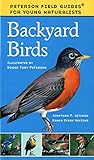
- Guide for young naturalists backyard birds
- Features the original art of celebrated naturalist Roger Tory Peterson
- The most effective method for bird identification and uses a straightforward design
- Pinpoints key field marks for quick recognition and easy comparison of species
- By Lang Elliott and Marie Read
Museum specimens allow researchers to compare plumage and other physical features across large geographic samples. Recordings make it possible to compare songs that may differ even when appearance is similar. The five-lineage conclusion came from the combined morphological and vocal evidence.
What role did BirdNET play?
BirdNET, a pre-trained sound-classification algorithm, was used as an aid in organizing and classifying recordings. It did not independently discover or name the species. The taxonomic interpretation was made by the researchers using BirdNET alongside specimen evidence, geographic patterns and vocal comparisons.
What are the five gray antbird lineages?
| Scientific name | Status in the 2026 revision | Reported range |
|---|---|---|
| Cercomacra cinerascens | One of the recognized species | North of the Pastaza and Amazon rivers, in northern Amazonia |
| Cercomacra sclateri | One of the recognized species | Eastern Ecuador and Peru, south of the Pastaza River and east of the Andes, east to the Ucayali River |
| Cercomacra iterata | Raised to species status | East of the Tapajós River |
| Cercomacra mura | Newly described species | Ucayali–Madeira interfluve |
| Cercomacra raucisona | Newly described species | Madeira–Tapajós interfluve |
An interfluve is the land between two major rivers. In this revision, those rivers are not incidental map labels: they help define the geographic boundaries separating the proposed species.
Why the rivers matter
The Amazon Basin is crossed by enormous rivers that can separate bird populations for long periods. The revision identifies lineages on opposite sides of the Pastaza, Amazon, Ucayali, Madeira and Tapajós rivers. Those boundaries, together with differences in morphology and loudsong, support treating the populations as separate evolutionary lineages rather than one species spread continuously across the basin.
Rank #3
What is genuinely new about the finding?
- The gray antbird complex was split into five lineages in the authors’ integrative revision.
- Cercomacra mura and Cercomacra raucisona were described as new species.
- Cercomacra iterata was elevated to species status.
- The evidence spans museum history and modern computational assistance: 682 specimens, 347 recordings and BirdNET-supported sound classification.
The result illustrates why taxonomic knowledge can change without any change in the animals themselves. A name may cover multiple lineages until researchers examine enough specimens, recordings and geography together.
What this means for birdwatchers
Seeing a gray antbird in the Amazon does not automatically reveal which of the five proposed species it is. Identification depends heavily on location and, where recordings are available, on song. Scientific names are the safest way to discuss the new taxa because common English names for them may differ among checklists.
Anyone documenting birds in the region should record the exact locality, habitat and vocalizations, and should check the field guide or checklist appropriate to that country. The 2026 paper is a taxonomic revision; it is not a universal announcement that every regional authority has already changed its list.
Independent reader supportYour contribution helps us test, update, and keep practical guides available for everyone.The bottom line
The gray antbird, Cercomacra cinerascens, was not literally one bird that transformed into five. Rather, a 2026 study found that populations long grouped under that name represent five distinct lineages, separated by Amazonian geography and supported by combined physical and vocal evidence. Two of those lineages—Cercomacra mura and Cercomacra raucisona—are newly described.
The Tool Desk
Outbyte PC Repair FREEClear out junk files and repair common Windows errorsFree Scan →Outbyte Driver Updater FREEScan for outdated or missing drivers - takes under a minuteDriver Scan →Quick Recap
Best Value

- Fantastic field guide for birds found commonly throughout North America
- Includes range maps, color photos, and common behaviors of each bird
- Has informtion on differntiating different bird species, and plenty of identification help
- Special emphasis placed on identifying birds by shape
- Written by preeminient birders Don and Lillian Stokes
Product prices and availability are accurate as of the date/time indicated and are subject to change. Any price and availability information displayed on Amazon at the time of purchase will apply.




