Windows Errors? Fix Them Before They Spread
Repair common Windows errors and clear accumulated junk for a smoother, more stable PC - no reinstall needed.Free scan · no reinstallOutdated Drivers Are Slowing You Down
One free scan finds every outdated or missing driver and matches the right update for your exact hardware.Free scan · exact hardware matchYes—most healthy adult cats can have a small amount of plain, cooked tuna packed in water as an occasional treat. Human tuna should never replace complete-and-balanced cat food. Avoid tuna packed in oil, salted or seasoned products, sauces, broth, flavorings, bones and raw fish. Ask your veterinarian before offering tuna to a kitten, a cat with illness or a cat eating a prescription diet.
How much tuna can a cat eat?
WSAVA’s Nutrition Committee gives 1 oz (28 g) of canned tuna in water and 36 kcal as a treat reference (2025). Treat this as a reference ceiling for one treat occasion, not a universal daily prescription. A cat’s safe amount depends on body size, weight, health, total calories and other treats.
- Use a small portion rather than feeding a whole can.
- Count the tuna’s calories within the cat’s daily treat allowance.
- Reduce or skip other treats that day.
- For an overweight cat or one with a medical condition, have your veterinarian set the portion.
Introduce any new food gradually and stop if it causes digestive upset or other unusual signs.
Why tuna should remain an occasional treat
Human tuna is not nutritionally complete for cats
Adult cats need a diet formulated to provide the right balance of protein, fat, vitamins, minerals and essential amino acids for their life stage. Human tuna by itself does not provide that nutritional adequacy. Choose a cat food carrying a nutritional-adequacy statement that says it is complete and balanced for the cat’s life stage. The FDA explains that animal food must be safe, made under sanitary conditions, free of harmful substances and truthfully labeled.
Recommended Free Tools
#1 Best Overall

- With real whitefish and tuna for the Friskies cat food tastes cats love. Tender shreds offer a tempting texture
- With savory whitefish and tuna cat food with sauce to add flavor and moisture. High-quality nutrition for adult cats with no artificial colors or preservatives
- Friskies Shreds canned cat food proudly manufactured in Purina-owned U.S. facilities. Contains essential vitamins and minerals
- Friskies cat food packaged in recyclable cans. Checked for quality and safety
- Enticing aroma leads her to her dish. Soft cat food formulated to meet or exceed industry standards for cat food
Large amounts can cause vitamin E deficiency
Merck Veterinary Manual reports that cats given large quantities of canned tuna have developed naturally occurring vitamin E deficiency and pansteatitis (yellow-fat disease). This is a nutritional-imbalance risk from making tuna a major part of the diet, not a reason to assume that a small occasional bite is toxic.
Exclusive tuna feeding can increase mercury exposure
In a 1978 Cornell Veterinary trial, six kittens fed exclusively commercially canned red-meat tuna with elevated mercury and selenium for 100 days accumulated markedly more mercury and selenium in their tissues than control kittens. The short study found no behavioral abnormalities or pathological lesions during that trial. It does not establish that every small tuna treat causes immediate mercury poisoning; it does show why tuna should not be a kitten’s or adult cat’s staple food.
Rank #2

- Moist cat food made with real tuna and featuring extra gravy delivers extra yum in every bowlful
- 100 percent complete and balanced adult cat food nutrition with essential vitamins and minerals and no artificial colors or preservatives
- Smooth Purina Friskies canned cat food pate texture coupled with a delicious taste cats love to tempt your cat at mealtime
- Wet food for cats packaged in a convenient pull-tab can
- Purina Friskies extra gravy canned cat food crafted in U.S. facilities and backed by a trusted leader in pet nutrition
How to prepare tuna safely
- Choose plain tuna packed in water. Do not use products packed in oil or containing added salt, spices, sauces, broth, onion, garlic or other flavorings.
- Use cooked or canned fish only. Remove any bones and allow the tuna to cool to a safe temperature.
- Serve a measured treat portion. Keep the total within the cat’s calorie allowance; the WSAVA 28 g/36 kcal figure is a reference, not a requirement.
- Keep fresh water available. Tuna should complement, not displace, the cat’s regular complete-and-balanced food.
Raw fish is a different risk. The CDC states that “cooking breaks down thiaminase, a harmful enzyme in seafood and prevents thiamine deficiency in cats.” Raw fish should not become a main diet unless a veterinarian or veterinary nutritionist is supervising a nutritionally balanced plan.
Can kittens eat tuna?
Kittens have high nutrient needs for growth, so their main food should be a complete-and-balanced kitten diet. The available veterinary guidance does not establish one universal tuna dose for every kitten. Because of growth requirements and the mercury and nutritional-imbalance concerns associated with heavy tuna feeding, get your veterinarian’s advice before offering tuna to a kitten.
What’s actually slowing this PC down?
Pick the symptom - the matching free tool is one click away.
Rank #3

- REAL TUNA FIRST: This BLUE Tastefuls wet cat food starts with real, high-quality tuna as the first ingredient to deliver the essential nutrition your cat needs to thrive
- EXPERT-LED NUTRITION: Formulated to help your pet thrive from the inside out, Blue Buffalo Tastefuls wet cat food is developed by a dedicated team of veterinarians and animal nutritionists for a trusted option in healthy cat food brands
- DELICIOUS TASTE CATS LOVE: Tender flakes in savory gravy make this flaked recipe a highly palatable wet cat food choice that satisfies even finicky cats
- HIGH MOISTURE CONTENT: Wet cat food naturally provides high moisture to support daily hydration and overall urinary tract health for cats at every life stage
- TRUE BLUE PROMISE: Healthy wet cat food enhanced with vitamins, minerals, and other nutrients with NO poultry by-product meals, NO corn, wheat, or soy, and NO artificial flavors or preservatives
Which cats need extra caution?
Seek individualized advice before giving tuna to:
- kittens;
- cats with kidney disease or another chronic illness;
- overweight cats whose calories are tightly controlled;
- cats with suspected or diagnosed food allergies;
- cats eating a prescription diet.
A treat can interfere with a therapeutic diet even when the ingredient itself seems harmless.
Human tuna versus cat-formulated tuna food
Compare the label rather than relying on the word “tuna.” These checks help distinguish an occasional human-food treat from a suitable regular diet:
Rank #4
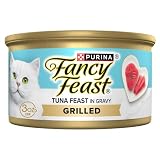
- Fancy Feast wet cat food made without artificial colors or preservatives
- Crafted with real, high-quality ingredients to deliver 100 percent complete and balanced canned cat food
- Fancy Feast grilled cat food developed in partnership with our expert nutritionists to create a unique and unforgettable taste experience for your cat
- Crafted with real tuna in a light, savory gravy for cats
- Protein-rich, gourmet soft cat food recipe creates a flavor-filled experience. Savory gravy adds to the delicious taste
| What to check | Human tuna | Cat-formulated tuna food |
|---|---|---|
| Nutritional adequacy | Usually a treat ingredient; not established as complete and balanced for cats | Look for a complete-and-balanced statement for the cat’s life stage |
| Packing liquid and additives | May contain oil, salt, broth or seasonings; choose plain water-packed tuna only | Review the full ingredient list and guaranteed analysis |
| Calories and portion | WSAVA reference: 1 oz/28 g and 36 kcal (2025) | Use the product’s label calories and feeding directions |
| Life-stage suitability | Not a growth or maintenance diet | Check whether it is formulated for kittens, adults or all life stages |
| Fish species and sourcing | Species and sourcing vary by product | Use the label’s species and sourcing information when available |
When tuna-related symptoms need veterinary help
Stop the suspect food and contact a veterinarian promptly if your cat develops vomiting, loss of appetite, weakness, wobbliness, falling, seizures, circling or holds its neck downward. The FDA lists these among signs that can occur with severe thiamine deficiency and warns that untreated deficiency can be deadly. Do not try to correct serious symptoms with more food at home.
Bottom line for feeding tuna
For a healthy adult cat, a small serving of plain, cooked tuna in water can be an occasional treat. Keep the regular diet complete and balanced, measure the portion, avoid raw or seasoned tuna, and obtain veterinary guidance for kittens, illness, allergies, prescription diets or any concerning symptom.
Free tools Windows power users keep installed
One-click scans. No signup required.
Quick Recap
Best Value
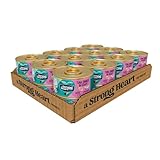
- Real Tuna, Named First-Ingredient Protein: High-quality protein to support muscle development and everyday energy.
- Complete Nutrition, All Life Stages: Full vitamin and mineral profile with essential nutrients for overall health.
- Savory Gravy: Extra moisture and flavor cats look forward to at mealtime.
- Easy-to-Eat Texture: Soft tuna and gravy suitable for cats of any age.
- Made in the USA: 3oz cans, pack of 24, manufactured in U.S. facilities.
Product prices and availability are accurate as of the date/time indicated and are subject to change. Any price and availability information displayed on Amazon at the time of purchase will apply.