Recommended Free Tools
Fish on a coral reef do not share one menu. Depending on the species and life stage, a reef fish may graze algae, pick through detritus, filter plankton from the water, eat coral tissue, hunt invertebrates, prey on other fish, or combine plant and animal foods. Many larvae begin as planktivores, then change diets after settling on the reef.
The main reef-fish feeding groups
Marine biologists describe reef fish by their primary food and feeding behavior. These categories overlap in some species, and an individual’s menu can change as it grows.
| Feeding group | Typical food | How and where it feeds | Reef role | Examples |
|---|---|---|---|---|
| Herbivores | Turf algae and other non-calcifying seaweeds | Graze surfaces such as dead coral, rock and reef rubble | Limit algal growth and open space for coral settlement | Parrotfish and surgeonfish, including yellow tangs |
| Detritivores | Detritus: organic debris and decomposing material | Bottom-feed across the reef and sediment | Move and recycle nutrients as primary consumers | Species adapted to sift or pick through reef material |
| Planktivores | Drifting plankton, including animal larvae | Snatch particles in the water column | Transfer plankton energy to larger reef animals | Many larvae; finger coral is itself a planktivore, while reef fish also occupy this role |
| Corallivores | Coral tissue or polyps | Take bites from living coral colonies | Consume coral tissue as specialized predators | Ornate butterflyfish |
| Invertivores | Invertebrates such as small crustaceans, worms or mollusks | Search reef surfaces, crevices and rubble | Form part of the reef’s secondary-consumer community | Various wrasse, triggerfish and other hunting species |
| Piscivores | Other fish and larger animal prey | Ambush or pursue prey around the reef and in open water | Regulate populations of smaller fish | Lizardfish |
| Omnivores | A mixture of plant and animal foods | Switch between grazing, picking and hunting opportunities | Link several food-web levels | Species whose diet includes both algae or detritus and animal prey |
What parrotfish and surgeonfish eat
Parrotfish
Parrotfish are herbivores that scrape or bite algae from reef surfaces. Their feeding helps prevent fast-growing algae from occupying space where corals could settle and grow. Some parrotfish also ingest the material attached to the surface they scrape, so their feeding is not equivalent to eating living coral tissue.
Surgeonfish and yellow tangs
Surgeonfish are primarily algae grazers. NOAA identifies yellow tangs as herbivores that eat turf algae. By continually removing algal growth, these fish function as reef “housekeepers,” a description used by NOAA for herbivores such as parrotfish and surgeonfish.
The Tool Desk
Outbyte PC Repair FREEClear out junk files and repair common Windows errorsFree Scan →Outbyte Driver Updater FREEFix the driver behind crashes, sound loss and screen glitchesFind Drivers →#1 Best Overall
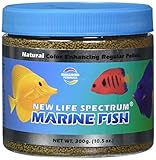
- Marine Fish Formula, 1mm Sinking Pellets - 300g
- Newest lineup from New Life Spectrum featuring the Nature series
- No artificial preservatives, flavoring, or colors
- All ingredients in the new formulas are preserved using natural preservatives
- Made in the USA.
Do reef fish eat coral?
Some do, but “reef fish eat coral” is too broad a statement. Corallivory is one specialized feeding strategy among many. NOAA gives the ornate butterflyfish as an example of a corallivore that eats coral tissue or polyps. Most reef fish are not corallivores; they eat algae, detritus, plankton, invertebrates, fish or mixed foods instead.
Coral is an animal. Each polyp can use tentacles to capture food, while symbiotic algae provide many corals with products of photosynthesis. That is the coral animal’s feeding biology, not a description of what every fish on the reef eats.
Rank #2
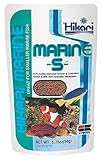
- High protein levels; consistent with the foods your fish would eat on the reef
- Soft and sponge-like, a texture your marine fish are instinctively accustomed to
- Shrimp Meal for excellent, natural color enhancing benefits
- Ideal for all smaller marine carnivores or omnivores
- Stabilized vitamin C to support immune system health
What fish eat at different ages
A fish’s feeding category is not necessarily permanent. NOAA reports that most reef fishes are planktivores during their larval stage. After settling into shallow-water habitat, many transform into carnivores and later switch to their adult diet. The same species can therefore occupy different feeding roles at different points in its life.
- Larvae: commonly capture drifting plankton because it is available in the water column and suits their small size.
- Newly settled juveniles: may begin taking small animal prey or other foods as they move onto the reef.
- Adults: adopt the specialized diet associated with their species, such as algae grazing, coral feeding or fish predation.
How these diets form a reef food web
The feeding groups are connected rather than isolated. Algae and detritus support primary consumers. Plankton supports larvae and other planktivores. Small fish and invertebrates then become food for omnivores, invertivores and piscivores. Predators such as grunts, triggerfish and wrasse can also consume animals that damage or bother corals.
Outdated Drivers Are Slowing You Down
One free scan finds every outdated or missing driver and matches the right update for your exact hardware.Free scan · exact hardware matchWindows Errors? Fix Them Before They Spread
Repair common Windows errors and clear accumulated junk for a smoother, more stable PC - no reinstall needed.Free scan · no reinstallRank #3

- Fortified with garlic Guard, chlorella, and vitamin C for enhanced health and vitality
- High in marine protein and a rich assortment of vitamins and minerals
- Premium and nutritionally balanced
- Contains only the highest quality ingredients without low nutritional value fillers
- Formulated with pro-biotics for maximum health and vitality
- Algae, detritus and plankton provide the food base.
- Herbivores, detritivores and planktivores transfer that energy into fish and invertebrate biomass.
- Invertivores and omnivores consume smaller animals and mixed foods.
- Piscivores eat fish and larger prey, regulating populations at higher levels of the web.
- Herbivory keeps algae from overwhelming available coral settlement space, while feeding and excretion move nutrients through the reef.
Where reef fish find their food
Feeding location often reveals what a fish eats. Planktivores face into currents or patrol the water column for drifting particles. Herbivores scrape exposed reef surfaces. Detritivores work along the bottom, and invertivores probe holes, crevices and rubble. Piscivores use ambush points or open-water pursuits. These different feeding positions reduce direct competition and allow many species to live on the same reef.
Independent reader supportYour contribution helps us test, update, and keep practical guides available for everyone.Why local conditions matter
There is no universal reef menu. Species composition, available algae and plankton, coral communities, habitat depth and a fish’s age all change what is eaten. A wild reef diet also cannot be inferred reliably from the food offered to fish in an aquarium. The safest general answer is to identify the species, its life stage and its feeding location before describing its diet.
Quick Recap
Best Value

- The only dry fish food in the world made directly from fresh seafood
- Rich in Omega 3 fatty acids
- Free of meals or other pre-processed protein
- Contains hand-harvested ocean kelp & spirulina
Rank #4

- Marine Fish Formula, 1mm Sinking Pellets - 150g
- Newest lineup from New Life Spectrum featuring the Nature series
- No artificial preservatives, flavoring, or colors
- All ingredients in the new formulas are preserved using natural preservatives
- Made in the USA.
Product prices and availability are accurate as of the date/time indicated and are subject to change. Any price and availability information displayed on Amazon at the time of purchase will apply.




