Free tools Windows power users keep installed
One-click scans. No signup required.
To see butterflies in spring and support them beyond a single visit, grow two kinds of plants: nectar flowers for adults and the specific host plants that caterpillars can eat. A season-long succession of regionally native blooms, protected from broad-spectrum pesticides, turns a flower bed into a complete butterfly life-cycle garden.
The exact species and plant combinations depend on your location. Use the profiles below as a planning framework, then confirm choices with your local extension service, native-plant society or regional Xerces Society plant list.
Why a butterfly garden needs more than flowers
Adult butterflies drink nectar, but caterpillars usually can eat only a narrow range of plants. A nectar-only bed may bring in adult visitors without providing anywhere for females to lay eggs or for larvae to grow. Host plants can be culinary herbs, perennial flowers, shrubs or trees, and they may look chewed or less ornamental when they are doing their job.
Native plants are the safest starting point for local habitat. The Xerces Society reports that native plants have been found to be four times more attractive to pollinators than non-native plants, and that many butterflies lay eggs only on native species. “Native” still means native to your region, not simply a plant sold as a native somewhere else in North America.
What’s actually slowing this PC down?
Pick the symptom - the matching free tool is one click away.
#1 Best Overall

- Real Retro: Our Real Retro poster embodies the essence of vintage charm by purposefully integrating a weathered design. This approach ensures each poster not only mimics the passage of time but also exudes a unique, naturally aged retro allure
- Natural Material: Our posters are crafted on natural linen canvas, setting them apart in texture and authenticity from the common chemical fiber fabrics. This choice ensures a genuine retro feel, capturing the essence of time's passage that synthetic materials simply cannot replicate
- Strong & Durable: Our wooden frames, crafted from premium fir wood, undergo meticulous processing to achieve a distinctive weathered and vintage look. This gives them an authentic old-world charm, enhancing any space with character and warmth. Moreover, their non-toxic, odorless nature makes them a safe and ideal choice for home decoration
- Widely Applied: Our versatile products are perfectly suited for any space, adding a touch of retro elegance with their exceptional craftsmanship and interesting content. Ideal for kids' rooms, bedrooms, living rooms, dorms, schools, and corridors, they create a captivating ambiance wherever they're placed
- Perfect Gift for Nature Enthusiasts: Ideal for classrooms, homes, or offices, this butterfly species chart makes a thoughtful and inspiring gift for nature lovers of all ages.
Four spring-to-summer butterflies and the plants they need
| Butterfly | Adult appearance and behavior | Larval host plants | Adult nectar and garden cue | Garden form and broad range |
|---|---|---|---|---|
| Black swallowtail (Papilio polyxenes) | Black wings marked with yellow spots; often patrols sunny, open beds with a quick, gliding flight. | Carrot-family plants: parsley, dill, carrot and parsnip. | Uses varied, nectar-rich flowers such as coneflowers, asters, bee balm, phlox, verbena, sedum, yarrow and sunflowers. Look for adults after host herbs put on fresh spring growth and through summer. | Herbaceous kitchen-garden host; widespread across much of North America, with timing varying by latitude. |
| Spicebush swallowtail | Large dark swallowtail with blue and orange markings on the hindwings; adults cruise woodland edges and gardens near host shrubs. | Spicebush and sassafras. | Visits clusters of nectar flowers, especially where a sunny edge meets woody cover. Sightings usually build from late spring into summer where the host shrubs grow naturally. | Woody shrub or small-tree hosts; primarily eastern and central North America. |
| Tiger swallowtail (Papilio glaucus) | Large yellow-and-black butterfly that glides high and then drops to flowers or damp ground. | Aspen, cherry and birch trees. | Feeds at many open, nectar-rich flowers, including phlox, bee balm, coneflowers and asters. Watch for the first large swallowtails on warm spring days and again through summer. | Tree-dependent host relationship; broadly distributed in eastern and central North America. |
| Monarch (Danaus plexippus) | Orange wings outlined and veined in black with white spots; adults make long-distance movements and pause frequently to refuel. | Asclepias milkweeds are the only host plants for eggs and caterpillars. | Needs a diverse sequence of nectar flowers during breeding and migration. In the United States and Canada, adults move north in spring and summer, then migrate south to Mexico or coastal California in fall and winter. | Herbaceous milkweed hosts; range and arrival dates differ among migration routes and local climates. |
Black swallowtail: an easy entry from the herb garden
Parsley, dill, carrot and parsnip make this species unusually approachable: the same plants used in a kitchen garden can feed its larvae. Expect caterpillars to consume foliage; plant an extra clump rather than removing every chewed stem. Keep a nearby patch of open, nectar-rich flowers so adults can refuel while females search the herbs for egg-laying sites.
Spicebush swallowtail: a reminder that hosts can be woody
Spicebush swallowtails expand the idea of a butterfly bed beyond annuals and perennials. Spicebush and sassafras are shrubs or small trees, so place them at a woodland edge or along the back of a larger garden. Adults are most likely where those host plants provide shelter and flowering plants provide sunlit nectar nearby.
Rank #2

- The artwork is printed onto premium water resistent polyester art fabric(110 gsm canvas) using archival quality inks
- The poster is durable, could not be destroyed or tore easily , it is silky and rich in color
- It is unframed, hang this poster print on the wall unframed or frame it if you want a formal look
- It is rolled and protected well in a sturdy cardboard tube to minimize the chance of damage during delivery
- A beautiful wall decoration poster for living room, bedroomm, kitchen, office,classroom, hotel, dining room, bathroom, bar etc
Tiger swallowtail: plan vertically with trees
Aspen, cherry and birch let a garden support a large swallowtail without relying on a mass of low flowers alone. Give the trees room to mature, then position nectar plants where their sunny edges are visible from a path or window. The first warm spring afternoons can bring gliding adults before the main summer bloom.
Monarch: build the garden around milkweed and migration
Milkweed is non-negotiable for monarch reproduction: the Monarch Joint Venture states that it is the only host plant for monarch eggs and the only food source for their caterpillars. Adults also need nectar from many flower types, not milkweed alone. A bed that offers only one short milkweed bloom cannot cover the fuel needs of breeding and migrating butterflies.
Do these 3 things before closing this tab:
1Repair Windows errors before they cause bigger problems2Fix the driver behind crashes, sound loss and screen glitches3Clear out junk files and repair common Windows errorsRank #3
- Real Retro: Our Real Retro poster embodies the essence of vintage charm by purposefully integrating a weathered design. This approach ensures each poster not only mimics the passage of time but also exudes a unique, naturally aged retro allure
- Natural Material: Our posters are crafted on natural linen canvas, setting them apart in texture and authenticity from the common chemical fiber fabrics. This choice ensures a genuine retro feel, capturing the essence of time's passage that synthetic materials simply cannot replicate
- Strong & Durable: Our wooden frames, crafted from premium fir wood, undergo meticulous processing to achieve a distinctive weathered and vintage look. This gives them an authentic old-world charm, enhancing any space with character and warmth. Moreover, their non-toxic, odorless nature makes them a safe and ideal choice for home decoration
- Widely Applied: Our versatile products are perfectly suited for any space, adding a touch of retro elegance with their exceptional craftsmanship and interesting content. Ideal for kids' rooms, bedrooms, living rooms, dorms, schools, and corridors, they create a captivating ambiance wherever they're placed
- Perfect Gift for Nature Enthusiasts: Ideal for classrooms, homes, or offices, this butterfly species chart makes a thoughtful and inspiring gift for nature lovers of all ages.
Monarch numbers have declined by more than 80 percent in recent decades, according to the Xerces Society (2026). Adding regionally appropriate milkweed and a continuous nectar supply helps replace lost habitat, but it does not make a garden a complete substitute for the broader migration corridor.
How to make blooms last from early spring through late fall
Start with an overlapping bloom calendar
Plan several plants for each part of the season instead of creating one dramatic peak. Early flowers support the first arrivals; summer flowers carry breeding adults; late asters, sedum and other fall bloomers help migrants and late-season insects. UMN Extension lists coneflowers, lilac, butterfly weed, asters, bee balm, sunflowers, verbena, phlox, sedum, yarrow and other wildflowers as nectar options, but every selection should be checked for local hardiness and native status.
Rank #4

- Artwork Info – Explore the remarkable butterfly diversity of Texas with this beautifully illustrated identification chart featuring native species from across the state's varied ecosystems. An engaging reference for learning, collecting, gardening, wildlife observation, and natural history appreciation.
- Unframed Print – Our unframed poster allows you to choose a frame that complements your decorating style. Whether displayed in a classroom, homeschool area, office, study, nature center, library, or living space, this artwork creates an educational focal point while giving you flexibility in presentation.
- Makes a Great Gift – A thoughtful gift for butterfly enthusiasts, gardeners, pollinator advocates, entomology students, teachers, homeschool families, naturalists, wildlife photographers, conservation supporters, and anyone fascinated by Texas wildlife.
- Great for Any Room – Unframed Print – Great for classrooms, homeschool rooms, science labs, libraries, offices, studies, visitor centers, nature preserves, garden sheds, and educational spaces. The detailed illustrations make learning both attractive and accessible.
- Proudly Made in Tomball – Proudly made in Tomball, Texas by our family-owned business. Every chart is carefully printed, assembled, packaged, and shipped with attention to detail, creating educational wall décor that combines visual appeal with lasting value for classrooms, offices, libraries, and homes.
Favor accessible, nectar-rich flower shapes
Flowers with multiple florets and abundant nectar give adults more feeding opportunities in one stop. Avoid relying on double-flowered cultivars bred mainly for appearance: extra petals can hide or reduce the nectar that butterflies need. Combine flower heights and colors, and leave sunny, wind-sheltered places for basking.
Put host plants where caterpillars can stay
Group host plants near nectar beds, but do not tidy them at the first sign of leaf damage. A caterpillar that disappears into nearby leaf litter or stems may be completing its next life stage. Include shrubs and trees when a target species requires them, and allow a small amount of untidy vegetation to remain.
Best Value
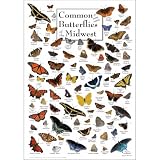
- This stunning poster includes 79 species of butterflies – both common and exotic – found in the Midwest region
- Images by Rick Cech, well-known naturalist and butterfly expert, author of Butterflies of the East Coast (Princeton University Press
- Posters measures 19″ X 27″
- Printed on #80 coated stock using fade resistant inks and the highest production values, it is truly museum quality and suitable for framing
- Shipped in a heavy-walled 2″ mailing tube with plastic endcaps
Spring maintenance that protects the next generation
- Delay intensive cleanup. Wait until temperatures are consistently warm before cutting every stem or removing leaf litter. Monarch Joint Venture advises holding off on spring garden cleanup because overwintering insects may still be using that material.
- Leave some bare ground and plant debris. About 70 percent of native bee species nest in the ground, so a completely mulched or sealed surface can remove useful habitat. Keep paths clear while retaining small undisturbed areas.
- Skip broad-spectrum pesticides. Sprays that kill a pest can also kill caterpillars, adult butterflies and other beneficial insects. Use the least disruptive response possible and avoid treating flowering plants when pollinators are active.
- Inspect before you intervene. Chewed leaves, eggs and caterpillars are evidence that the garden is functioning. Move a plant only if it is failing, hazardous or clearly in the wrong location.
- Refresh the bloom succession. Record which plants flowered early, midsummer and late, then add plants to cover gaps rather than simply buying more of the same peak-season flower.
Choosing plants for your region
No universal North American plant list works equally well everywhere. The Xerces Society’s monarch guidance drew on nearly 24,000 nectaring observations covering 358 native plant species, then filtered candidates for regional distribution, commercial availability and garden hardiness. That approach illustrates why a plant recommended for one migration route or climate may be unsuitable several states or provinces away.
Quick Recap
- Check your state or provincial extension service for butterfly host and nectar recommendations.
- Use a local native-plant society to verify botanical names, soil needs and mature size.
- Consult regional Xerces Society lists before ordering seed or nursery stock.
- Ask whether nursery plants were grown without systemic insecticides, which can persist in plant tissues.
- Choose a butterfly field guide such as Gardening for Butterflies to compare local species and identify adults, eggs and caterpillars in the garden.
A practical first-season plan
- Map sun and shelter. Mark the warmest open areas for nectar flowers and the edges or structural spaces where shrubs, trees and host herbs can grow.
- Pick one host relationship. Start with parsley or dill for black swallowtails, a locally appropriate milkweed for monarchs, or a verified spicebush, sassafras, aspen, cherry or birch host where space allows.
- Fill at least three bloom windows. Select regionally suitable plants for early spring, summer and late season, favoring nectar-rich, single-flowered forms.
- Plant more than one of key species. A small cluster is easier for adults to find and gives caterpillars a better chance of leaving enough foliage for the plant to recover.
- Observe before editing. Photograph visitors, note dates and watch which plants host eggs or larvae. Use those observations to improve next year’s succession.
Product prices and availability are accurate as of the date/time indicated and are subject to change. Any price and availability information displayed on Amazon at the time of purchase will apply.




