Teach your dog by rewarding the behaviors you want, making practice easy enough to succeed, and managing the environment while new skills develop. Reward-based training can use food, play, affection, or another reward your dog values. For serious fear, anxiety, aggression, or a sudden behavior change, start with a veterinarian rather than trying to solve the problem with a generic training plan.
Start with a reward-based approach
The American Veterinary Society of Animal Behavior (AVSAB) recommends reward-based methods for all dog training and behavior modification. Its 2025 clarification says its 2021 humane dog-training statement remains its current authoritative position. AVSAB rejects aversive methods; punishment and tools that cause fear or pain are not equivalent alternatives to rewards. Read AVSAB’s position statements and public guidance and its Humane Dog Training position statement.


In practice, notice and reward the behavior you want to see again. Rewards may be food, a game, affection, or access to something the dog enjoys. Food is one useful option, not the only one. Keep early practice manageable: reduce distractions, work at a comfortable distance, and ask for short periods of attention before increasing duration or difficulty. If your dog cannot respond, make the exercise easier rather than repeating the cue or escalating pressure.
Training and management work together. A leash, gate, pen, or comfortable crate can help prevent unsafe or unwanted rehearsals while you teach a new skill. These aids do not teach the skill by themselves: a harness does not automatically stop pulling, and a gate does not resolve the reason a dog is barking. AVSAB describes non-aversive management alongside reinforcement in its guide to reward-based methods.
Do these 3 things before closing this tab:
1Clear out junk files and repair common Windows errors2Fix the driver behind crashes, sound loss and screen glitches3Repair Windows errors before they cause bigger problems#1 Best Overall
Choose useful skills for everyday life
For a new puppy or adopted dog, prioritize skills that make daily routines safer and calmer. AVSAB’s training tips for first-time dog owners discuss practical goals such as coming when called, walking nicely on leash, settling, and household manners. Teach one small, observable action at a time and reward it promptly.
Coming when called
Build recall in easy settings first: call your dog from a short distance when distractions are low, then reward the response generously. Gradually vary the distance, location, and distractions. Do not assume a dog who comes reliably in the house is ready to do so near traffic, wildlife, or other dogs. AVSAB’s guidance on dog bolting and recall recommends progressing across outdoor contexts and distractions; off-leash practice belongs only after the dog has shown reliable responses in those situations, with safety and local leash rules in mind.
Walking calmly on leash
Reward moments when the leash is loose and your dog is near you. If pulling resumes, pause or change direction in a way that avoids yanking, then reward the next loose-leash moment. Keep the route and distractions within your dog’s current ability. A suitable harness may help you manage a walk, but it is equipment—not a substitute for teaching and reinforcing the walking behavior you want.
Settling and household manners
Reward calm behavior you notice spontaneously, such as resting on a mat or keeping four paws on the floor when greeting someone. Make the desired behavior easier by reducing excitement, providing an appropriate resting place, or using a gate to manage access. For jumping, barking, or other persistent challenges, AVSAB recommends teaching an alternative and managing the situation rather than relying on punishment; the right plan depends on what is driving the behavior.
Rank #3
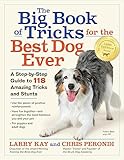
- Book: the big book of tricks for the best dog ever: a step-by-step guide to 118 amazing tricks and stunts
- Language: english
- Binding: paperback
Housetrain with supervision and timely rewards
Give your dog regular opportunities to toilet outside and supervise closely indoors, especially during the early learning period. When your dog finishes outside, reward promptly so the connection between the location and the reward is clear. AVSAB’s housetraining tips emphasize supervision and reinforcement for outdoor success.
If you find an accident after it happened, clean it up and adjust supervision, timing, or access to the area. Do not punish the dog for a past accident: delayed punishment may not be connected to the earlier behavior and can make the dog wary without teaching where to toilet.
Use confinement as management, not punishment
A crate can be useful for short periods if you introduce it positively and your dog is comfortable there. A pen or gated area may suit the situation better. Neither replaces appropriate supervision, exercise, toilet breaks, or care, and a crate should not be used as punishment. If confinement causes distress, do not force it; reconsider the setup and seek individualized guidance.
Independent reader supportYour contribution helps us test, update, and keep practical guides available for everyone.Socialize puppies gradually and safely
Socialization means giving a puppy positive, gradual opportunities to experience people, places, sounds, surfaces, and everyday events—not forcing contact or keeping the puppy in overwhelming situations. Continue appropriate social experiences as the puppy grows, and let the puppy approach at a comfortable pace. If the puppy shows fear, reduce pressure and ask your veterinarian for guidance.
Quick wins for a faster PC:
Clear out junk files and repair common Windows errorsFree Scan →Fix the driver behind crashes, sound loss and screen glitchesFind Drivers →Repair Windows errors before they cause bigger problemsFix Now →Balance social experiences with disease precautions. AVSAB’s Puppy Socialization position statement advises current vaccinations and health precautions for puppy classes, cleanable surfaces where possible, and avoiding unsanitized, high-traffic dog areas where dogs’ health status is unknown. The statement dates to 2008; ask your veterinarian about your puppy’s vaccine timing and local disease risks rather than applying a one-size-fits-all rule.
Know when to get professional help
Consult a veterinarian for serious aggression, marked fear, anxiety, a sudden behavior change, or any concern that creates a safety risk. Pain or illness can affect behavior, and significant behavior problems may need a coordinated plan involving management, behavior modification, and sometimes medication. A general training guide cannot determine the cause or prescribe that plan.
If you work with a trainer, ask what methods they use, what they do when a dog struggles, and how they assess progress. Favor someone who relies primarily or only on reward-based methods and avoids physical force. AVSAB’s trainer guidance can help frame those questions. Credentials may be useful information when comparing providers, but AVSAB clarifies that it does not endorse or oppose trainers from specific organizations.
Quick Recap
Product prices and availability are accurate as of the date/time indicated and are subject to change. Any price and availability information displayed on Amazon at the time of purchase will apply.
The Tool Desk
Outbyte PC Repair FREERepair Windows errors before they cause bigger problemsFix Now →Outbyte Driver Updater FREEScan for outdated or missing drivers - takes under a minuteDriver Scan →



