Effective veterinary triage quickly assigns priority from a patient’s history and physical findings, identifies instability, and starts care for immediate threats. In small-animal emergency practice, the practical sequence is a focused primary survey and stabilization first, followed by a fuller secondary survey. Clear handoffs, clinic-approved protocols, and timely escalation are essential; no checklist replaces clinician judgment, local protocols, or jurisdiction-specific scope-of-practice rules.
What effective triage is—and what it is not
Triage is the rapid assignment of priority to emergency patients and problems using historical and physical findings. Its purpose is to identify what cannot wait and direct immediate attention accordingly—not to complete an exhaustive examination before treating an unstable patient. Merck Veterinary Manual describes a rapid primary survey to assess stability and identify problems for immediate treatment, followed by stabilization and a thorough secondary survey (Initial Triage and Resuscitation of Small Animal Emergency Patients; page reviewed December 2025 and updated April 2026).


This article focuses on small-animal emergency care and clinic workflow. The examples are not a universal protocol, and staff responsibilities must fit local law, supervision requirements, training, and the clinic’s approved procedures.
How to assess the patient: primary survey, stabilization, then secondary survey
Use a focused primary survey
For trauma, the VetCOT sequence XABCDE provides a practical order: catastrophic hemorrhage (X), airway, breathing, circulation, disability, and exposure/environment. Look for the threat that changes what needs to happen now. Merck identifies examples of immediate threats including severe hemorrhage, airway disruption or obstruction, serious breathing compromise, shock, and cardiopulmonary arrest.
Recommended Free Tools
#1 Best Overall
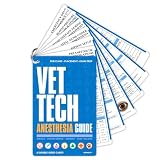
- 12 PAGES OF ANESTHESIA REFERENCE - 6 double-sided cards covering preanesthetic drugs, induction agents, airway setup, machine checklist, patient risk, vitals under anesthesia, monitoring, fluid therapy, arrhythmia management, anesthetic emergencies, and recovery.
- WATERPROOF PVC SCRUB POCKET SIZE - Each card is 3.5 x 5.5 inches. Wipe clean between procedures. Essential vet tech supplies and vet tech accessories for any surgery suite. Vet tech essentials and vet tech must haves for anesthesia rotations and exam prep.
- YOUR ANESTHESIA SAFETY NET - Flip to drug doses, monitoring parameters, or emergency protocols without leaving your patient. Built for vet tech students learning anesthesia, new graduates running their first solo cases, and experienced veterinary technicians training staff.
- EASY TO READ, ORGANIZED BY STAGE - Pre-op, induction, maintenance, monitoring, complications, and recovery each on their own card. Practical vet med accessories and veterinary technician supplies for surgical teams. Clear tables for quick reference during procedures.
- PERFECT VETERINARIAN GIFT - A practical gift for vet tech graduation or vet tech week. Great vet tech study materials for veterinary assistant training and vet med students. Veterinary technician supplies for clinic teams. Works alongside veterinary books and vet supplies.
- X — Catastrophic hemorrhage: Look for immediately life-threatening blood loss.
- A — Airway: Assess whether the airway is open and protected.
- B — Breathing: Identify severe respiratory compromise.
- C — Circulation: Assess heart rate, pulse quality, mucous-membrane color, capillary refill time, and blood pressure as appropriate.
- D — Disability: Assess neurologic status and consciousness.
- E — Exposure/environment: Check for open wounds and temperature or heat-loss concerns while considering the environment.
Assess pain and address it appropriately as part of patient care. The specific interventions depend on the patient, the clinician’s assessment, available resources, and the team member’s authorized role.
Stabilize immediate threats before the fuller examination
When the primary survey reveals instability, prioritize stabilization rather than delaying for a complete history or examination. Once the patient is stable enough, continue with the secondary survey and more thorough assessment. The exact measures depend on the problem and must be directed by veterinary judgment and clinic protocols.
Give respiratory distress and seizures a methodical response
Respiratory distress and seizures require a stepwise approach to categorizing and stabilizing the presentation, with referral considered when indicated. A 2024 peer-reviewed review by Elizabeth Thomovsky and Laura Ilie emphasizes that first-line practitioners may need to stabilize a patient before transfer; triage capability is not limited to referral hospitals (Basic triage in dogs and cats: Part I).
Who does what: intake, clinical triage, and veterinary decisions
AAHA’s 2023 standardized workflow is an example of role allocation, not a universal legal scope rule. Adapt it to local law, supervision, and standing protocols (Standardized Workflow for Optimal Utilization).
| Team role | Example responsibilities in the AAHA workflow |
|---|---|
| Client service representative | Collect initial information, reason for visit, and records. |
| Credentialed veterinary technician, working with assistants | Obtain relevant history, perform initial triage, record problems, follow agreed algorithms, initiate permitted basic care, and present the case. |
| Veterinarian | Assess and prioritize problems with the technician, establish a working diagnosis, and create the therapeutic plan. |
A reliable handoff makes clear who has received the case, what was observed or reported, what actions have already been taken under protocol, and what requires the veterinarian’s decision. Define that transition in the clinic’s workflow so urgent findings do not remain only in an intake note or verbal message.
Teletriage is a pathway decision, not a remote diagnosis
AAHA’s workflow calls for team members involved in teletriage to understand telehealth, triage, and the veterinarian-client-patient relationship. Client service staff may collect signalment and history; credentialed technicians may ask differentiating questions and recommend an action pathway under veterinarian-approved standard operating procedures. Veterinarians diagnose and prescribe. A triage script should not be represented as a remote diagnosis.
Rank #4

- Extensive Knowledge Coverage: developed by pharmacists, this set of 50 veterinary pharmacology flashcards provides comprehensive reference material to support your ongoing education. They are an invaluable resource for anyone passionate about veterinary medicine and animal health
- Compact & Portable: measuring just 3.5 x 4.8 inches (8.9 x 12.1 cm), these flashcards are small and highly portable. They eliminate the need for bulky textbooks by delivering essential information in a compact format, making them perfect for learning on the go
- Durable & Long-Lasting: crafted from high-quality materials, these flashcards are resistant to bending and tearing. Engineered to withstand frequent use in classrooms, clinics, and during personal study, they offer reliable performance over the long term
- Optimized for Effective Learning: the veterinary pharmacology flashcards are designed to help you master complex pharmaceutical concepts through a clear and concise layout. Ideal for veterinary and technician students preparing for exams, they simplify challenging topics for efficient study
- Ideal Gift & Practical Tool: these veterinary pharmacology flashcards serve as excellent study aids and make thoughtful gifts for veterinary students or technician trainees. They are a practical study guide and quick-reference tool, covering commonly needed information. They are also highly useful for licensing exam preparation and for onboarding new staff at veterinary clinics
Escalate when the case exceeds the role or available capability
The Royal College of Veterinary Surgeons’ EPA 4 competency guidance emphasizes triaging according to severity and available facilities or equipment, supporting vital functions, evaluating consciousness and ventilation/circulation, working as part of a team, recognizing personal limits, and seeking help. It is a competency framework for veterinary graduates, not a universal rule for every jurisdiction (EPA 4).
Independent reader supportYour contribution helps us test, update, and keep practical guides available for everyone.What a clinic triage SOP should settle in advance
A usable written procedure turns general priorities into clear local actions. It should address:
Free tools Windows power users keep installed
One-click scans. No signup required.
Best Value
- Who receives the initial call or arrival, and who visually screens the patient.
- Which signs require immediate notification of a clinician.
- Where the patient should be taken and what actions are authorized while the veterinarian responds.
- How the assessment, actions, and handoff are documented.
- How staff respond if a patient deteriorates while waiting.
- When the clinic’s capacity is exceeded and referral or transfer is required.
The Veterinary Emergency and Critical Care Society’s 2018 injured-patient resource expects trauma triage, staff training, and a written triage SOP reviewed at least annually. It also names gurney access and backboards for suspected spinal injury. These are trauma-center expectations, not necessarily minimum requirements for every general practice (Resources for the optimal care of the injured veterinary patient).
Make the triage area and emergency equipment usable
Everyone on the team should know where the triage area is and where necessary equipment and medications are kept. Merck’s example equipment list includes a multiparameter monitor, oxygen, an airway-mask-bag unit, catheter materials, and a crash cart with suction and defibrillator. It also lists RECOVER-based recording sheets, drug charts, and CPR algorithms. Adapt readiness to the clinic’s services, patient risks, staff training, and current resuscitation guidance (Equipping a Triage Area for Small Animal Emergency Patients; page reviewed June 2025 and updated December 2025).
How to choose or review a triage system
The available sources do not establish that one named scoring system is best. When selecting or reviewing a system, compare the factors that affect whether it will work in your clinic:
- What assessment sequence and clinical signs it includes.
- How it defines urgency categories, response expectations, and reassessment.
- Who is authorized to assign a category and which findings trigger veterinarian escalation.
- Which species and presentations it covers.
- Whether it fits the clinic’s staffing, equipment, and referral capacity.
- What training, documentation, and local validation it requires.
Do not treat a category label as a substitute for reassessment: a patient’s condition can change while waiting, so the SOP should specify how staff identify and communicate deterioration.
What’s actually slowing this PC down?
Pick the symptom - the matching free tool is one click away.
Further reading for small-animal emergency teams
The BSAVA Manual of Canine and Feline Emergency and Critical Care, third edition, includes a triage chapter and practical emergency-care coverage. The publisher lists this edition as published in March 2018; check whether a newer edition is available before relying on it as a current reference.
Quick Recap
Product prices and availability are accurate as of the date/time indicated and are subject to change. Any price and availability information displayed on Amazon at the time of purchase will apply.