What’s actually slowing this PC down?
Pick the symptom - the matching free tool is one click away.
There is no reliable way to tell why a betta died from the fact of the death alone. Possible causes include poor water quality or toxic exposure, temperature or oxygen stress, infectious disease, injury, and other illness. If fish remain in the tank, check their condition and test the water; a test can reveal a tank problem, but it cannot prove what killed one particular fish.
What may have caused a betta’s death?
Several different problems can produce similar signs, and causes can overlap. Fish-health references discuss environmental stress, infectious disease, trauma, and toxins as possible explanations—not as a diagnosis for an individual fish.
| Possible cause | What to consider |
|---|---|
| Water quality or toxin exposure | Ammonia or nitrite, pH changes, and low oxygen can be hard to see. Consider recent tank changes and possible exposure to medication, pesticides, cleaners, or other household substances. |
| Temperature or oxygen stress | Think about temperature changes, circulation problems, or a power interruption, particularly if the onset was sudden. |
| Infectious disease or another illness | Illness may involve changes in behavior or appearance, but signs are often nonspecific and do not identify a disease on their own. |
| Injury or aggression | Consider visible injury, interactions with tankmates, and changes in the aquarium environment. |
Betta care guidance lists clamped fins, lethargy, and loss of interest in food among signs that a fish may be ill. None of these signs, alone, establishes the cause. A betta husbandry review also discusses poor water quality as a health risk and explains that fish waste and uneaten food can contribute ammonia; biological filtration helps process it into less toxic nitrogen compounds. Care and Use of Siamese Fighting Fish (Betta splendens) for Research
Could ammonia have killed my betta?
Ammonia is one possibility, but a suspected or measured ammonia problem does not by itself confirm why an individual fish died. Ammonia and nitrite elevations, pH fluctuations, and low oxygen may not be visible in the water. As the University of Florida IFAS Extension Aquatic Animal Health Program explains, “Many water quality issues that cause disease in fish, such as increased ammonia or nitrite, pH fluctuations, and low oxygen levels, are invisible to the human eye.” Use water tests rather than appearance to investigate. UF/IFAS: Submission of Fish for Diagnostic Evaluation
The Tool Desk
Outbyte PC Repair FREEClear out junk files and repair common Windows errorsFree Scan →Outbyte Driver Updater FREEScan for outdated or missing drivers - takes under a minuteDriver Scan →#1 Best Overall
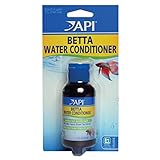
- Contains one (1) API BETTA WATER CONDITIONER Betta Fish Freshwater Aquarium Water Conditioner 1.7-Ounce Bottle
- Neutralizes chlorine, chloramines, ammonia and other chemicals to make tap water safe for betta fish
- Prevents tap water chemicals from causing gill destruction, tissue irritation and fish death
- Formulated with aloe vera to and green tea extract to reduce inflammation and help heal fish
- Use when starting a new Betta bowl or aquarium and when changing water
Check ammonia, nitrite, pH, and temperature; oxygen and circulation may also warrant attention if equipment or power failed. Write down the readings and when you took them. A freshwater aquarium test kit that measures ammonia, nitrite, nitrate, and pH can help assess tank conditions, but it cannot establish the cause of death.
What should I do if other fish are still in the tank?
- Observe the survivors. Note breathing, swimming, feeding, visible lesions, and when any changes began. These observations help guide an investigation, but are not diagnoses.
- Test the water promptly. Record ammonia, nitrite, pH, and temperature readings. Check oxygenation and circulation if there has been an equipment or power interruption.
- Review recent changes and exposures. Write down water changes, filtration or power problems, treatments, new tankmates, and any possible contact with sprays, pesticides, or cleaners.
- Do not add new fish while the cause is unclear. If a survivor is ill or another death occurs, contact an aquatic veterinarian or fish diagnostic laboratory for case-specific advice.
Avoid medicating the tank based only on a guessed cause. Environmental problems and toxins need a different response from infections, so a treatment chosen without identifying the problem may not help.
Rank #2

- Contains one (1) API TAP WATER CONDITIONER Aquarium Water Conditioner 16-Ounce Bottle
- Neutralizes chlorine, chloramines and other chemicals to make tap water safe for fish
- Prevents tap water chemicals from causing gill destruction, tissue irritation and fish death
- Super strength, high concentration formula
- Use when adding or changing water and when adding new fish to freshwater and saltwater aquariums
How can I find out what happened?
A professional investigation can combine the fish’s history, environmental assessment, water testing, and diagnostic examination. No single observation or water reading necessarily proves what caused an individual death. If losses recur or another fish is sick, contact an aquatic veterinarian or fish diagnostic service promptly. Ask what water samples or fish they need and how to prepare them before transporting anything; postmortem changes can interfere with diagnosis, so timely submission matters. Emergency and critical care of fish · University of Minnesota veterinary reference · Toxicology of aquarium fish
Quick Recap
Best Value

- Contains one (1) API STRESS COAT Aquarium Water Conditioner 16-Ounce Bottle
- Makes tap water safe and protects fish with dual-action formula
- Removes chemicals from tap water that are harmful to fish
- Replaces fish’s protective coat damaged by handling or fish fighting with healing power of Aloe Vera extract
- Use when adding or changing water, when adding new fish and when fish are sick or injured
Rank #4

- INSTANTLY DETOXIFIES TAP WATER: Rapidly eliminates toxic chlorine, chloramines, and heavy metals from your tap water. Creates a stress-free, perfectly safe environment for your Betta fish while simplifying your periodic water changes.
- EXTREMELY CONCENTRATED FORMULA: A little goes a long way! Just 4 drops are enough to fully treat an entire gallon of tap water. This compact 4.2 oz (125 ml) bottle treats up to 660 gallons, making it highly economical for your setup.
- NEUTRALIZES HARMFUL AMMONIA: Safely binds and neutralizes dangerous ammonia spikes before they can stress your delicate pets. Protects your fish from gill damage and breathing difficulties without disrupting the aquarium's biological cycle.
- ENHANCED MINERAL SUPPORT: Enriched with essential electrolytes and minerals that promote healthy respiration and overall vitality. Provides the crucial natural elements your Betta needs to thrive in a closed aquatic ecosystem.
- PRECISION DOSING CAP: Say goodbye to messy spills and guesswork! Designed with a convenient drop cap for perfectly accurate measurement (approx. 15 drops = 1 ml). Prevents product waste and ensures you add the exact right amount every single time.
Rank #3
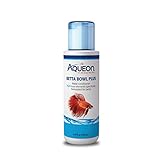
- Use when filling aquarium with tap water or performing water changes
- Instantly makes tap water safe for fish
- Supplement for fish that have been stressed, transported or netted
- Detoxifies heavy metals, ammonia and other elements that are released from fish waste
- Convenient dosage cap is included - Add 5mL (1 tsp) for every 1 gallon of temperature adjusted tap or purified water
Product prices and availability are accurate as of the date/time indicated and are subject to change. Any price and availability information displayed on Amazon at the time of purchase will apply.
Recommended Free Tools