Yes. Harlequin rasboras (Trigonostigma heteromorpha) are social shoaling fish and should be kept with other harlequin rasboras, not alone. Fluval says groups of at least six show the species at its best, while Tetra recommends eight to ten for security and a fuller range of behavior. An aquarium group will not remain in a perfectly synchronized “ball” every second; fish commonly spread out while feeding or exploring and regroup afterward.
How many harlequin rasboras should you keep together?
A practical target is eight to ten fish when your aquarium can comfortably support them. That recommendation comes from Tetra’s Fishkeeper Blog and is also used by AquariumSource. Fluval’s species spotlight gives a lower figure, saying groups of at least six look best.
| Source | Group guidance | How to interpret it |
|---|---|---|
| Fluval species spotlight (2024 filename; publication day not stated) | At least 6 | Fluval’s stated lower group figure, not a scientifically proven minimum for every aquarium |
| Tetra Fishkeeper Blog (page indexed approximately 2019; exact date not shown) | 8–10 | Recommended for security and a fuller range of behavior |
| AquariumSource | 8–10 | Practical group recommendation |
There is no controlled study establishing one exact minimum shoal size. Therefore, do not treat six as automatically inadequate or eight as a tested threshold. The important husbandry point is to keep a genuine group rather than a solitary fish; choose the largest group your tank size, filtration and maintenance routine can support responsibly.
What “schooling” means for harlequin rasboras
In aquarium care, harlequin rasboras are usually described as shoaling: they live and move socially, but individuals are free to change position. Fluval describes them as a peaceful species that often shoals more tightly than many small fish. AquariumSource notes that a fish may occasionally stray from the group while the shoal otherwise travels together.
#1 Best Overall

- Tropical fish food that contains up to 40%, nutrient-rich Black Soldier Fly Larvae, the first ingredient
- High in multiple proteins like whole salmon – rich in Omega 3 and 6 for healthy skin, scales and fins
- Fortified with essential vitamins, amino acids and minerals for a balanced daily diet
- Slow sinking micro granule format (0.7-1mm) – all fish can feed at their preferred depth; feed as much as fish can eat in two minutes, two or three times daily
- Sustainably processed in small batches for quality control and maximum freshness
Normal group behavior
- Using the middle part of the aquarium as a shared swimming area.
- Spreading out briefly at feeding time or when investigating plants and décor.
- Regrouping after a disturbance, movement near the tank or a change in direction.
- Swimming in a looser formation when relaxed rather than maintaining a rigid line.
Brief separation by itself is not proof that a fish is ill or that water quality is poor. Look at the whole picture—appetite, breathing, posture, fins and measured water conditions—before drawing conclusions.
Tank size and layout that support a shoal
Published minimums differ slightly. Fluval lists 15 US gallons (60 L), while Tetra lists 54 L. These are source-specific minimum recommendations, not a guarantee that every stocking plan will work at that volume. A group of eight to ten also needs room for equipment, plants and compatible tank mates.
Rank #2

- Ideal For: Betta Fish, Tetras, Barbs and other small mouthed tropical fish.
Give them an open middle and covered edges
Harlequin rasboras primarily use the middle water layers. Fluval says they rarely venture to the surface or bottom, so arrange the aquarium around a clear central swimming route rather than filling every area with décor.
- Plant the sides and rear with cover, leaving open water through the center.
- Use plants such as Cryptocoryne, Microsorum and Anubias, which Fluval specifically lists.
- Provide subdued or lower-intensity lighting and, where appropriate, tannin-rich water to create a sheltered feel.
- A sandy substrate with leaf and twig litter can complement the naturalistic layout described by Fluval.
Build the aquarium around stable, measured conditions: use a fully cycled tank, test regularly and acclimate new fish carefully. Stability matters more than chasing a single “perfect” number.
Windows Errors? Fix Them Before They Spread
Repair common Windows errors and clear accumulated junk for a smoother, more stable PC - no reinstall needed.Free scan · no reinstallOutdated Drivers Are Slowing You Down
One free scan finds every outdated or missing driver and matches the right update for your exact hardware.Free scan · exact hardware matchRank #3

- High Palatability : Our food contains up to 40% of wild sword prawns, fresh squid, natural spirulina, fresh garlic, plus a mixture of premium selected natural ingredients along with the perfect pellet size. This formula is an ideal staple food for small and medium size tropical fish, such as angelfish, neon tetras, cardinal tetras, congo tetras, glowfish,etc
- Pefect Pellet Size : The slow sinking 0.6mm micro pellet is attractive to fish. The micro pellets will not dissolve within 24 hours, so it does not pollute the water and is perfect for all small and midsize tropical fish. *Feed 1-3 times per day, no more than your fish can consume within 3 minutes
- Ultra Natural Coloration : Ultra-enhanced formulation of natural seaweed, Australian spirulina, and premium fresh sword prawns enhances the natural coloration of your fish, presenting them in their most natural and vibrant colors
- Healthy Growth Formula : It's not only tasty, but it also keeps algae eaters healthy! Our food is jam-packed with vitamins (A, C, D3, E, B1, B2, B6, B12) great for reaching full potential in size, color, fins, and A+ immunity!
- 3 Million CFUs/g Probiotics : 3 million CFUs/g probiotics are within our food to automatically help dissolve fish excrements, residuals and keeps water clean. Other than that it helps fish to fully absorb nutrition, help to excretion, enhance the immune system and lower the risk of digestive problems.
Water parameters: why published ranges differ
Care sheets do not give identical figures. Keep each range attached to its publisher rather than combining the numbers into a false consensus.
| Source | Temperature | pH | Hardness |
|---|---|---|---|
| Fluval species spotlight (2024 filename) | 24–28°C (76–82°F) | 5.5–7.5 | 1–10 dH |
| Tetra Fishkeeper Blog (approximately 2019 indexing) | 22–26°C | 5.0–7.0 | Not stated |
| AquariumSource | 72–80°F | 6.0–7.8 | 2–15 KH |
Those differences reflect different care recommendations and units, not evidence that the fish require rapid changes. Select a suitable, consistent setting within the guidance you are following, measure it with a reliable aquarium water test kit and avoid abrupt swings.
Rank #4
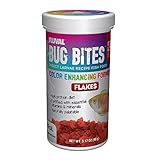
- Tropical fish food that contains up to 40%, nutrient-rich Black Soldier Fly Larvae, the first ingredient
- High in multiple proteins like whole salmon – rich in Omega 3 and 6 for healthy skin, scales and fins
- Fortified with essential vitamins, amino acids and minerals for a balanced daily diet
- Feed as much as fish can eat in two minutes, two or three times daily
- Sustainably processed in small batches for quality control and maximum freshness
Can harlequin rasboras live with other fish?
Yes, their peaceful temperament makes them plausible residents of a community aquarium, provided the other species are also peaceful, appropriately sized and compatible with the same water conditions and available space.
Examples of potential companions
Fluval lists other rasboras, various characins, most anabantids, dwarf cichlids, Corydoras and other peaceful bottom dwellers. Tetra also mentions labyrinth fish, loaches and other danios. Treat these as examples rather than a universal compatibility list: adult size, individual aggression, swimming space and water chemistry still determine whether a combination is suitable.
Quick wins for a faster PC:
Fix the driver behind crashes, sound loss and screen glitchesFind Drivers →Clear out junk files and repair common Windows errorsFree Scan →Best Value

- PACK OF 2 | SUPERIOR NUTRITION has been scientifically proven by decades of research to meet the dietary needs of tetras, barbs and other small tropical fish.
- PREMIUM SELECTION of marine and vegetable proteins is ideally suited for small tropical fish, which require larger energy reserves.
- SEMI-FLOATING micro-pellets sink slowly to allow fish at all levels of the tank to receive the nutrition they need to thrive.
- UNIQUE MICRO-COATING virtually eliminates nutrition loss and water clouding; a balance of krill and spirulina help fish achieve vivid coloration.
- PRECISELY COLORED granules improve underwater visibility for maximum consumption with less wasted food.
- Avoid large or predatory fish that could eat a 4–5 cm rasbora.
- Do not assume a species is safe solely because it is sold as a “community” fish; observe temperament and provide enough territory and cover.
- Keep the harlequin group at a proper size even when other schooling or bottom-dwelling species are present.
Feeding a small shoaling fish
Offer foods small enough for their mouths. Fluval recommends small granules and flakes, supplemented with small frozen foods such as daphnia and brine shrimp, with occasional live baby brine shrimp. AquariumSource similarly describes tiny pellets or flakes as a base and daphnia, brine shrimp or bloodworms as occasional supplements.
- Use a small-particle staple food and feed only what the group consumes promptly.
- Vary the diet with suitable frozen foods rather than relying on one item.
- Distribute food across the open swimming area so subordinate fish can eat.
How to tell whether the group is behaving normally
A healthy shoal may tighten when startled and loosen when relaxed. Fish that briefly leave the group during feeding or exploration can still be behaving normally. Pay closer attention when a fish remains isolated, refuses food, breathes heavily, clamps its fins or loses normal posture; check measured water conditions and other symptoms before attributing the behavior to schooling alone.
Size and identification notes
Fluval gives a maximum length of 4 cm (1.5 inches). The U.S. Fish and Wildlife Service’s ERSS report, citing Froese and Pauly (2016) and their reference to Lim and Ng (1990), lists 5.0 cm. Individual size can therefore be reported differently by source; plan stocking with the larger published figure in mind rather than assuming every adult will stop at exactly one length.
Bottom line for planning your aquarium
Harlequin rasboras are peaceful, social shoaling fish. Keep a group—ideally around eight to ten when the aquarium is sized for it, with Fluval’s six-fish figure presented as a lower published recommendation. Provide open midwater swimming space, planted cover at the margins, stable tested conditions and peaceful, size-appropriate companions. A shoal that occasionally spreads out is still a shoal; judge problems from persistent isolation or other health signs, not from a momentary change in formation.
Recommended Free Tools
Quick Recap
Product prices and availability are accurate as of the date/time indicated and are subject to change. Any price and availability information displayed on Amazon at the time of purchase will apply.




