Human-wildlife conflict is widespread in Sikkim, and some communities have suffered severe losses, but available evidence does not prove one statewide year-over-year increase across every type of conflict. Climate change could be adding pressure by altering habitat, snow and seasonal food supplies. Land-use overlap, habitat fragmentation, grazing changes and development are also important causes.
What the evidence can—and cannot—say about a statewide rise
Sikkim does not yet have a single, consistent time series covering crop raids, livestock depredation and dangerous encounters across every district and altitude. Local studies instead show that conflict can be intense in particular villages and landscapes. It is therefore accurate to describe the problem as serious and geographically widespread, not to claim that every conflict category has risen continuously across the state.
The Sikkim biodiversity assessment, published in 2021, records substantial losses in several locations. Those historical measurements show the scale of exposure; they are not a current statewide trend estimate.
Which animals are involved, and where?
Species and impacts change sharply with elevation. The state assessment describes the following pattern:
The Tool Desk
Outbyte PC Repair FREEClear out junk files and repair common Windows errorsFree Scan →Outbyte Driver Updater FREEFix the driver behind crashes, sound loss and screen glitchesFind Drivers →#1 Best Overall

- 64MP Photos & 1296P HD Videos: Equipped with a high-quality optical lens and advanced image sensor, the E5S captures ultra-sharp 64MP photos and smooth 1296P HD videos.
- Low-Power, Eco-Friendly Wildlife Viewing: Simply retrieve the SD card to see what your camera has captured—each visit could bring a new surprise. Non-Cellular and Non-WiFi operation ensures minimal power use, fewer battery changes, and zero disturbances.
- Rugged & Weather-Resistant: Built to withstand harsh outdoor conditions with an IP66 waterproof rating. Features a 1/4"-20 mounting thread for secure placement on trees, posts, or fences. Ideal for use as a durable trail camera.
- Fast 0.1s Trigger Speed with 3 PIR Sensors: Never miss fast-moving deer wildlife. Three PIR sensors enable a lightning-fast 0.1s trigger speed motion activation, perfect for hunting purposes.
- Extended Power Options & Efficient Design: Powered by 8×AA batteries (not included). For continuous outdoor use, the E5S supports the GardePro SP350 Solar Panel (sold separately), ensuring reliable power even in remote areas.
| Setting | Species reported | Typical conflict |
|---|---|---|
| High-altitude communities | Snow leopards, Himalayan black bears, wild dogs and other species; interactions involving yaks and cattle | Livestock depredation and risks to people working or grazing animals |
| Middle belts | Himalayan black bears, wild pigs and macaques | Crop damage and occasional human encounters |
| Lower belts | Wild pigs, peafowl and feral dogs | Crop raids and threats around settlements |
| Pangolakha Wildlife Sanctuary and Kitam Bird Sanctuary surroundings | Wild boar, Himalayan palm civets, monkeys and porcupines | Repeated raids on cultivated fields |
This altitude pattern matters when authorities compare sites or choose interventions: a snow-leopard livestock case in a high valley requires a different response from wild-boar damage in a lower-elevation field.
How large can local losses be?
| Location and source | Reported measure | Year or period | How to interpret it |
|---|---|---|---|
| Kitam-Manpur village-council pilot, cited by the 2021 Sikkim biodiversity assessment from Jamwal (2018) | All 290 households were affected by conflict | Pilot study period | Shows community-wide exposure in that locality; it is not a statewide prevalence rate |
| Barsey fringe villages, Rai et al. (2012), reproduced in the 2021 assessment | Almost 1,890 kg of potatoes destroyed per household | 2010–11 | A local, one-period loss estimate |
| Around Barsey, Rai et al. (2014), reproduced in the 2021 assessment | Up to 65% of crops lost | 2013 | The upper loss reported for that study area and year |
| Near Kitam Bird Sanctuary, Pradhan et al. (2012), reproduced in the 2021 assessment | 85.92% of cultivated land affected | Study period | Measures affected cultivated land, not necessarily total crop tonnage |
These figures should not be converted into a claim that Sikkim currently loses the same share every year. They demonstrate why a single encounter or raid can have serious economic consequences for households with limited alternatives.
How climate change may increase encounter risk
The proposed mechanism is ecological rather than a simple temperature-to-conflict equation. Warmer winters, changes in monsoon rainfall, earlier snowmelt and shifts in the timing or abundance of seasonal foods can alter where wildlife feeds and where people graze, farm or collect resources.
Rank #2

- 𝐍𝐎𝐓𝐄: 𝐢𝐭 𝐢𝐬 𝐍𝐎𝐓 𝐜𝐨𝐦𝐩𝐚𝐭𝐢𝐛𝐥𝐞 𝐰𝐢𝐭𝐡 𝐡𝐨𝐦𝐞 𝐖𝐢𝐅𝐢, 𝐝𝐨𝐞𝐬 𝐍𝐎𝐓 𝐬𝐮𝐩𝐩𝐨𝐫𝐭 𝐜𝐞𝐥𝐥𝐮𝐥𝐚𝐫/𝟒𝐆/𝟓𝐆 𝐧𝐞𝐭𝐰𝐨𝐫𝐤𝐬, and 𝐝𝐨𝐞𝐬 𝐍𝐎𝐓 capable of real-time motion alerts or push notifications. The camera creates its own short-range Wi-Fi hotspot (𝐍𝐨𝐧-𝐂𝐞𝐥𝐥𝐮𝐥𝐚𝐫) for setup, and downloading files only. Wi-Fi range is up to 33–50 ft in open areas. The camera records automatically even when your phone is not connected. No subscription or monthly fees
- Upgraded Split Solar Panel Design: This trail camera features a Allows flexible placement design. Its angle can be manually adjusted to efficiently face the sun, regardless of seasonal changes or terrain. This greatly improves charging efficiency and minimizes sunlight blockage, making it suitable for all kinds of outdoor environments (32GB SD card included (pre-installed). No extra charge)
- Non-Stop Solar Power: Equipped with a high-capacity 6000mAh rechargeable power, this trail camera supports three charging modes: solar charging, Type-C charging, and rechargeable power. It allows for long-term continuous use. No more wasting money or climbing. It is the truly energy saving, and long-lasting solution for 24/7 backyard, farm, and deep-woods surveillance
- Easy & Smart App Control : This wifi trail camera pairs instantly via WiFi + Bluetooth with the user friendly “TrailCamGO” app, with a maximum connection range of 55FT (recommended within 10FT). Photos and videos can be send directly to your phone without removing the SD card. (As the wireless trail camera creates its own hotspot to connect with the phone, it does not support home Wi-Fi networks.)
- 4K & 64MP Ultra-Clear Imaging: With a high-resolution sensor and excellent low-light performance, this solar trail camera minimizes image and video blur or noise, enabling quick wildlife recognition and capturing every detail clearly.Ideal for birdwatching, spotting wildlife, and keeping an eye on your garden/home
The Sikkim biodiversity assessment reports: “Climate Change has also led to a dramatic increase in direct encounter incidents.” The assessment attributes that statement to the Sikkim State of Environment Report (2016). It is a reported assessment conclusion, not a newly measured statewide time series proving that climate change caused every encounter.
What’s actually slowing this PC down?
Pick the symptom - the matching free tool is one click away.
WWF’s Asia High Mountains assessment projects that Sikkim will become warmer, especially in winter, and wetter during the summer monsoon. It identifies early snowmelt, shifts in rotational grazing, altered seasonal food availability and increased human-wildlife conflict among the relevant risks. Those are projections and plausible pathways, so “may be partly to blame” is more defensible than saying climate change is the sole cause.
Why climate is not the only driver
The Government of Sikkim’s 2026 announcement identifies “human-wildlife conflict, climate change and habitat fragmentation” as key challenges. In practice, several pressures can overlap:
Rank #3

- Crystal-Clear 64MP Photos & 1296p HD Video – Stunning detail day or night, thanks to advanced image tech and a high-performance f/1.6 aperture lens.
- Lightning-Fast 0.1s Trigger Speed – Never miss a moment! Side sensors detect motion instantly, even for fast-moving wildlife, deer.
- Bright 100ft No-Glow Night Vision – Invisible 940nm LEDs and enhanced light capture deliver sharp nighttime footage without spooking animals.
- Smaller Files, Faster Playback – H.264 tech compresses videos (MP4/MOV) for quick downloads and seamless viewing on any device.
- 2.4" Color Display + User-Friendly Controls – Review footage on the spot with an intuitive menu and easy-access buttons.
- Resource overlap: farms, grazing routes and wildlife feeding areas occupy the same slopes and forest edges.
- Fragmentation and development: roads, settlements and other infrastructure can break habitat connections and funnel animals toward cultivated land.
- Changing grazing practices: altered rotational grazing can change both livestock exposure and the availability of forage for wild herbivores.
- Urbanisation and settlement expansion: more people and attractants near habitat edges create additional opportunities for encounters.
- Seasonal food shifts: climate-sensitive crops and wild foods may become available at different times, changing when animals enter fields.
- Compensation and reporting costs: the practical difficulty of documenting a loss and obtaining compensation affects whether incidents are reported and whether households receive help.
Because these drivers interact, a rise in reports at one site cannot automatically be assigned to climate change without a study that separates weather, land-use and population effects.
What Sikkim is doing about the problem
Wildlife Sector Vision 2047
Sikkim’s Wildlife Sector Vision 2047 sets policy goals of reducing crop damage and livestock losses by 75% and reaching near-zero human fatalities. These are targets, not outcomes already achieved. The vision links conflict reduction to wildlife connectivity, climate-resilient ecosystems, recovery of red pandas and high-altitude species, smart monitoring, green livelihoods and community participation.
Recommended Free Tools
Coordination in Gyalshing
In March 2026, a Gyalshing programme brought forest officials, district authorities, non-governmental organisations and experts together to discuss protecting people, crops, livestock and wildlife. Such coordination is important because conflict cases cross administrative boundaries and require both rapid response and longer-term habitat planning.
Rank #4

- 【Ultra-clear Photos and Videos】36MP Still Images & 2.7K Videos. Thanks to premium optical lens and an advanced image sensor, and built-in 22Pcs 850nm low glow LEDs, this trail camera provides crystal clear images and amazing smooth 2.7K videos with sound in the daytime, low light or nighttime, combined with noise reduction speaker and 2.0” HD TFT Color Screen, which takes you into the world of wildlife.(This camera does not include an SD card.)
- 【Super Night Vision & Low Glow Infrared LEDs】The trail camera is equipped with powerful low glow infrared LEDs, features upgraded 850nm infrared technology, makes this game camera more stealth, which can show the night behavior of animals without disturbing them, encompasses adaptive illumination technology to avoid overexposure or over-dimmed, which can provide clear night images and videos in total darkness, delivers brilliant night vision up to 75ft.
- 【Fast 0.1s Trigger Time &130°Wide Angle】Once movements are detected, the lightning-fast trigger speed of less than 0.1s with 1 to 3 shots choice guarantees fast and accurate capture of each detected motion exposed to the field, never miss any animals that wander by this camera. 130° detection range to give you an expansive field view, indispensable for hunting, wildlife observation, farm monitoring, home backyard, plant growth observation, property security and surveillance.
- 【Easier Setup Than Ever】This hunting camera features a built-in 2.0-inch color screen and TV remote-style control buttons. No Wi-Fi or app is needed; the intuitive and easy-to-use interface allows for quick setup and instant playback, making it suitable for users of all ages. The included mounting strap and stand allow you to stabilize the camera in various scenes and at any angle. A comprehensive user guide helps you quickly get started using this hunting camera.
- 【IP66 Waterproof】KJK201 is designed to withstand extreme environments, thanks to the tightly integrated design of the camera body and high-quality rubber ring, ensuring that works normally from -22 °F to 158 °F, excellent quality can be used in deserts, rainforests, etc. The efficient PIR design works to reduce false triggers, boasting an impressive 17,000-image battery life! The smaller size makes them easier to conceal from theft/vandalism, and also much easier to carry out into the field.
Monitoring with camera traps and occupancy surveys
The Wildlife Institute of India’s first national snow-leopard assessment surveyed about 120,000 square kilometres during 2019–2023 and was released in 2024. It used occupancy sampling and camera-trap-based abundance estimation. A wildlife camera trap can therefore support trained monitoring teams by recording animals that are difficult to observe directly, but consumer equipment is not a substitute for agency-designed surveys, species identification and analysis.
Landscape and community programmes
The Kangchenjunga Landscape covers about 25,100 square kilometres, according to ICIMOD’s 2020 initiative description. WWF-India’s Khangchendzonga programme combines long-term monitoring with coexistence work, habitat restoration and community-based natural-resource management. These approaches address both the animal population and the household conditions that determine whether an encounter becomes a serious loss.
Independent reader supportYour contribution helps us test, update, and keep practical guides available for everyone.What a useful local response should measure
Comparing two villages or interventions requires more than counting incident reports. A meaningful assessment should record:
Best Value
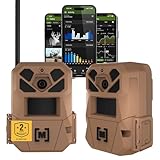
- HARVEST MORE BUCKS THIS SEASON - EDGE 3 delivers real-time deer activity, movement patterns, and location intelligence—so you know when and where mature bucks are moving instead of hunting on hope.
- AI BUCK DETECTION + INSTANT ALERTS - Moultrie AI identifies bucks and immediately delivers high-resolution photos or HD video—reducing false alerts and helping you act fast when it matters most.
- NATIONWIDE 4-CARRIER AUTO-CONNECT - Automatically connects to the strongest of four major U.S. networks. No SIM cards. No manual setup. Reliable photo and video delivery—even in remote hunting properties.
- 40MP PHOTOS + 1080p HD VIDEO - Capture crisp, detailed images and lifelike HD video. Low-glow infrared flash keeps nighttime shots clear without spooking deer.
- 0.5-SECOND TRIGGER + 100FT RANGE - Fast trigger speed and long detection range ensure moving deer are captured cleanly—no blur, no missed opportunities.
- altitude, species and the type of habitat connection or fragmentation present;
- whether the loss involves crops, livestock or immediate human safety;
- winter warming, monsoon change and shifts in seasonal food availability;
- grazing patterns and other community resource use;
- the time and paperwork required to report a loss and receive compensation;
- the quality and continuity of monitoring, including camera-trap or occupancy data.
Those measures help distinguish a genuine change in risk from a change in reporting, patrol effort or land use.
How to read claims about a “rise” in conflict
- Check the geography: a village, sanctuary fringe or district is not the whole state.
- Check the conflict type: crop damage, livestock depredation and human injury follow different patterns.
- Check the years and method: a single bad season or retrospective survey cannot establish a long-term trend.
- Separate observation from projection: historical loss figures are measured events, while warmer winters and wetter monsoons are climate projections.
- Ask whether habitat fragmentation, grazing or development changed at the same time as the climate conditions.
The most accurate conclusion is therefore qualified: Sikkim faces serious, locally severe human-wildlife conflict; climate change could be intensifying some encounters; and effective reduction will require connectivity protection, climate resilience, community participation and better monitoring alongside immediate help for affected households.
Quick Recap
Product prices and availability are accurate as of the date/time indicated and are subject to change. Any price and availability information displayed on Amazon at the time of purchase will apply.




