What’s actually slowing this PC down?
Pick the symptom - the matching free tool is one click away.
The Australian Cattle Dog is a compact, athletic herding breed developed to move cattle across Australia’s difficult terrain. You may know one as a Blue Heeler, Red Heeler, or Queensland Heeler. These are common names and color descriptions for the same breed—not separate breeds.
This is an intelligent, intense working dog that usually needs considerably more than a daily stroll and access to a yard. With consistent training, purposeful activity, and careful socialization, an Australian Cattle Dog can be a devoted and highly capable companion. Without those outlets, its instinct to chase, control, and patrol can become difficult household behavior.
Australian Cattle Dog quick facts
| Characteristic | Details |
|---|---|
| Official name | Australian Cattle Dog |
| Common names | Blue Heeler, Red Heeler, Queensland Heeler |
| Origin | Australia |
| AKC group | Herding Group |
| Height | Males: 18–20 inches; females: 17–19 inches |
| Typical weight | 35–50 pounds |
| Life expectancy | 12–16 years, according to the current AKC breed profile |
| Coat | Short, smooth, weather-resistant double coat |
| Original job | Moving and controlling cattle over long distances and challenging ground |
Size and weight are useful starting points, but they do not predict how demanding an individual dog will be. A 40-pound Australian Cattle Dog can require more daily structure and supervision than a much larger, lower-drive breed.
Appearance and coat
The Australian Cattle Dog is muscular, balanced, and built for endurance, agility, and quick changes of direction. Its body is slightly longer than it is tall, with the breed standard describing an approximate 10-to-9 length-to-height ratio.
Free tools Windows power users keep installed
One-click scans. No signup required.
#1 Best Overall
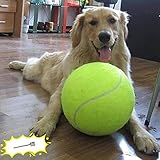
- Material: Our dog tennis ball is made of natural rubber and ultra thick felt material. Non-toxic, safe for your dog's teeth
- Birthday/Christmas Gift for Dogs: Each tennis ball is lightweight with a powerful bounce. Suitable for training, chasing, interactive play, and having fun with your beloved dog in parks, grass, yards, swimming pools and more (not for chewing). A great choice as a birthday, Christmas, Halloween, or other holiday gift for your pet.
- Perfect for Exercise: With bright colors and oversized design dog ball can guide dogs to run, help increase their physical activity and promote metabolism and increase appetite. Keep your pet healthy and avoid weight issues, give them a happy growth
- Large Tennis Ball: This giant tennis ball can be used like a basketball or a soccer ball to kick. It can also be used as a signature gift for your friends.
- Because of the transportation, we will ship out the ball without inflating. Please inflate it by yourself after receiving this ball. (NOTICE:Package not include the pump!)
Typical features include:
- A broad, strong head and powerful muzzle
- Dark-brown, oval eyes
- Medium-sized, erect ears
- A strong neck and deep chest
- Round feet with compact, arched toes
- A brush tail reaching approximately to the hock
- A smooth outer coat over a short, dense undercoat
Accepted coat varieties include blue, blue-mottled, blue-speckled, and red-speckled, with permitted markings depending on the color. Puppies are often born predominantly white and develop their blue-gray or red coloration as they mature.
“Blue Heeler” and “Red Heeler” do not describe different breeds or reliable temperament types. Coat color alone does not make a dog calmer, more aggressive, or more suitable for a particular home.
Australian Cattle Dog temperament
This breed was developed as a serious working dog. Its standard describes it as alert, intelligent, watchful, courageous, trustworthy, devoted to duty, and naturally suspicious of strangers. In a home, those traits can look like intense loyalty, constant environmental awareness, and a tendency to investigate anything unfamiliar.
Common characteristics include:
- Close attachment to its family
- Fast learning and strong problem-solving ability
- Independence and persistence
- A protective or territorial response
- Caution around unfamiliar people
- An instinct to chase, control, and move
- Possible conflict with unfamiliar dogs if socialization and management are poor
That does not mean every Australian Cattle Dog is aggressive. Individual temperament, breeding, early experiences, training, health, and management all matter. The international breed standard calls for a manageable dog and lists aggression or excessive shyness as disqualifying faults.
Recommended Free Tools
The breed’s intensity can nevertheless create real safety concerns if it is allowed to rehearse chasing, heel-nipping, guarding, or uncontrolled confrontations. If a dog is growling, snapping, biting, or becoming difficult to control, work with a qualified veterinary behaviorist or experienced reward-based behavior professional rather than trying to correct the problem with punishment.
Are Australian Cattle Dogs good family dogs?
They can be excellent family dogs in active, experienced households, but they are not an effortless choice. The breed’s instinct to move livestock may be redirected toward running children, bicycles, cats, or other dogs. Excited heel-nipping is especially concerning in homes where children move unpredictably.
Australian Cattle Dogs are generally a better fit for families with older children who can follow dog-safety rules. Every interaction between a dog and a child should be supervised. Children should learn not to:
- Run from or tease the dog
- Corner, hug, climb on, or handle the dog roughly
- Take food, toys, or resting spaces away from the dog
- Approach the dog when it is frightened, ill, eating, or sleeping
Use gates, crates, pens, or separate rooms when direct supervision is not possible. Do not expect a dog and a young child to manage their relationship without adult intervention.
Do these 3 things before closing this tab:
1Repair Windows errors before they cause bigger problems2Scan for outdated or missing drivers - takes under a minute3Clear out junk files and repair common Windows errorsA large yard helps with safe movement, but it does not replace walks, training, interaction, and mental work. A dog left alone in a yard may simply patrol the fence, bark, dig, escape, or develop stronger territorial habits.
Exercise and mental stimulation
The Australian Cattle Dog needs regular physical activity and mentally demanding work. A brief walk followed by occasional backyard play is unlikely to meet the needs of a healthy adult with a strong working drive.
Potential outlets include:
- Long walks, hikes, or runs for mature, physically sound dogs
- Obedience and rally training
- Agility
- Herding activities with suitable instruction and safe livestock handling
- Scent work and tracking
- Fetch and tug with rules for starting, stopping, and releasing
- Food puzzles and carefully supervised enrichment
- Short, structured training sessions spread through the day
- Appropriate farm or ranch work
There is no reliable exercise number that suits every Australian Cattle Dog. Age, health, conditioning, weather, and temperament change the answer. Puppies should not be pushed into repetitive, high-impact exercise before they are physically mature; ask your veterinarian for guidance suited to the individual puppy.
Rank #2
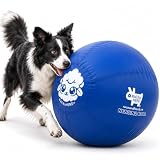
- BUILT FOR HERDING, NOT FETCH — Too big to carry and weighted to roll and stop like livestock, so herding breeds push, chase and steer it with their shoulders and nose.
- A COMPLETE SET, READY TO PLAY — Includes the protective zip cover, inner ball, hand pump, repair patches and an IACP-approved herding training guide.
- TWO LAYERS YOU CAN REPAIR — The cover takes the pushing and the inner ball is replaceable, with patches included, so one puncture doesn’t end the ball.
- CHOOSE THE RIGHT SIZE — 25" Large suits dogs about 18–40 lb such as Border Collies and Blue Heelers. High-drive or 35 lb+ dogs: size up to 30".
- PLAY IT RIGHT, MAKE IT LAST — Inflate until firm (2–3 PSI), keep out of direct heat, and use for supervised herding play — it is not a chew toy.
Work should also include calmness. An exercise routine made entirely of frantic chasing can produce a fitter dog without improving impulse control. Practice settling on a mat, waiting at doors, disengaging from moving objects, and relaxing after activity.
Training and socialization
Early socialization and lifelong training are essential. Australian Cattle Dogs learn quickly, but their independence and persistence mean that inconsistent rules can quickly become optional rules.
- Begin with safe exposure. Introduce the puppy gradually to people, stable dogs, surfaces, household sounds, handling, vehicles, and different environments. Keep experiences manageable and rewarding.
- Build practical control. Prioritize name recognition, recall, leash walking, a release cue, and impulse control around food, toys, doors, and movement.
- Teach calm visitor behavior. Use a leash, gate, mat, or separate room while visitors enter. Reward the dog for looking at the person and returning attention to you.
- Manage movement. Prevent rehearsals of chasing children, bikes, joggers, livestock, and wildlife. Train a reliable response before attempting challenging situations.
- Address heel-nipping early. Stop access to the moving target, keep arousal lower, and redirect to a trained behavior or suitable toy. Do not turn nipping into a game of chase.
- Continue after puppy class. Adolescence is not the end of training. Maintain skills and add activities such as obedience, scent work, tracking, or agility.
Reward-based training, clear boundaries, and consistent management are the safest approach. Harsh physical corrections can damage trust and intensify defensive or aggressive responses, particularly in a watchful, reactive dog.
Grooming requirements
The Australian Cattle Dog has a relatively low-maintenance double coat. It does shed, especially during heavier seasonal shedding periods, but it does not normally need frequent professional trimming.
| Task | Practical routine |
|---|---|
| Brushing | Quick brushing about once a week; brush every few days during heavier shedding |
| Bathing | Occasional bathing when the coat is dirty or a veterinarian recommends it |
| Nails | Trim regularly so nails do not become overgrown or interfere with movement |
| Ears | Check regularly for wax, debris, odor, or foreign material |
| Teeth | Brush regularly and discuss professional dental care with your veterinarian |
Routine shaving is unnecessary and removes much of the coat’s weather protection. Ask your veterinarian before using ear cleaners, particularly if the ear is painful, inflamed, or producing discharge.
Health and veterinary screening
The current AKC breed-health information recommends screening for hips, elbows, eyes, and congenital deafness using BAER testing. It also identifies DNA testing for Primary Lens Luxation and PRCD/PRA-prcd. The Australian Cattle Dog Club of America’s OFA/CHIC guidance includes these core evaluations and lists optional screening for patellar luxation, cardiac conditions, RCD4 PRA, and hock OCD.
When considering a puppy, ask the breeder for the parents’ actual health records and verify publicly available results through the Orthopedic Foundation for Animals where applicable. A CHIC number means that required results have been submitted and made public; it does not guarantee that every result is normal.
Some testing has age requirements. The breed club’s guidance specifies, among other minimums, hip and elbow evaluations at two years, an eye examination by a boarded ophthalmologist at 24 months, and PennHIP eligibility from one year for its CHIC hip requirement. Requirements can change, so check the current guidance rather than relying on an old breeder checklist.
For an individual dog, routine preventive care should cover:
The Tool Desk
Outbyte Driver Updater FREEFix the driver behind crashes, sound loss and screen glitchesFind Drivers →Outbyte PC Repair FREEClear out junk files and repair common Windows errorsFree Scan →- Veterinary examinations and vaccinations based on local risk
- Parasite prevention
- Weight and body-condition monitoring
- Dental care
- Ear and nail checks
- Prompt assessment of lameness, vision changes, hearing concerns, or unusual behavior
Feeding an Australian Cattle Dog
Feed a complete and balanced diet appropriate for the dog’s life stage, activity level, body condition, and medical needs. A high-quality commercial food may be suitable; a home-prepared diet should be formulated with veterinary supervision so that essential nutrients are not missed.
Calorie requirements can differ sharply between a working dog, a sport dog, and a mostly sedentary pet—even when they weigh the same. Measure meals, monitor body condition, and adjust portions rather than feeding by weight alone. Keep fresh water available at all times.
Rank #3

- Designed for Push Play - This hard plastic dog ball supports push-style and herding movement, supporting structured backyard activity during supervised outdoor play.
- Important Size Guidance - This ball for dogs is not intended for chewing, catching, or fetch games. Selecting the correct size helps ensure the ball does not fit inside your dog’s mouth, supporting safer push-style play.
- Floats in Water - Designed for outdoor environments, this dog toy floats in water, expanding activity options to yards, pools, and lakes. The rigid plastic construction features a smooth surface that is washable for easy cleanup after play.
- Size & Color Details - Available in multiple sizes to match different breed needs. The 10-inch version measures approximately 10 x 10 x 10 inches and weighs 1.5 pounds. Ships in red color and include one hard plastic ball.
- Trusted Pet Solutions - Made in the USA since 1992, Doggie Dooley develops practical pet supplies focused on functional design and real-world outdoor use. Each product emphasizes straightforward construction and everyday reliability to support responsible pet ownership.
Living with the breed
The best home is not necessarily the one with the biggest property. It is the one where people can provide daily activity, training, supervision, and meaningful interaction. A secure fence is valuable because the breed may chase, patrol, or pursue opportunities beyond the property, but fencing is only one part of management.
Think carefully before choosing an Australian Cattle Dog if you:
Quick wins for a faster PC:
Clear out junk files and repair common Windows errorsFree Scan →Scan for outdated or missing drivers - takes under a minuteDriver Scan →- Want a calm, low-exercise companion
- Work long hours and cannot provide enrichment or interaction
- Have very young children and little dog-management experience
- Live on an unfenced property
- Keep small animals that cannot be safely separated
- Do not want to continue training beyond puppyhood
- Expect a yard to exercise the dog for you
Before adoption, ask a rescue or breeder specific questions about the dog’s behavior around children, visitors, dogs, livestock, cats, handling, confinement, and being left alone. “High energy” is too vague to guide a safe placement.
History of the Australian Cattle Dog
The breed was developed in Australia to work cattle in harsh, open-country conditions. Its historical development involved blue-merle Smooth Collies and Dingoes, with later Dalmatian and black-and-tan Kelpie influence recorded in the breed’s history. The resulting dog needed stamina, toughness, agility, and enough control to move difficult cattle over long distances.
The American Kennel Club accepted the Australian Cattle Dog in 1980. It was initially shown in the Working Group and was later placed in the Herding Group.
Bottom-line suitability checklist
| Likely to suit you if you… | May be a poor fit if you… |
|---|---|
| Enjoy training and active outdoor activities | Want a dog that needs little daily engagement |
| Can manage chasing, guarding, and visitor behavior | Cannot provide supervision around children or other animals |
| Prefer an intelligent dog with a job to do | Expect affection alone to satisfy a working breed |
| Can commit to secure fencing and lifelong training | Rely on an unfenced yard or occasional exercise |
The Australian Cattle Dog can be loyal, athletic, trainable, and remarkably versatile. It is also demanding. Choose one because you want to include a dog in regular training and purposeful activity—not simply because you like the blue-speckled coat.
FAQ
Are Blue Heelers and Australian Cattle Dogs the same breed?
Yes. Australian Cattle Dog is the official breed name. Blue Heeler, Red Heeler, and Queensland Heeler are common names or color descriptions for the same breed.
Do Blue Heelers have a different temperament from Red Heelers?
No reliable temperament difference is based solely on blue versus red coat color. Individual genetics, socialization, training, health, and life experiences have much greater influence.
How much exercise does an Australian Cattle Dog need?
The breed needs regular physical activity plus mental work, but there is no single correct number of minutes for every dog. Age, health, conditioning, weather, and individual drive matter. Suitable activities include hiking, running for mature dogs, obedience, agility, scent work, herding, and retrieving.
Are Australian Cattle Dogs good with children?
They can be good family dogs in an active, experienced home, but their instinct to chase and control movement can lead to heel-nipping or chasing children. They are generally better suited to families with older children, and all interactions require supervision and appropriate management.
Outdated Drivers Are Slowing You Down
One free scan finds every outdated or missing driver and matches the right update for your exact hardware.Free scan · exact hardware matchPC Slower Than It Used to Be?
A free scan shows the junk files, broken settings and background clutter dragging Windows down - then fixes them in one click.Free scan · Windows 10 & 11The Bottom Line
The Australian Cattle Dog is a working partner, not a low-maintenance backyard pet. Its short coat is easy to care for, but its exercise, training, socialization, and management needs are substantial. An active household prepared to provide structure can find a devoted and capable companion; a household seeking an easygoing dog may be overwhelmed by the breed’s drive.
Quick Recap
Product prices and availability are accurate as of the date/time indicated and are subject to change. Any price and availability information displayed on Amazon at the time of purchase will apply.




