Free tools Windows power users keep installed
One-click scans. No signup required.
The best aquarium water clarifier depends on your tank and the cause of the cloudiness. For a freshwater aquarium, API ACCU-CLEAR is the most narrowly targeted choice. Seachem Clarity covers freshwater, planted, marine and reef systems when you have mechanical filter media. Fritz Clarifier is the broadest environment option and is phosphate-free, including for ponds. All three clump suspended particles so filtration or siphoning can remove them; none replaces water testing, maintenance or treatment of ammonia and nitrite.
Quick comparison
| Product | Stated environments | Manufacturer dose | Best fit | Important conditions |
|---|---|---|---|---|
| API ACCU-CLEAR | Freshwater aquariums | 2 mL per 10 US gal (38 L); 10 mL per 50 US gal (190 L) | Green or cloudy freshwater water | API says it is safe for fish and plants. Do not overdose; repeat only after 24 hours if still cloudy. |
| Seachem Clarity | Freshwater, planted, marine and reef aquariums | 5 mL (one capful) per 80 L (20 US gal) | One clarifier for mixed freshwater and saltwater applications | Mechanical filtration, such as filter floss, is required. Seachem says clarification is typically rapid, but haze can increase first. |
| Fritz Clarifier | Freshwater, saltwater, reef aquariums and ponds | 5 mL (1 teaspoon) per 10 US gal (38 L) | Multi-environment use or a phosphate-free formulation | Wait at least six hours between doses. Fritz states the formula is 100% phosphate-free. |
Dose volumes cannot be compared directly between brands because the formulas and concentrations differ. Use the current bottle label for your product and your actual water volume.
What aquarium clarifiers actually do
Cloudy water often contains microscopic particles that remain suspended instead of settling. Seachem lists possibilities including bacterial clouding, dust and precipitates. A clarifier uses flocculating or precipitating agents to bind those particles into larger clumps. Fine mechanical media can then trap them, or settled material can be siphoned out where the label directs.
Mechanical filtration is not optional. Seachem explains that Clarity can produce a visible cloudy haze immediately after dosing: that temporary haze is the clumped material becoming large enough for the filter to capture. Fine floss may clog quickly, so inspect it during treatment and rinse or replace saturated media according to your filter and product instructions.
#1 Best Overall

- QUICKLY CLEARS CLOUDY WATER by binding suspended particles together for easier filtration and removal
- SAFE FOR FRESHWATER FISH AND PLANTS when used as directed to maintain a healthy aquarium environment
- HELPS IMPROVE WATER CLARITY by causing fine particles to settle or become trapped by filtration systems
- IDEAL FOR ROUTINE AQUARIUM MAINTENANCE to help maintain a clean and attractive aquarium appearance
- EASY-TO-USE DOSING CAP INCLUDED with a recommended dosage of 5 mL (1 tsp) per 10 gallons of water
Which clarifier suits your aquarium?
Choose API ACCU-CLEAR for a freshwater tank
API documents ACCU-CLEAR for green or cloudy freshwater aquariums. Its stated dose is 2 mL per 10 US gallons (38 L), with a second dose only after 24 hours if the water has not cleared. API says it is safe for fish and plants. This is the straightforward option when you have a freshwater community, planted or unplanted, and a working filter that can remove the clumps.
Choose Seachem Clarity for broad freshwater, marine or reef coverage
Seachem markets Clarity for freshwater, planted, marine and reef systems. The label dose is 5 mL per 80 L (20 US gallons), and Seachem describes expected clarification in about one to two hours when mechanical media is present. In soft or low-alkalinity water, Seachem advises starting with a lower fraction of the dose and testing the effect before using a full dose.
Rank #2
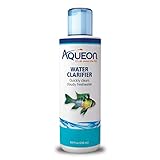
- QUICKLY CLEARS CLOUDY WATER by binding suspended particles together for easier filtration and removal
- SAFE FOR FRESHWATER FISH AND PLANTS when used as directed to maintain a healthy aquarium environment
- HELPS IMPROVE WATER CLARITY by causing fine particles to settle or become trapped by filtration systems
- IDEAL FOR ROUTINE AQUARIUM MAINTENANCE to help maintain a clean and attractive aquarium appearance
- EASY-TO-USE DOSING CAP INCLUDED with a recommended dosage of 5 mL (1 tsp) per 10 gallons of water
Choose Fritz Clarifier when phosphate-free formulation or pond use matters
Fritz states that Clarifier works in freshwater, saltwater, reef aquariums and ponds, and that its formula is 100% phosphate-free. Dose 5 mL per 10 US gallons (38 L), then wait at least six hours before another dose if needed. Fritz attributes recurring cloudiness to possible bacterial blooms and recommends time, better maintenance and reduced feeding rather than continuous dosing.
Before dosing: rule out problems a clarifier cannot fix
A clarifier addresses suspended particles, not dissolved toxins or an unstable nitrogen cycle. API explicitly says ACCU-CLEAR does not remove ammonia or nitrite. API also identifies partial water changes as the best way to remove nitrate and other waste.
Rank #3

- Contains one (1) API ACCU-CLEAR Freshwater Aquarium Water Clarifier 4-Ounce Bottle
- Clears cloudy aquarium water
- Clumps floating particles into large clusters that can be easily removed by an aquarium filter
- Works fast and maximizes filter efficiency
- Use weekly and when cloudy water is observed in freshwater aquariums only
- Test ammonia, nitrite and nitrate, plus parameters relevant to your species and saltwater system.
- Check that the filter is running at normal flow and contains usable mechanical media.
- Look for overfeeding, recently disturbed gravel or décor, excessive filter cleaning, insufficient biological media or a bacterial bloom.
- If ammonia or nitrite is detectable, prioritize an appropriate partial water change and correcting the biological cause; do not try to hide the result with repeated clarifier doses.
How to use a clarifier safely
- Confirm the cause is particulate. Test water and inspect for dust, debris, precipitates or a new bacterial bloom.
- Calculate the tank’s actual water volume. Account for substrate and décor displacement rather than blindly dosing the advertised tank size.
- Read the current label. Use only the dose for that product; never substitute another brand’s dose.
- Ensure mechanical filtration is installed. Add or clean suitable fine floss or other mechanical media before dosing.
- Dose once and observe. A temporary increase in haze can be normal with Seachem Clarity. Watch fish and invertebrates for distress.
- Service the filter after clumping. Replace or rinse clogged floss as appropriate, and siphon settled debris when instructed.
- Wait the label’s interval before considering another dose. API specifies 24 hours; Fritz specifies at least six hours. Do not repeatedly dose simply because the tank is not instantly clear.
When cloudy water keeps returning
Rapid recurrence usually means the source remains. Review feeding quantity, remove decaying material, improve routine maintenance and verify adequate biological and mechanical filtration. A bacterial bloom may need time to stabilize; Fritz specifically recommends reduced feeding and increased maintenance in that situation. Continue testing ammonia and nitrite while the tank settles.
Independent reader supportYour contribution helps us test, update, and keep practical guides available for everyone.What “safe” and “reef safe” mean here
Statements such as “safe for fish and plants,” “reef” compatibility or claims that a product will not affect bio-filtration, pH or other parameters are manufacturer claims, not independent head-to-head evidence. No universal success rate or independent trial establishes one brand as best for every aquarium. Follow the current label, use extra caution with sensitive invertebrates and unusual water chemistry, and stop dosing if livestock reacts adversely.
Rank #4
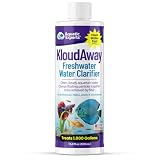
- FAST- ACTING - KloudAway quickly clears cloudy or hazy aquarium water by CLUMPING FLOATING PARTICLES together making them large enough to be trapped by your aquariums' mechanical filter. To remove these particles from the water your aquarium must have a mechanical filter.
- CUTTING EDGE FORMULA - Our advanced fish tank water clarifier is targeting unsightly particles in water such as uneaten fish food, dust and other debris to produce crystal clear water. KLOUDAWAY DOES NOT WORK ON "GREEN WATER" as algae continues to multiply.
- SAFE AND EFFECTIVE - Our cloudy water treatment is SAFE FOR all types of FRESHWATER FISH, TURTLES, PLANTS, SHRIMP and OTHER INVERTEBRATES and has no effect on the beneficial bacteria in your aquarium's biological filtration.
- REMARKABLE RESULTS! Use our aquarium clarifier to maintain sparkling clear water in your freshwater aquarium. For exact details of how to use KloudAway, causes of cloudy water and much more, WATCH OUR VIDEO "Clear Aquarium Water Fast"
- Water testing is recommended. Cloudy water is often caused by New Tank Syndrome, which can cause dangerously high levels of ammonia and nitrite. Protect your fish from ammonia spikes with TankFirst Water Conditioner!
Frequently Asked Questions
Can aquarium clarifier remove ammonia or nitrite?
No. API states that ACCU-CLEAR does not remove ammonia or nitrite. Test the water and correct the nitrogen-cycle problem with appropriate maintenance and partial water changes.
Why did my aquarium get cloudier after adding clarifier?
Some products, notably Seachem Clarity, intentionally create a temporary haze as particles clump. Mechanical filter media must capture those clumps; inspect and service the media as it loads.
Can I use the same clarifier dose for different brands?
No. API, Seachem and Fritz use different label doses and formulations. Dose only according to the current label for the product you own.
Quick Recap
Product prices and availability are accurate as of the date/time indicated and are subject to change. Any price and availability information displayed on Amazon at the time of purchase will apply.




