A live-capture mouse trap is only the starting point—not proof that a mouse will be unharmed. A trapped mouse can become dehydrated, chilled, overheated, stressed, or vulnerable to pets and predators. For a genuinely more humane approach, choose a trap you can monitor closely, keep it away from dogs and cats, follow local release rules, and seal the openings that let mice inside.
For most indoor infestations, the Victor TIN CAT with Window M308 is the strongest all-around choice because its transparent lid makes checks quick and it can hold multiple mice. The Havahart X-Small 2-Door Trap is better for catching one mouse at a time, while the Kness Ketch-All is useful when you want a repeating, bait-free design.
Quick comparison
| Trap | Best for | Important details |
|---|---|---|
| Victor TIN CAT with Window, M308 | Most indoor infestations | Transparent lid, live-capture design, holds up to 30 mice, indoor/outdoor use; manufacturer price was $17.59 when checked |
| Victor TIN CAT, M310S | Larger infestations and areas where pets or children may reach the trap | Enclosed metal box with no poison or snapping parts; holds up to 30 mice; indoor/outdoor use; manufacturer price was $19.19 when checked |
| Havahart X-Small 2-Door Trap, Model 1020 | One or a few mice | 10 × 3 × 3 inches, two gravity-action doors, galvanized steel, smooth rolled internal edges |
| Kness Ketch-All, SKU 102-0-002 | Repeated catches without rebaiting | Wind-up paddlewheel mechanism; designed to work without bait; must be positioned correctly against a wall |
Prices and availability change, so treat the prices above as a snapshot rather than a guarantee.
Best overall for multiple mice: Victor TIN CAT with Window M308
The M308 is a practical choice for an indoor mouse problem because the transparent window lets you see whether a mouse has been caught without repeatedly opening the trap. Victor rates it for up to 30 mice per setting, although that capacity does not mean it can safely be left unattended. The manufacturer says to check it frequently and release trapped mice promptly.
#1 Best Overall

- Designed for Humane catch and release of mice
- Able to catch and hold up to 30 mice per setting
- Convenient viewing window allows you to see when there’s a catch
- Lid opens for easy, offsite release after catches
- Slim metal construction for indoor or outdoor use
Use a small amount of peanut butter or another food the mice are already eating. Set the trap beside a wall or other active travel route, not in the middle of an open room. The window is especially useful in homes with cats or dogs because you can inspect the trap without giving a curious pet access to the inside.
Best enclosed option: Victor TIN CAT M310S
The M310S is a metal live-capture box with no poison or snapping parts. Its enclosed construction can make it a sensible option for a garage, attic, business, or room where a pet or child might otherwise investigate an exposed cage trap. It is rated to hold up to 30 mice and is intended for indoor or outdoor use.
“Enclosed” does not mean “safe to forget.” Put the trap somewhere your pet cannot knock it over, chew it, or bat it around. Bait it with a small amount of peanut butter and place it near mouse traffic, preferably parallel to a wall.
Best single-mouse cage: Havahart X-Small 2-Door Trap 1020
The Havahart 1020 is a narrow, reusable cage measuring 10 × 3 × 3 inches and weighing 0.96 lb. It has two gravity-action doors, galvanized steel construction, one-piece wire mesh, and smooth rolled internal edges. The two-door layout can work well when a mouse is traveling through a confined route such as along a wall, behind stored items, or beside a cabinet.
Rank #2

- Designed for humane catch and release of mice
- Able to catch and hold up to 30 mice per setting
- Lid opens for easy release after catches
- Slim metal construction for indoor or outdoor use
To set it, open the door locks, put bait on the bait pan, hold both doors open with the trigger rod, level the bait pan, and turn the locks so they rest on the doors. Test the mechanism before leaving it in position. Keep the trap stable and out of reach of pets.
Best bait-free repeating trap: Kness Ketch-All
The Kness Ketch-All uses a wind-up paddlewheel mechanism and is designed to continue catching mice while properly wound. The manufacturer says it does not require bait or poison, which is useful if bait is likely to attract a dog, cat, or other household animal.
Wind the knob until it stops. Kness instructs users to place the trap 1½–2 inches from and parallel to the wall, with an entrance facing the wall, or with either end flush to the wall. Incorrect placement can make a mechanically sound trap much less effective.
How to use a live mouse trap more humanely
- Find the travel route. Look for droppings, gnaw marks, greasy rub marks, nesting material, or nighttime sounds. Place traps along walls and close to those signs. House mice commonly travel beside walls rather than crossing large exposed areas.
- Use several traps. One trap is often inadequate for an infestation. Multiple traps placed along active routes can shorten the time mice spend exposed to traps and reduce the chance that one missed catch allows the problem to continue.
- Use very little bait. A pea-sized amount is generally enough. Too much bait may be removed without triggering a trap. Peanut butter is common, but food the mice are already eating can work better.
- Keep traps inaccessible to pets. Place them behind a secure barrier, inside a pet-proof area, or where a cat or dog cannot reach, tip, chew, or carry them. Do not rely on a trap’s product label to protect an animal that can physically access it.
- Check on a strict schedule. Check live traps at least every eight hours; hourly checks are preferable when practical, especially outdoors or during cold weather. Never leave a trap unattended overnight or during severe weather.
- Deal with the catch promptly. A live trap creates an immediate welfare decision. Before setting one, know what local law permits and have a plan for contacting animal control, a wildlife agency, or a pest professional if release is not legal or practical.
Are live mouse traps actually humane?
Not automatically. “Humane” usually means live-capture, but a live-captured mouse can still suffer from dehydration, starvation, heat, cold, stress, or injury. A trap left in a garage during freezing weather or in direct summer sun may be more dangerous than its mechanism suggests. A mouse can also be attacked if a dog or cat gets to the trap.
Free tools Windows power users keep installed
One-click scans. No signup required.
Rank #3

- HUMANELY CAPTURES MICE: The Victor Tin Cat mouse trap is a no-touch, non-lethal solution is designed for live catch and release of mice
- CATCH UP TO 30 MICE: This large trap can hold up to 30 mice before it reaches capacity, making it ideal for larger infestations
- EASY TO USE: Simply add bait to the inside of the trap, close the lid, and place the traps in an area where you've seen rodent activity. The lid opens for easy release after a catch
- DURABLE CONSTRUCTION: The sturdy metal trap holds mice securely inside until release
- SLIM PROFILE: The Tin Cat's slim metal construction allows for easy placement under furniture, inside cabinets, in attics, and more
The U.S. Environmental Protection Agency notes that live-captured rodents must then be released or killed. That does not mean an owner can legally release a house mouse wherever they choose. UC Integrated Pest Management warns that relocating house mice may be illegal, ineffective, and harmful to the animal.
Release laws and relocation problems
Do not assume that releasing a mouse in a park, field, woods, or a neighbor’s yard is lawful. Rules vary by state and locality. California prohibits relocating live wildlife, including house mice, away from the property without a special permit. New York says animals cannot be released on state land, in a park, or anywhere other than the property where they were captured.
Check your state wildlife agency and local ordinances before setting a live trap. Never release a mouse on public land or someone else’s property. Relocation also may not solve the problem: UC IPM reports that house mice can navigate back to their nest site even after being moved as much as half a mile.
Where lawful on-site release is permitted, Wisconsin Humane Society recommends releasing the mouse near the home after exclusion work is complete. House mice depend heavily on human-made structures for shelter, so moving one to unfamiliar habitat can expose it to predators, weather, and competition.
Recommended Free Tools
Rank #4

- Humanely Captures Mice - This no-touch, non-lethal solution is designed for live catch and release of mice
- Multi-Catch Design - This large trap can hold up to 30 mice before it reaches capacity, making it ideal for larger infestations
- Easy to Use - Simply add bait to the inside of the trap, close the lid, and place the traps in an area where you've seen rodent activity. The lid opens for easy release after a catch
- Durable Construction - The sturdy metal trap holds mice securely inside until release and is designed to be used both indoors and outdoors
- Slim Profile - The slim metal construction allows for easy placement under furniture, inside cabinets, in drop ceilings, and more
What not to use
- Glue traps: Do not use them. Mice caught on glue boards may die slowly from dehydration, starvation, exhaustion, or injury and may require euthanasia.
- Drowning methods: Drowning a trapped mouse is not humane.
- Unmonitored live traps: A trap that is technically nonlethal can still cause serious suffering if it is not checked promptly.
- Outdoor release without checking the law: “A mile away” is not a universal legal or humane solution.
The solution is exclusion, not endless trapping
Mice can enter openings as small as ¼ inch. Inspect the foundation, utility penetrations, vents, doors, garage, roofline, and areas around pipes. Seal openings larger than ¼ × ¼ inch with corrosion-resistant copper or stainless-steel mesh, and fit doors with proper sweeps. Avoid leaving gaps beneath garage or exterior doors.
Store pet food and human food in sealed containers. Remove accessible water, spilled seed, rubbish, and nesting material. If you feed pets outdoors, pick up uneaten food rather than leaving it overnight. Trapping without sanitation and exclusion usually produces a cycle of repeated catches and new mice entering the same building.
Independent reader supportYour contribution helps us test, update, and keep practical guides available for everyone.Cleaning mouse droppings safely in a pet home
Do not sweep or vacuum droppings, urine, or nesting material. CDC guidance is to soak the material with disinfectant, wait five minutes—or follow the product label—and then wipe it up while wearing gloves. Keep pets and children away from the area during cleaning, and wash your hands afterward.
For a heavy infestation, contamination in heating or ventilation systems, or mice in inaccessible structural spaces, use a qualified pest professional. Ask for an exclusion-focused plan rather than relying only on poison or repeated trapping.
Do these 3 things before closing this tab:
1Fix the driver behind crashes, sound loss and screen glitches2Clear out junk files and repair common Windows errors3Scan for outdated or missing drivers - takes under a minuteBest Value
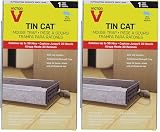
- The information below is per-pack only
- Humanely Captures Mice - This no-touch, non-lethal solution is designed for live catch and release of mice
- Multi-Catch Design - This large trap can hold up to 30 mice before it reaches capacity, making it ideal for larger infestations
- Easy to Use - Simply add bait to the inside of the trap, close the lid, and place the traps in an area where you've seen rodent activity. The lid opens for easy release after a catch
- Durable Construction - The sturdy metal trap holds mice securely inside until release and is designed to be used both indoors and outdoors
FAQ
What is the best humane mouse trap for several mice?
The Victor TIN CAT with Window M308 is the best fit for many indoor infestations because it is a live-capture trap with a transparent lid and a stated capacity of up to 30 mice. It still needs frequent checks and must be kept away from pets.
How often should a live mouse trap be checked?
Check it at least every eight hours. Hourly checks are better when practical, particularly outdoors, in cold weather, or during hot weather. Never leave a live trap unattended overnight or during severe weather.
Can I release a trapped mouse in a park or nearby woods?
Do not assume that is legal or humane. Release laws vary, and some states prohibit off-property relocation or release on public land. Check local rules before setting the trap, and never release the mouse on someone else’s property.
Are live traps safe around cats and dogs?
They are safer than poison or exposed snap mechanisms only when the pet cannot access them. Put the trap behind a secure barrier or in a pet-proof area, and remember that a trapped mouse can still be injured or stressed if a pet reaches it.
The Tool Desk
Outbyte PC Repair FREEClear out junk files and repair common Windows errorsFree Scan →Outbyte Driver Updater FREEScan for outdated or missing drivers - takes under a minuteDriver Scan →The Bottom Line
The Victor TIN CAT M308 is the best overall live-capture trap for multiple indoor mice, while the Havahart 1020 suits a single mouse and the Kness Ketch-All offers a bait-free repeating design. None is automatically humane: check traps frequently, protect them from pets and weather, follow release laws, and seal ¼-inch entry gaps so mice do not keep coming back.
Quick Recap
Product prices and availability are accurate as of the date/time indicated and are subject to change. Any price and availability information displayed on Amazon at the time of purchase will apply.




