
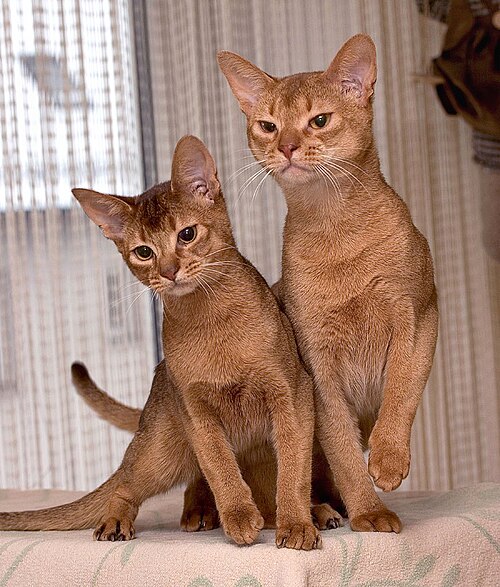
 Photo: Martin Bahmann · CC BY-SA 3.0
cat breed · 135 on Animalso
Abyssinian Cat: Egyptian Origin and Ticked Coat
- Animal
- Cat
- Origin
- Egypt, United Kingdom, Ethiopian Empire
- Weight
- 3.5 kg
The Abyssinian is a standardized cat breed from Egypt. Its coat has ticked tabby hairs, with each agouti hair banded in different colors. Abyssinians are social, often seek attention, and generally do well with other cats. They stay active through exploration and play rather than settling as lap cats. The listed weight is 3.5.
What the Abyssinian is
The Abyssinian, also called the Aby, is a standardized cat breed traced to Egypt. Its defining feature is a ticked tabby coat: individual agouti hairs carry bands of different colors.
The breed has a long, lean appearance, large erect ears and a wildcat-like look.
What living with one involves
Abyssinians are described as highly social cats that may ask for a lot of attention. They are usually in motion, exploring or playing, rather than acting as lap cats.
Their social nature can suit a household with more than one cat.
Strengths
The Abyssinian has a distinctive ticked coat and a recognizable wildcat appearance.
Its social nature can work well in multi-cat households.
The breed brings an active, exploratory presence to a home.
Catches
This is not generally a lap cat. Abyssinians may demand attention and stay busy with exploration or play.
The listed weight is 3.5; no other size or lifespan figures are given here.
Price
No purchase or adoption price is provided for the Abyssinian.
Who may want another breed
Someone seeking a quiet cat that prefers sitting on a lap may want to compare other cat breeds. The Abyssinian is described as active, social and attention-seeking.
Verdict
Choose the Abyssinian if its Egyptian origin, ticked coat and social, active character fit your household. It may be a natural match for people who enjoy an engaged cat and already keep multiple cats. Look elsewhere if your priority is a cat known here for lap sitting or a calm, less demanding presence.
What stands out
- Distinctive ticked tabby coat
- Social nature can suit multi-cat homes
- Active, exploratory character
- Large erect ears and wildcat-like look
Worth knowing
- May demand frequent attention
- Usually not a lap cat
- Often stays in motion through play and exploration
Suits
- Homes comfortable with a social, active cat
- Households with more than one cat
- People drawn to a ticked coat and wildcat look
Think twice if
- You want a cat described as a lap cat
- You prefer a less active or less attention-seeking companion
In short
The Abyssinian stands out for its banded ticked coat, large ears and wildcat-like outline. Its social behavior can suit homes with other cats, while its constant movement suits people who enjoy an active companion. Expect a cat that explores, plays and may seek frequent attention, not one defined by lap sitting. The listed weight is 3.5, and the available facts do not provide height or lifespan figures. Its origin is given as Egypt, with additional historical links to the United Kingdom and Ethiopian Empire.
Questions
Where does the Abyssinian come from?
The Abyssinian is identified as originating in Egypt. Its listed origins also include the United Kingdom and the Ethiopian Empire.
What does an Abyssinian look like?
It has a ticked tabby coat, a long and lean appearance, large erect ears and a wildcat-like look.
Are Abyssinians social cats?
Yes. The breed is described as highly social and may demand attention. It can do well in multi-cat households.
Is an Abyssinian a lap cat?
The available description says no. Abyssinians are generally in motion, exploring or playing.
How much does an Abyssinian weigh?
The listed weight is 3.5. No unit is supplied in the available facts.
What colors are in an Abyssinian's coat?
Each agouti hair in the ticked coat is banded with different colors.
More cat breeds from Egypt
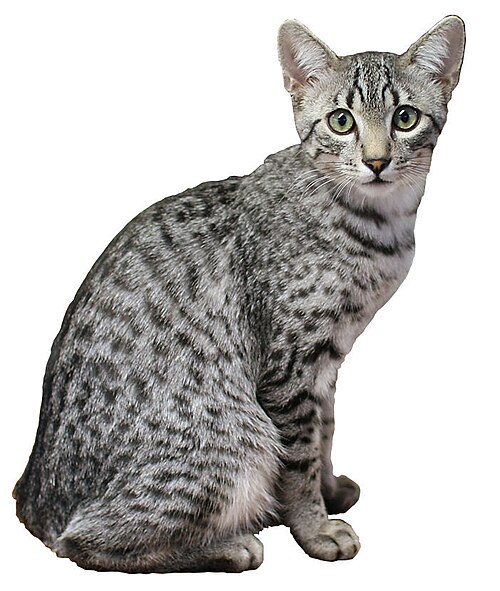 Egyptian Mau Egypt Photo: Desaix83 · CC BY 3.0
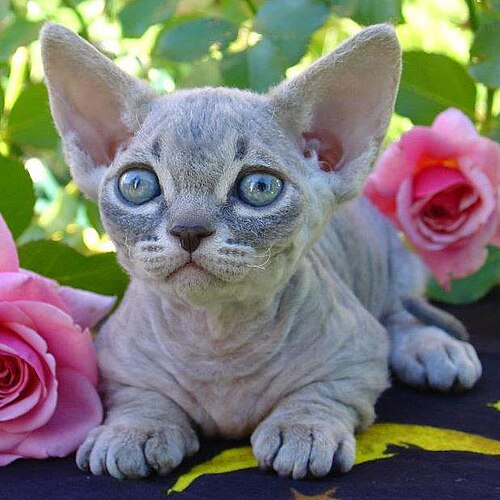 Minskin Egypt Photo: Paulmcsorley · CC BY-SA 3.0
Photo credits3 photographs on this page
- Abyssinian — Martin Bahmann · CC BY-SA 3.0 · file page
- Egyptian Mau — Desaix83 · CC BY 3.0 · file page
- Minskin — Paulmcsorley · CC BY-SA 3.0 · file page
Photographs come from Wikimedia Commons under the licence each one names. How Animalso credits photographs.