
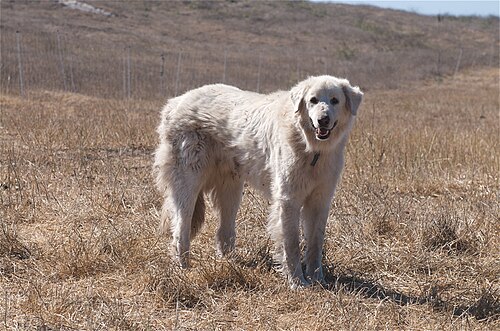
 Photo: Jerry Kirkhart · CC BY 2.0
dog breed · 927 on Animalso
Akbash: Turkish Flock Guardian Dog
- Animal
- Dog
- Origin
- Turkey
- Life expectancy
- 10 years
The Akbash is a traditional Turkish dog or dog type from western Anatolia. It was bred as a flock guardian. The name akbaş means “white head,” distinguishing it from the Karabaş, or “black head.” Turkey’s Ministry of Agriculture and Rural Affairs recognized it in 2006. The breed is not recognized by the Fédération Cynologique Internationale.
What the Akbash is
The Akbash is a traditional Turkish flock guardian dog from western Anatolia. Its original work was guarding flocks.
Akbash can refer to a breed or type. The name akbaş means “white head,” setting it apart from the Karabaş, or “black head.”
Origin and recognition
The breed comes from Turkey. The Turkish Ministry of Agriculture and Rural Affairs recognized it in 2006.
It is under the care of the Köpek Irkları ve Kinoloji Federasyonu, Turkey’s dog breed society.
What stands out
The Akbash has a clear working history as a flock guardian in western Anatolia.
Its Turkish origin and name give it a distinct place among dog breeds from Turkey.
Points to know
The Fédération Cynologique Internationale does not recognize the Akbash. That matters if formal FCI recognition is important to you.
It is described as a traditional breed or type, rather than using one single classification.
Pricing
No pricing information is provided for the Akbash.
Who should skip it
Skip the Akbash if you require a breed recognized by the Fédération Cynologique Internationale. You may prefer to compare other dog breeds instead.
Verdict
Choose the Akbash if its Turkish history and flock-guarding role are central to your search. Its western Anatolian origin is well defined, and its name records the traditional “white head” distinction.
Look elsewhere when international kennel-club recognition is a deciding factor.
What stands out
- Traditional flock-guardian role from western Anatolia
- Distinctive Turkish origin and “white head” name
- Recognized by Turkey’s agriculture ministry in 2006
Worth knowing
- Not recognized by the Fédération Cynologique Internationale
- Described as a breed or type rather than one single classification
- Its history is tied specifically to western Anatolia
Suits
- Readers tracing Turkish dog origins
- People interested in traditional flock guardians
- Those comparing regional dog breeds
Think twice if
- You require Fédération Cynologique Internationale recognition
- You want a breed outside the Turkish flock-guardian tradition
In short
The Akbash is a Turkish dog or dog type with a documented role as a flock guardian in western Anatolia. Its name means “white head,” a traditional contrast with the Karabaş. Turkey’s agriculture ministry recognized it in 2006, while the Fédération Cynologique Internationale does not. The recorded life expectancy is 10 years. This profile suits readers tracing working origins and Turkish breeds. It is less suitable for anyone who needs FCI recognition as part of their choice.
Questions
Where does the Akbash come from?
The Akbash comes from Turkey, specifically western Anatolia.
What was the Akbash bred to do?
It is a traditional flock guardian dog, bred to guard flocks.
What does the name Akbash mean?
Akbaş means “white head” in Turkish. The name distinguishes it from the Karabaş, or “black head.”
Is the Akbash recognized by the FCI?
No. The Fédération Cynologique Internationale does not recognize the Akbash.
When was the Akbash recognized in Turkey?
Turkey’s Ministry of Agriculture and Rural Affairs recognized it in 2006.
How long does an Akbash live?
The recorded life expectancy for the Akbash is 10 years.
More dog breeds from Turkey
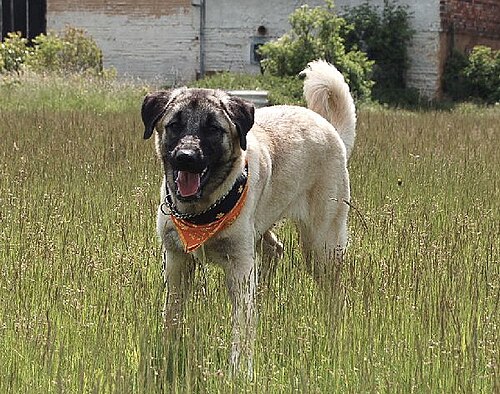
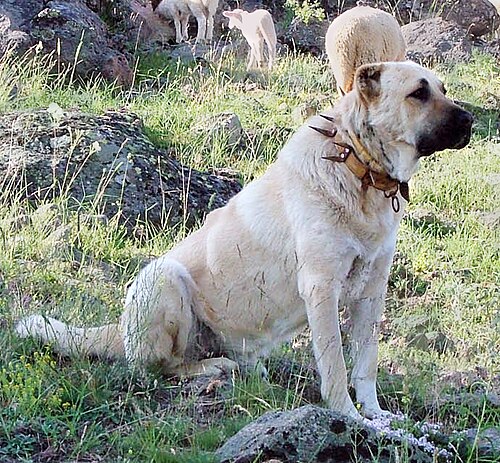
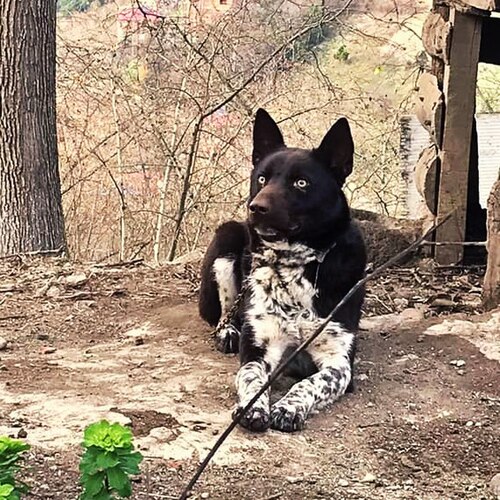
Photo credits4 photographs on this page
- Akbash — Jerry Kirkhart · CC BY 2.0 · file page
- Anatolian Shepherd — Dfence · CC BY-SA 3.0 · file page
- Kangal Shepherd Dog — friend of tr:Onur1991 · CC BY-SA 3.0 · file page
- Zerdava — Annwfwn · CC BY-SA 4.0 · file page
Photographs come from Wikimedia Commons under the licence each one names. How Animalso credits photographs.