The essential answer to “Alaskan Husky: Dog Breed Characteristics & Care” is that an Alaskan Husky is a performance-bred sled-dog type, not a uniformly standardized show breed. Expect substantial daily exercise, purposeful training, secure containment, regular double-coat brushing, seasonal shedding, and careful heat management; appearance, size, and health needs vary by individual and line.
That definition changes how the dog should be evaluated. Instead of asking whether every Alaskan Husky has a certain eye color, weight, ear shape, or temperament, assess the individual dog’s working background, behavior, health records, exercise needs, escape habits, coat, and ability to live safely in your climate.
As an Amazon Associate I earn from qualifying purchases.
Key takeaways
- An Alaskan Husky is primarily a performance-oriented sled-dog type or working population, not a conventional conformation breed with one compulsory appearance standard.
- Alaskan Husky size, weight, coat pattern, ear carriage, tail carriage, and body shape can vary considerably between working lines.
- An Alaskan Husky generally needs demanding daily activity, purposeful mental enrichment, reward-based training, and secure containment.
- The thick double coat usually requires regular brushing and may shed heavily during seasonal coat changes.
- Heat management is essential because an Arctic working history does not make an individual Alaskan Husky immune to heat stress or heat stroke.
- Siberian Husky health-testing recommendations provide useful context but should not be presented as a universal health-screening standard for every Alaskan Husky.
What is an Alaskan Husky?
An Alaskan Husky is a performance-bred sled-dog type developed primarily for working ability in Alaska. The label describes a functional population selected for traits such as speed, endurance, pulling ability, intelligence, appetite, cooperation, and tolerance for demanding work rather than a single closed-studbook appearance. The reference overview of the Alaskan Husky explains why the type is better understood through its working purpose than through a uniform show-ring outline.
The Tool Desk
Outbyte Driver Updater FREEScan for outdated or missing drivers - takes under a minuteDriver Scan →Outbyte PC Repair FREEClear out junk files and repair common Windows errorsFree Scan →“Alaskan Husky” does not mean that every dog is an indiscriminate first-generation cross, and the absence of universal kennel-club recognition does not make the type imaginary. Terms such as Alaskan Husky type, Alaskan-type Husky, and performance-bred sled dog can be useful when the dog’s exact ancestry is undocumented.
#1 Best Overall

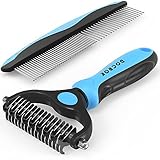
- DUAL-SIDED DESIGN: Our Undercoat Rake Dog brush is perfect for deshedding your pet's coat. Designed with a dual-sided design, start with a 9-teeth side to tackle stubborn mats and tangles, and finish with a 17-teeth side to thin out and deshed after.
- HEALTHY COAT AND REDUCED SHEDDING: Our deshedding brush for dogs is designed with sharpened but finely rounded teeth that allow you to easily and safely remove mats, tangles, knots, and loose hair without irritation or scratching.
- EFFECTIVE DESHEDDING TOOL: This dematting and deshedding brush gently removes loose hair and eliminates tangles, knots, dander, and trapped dirt. The perfect cat grooming tool solution for pets with thick fur or dense double coats.
- COMFORTABLE TO USE: Keep your pet clean and healthy with our dog and cat brush for grooming. Designed with a lightweight, comfortable handle and a non-slip rubber base to keep the brush from moving around as you brush your pet.
- PERFECT GIFT FOR PET LOVERS: Our dog comb brush is a must-have grooming products for dogs and cats. A great gift undercoat rake dog for pet lovers who want to keep their fur buddies clean, healthy, and well-groomed!
The distinction matters to anyone choosing a companion. An Alaskan Husky is not primarily a predictable-looking pet breed. The more useful ownership question is whether the household can support a highly athletic, intelligent, thick-coated working dog that may roam, dig, chase, vocalize, or become destructive when its physical and mental needs are poorly matched.
Why does the Alaskan Husky look so different from one dog to another?
Alaskan Husky appearance varies because working traits are prioritized over cosmetic uniformity. Height, weight, head shape, coat color and pattern, ear carriage, tail carriage, and body proportions can differ according to family line, individual ancestry, and the type of sled work for which the dogs were selected.
Some Alaskan Huskies look distinctly spitz-like, while others may show hound- or gundog-influenced features. Blue eyes, erect ears, a curled tail, or a particular Siberian Husky outline are not requirements for identifying an Alaskan Husky. Visual identification alone is therefore unreliable.
What’s actually slowing this PC down?
Pick the symptom - the matching free tool is one click away.
| Feature | What can be said responsibly | What should not be assumed |
|---|---|---|
| Size | Height and weight vary by individual and working line. | There is one universal Alaskan Husky height or weight. |
| Coat | A thick double coat is common, with substantial seasonal shedding. | Every dog has the same coat length, density, or color. |
| Head and ears | Spitz-like features are common, but broader functional influences occur. | Every Alaskan Husky must have erect ears or a Siberian-like head. |
| Tail | Tail carriage can vary between dogs and lines. | Every Alaskan Husky must carry a tightly curled tail. |
| Measurements | Use an individual dog’s veterinary, breeder, or rescue records. | Relabel Siberian Husky breed-standard figures as Alaskan Husky measurements. |
How much exercise does an Alaskan Husky need?
An Alaskan Husky generally needs substantial daily activity that combines meaningful physical exertion with mental work. There is no defensible universal mileage minimum because Alaskan Huskies are not a standardized population and fitness varies with age, health, line, conditioning, and weather.
Suitable activities may include structured walks, hiking, running when physically mature and properly conditioned, scent work, obedience, puzzle feeding, pulling sports, and controlled dog-powered activities. The best routine is sustainable, varied, and adapted to the individual dog rather than based on a fixed number of miles.
Puppies need age-appropriate movement rather than forced endurance work. Increase exercise gradually, and discuss running, pulling, repetitive impact, and other strenuous activities with a veterinarian while the dog is growing. An adult dog that becomes restless, destructive, or chronically vocal may be under-exercised or under-stimulated, although a sudden behavior change can also indicate pain or another medical problem.
Rank #2
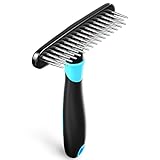
- 【Easy Dematting and Deshedding Tools】: Our Grooming brush and comb combo help effortlessly dematting and reduces shedding. A must have dog brush for shedding, pet supplies, cat supplies, dog supplies metal comb for dogs shedding.
- 【Safe Design】: Soft and protective edge brush and comb creating a comfortable feeling while detangling matted hair and deshedding without hurting your pet. Perfect metal comb for dogs, dematting comb for cats, undercoat rake for dogs double coat.
- 【2-in-1 Rake】: Our undercoat rake is perfect for medium and long-haired dogs and cats and other double coat pets. Wide side for easy dematting, dense side for deshedding. Well made deshedding tool, grooming brush and deshedder brush for dogs.
- 【2-in-1 Comb】: Wide sided for comb knot, smoothing and modeling your pet's hair, dense side for removal of loosen hair, you can use it on the legs, head or tail of your pets where the brush can’t. Perfect metal comb for dogs, dematting comb for cats deshedding tool for dogs.
- 【Sturdy and Comfortable Design】: Premium Stainless steel metal teeth and compact design make our product sturdy and durable. High-quality & lightweight TPR handle make your grooming effortlessly. High-quality undercoat rake for dogs double coat, metal comb for dogs, dematting comb for cats, dog comb for matted hair.
Are Alaskan Huskies good family dogs?
Alaskan Huskies can be social, engaging, and affectionate household companions, but they are a good family fit only when the family can consistently meet the demands of a working-type dog. A friendly temperament does not remove the need for exercise, training, supervision, and escape prevention.
Families should consider the dog’s behavior around children, cats, small pets, unfamiliar dogs, traffic, wildlife, and visitors on an individual basis. A prospective owner should ask for the dog’s known history instead of relying on the label alone. Households seeking a low-exercise, reliably off-leash, easy-to-contain companion are often poorly matched with this type.
Veterinary guidance for the related Siberian Husky describes a strong desire to run, independence, and the need for vigorous daily exercise and a well-fenced yard. Those warnings are useful northern-husky ownership context, but they do not prove that every Alaskan Husky has an identical temperament. VCA’s Siberian Husky reference should therefore be read as context rather than as an Alaskan Husky breed standard.
How should an Alaskan Husky be trained and contained?
Reliable management starts with secure fencing, careful leash handling, and a properly fitted harness. Alaskan Huskies may roam, dig, chase, slip through weak points, or exploit an unsecured gate, so prevention is more dependable than expecting recall to overcome every high-distraction situation.
- Inspect gates, latches, fence gaps, digging points, and areas where the dog can climb or jump.
- Use a leash or long line in open areas until the dog’s behavior is proven in that specific environment.
- Teach recall with rewards, but do not treat recall as a guarantee near roads, wildlife, or other powerful distractions.
- Use reward-based training, predictable routines, and management that prevents repeated rehearsal of escape behavior.
- Assess a harness for fit, construction, rubbing, range of motion, and the individual dog’s ability to back out of it.
A fitted dog harness can be useful for controlled exercise, running, or pulling, but no generic harness should be described as universally escape-proof or injury-proof. A secure property still requires appropriate fencing and supervision.
Do these 3 things before closing this tab:
1Repair Windows errors before they cause bigger problems2Scan for outdated or missing drivers - takes under a minute3Clear out junk files and repair common Windows errorsDo Alaskan Huskies shed, and what is the best brush?
Yes. Alaskan Huskies generally have a thick double coat made of an outer guard coat and an insulating undercoat, and owners should expect substantial seasonal shedding. Veterinary grooming guidance identifies husky-type dogs among thick-coated dogs that commonly shed heavily during seasonal coat changes. VCA’s dog grooming and coat-care guidance supports regular maintenance rather than a one-time grooming solution.
Rank #3
- One of the best dog brushes on the market, It has a double row of stainless steel pins/teeth to reduce pulling the coat without damaging it or hurting your pet. It is a very gentle experience for your dog, cat, rabbit, or any other furry friend that needs brushing.
- Our undercoat Rake dramatically reduces shedding by up to 90% after just 1 short session. This is compared to only 30% with the average Brush or comb. Perfect for matted, heavy shedding undercoats and fur.
- Our professional grooming brushes can be used on both dogs, cats, rabbits, or equestrian horses that have short, Medium or long hair. This professional, high quality brush is priced well, so you can buy one to keep in the house and one for the car.
- Recommended and used by veterinarians, groomers, and pet professionals. The perfect brush for removing unwanted shedding hair. Scientifically designed to promote healthy skin and a shiny top coat. Protects you and your pet from skin allergies, and minimizes irritation from build up, which reduces allergic airborne elements.
- The innovative design allows air to your pet's skin and stimulates the hair follicles, allowing the release of healthy oils. The contouring handle is strong and durable, made of a non-slip, non-toxic silicone. The stainless pins take the unnecessary ’hurt’ out of grooming your pet.
A dog undercoat rake may help remove loose undercoat during shedding periods. A metal comb or pin brush can also be useful depending on the dog’s coat and tolerance. Introduce grooming gradually, work in manageable sections, and inspect the skin as you go. Stop and seek veterinary or professional grooming advice if the dog has pain, inflammation, parasites, mats, sores, or unusual hair loss.
Do not routinely shave an Alaskan Husky to make summer safer. The double coat contributes to insulation and skin protection. Clipping may be appropriate for a medical reason, severe matting, or another specific situation, but those decisions should be discussed with a veterinarian or qualified groomer. No Alaskan Husky-specific published statistic for annual shedding volume was identified, so shedding is best described qualitatively rather than with a made-up weight or percentage.
Can an Alaskan Husky live in a hot climate?
An Alaskan Husky can live in a hot climate only with deliberate heat management, and an Arctic working history does not make an individual dog heat-proof. Schedule demanding activity during cooler periods, provide shade and water, monitor humidity and exertion, and stop activity when the dog shows abnormal fatigue or distress.
Crashes, No Sound, or Screen Glitches?
Random freezes, missing sound and display glitches usually trace back to one bad driver. Find and replace yours safely.Free scan · under a minuteWindows Errors? Fix Them Before They Spread
Repair common Windows errors and clear accumulated junk for a smoother, more stable PC - no reinstall needed.Free scan · no reinstallHeat risk is affected by more than the thermometer. A thick coat, dark coat, obesity, age, illness, and poor acclimation can increase risk, but temperature alone cannot determine whether exercise is safe. Never use heavy exercise to “condition” a dog through dangerous heat.
Heat stroke is an emergency. Warning signs can include hot skin, vomiting, drooling, rapid panting, distress, uncoordinated movement, collapse, and unconsciousness. Merck Veterinary Manual’s hot-weather guidance advises moving the dog out of the heat, beginning gradual cooling with cool water, wet towels, ice packs, or a fan, and obtaining veterinary care immediately. Do not immerse an overheated dog in cold water.
| Situation | Safer management | Stop and seek help when |
|---|---|---|
| Routine warm-weather walk | Choose a cooler time, carry water, use shade, and keep the pace controlled. | Panting becomes excessive, coordination changes, or the dog appears distressed. |
| Exercise in humidity | Reduce intensity and duration; monitor the dog continuously. | The dog cannot recover normally or shows weakness, vomiting, or confusion. |
| Suspected heat stroke | Move to a cooler area, begin gradual cooling, and contact a veterinarian immediately. | Any collapse, unconsciousness, severe distress, or neurologic abnormality is present. |
What cold-weather care does an Alaskan Husky need?
A northern double coat helps an Alaskan Husky tolerate cold, but it does not eliminate the need for shelter, dry bedding, unfrozen water, monitoring, and gradual acclimation. Wet and windy conditions can increase cold stress even when the air temperature does not appear extreme.
Rank #4
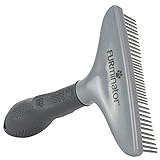
- Removes loose hair, tangles and prevents mats
- The rotating metal teeth help to remove loose hair from undercoat in dense fur
- Best for dogs and cats with thick fur or dense double coats
- Convenient daily solution for undercoat care
- The ergonomic non-slip handle gives you maximum control
After winter walks, check the paws for salt, ice, abrasions, and chemical residues. Wipe the paws when necessary, and inspect between the pads if the dog is limping or licking persistently. Cold tolerance is individual, so monitor behavior rather than assuming that every Alaskan Husky can remain outside indefinitely.
Quick wins for a faster PC:
Scan for outdated or missing drivers - takes under a minuteDriver Scan →Repair Windows errors before they cause bigger problemsFix Now →What is the difference between an Alaskan Husky and a Siberian Husky?
The main difference is definition: an Alaskan Husky is a variable, performance-oriented sled-dog type, while the Siberian Husky is a formal breed with an established conformation standard. Both are associated with sled work and substantial activity, but the Alaskan label places greater emphasis on what the dog can do than on whether the dog matches a fixed appearance.
| Comparison | Alaskan Husky | Siberian Husky |
|---|---|---|
| Definition | Performance-bred sled-dog type or working population. | Formal dog breed with an established breed standard. |
| Appearance | Varies by working line, ancestry, and selected function. | More predictable within its recognized standard. |
| Purpose | Strongly defined by speed, endurance, pulling ability, and work performance. | Historically associated with sled work while also being defined by breed-standard traits. |
| Exercise | Should be approached as a serious working-dog commitment; individual needs vary. | Also generally needs substantial daily activity and an outlet for running behavior. |
| Health documentation | Advice must be individualized because there is no single universal Alaskan Husky screening protocol. | Breed-specific recommendations are easier to state through established breed-health frameworks. |
Do not use American Kennel Club Siberian Husky measurements or testing recommendations as if they automatically describe every Alaskan Husky. The AKC Working Group health-testing reference lists hip evaluation, ophthalmologist evaluation, Siberian Husky Shaking Puppy Syndrome Type 1 testing, and Siberian Husky Polyneuropathy Type 1 testing for the Siberian Husky. Those recommendations are useful questions when documented Siberian ancestry or a specific line is involved, not a universal Alaskan Husky requirement.
Independent reader supportYour contribution helps us test, update, and keep practical guides available for everyone.What health care does an Alaskan Husky need?
Health care should be individualized because Alaskan Husky lines are not governed by one universal conformation standard or one centralized breed-health protocol. A veterinarian should assess the individual dog’s body condition, eyes, joints, gait, teeth, skin, parasite prevention, vaccinations, nutrition, and exercise plan.
No authoritative Alaskan Husky-specific average height, weight, lifespan, or disease-prevalence figure was identified in this research. Avoid filling those gaps with Siberian Husky figures or unsupported breed-wide claims. A breeder or rescue organization may be able to provide useful records for a particular dog, including family history, veterinary examinations, working history, and known issues.
Budget for routine veterinary care as well as the possibility of injury management, especially when the dog participates in running, pulling, or other strenuous activities. The 2022 AVMA Pet Ownership and Demographics Sourcebook can provide general pet-spending context, but it is not an Alaskan Husky-specific cost estimate. Pet insurance for active dogs may be worth comparing as a budgeting option, but coverage, exclusions, waiting periods, hereditary-condition terms, activity exclusions, and availability must be checked with current providers.
Best Value

- COMPLETE GROOMING COMBO: Includes our dual-sided deshedding brush and a premium metal comb to effortlessly remove stubborn mats, tangles, and loose hair.
- 2-IN-1 METAL COMB: The included stainless steel comb features dual-density teeth perfect for detailed detangling on sensitive areas like the face, paws, and tail.
- DUAL-SIDED DEMATTING BRUSH: Start with the 9-teeth side for stubborn mats and tangles, then finish with the 17-teeth side for thinning and deshedding to reduce shedding by up to 95%.
- SKIN-FRIENDLY DESIGN: Both tools feature rounded, scratch-free teeth that gently massage your pet's skin, ensuring a pain-free and comfortable grooming experience.
- COMFORTABLE & DURABLE: Designed with a soft, ergonomic anti-slip grip for comfortable, long grooming sessions for both cats and dogs of all hair types.
Can a DNA test identify an Alaskan Husky?
A dog DNA test can provide a cautious clue about ancestry, but it cannot replace breeder records, rescue documentation, working history, or a veterinary examination. A DNA result should not be used by itself to predict temperament, exercise tolerance, or future disease.
Embark’s published tested-breed list, updated October 2025, includes Alaskan-type Husky. That makes a dog DNA breed and health test a potentially useful option for a dog with uncertain origins, provided the result is interpreted as genetic testing information rather than a complete explanation of the dog. Embark’s full tested-breed list is the appropriate place to verify the current category list before purchasing or interpreting a test.
Is an Alaskan Husky right for your household?
An Alaskan Husky is a strong match for an owner who wants an athletic working companion and can provide daily activity, enrichment, consistent reward-based training, secure containment, grooming, and careful climate management. The type is a poor match for a household expecting a low-maintenance dog, dependable off-leash freedom, minimal shedding, or a standardized appearance.
Free tools Windows power users keep installed
One-click scans. No signup required.
| Your household can provide | Likely fit | Questions to resolve first |
|---|---|---|
| Daily physical activity, training, enrichment, and secure fencing | Potentially good fit | Can every adult maintain the routine year-round? |
| Some exercise but little time for training or containment | High-risk fit | Who will prevent escape, roaming, and destructive boredom? |
| Hot climate with limited ability to change exercise times | Potentially poor fit | Can activity be moved to cooler periods and can heat signs be monitored? |
| Low tolerance for fur, brushing, or seasonal shedding | Poor fit | Can regular grooming and heavy shedding be managed? |
| Interest in running, hiking, pulling, or dog sports | Potentially strong fit | Is the dog old and healthy enough for the planned activity? |
Practical Alaskan Husky care checklist
- Confirm the individual dog’s history, age, health records, behavior, and known ancestry.
- Provide daily physical activity appropriate to age, conditioning, health, and weather.
- Add mental work such as scent games, obedience, food puzzles, or task-based training.
- Use secure fencing, reliable gates, careful leash handling, and a properly fitted harness.
- Brush the double coat regularly and increase undercoat maintenance during seasonal shedding.
- Do not routinely shave the coat for summer; seek professional advice for medical clipping or severe matting.
- Plan exercise around heat, humidity, shade, water, and the dog’s acclimation.
- Know the signs of heat stroke and contact a veterinarian immediately if they occur.
- Ask a veterinarian to individualize preventive care, nutrition, conditioning, and health screening.
- Keep winter shelter, bedding, water, and paw checks appropriate to the actual weather.
Frequently Asked Questions
Is an Alaskan Husky a real breed?
An Alaskan Husky is a performance-oriented sled-dog type or working population developed for speed, endurance, pulling ability, intelligence, and demanding work. Unlike the Siberian Husky, the Alaskan Husky does not have one universally enforced conformation standard, so appearance and size vary considerably.
How big do Alaskan Huskies get?
There is no authoritative universal Alaskan Husky size range that can responsibly be applied to every individual. Height and weight vary by working line, ancestry, sex, age, conditioning, and purpose, so veterinary, breeder, or rescue records are more useful than relabeled Siberian Husky figures.
Can an Alaskan Husky live in a hot climate?
An Alaskan Husky can live in a hot climate with careful management, but the dog is not immune to heat stress. Exercise should be scheduled during cooler periods, with shade, water, humidity monitoring, and immediate veterinary care for suspected heat stroke.
Can a DNA test identify an Alaskan Husky?
A dog DNA test may provide ancestry information and some tests include an Alaskan-type Husky category, but DNA results cannot replace records or a veterinary examination and should not be used alone to predict temperament, exercise tolerance, or disease.
The Bottom Line
An Alaskan Husky is best understood as a performance-oriented sled-dog type rather than a predictable-looking companion breed. Choose one only if your household can manage demanding daily activity, purposeful enrichment, secure containment, heavy seasonal shedding, consistent training, and heat risk. Avoid false precision about size, lifespan, or disease prevalence: the individual dog and its line matter.
Quick Recap
Product prices and availability are accurate as of the date/time indicated and are subject to change. Any price and availability information displayed on Amazon at the time of purchase will apply.




