
horse breed · 671 on Animalso
Chaidamu Horse
- Animal
- Horse
- Type
- Mongolian horse
- Origin
- People's Republic of China
The Chaidamu is a horse breed from the People’s Republic of China, native to Qinghai and Tibet. It is closely related to the Mongolian horse and is classed as a working pony. Its main traditional job is pulling. The breed has declined seriously since the end of the 20th century as the Qaidam Basin became more desertified.
What the Chaidamu is
The Chaidamu is a horse breed native to Qinghai and Tibet in China. It is a type of Mongolian horse.
This working pony was mainly used for pulling.
Getting to know the breed
Start with its origin and role: the Chaidamu comes from the People’s Republic of China and is a working pony mainly used for pulling.
It is closely related to the Mongolian horse.
What stands out
The Chaidamu has a clear working history. Pulling was its main use.
Its background links it to the Mongolian horse and to the Qinghai and Tibet regions of China.
What to keep in mind
The breed has been in serious decline since the end of the 20th century.
Desertification of the Qaidam Basin is identified as the main reason for that decline.
Pricing
Pricing does not apply to a horse breed. No purchase price is provided here.
Who may want another breed
Readers seeking a breed with a documented pulling background may find the Chaidamu relevant. Those looking for a different Chinese horse can compare horse breeds from the People’s Republic of China.
For a wider comparison, see horse breeds.
Verdict
The Chaidamu is a Chinese working pony with Mongolian-horse connections and a traditional pulling role.
Its serious decline is an important part of its story, especially for anyone interested in the Qaidam Basin desertification associated with that decline.
What stands out
- Native to Qinghai and Tibet in China
- Traditional working role centered on pulling
- Closely related to the Mongolian horse
Worth knowing
- The breed has been in serious decline
- Qaidam Basin desertification is linked to its decline
- No height, weight, or lifespan figures are provided
Suits
- Readers studying Chinese horse breeds
- People interested in pulling ponies and Mongolian-horse types
Think twice if
- You need recorded size or lifespan figures before choosing a horse
- You are looking for a breed without a documented decline
In short
Choose the Chaidamu if you want to learn about a Chinese horse breed tied to Qinghai and Tibet, with a working history centered on pulling. Its relationship to the Mongolian horse adds useful context for comparing regional breeds. The breed’s decline since the late 20th century also matters: it is part of a changing landscape in the Qaidam Basin. This profile does not provide height, weight, lifespan, or other ownership details, so those points cannot guide a decision here.
Questions
Where does the Chaidamu horse come from?
The Chaidamu is native to Qinghai and Tibet in the People’s Republic of China.
What is the Chaidamu mainly used for?
It is a working pony mainly used for pulling.
What type of horse is the Chaidamu?
It is a Mongolian horse type and is closely related to the Mongolian horse.
Why has the Chaidamu declined?
The breed has been in serious decline since the end of the 20th century, mainly because of desertification in the Qaidam Basin.
What are the Chaidamu’s height, weight, and lifespan?
This profile does not provide recorded height, weight, or life-expectancy figures.
Where can I compare it with other Chinese horse breeds?
See horse breeds from the People’s Republic of China for a wider regional comparison.
More horse breeds from People's Republic of China
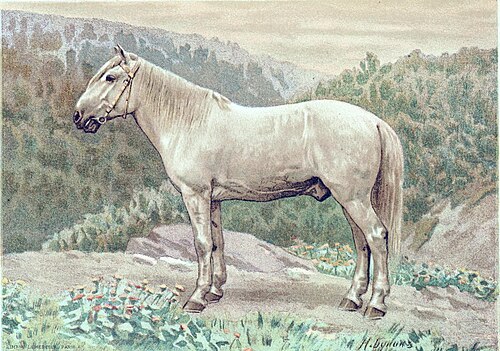 Amurski horse People's Republic of China Photo: N. Bunin and others · Public domain
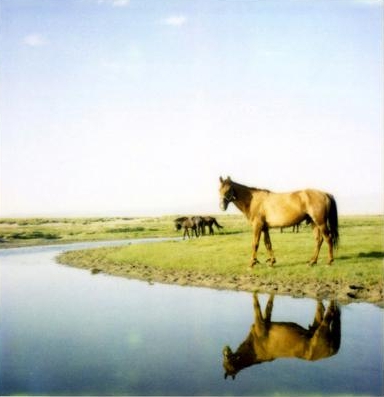
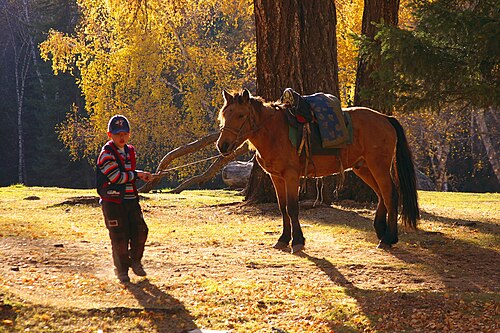
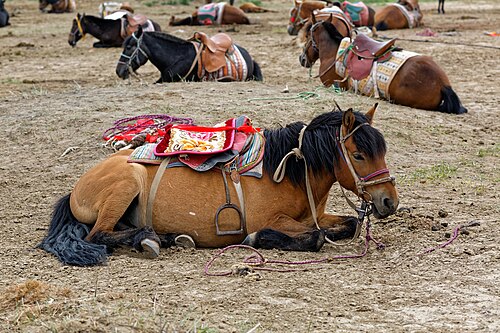
Other Mongolian horse breeds
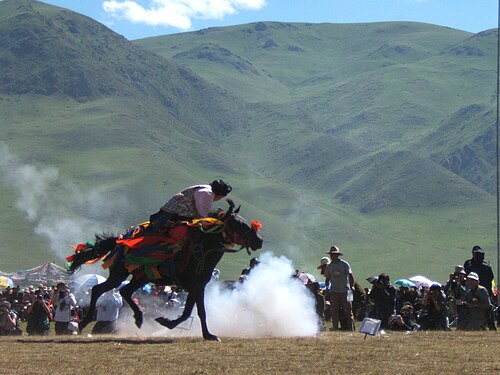 Yushu People's Republic of China Height 1.26 cm Photo: Nomadsolicitor · Public domain
Photo credits9 photographs on this page
- Amurski horse — N. Bunin and others · Public domain · file page
- Balikun horse — joyboffin · CC BY 2.0 · file page
- Chinese Kazakh Horse — George Lu · CC BY 2.0 · file page
- Chinese Mongolian — Sergio Tittarini · CC BY 2.0 · file page
- Guangxi — Elvir K · CC BY 2.0 · file page
- Guizhou pony — pan zhen alpacccca · CC0 · file page
- Jinjiang — Arian Zwegers · CC BY 2.0 · file page
- Lijiang pony — Tom Thai · CC BY 2.0 · file page
- Yushu — Nomadsolicitor · Public domain · file page
Photographs come from Wikimedia Commons under the licence each one names. How Animalso credits photographs.