
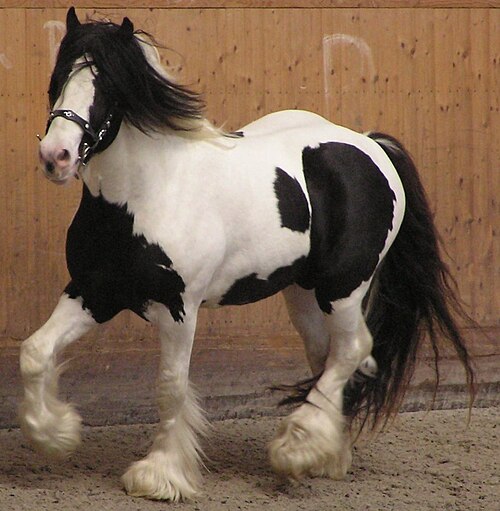
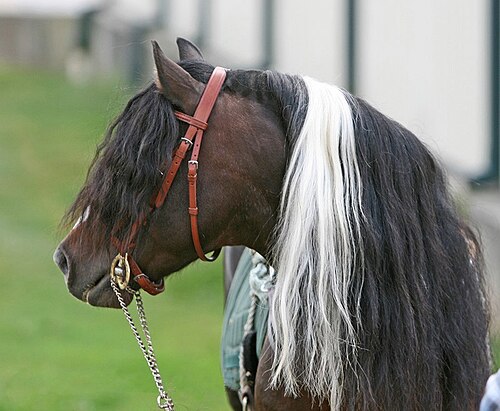
 Photo: Karakal · CC BY-SA 3.0
horse breed · 671 on Animalso
Gypsy Vanner Horse
- Animal
- Horse
- Type
- Cob
- Origin
- Ireland, United Kingdom
- Height
- 1.32 cm
- Weight
- 750 kg
The Gypsy Vanner, also called the Gypsy Cob, Irish Cob, Romani Cob or Traditional Gypsy Cob, is a domestic horse breed from Ireland and the wider British Isles. It is a small, solidly built cob, usually piebald. The recorded height is 1.32 m and the recorded weight is 750 kg.
What it is
The Gypsy Vanner is a domestic horse breed from Ireland and the British Isles. It is also known as the Gypsy Cob, Traditional Gypsy Cob, Irish Cob, Romani Cob and Gypsy Horse.
The breed has cob conformation, a small and solid build, and is usually piebald.
Names and origins
When looking into this breed, search under its several recorded names as well as Gypsy Vanner. Its origins are listed as Ireland and the United Kingdom.
The horse is associated with Irish Travellers and English Romanichal Travellers.
Distinctive traits
This is a solidly built cob with a recorded height of 1.32 m and a recorded weight of 750 kg.
Its usual piebald coloring and its links to Irish and English Traveller communities give the breed a clear identity.
Registry history
There was no stud-book or breed registry for these horses until 1996. Breeders later developed standards and recorded pedigrees, and organizations now register horses that qualify.
Pricing
No purchase price is stated for the Gypsy Vanner in this profile.
Who should look elsewhere
Readers seeking a breed outside the cob type, or one without the Gypsy Vanner’s several alternate names and recent registry history, should compare other entries in horse breeds.
Verdict
The Gypsy Vanner suits someone looking for an Irish-origin cob with a compact, solid build and usually piebald coloring. Its recorded size is 1.32 m and 750 kg. Buyers who need a long-established stud-book should note that formal registration began only in 1996. To compare its background with other Irish breeds, see horse breeds from Ireland.
What stands out
- Irish and British Isles origins are clearly recorded.
- Solid cob conformation gives the breed a distinct type.
- Usually piebald coloring makes it easy to recognize.
- The breed has several established names for searching.
Worth knowing
- Formal stud-books and registries began only in 1996.
- The breed is usually piebald, limiting coat-pattern variety.
- Its cob type is defined as small and solidly built.
Suits
- Readers tracing an Irish-origin cob horse
- People comparing Gypsy Vanner names and background
- Those seeking a usually piebald horse breed
Think twice if
- You want a breed outside the cob type or without this breed's recent registry history.
- You are looking for a horse with a different recorded origin.
In short
Choose the Gypsy Vanner if its Irish roots, cob type and usual piebald coat fit the horse you want to learn about. The breed is recorded at 1.32 m and 750 kg, giving a clear size reference. Its history is tied to Irish Travellers and English Romanichal Travellers, while formal stud-books and registries appeared only from 1996. Look at another breed if those origins, the cob build or the relatively recent registry history do not match your needs.
Questions
What is another name for the Gypsy Vanner?
It is also called the Gypsy Cob, Traditional Gypsy Cob, Irish Cob, Romani Cob or Gypsy Horse.
Where did the Gypsy Vanner originate?
Its origin is Ireland, with the breed also described as coming from the British Isles and listed with Ireland and the United Kingdom as origins.
How tall is a Gypsy Vanner?
The recorded height is 1.32 m.
How much does a Gypsy Vanner weigh?
The recorded weight is 750 kg.
What type of horse is the Gypsy Vanner?
It is a cob-type domestic horse with a small, solidly built body.
What color is a Gypsy Vanner usually?
The breed is usually piebald.
When did Gypsy Vanner registries begin?
There was no stud-book or breed registry until 1996. Later, breeders developed standards and recorded pedigrees.
More horse breeds from Ireland
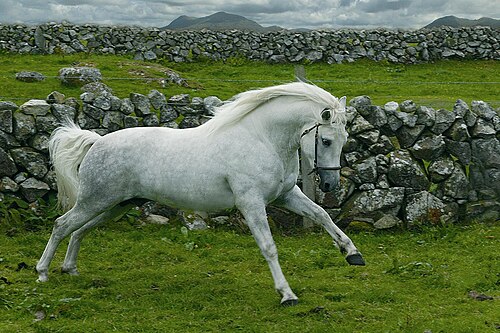
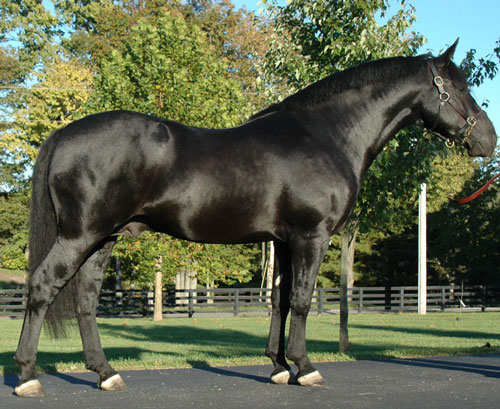
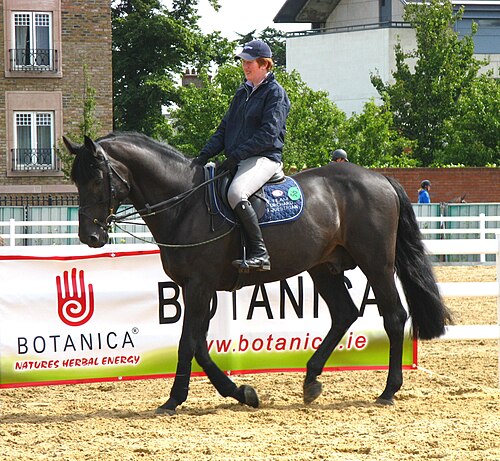
Other cob breeds
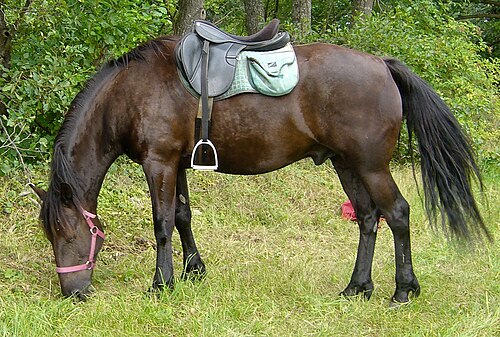
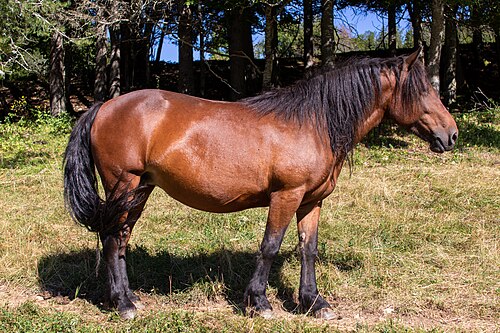
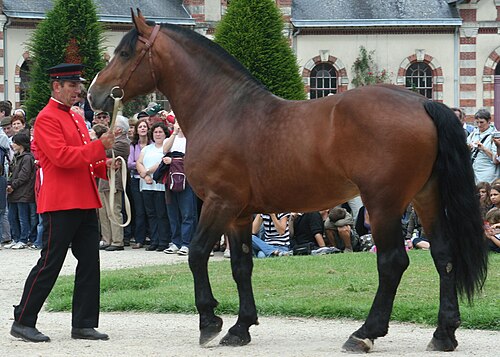
Photo credits8 photographs on this page
- Gypsy Vanner horse — Karakal · CC BY-SA 3.0 · file page
- Connemara pony — Sophiesl · CC BY-SA 3.0 · file page
- Irish Draught — Losmurfs · CC BY 2.5 · file page
- Irish Sport Horse — Culnacreann · CC BY-SA 3.0 · file page
- Kerry Bog Pony — Heather Moreton · CC BY 2.0 · file page
- Auvergne horse — Stephanemartin · CC BY-SA 3.0 · file page
- Barraquand horse — Michael Barbereau WMFr · CC BY-SA 4.0 · file page
- Norman Cob — Larayevire · CC BY-SA 3.0 · file page
Photographs come from Wikimedia Commons under the licence each one names. How Animalso credits photographs.