
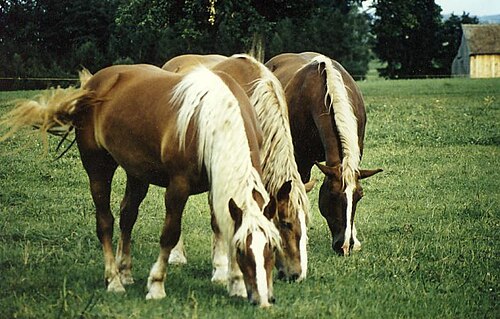
 Photo: Rumo · CC BY-SA 2.0
horse breed · 671 on Animalso
Oberlander Horse (South German Coldblood)
- Animal
- Horse
- Type
- Draft horse
- Origin
- Germany
- Height
- 1.6 cm
- Weight
- 500 kg
The Oberlander horse is identified here as the South German Coldblood, or Süddeutsches Kaltblut. It is a draft horse from southern Germany, found mainly in Bavaria. Among Germany’s four principal draft horse breeds, it has the largest population and is the only one not listed as endangered by the named conservation groups.
What it is
The Oberlander horse is the South German Coldblood, a draft horse from southern Germany. Its German name is Süddeutsches Kaltblut.
The breed is distributed mainly in Bavaria and belongs to the horse family.
Origin and type
This breed began in Germany and is classified as a draft horse.
It is one of the four principal German draft horse breeds, alongside the Black Forest Horse, Rhenish German Coldblood and Schleswig Coldblood.
What stands out
Of Germany’s four principal draft horse breeds, the South German Coldblood is the most numerous.
Points to weigh
The breed’s identity is closely tied to draft-horse work and to southern Germany, especially Bavaria.
Its recorded measurements are a height of 1.6 and a weight of 500.
Size record
The facts record a height of 1.6 and a weight of 500 for this horse breed.
Who may want another breed
Choose another type if you are looking specifically for a non-draft horse.
Verdict
The Oberlander horse suits readers seeking a German draft breed with a strong connection to Bavaria. Its place among the principal German draught breeds gives it a clear regional identity. The recorded size figures help set a basic scale, while its status among those four German breeds distinguishes it from the others.
What stands out
- Draft breed with roots in southern Germany.
- Mainly associated with Bavaria.
- Most numerous of Germany’s four principal draft breeds.
- Not listed as endangered by the named conservation groups.
Worth knowing
- Its draft-horse role may not suit non-draft goals.
- Its regional identity is centered on southern Germany.
- The breed is mainly distributed in Bavaria.
Suits
- Readers seeking a German draft horse.
- People interested in Bavarian horse breeds.
- Those comparing principal German draft breeds.
Think twice if
- You want a non-draft horse type.
- You are looking outside German or southern German breeds.
In short
The Oberlander horse is a German draft breed for someone drawn to southern German and Bavarian horse heritage. Its profile is straightforward: South German Coldblood by another name, with a recorded height of 1.6 and weight of 500. It also stands out among Germany’s principal draft breeds: it has the largest population and is the only one of the four not listed as endangered by the named organizations. Consider another breed if draft work is not your aim.
Questions
What is the Oberlander horse?
It is the South German Coldblood, also called Süddeutsches Kaltblut, a draft horse breed.
Where did the Oberlander horse originate?
It originated in Germany, specifically southern Germany, and is mainly distributed in Bavaria.
What type of horse is it?
It is a draft horse.
How tall is the Oberlander horse?
Its recorded height is 1.6.
How much does it weigh?
Its recorded weight is 500.
How does it compare with other German draft breeds?
It has the largest population among the four principal German draft breeds.
Is the Oberlander horse endangered?
Among those four principal German draft breeds, it is the only one not listed as endangered by the named conservation organizations.
More horse breeds from Germany
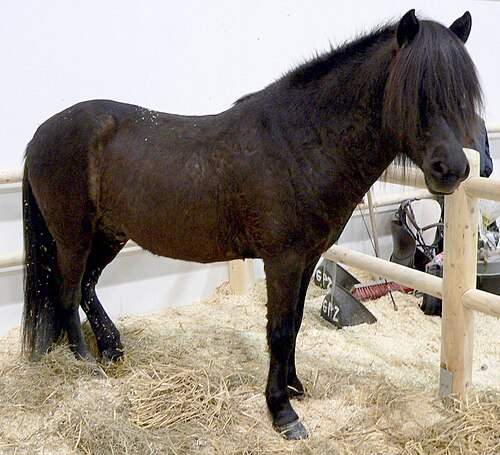
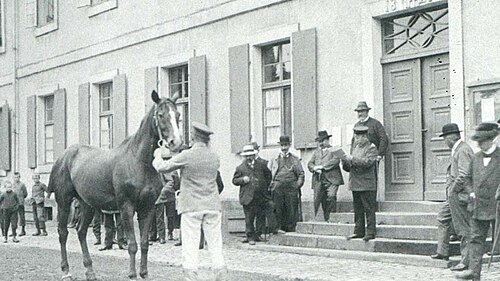 Beberbecker Germany Height 1.63 cm Photo: Wikimedia Commons contributor · Public domain
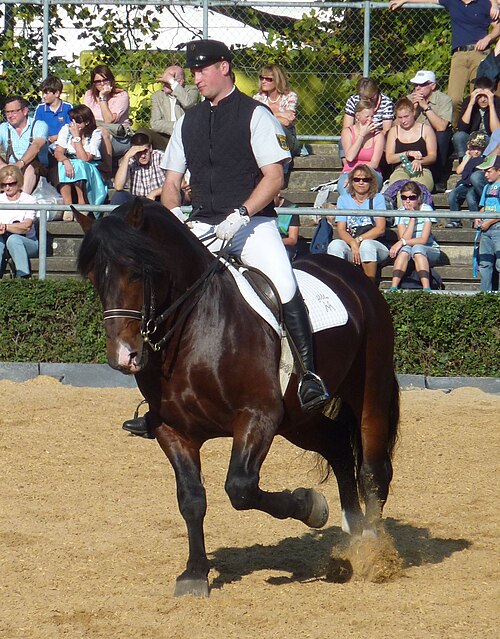
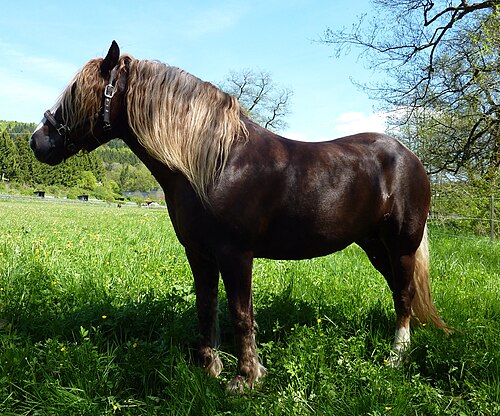 Black Forest Horse Germany Height 1.53 cmWeight 610 kg Photo: Xocolatl · Public domain
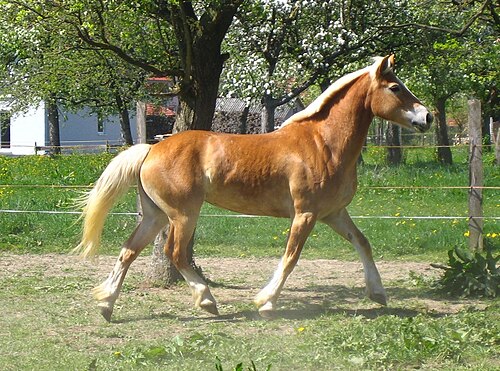
Other draft horse breeds
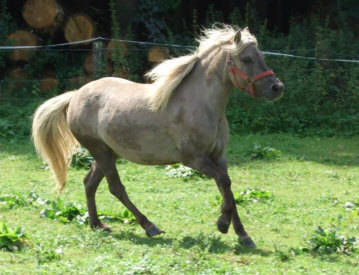 German Classic Pony Germany Height 1.12 cm Photo: Freia Schultz-Friese · Public domain
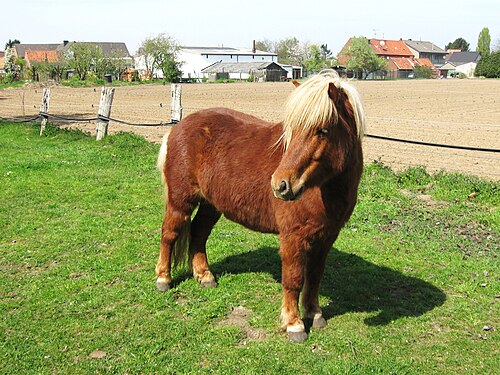
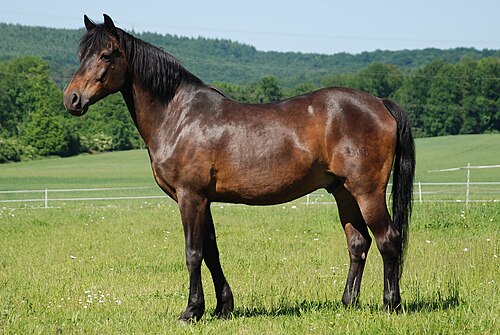
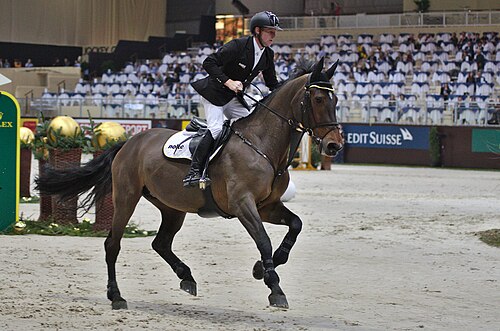
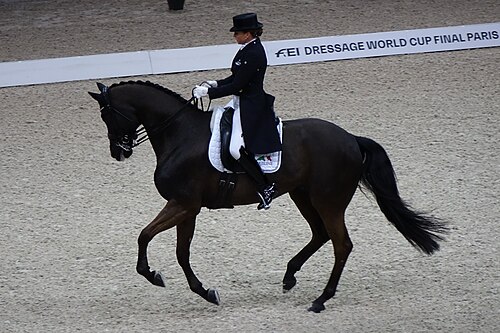 German Warmblood Germany Photo: Eponimm · CC BY-SA 4.0
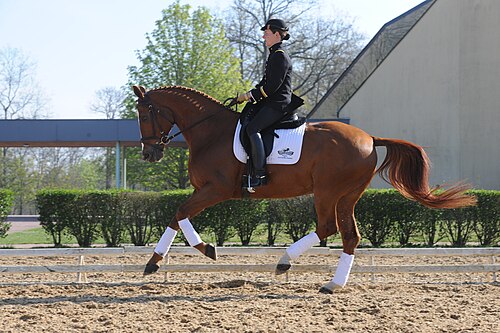
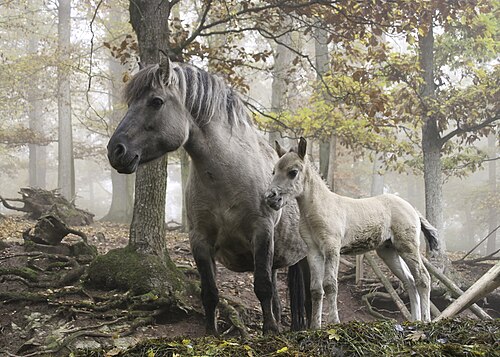
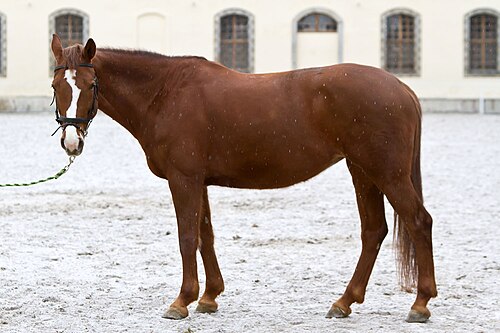
Photo credits17 photographs on this page
- Oberlander horse — Rumo · CC BY-SA 2.0 · file page
- Aegidienberger — BS Thurner Hof · CC BY-SA 3.0 · file page
- Altwürttemberger — Xocolatl · CC BY-SA 4.0 · file page
- Bavarian Warmblood — Clément Bucco-Lechat · CC BY-SA 3.0 · file page
- Beberbecker — Wikimedia Commons contributor · Public domain · file page
- Black Forest Horse — Xocolatl · Public domain · file page
- Brandenburger — Florence.Skowron · CC BY-SA 4.0 · file page
- Dülmener — Dietmar Rabich · CC BY-SA 4.0 · file page
- Edelbluthaflinger — Haflingermaus · CC BY-SA 3.0 · file page
- German Classic Pony — Freia Schultz-Friese · Public domain · file page
- German Part-bred Shetland Pony — Shetta · CC BY-SA 3.0 · file page
- German Riding Pony — Sara Landvogt · CC BY-SA 3.0 · file page
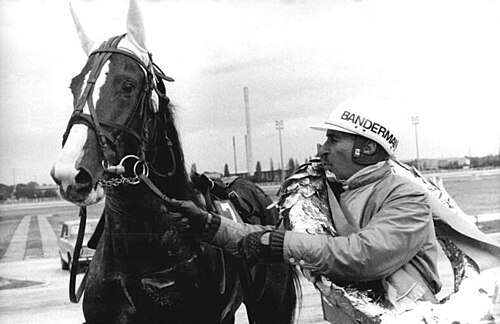
- German Trotter — Hartmut Reiche · CC BY-SA 3.0 de · file page
- German Warmblood — Eponimm · CC BY-SA 4.0 · file page
- Hanoverian horse — Alain Laurioux CDDENE · CC BY-SA 3.0 · file page
- Heck horse — Robin Müller · CC BY-SA 2.0 de · file page
- Hessisches Warmblut — Krypt · CC BY-SA 3.0 · file page
Photographs come from Wikimedia Commons under the licence each one names. How Animalso credits photographs.