Recommended Free Tools
A Rottweiler is a powerful working dog with the intelligence, confidence, endurance, and protective instinct to be an exceptional companion in the right home. It can be affectionate and playful with family, but responsible ownership requires early socialization, consistent training, daily activity, supervision, and thoughtful management.
Rottweiler at a glance
| Characteristic | Typical information |
|---|---|
| Breed group | Working Group |
| Adult height | Males: 24–27 inches; females: 22–25 inches |
| Adult weight | Males: approximately 95–135 pounds; females: approximately 80–100 pounds |
| Life expectancy | Approximately 9–10 years |
| Coat | Short-to-medium, dense, coarse black coat with defined rust-to-mahogany markings |
| Temperament | Confident, intelligent, devoted, courageous, protective, and often reserved with strangers |
| Exercise needs | Daily physical activity combined with training or other purposeful mental work |
A Rottweiler is a powerful working dog with the intelligence, confidence, endurance, and protective instinct to be an exceptional companion in the right home. The breed can be affectionate, playful, and deeply devoted to its family, but it is not a low-maintenance dog. An adult Rottweiler is strong enough that jumping, pulling, chasing, guarding, or poor leash behavior can become difficult to manage if training begins too late.
The best owners start socialization and basic training early, provide daily activity, supervise interactions with children and visitors, maintain the dog’s weight and health, and treat the protective instinct as something to manage responsibly—not something to encourage indiscriminately.
What Rottweilers look like
The ideal Rottweiler is robust and muscular without being clumsy or excessively coarse. The breed was developed for demanding physical work, so a sound dog should show substantial bone, strength, agility, endurance, and efficient movement. Males are generally more massive; females should still be strong and substantial while retaining feminine structure.
#1 Best Overall
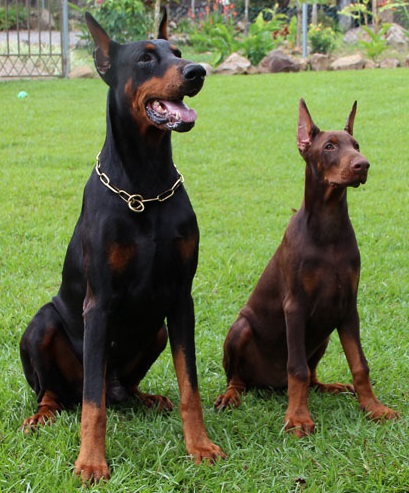
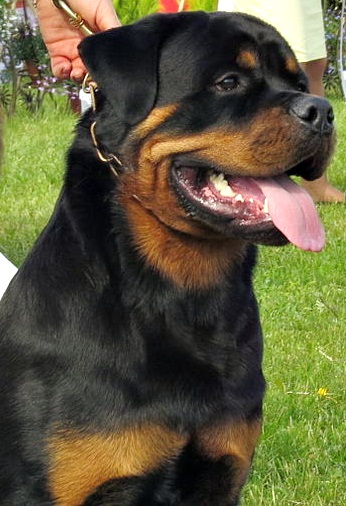
Rottweilers have a black base coat with clearly defined rust-to-mahogany markings. Markings commonly appear on areas such as the muzzle, cheeks, chest, legs, and above the eyes. The coat is straight, dense, coarse, and flat-lying, with an undercoat particularly noticeable around the neck and thighs.
The coat is much easier to maintain than that of a long-coated breed, but “short-haired” does not mean “non-shedding.” Rottweilers shed routinely and may shed more heavily during seasonal periods. Weekly brushing usually keeps loose hair under control and helps you notice skin changes, lumps, parasites, or injuries early.
Rottweiler temperament and personality
With familiar people, a well-raised Rottweiler may be affectionate, playful, calm, and eager to remain close to the household. Many enjoy participating in ordinary family life rather than being left alone in a yard or isolated kennel. Their working background also helps explain why they often enjoy having a job: obedience practice, scent games, tracking, structured walks, or another activity with a clear purpose.
Rottweilers are typically self-assured rather than indiscriminately social. A dog may observe an unfamiliar person or situation before deciding whether to engage. That reserved attitude is different from fear or automatic aggression, but owners must still take it seriously because the breed’s protective instincts and physical strength can magnify mistakes.
It is inaccurate to describe every Rottweiler as aggressive or unsafe. Behavior varies with genetics, early development, socialization, training, handling, health, and environment. It is equally inaccurate to assume that affection for family eliminates the need for management. A stable temperament, responsible breeding, thoughtful exposure to the world, and consistent household rules all matter.
Protective behavior and guarding
A Rottweiler may naturally notice changes around the home, react to unusual sounds, or position itself between family members and something it perceives as unfamiliar. This can be useful in a thoughtfully managed companion, but owners should not deliberately provoke suspicion, reward threatening displays, or treat uncontrolled guarding as proof of superior character.
Teach the dog what to do instead: look to you, move away from the door, settle on a mat, accept a visitor’s presence, and respond to a reliable cue. If the dog is lunging, growling, snapping, or unable to recover around people or animals, seek help from a qualified, reward-based behavior professional. Do not attempt to “test” the dog or correct a serious reaction with physical intimidation.
Herding-related behavior
Some Rottweilers attempt to move people by bumping, nudging, blocking, or following closely. Their enthusiasm can unintentionally knock over a toddler, frail adult, or older person. Jumping, mouthing, chasing, and body-slamming should be addressed while the dog is young, before its size makes those behaviors dangerous.
PC Slower Than It Used to Be?
A free scan shows the junk files, broken settings and background clutter dragging Windows down - then fixes them in one click.Free scan · Windows 10 & 11Crashes, No Sound, or Screen Glitches?
Random freezes, missing sound and display glitches usually trace back to one bad driver. Find and replace yours safely.Free scan · under a minuteRank #2
Training and socialization
Training is essential for this breed, not optional polish. Begin as soon as the puppy comes home, using clear, consistent, fair methods. The goals are communication and self-control—not fear or submission.
A Rottweiler training book can help organize lessons and explain breed-specific handling considerations, but it should supplement—not replace—qualified professional training, veterinary advice, and hands-on assessment when behavior problems arise.
Early training priorities
- Name recognition and attention to the handler
- Recall, first indoors and then in increasingly distracting environments
- Loose-leash walking and calm movement through doors
- Polite greetings without jumping or body-slamming
- “Off,” “drop it” or “out,” and other impulse-control cues
- Settling quietly on a mat or in a designated area
- Cooperative handling of paws, ears, mouth, coat, and collar
- Calm behavior around visitors, household activity, children, and appropriately managed dogs
Socialization means gradually introducing a puppy to people, surfaces, sounds, environments, handling, grooming, and safe dogs in a way that remains positive and manageable. It does not mean forcing the puppy to greet everyone or exposing it to frightening situations until it “gets used to them.” A puppy that is overwhelmed may learn that unfamiliar experiences are dangerous.
Keep sessions short, reward desirable choices, and increase difficulty gradually. Avoid roughhousing and games that reward uncontrolled grabbing, threatening behavior, or collisions with people. The larger and stronger the dog becomes, the more important it is that the whole household follows the same rules.
Exercise and mental stimulation
Rottweilers are athletic working dogs that generally need daily activity. A fenced yard can provide room to move, but it is not a substitute for walks, interaction, training, or purposeful work with the owner.
Suitable activities may include:
- Structured walks and controlled trotting for appropriately conditioned adults
- Swimming, where the dog is comfortable and safely supervised
- Obedience training and trick training
- Tracking and scent-work games
- Herding-related activities with suitable instruction
- Carting or other working-dog activities when properly introduced
- Food puzzles, search games, and short problem-solving sessions
There is no universally correct mileage target. Exercise should reflect age, health, conditioning, weather, body condition, and the individual dog. Watch for excessive fatigue, reluctance to move, limping, overheating, or prolonged recovery, and discuss concerning changes with a veterinarian.
Exercise caution for puppies
Large-breed puppies mature physically more slowly than small dogs. While a puppy needs play and exploration, sustained running, road work, repeated jumping, and other high-impact exercise can place unnecessary stress on developing bones and joints. Safer foundations include self-regulated play on suitable surfaces, brief training sessions, calm exploration, and controlled movement.
Do not use a fixed running schedule simply because a puppy appears energetic. Ask your veterinarian when more demanding exercise is appropriate for your individual dog, particularly if there are concerns about gait, joints, weight, or growth.
The Tool Desk
Outbyte Driver Updater FREEScan for outdated or missing drivers - takes under a minuteDriver Scan →Outbyte PC Repair FREEClear out junk files and repair common Windows errorsFree Scan →Grooming and routine care
Rottweiler grooming is manageable but should be taught early. Brush the coat approximately weekly and more often during heavier shedding. Bathe as needed when the dog is dirty or has an odor; frequent unnecessary bathing may dry or irritate the skin.
Nails need regular trimming or grinding. Long nails can affect traction, posture, and comfort, and they make handling more difficult if the dog has never learned to offer its paws. A dog nail grinder for large dogs is one option for owners who prefer grinding to clipping. Introduce the tool gradually: let the dog hear it from a distance, pair the sound with food, touch the paw without grinding, and work up to brief contact with one nail at a time. Stop before the dog becomes distressed, and use a groomer or veterinary team if you are not confident.
Brush the teeth regularly with a dog-specific toothbrush and toothpaste, and ask your veterinary team about dental examinations. Check ears, paws, skin, and coat during routine handling. Early cooperation makes later nail care, veterinary examinations, and treatment substantially easier.
Feeding and weight management
Rottweilers are naturally substantial, but a muscular appearance should not be confused with excess body fat. Extra weight increases strain on the joints and can reduce stamina. Monitor body condition, waist, abdominal tuck, muscle, and overall mobility rather than relying only on a number printed on a food bag.
What’s actually slowing this PC down?
Pick the symptom - the matching free tool is one click away.
Choose a complete and balanced diet appropriate for the dog’s age and life stage. Puppies should generally receive food formulated for large-breed growth, with controlled energy and appropriate mineral levels. Rapid or excessive growth is not a goal. Follow veterinary guidance if the puppy is unusually fast-growing, underweight, overweight, or showing orthopedic concerns.
Measure meals, count training treats as part of daily calories, and reassess portions as activity and age change. Home-prepared diets should be developed with veterinary nutrition guidance rather than assembled from an unbalanced online recipe. Supplements should not be added automatically; discuss them with your veterinarian first.
Rottweiler health and breeder questions
No health screening can guarantee that a puppy will never become ill. Testing is valuable because it can identify risks and support better breeding decisions, but it is only one part of evaluating a breeder and a litter.
Breed-club and kennel-club recommendations commonly include:
- Hip evaluation
- Elbow evaluation
- Cardiac examination
- Ophthalmologist evaluation
- JLPP DNA testing, referring to juvenile laryngeal paralysis and polyneuropathy
Ask to see the actual results for the sire and dam, and ask which registry, laboratory, or qualified evaluator issued each result. Do not settle for a verbal statement that the parents are “healthy” or “vet checked.” Also ask about family longevity, temperament, structural soundness, veterinary care, puppy socialization, contracts, and what support the breeder provides after the puppy goes home.
A responsible breeder should be willing to discuss weaknesses as well as strengths. Be cautious of anyone who guarantees a disease-free puppy, claims that testing eliminates all risk, or presents extreme protectiveness as the primary selling point.
Rottweilers and children
A well-raised Rottweiler may be affectionate and patient with children, but no large dog should be left unsupervised with young children. The issue is not only aggression: a strong, excited dog can knock over a child accidentally, guard food or toys, chase movement, or play too roughly.
Adults should supervise actively rather than relying on a child to recognize warning signals. Give the dog a quiet retreat, keep high-value food and chews separate when necessary, and teach children not to climb on, hug, disturb, or take objects from the dog. Children should learn to call an adult when the dog moves away, freezes, stiffens, growls, or appears uncomfortable.
Quick wins for a faster PC:
Scan for outdated or missing drivers - takes under a minuteDriver Scan →Clear out junk files and repair common Windows errorsFree Scan →Rottweilers with other pets and visitors
Compatibility with other dogs, cats, and small animals varies by individual. Early, controlled exposure can help, but it is not a guarantee. Introductions should be gradual, supervised, and arranged so each animal can retreat. Do not leave animals together unsupervised until their behavior has been thoroughly established.
Visitor management should be taught before the dog is physically imposing. Use a leash, gate, crate, or separate room when appropriate; reward calm observation; and give visitors clear instructions. Management tools create safety, but they do not replace training and human interaction.
Independent reader supportYour contribution helps us test, update, and keep practical guides available for everyone.Is a Rottweiler a good family dog?
A Rottweiler may be a good fit for an active, involved household that wants a close companion and is prepared to invest in training, exercise, supervision, grooming, and long-term management. The breed can live successfully as part of family life when its physical and behavioral needs are met.
It is less suitable for someone seeking a very low-energy dog, a dog that welcomes every stranger immediately, or a pet that can be left largely independent. It is also a poor match for a household unwilling to establish rules or unable to control a strong adult dog.
Best Value
Before choosing one, consider whether you can:
- Attend to early socialization and consistent training
- Provide daily activity in addition to time in a yard
- Manage visitors, children, other pets, and public outings responsibly
- Afford routine veterinary care and potential care for a large dog
- Maintain healthy body condition and regular grooming
- Continue training after puppy classes end
Where the breed came from
Rottweilers descend from old mastiff-type dogs associated with Roman livestock-droving routes and were later developed in Germany. Their historical work included moving cattle, pulling carts, guarding, police work, and other demanding jobs. That background helps explain the modern breed’s combination of strength, endurance, trainability, confidence, and willingness to work.
History provides context, not a behavioral guarantee. A dog’s ancestry may influence tendencies, but the individual’s genetics, early experiences, training, health, handling, and environment still shape how those tendencies appear.
Bottom line
The Rottweiler is a devoted, intelligent, athletic guardian-type breed—not an inherently aggressive dog and not an effortless one. The strongest match is an owner who values a close relationship, starts training early, socializes thoughtfully, provides meaningful daily activity, and takes the dog’s size and protective instincts seriously. Responsible breeding, health documentation, supervision, and humane management are central to living successfully with this powerful breed.
Frequently Asked Questions
Are Rottweilers aggressive?
Rottweilers are not inherently aggressive. They are confident, protective dogs whose behavior is influenced by genetics, socialization, training, handling, health, and environment. Because they are powerful, irresponsible breeding or poor management can have serious consequences.
Do these 3 things before closing this tab:
1Scan for outdated or missing drivers - takes under a minute2Repair Windows errors before they cause bigger problems3Fix the driver behind crashes, sound loss and screen glitchesAre Rottweilers good with children?
Yes, a Rottweiler may be affectionate and patient with children when properly raised, but every interaction with young children should be actively supervised. Their size and enthusiasm alone can cause accidental injuries, and children must be taught to respect the dog’s space, food, toys, and warning signals.
How much exercise does a Rottweiler need?
They generally need daily physical activity plus mental work such as obedience, scent games, tracking, swimming, or structured walks. A yard alone is not enough. The amount and intensity should be adjusted for age, health, conditioning, weather, and the individual dog.
Can Rottweiler puppies go running?
Large-breed puppies should not be placed on a fixed running or high-impact exercise schedule. Self-regulated play, brief training, exploration, and controlled movement are safer while the skeleton develops. Ask a veterinarian when demanding activities are appropriate for your puppy.
What health tests should Rottweiler breeders provide?
Recommended screening areas include hips, elbows, cardiac health, eyes, and JLPP DNA testing. Ask the breeder for the actual results and the issuing registry, laboratory, or evaluator. Testing reduces risk and informs breeding decisions but cannot guarantee a disease-free puppy.
Free tools Windows power users keep installed
One-click scans. No signup required.
Do Rottweilers shed a lot?
Yes. Their coat is relatively easy to maintain, but Rottweilers shed regularly and may shed more heavily seasonally. Weekly brushing, regular nail and dental care, and early grooming desensitization are important.
The Bottom Line
Bottom line: Rottweilers can be affectionate, playful family companions, but their strength and protective instincts demand early socialization, consistent training, daily activity, healthy weight management, and active supervision. They are best suited to owners prepared to manage a powerful working dog throughout its life.
Quick Recap
Product prices and availability are accurate as of the date/time indicated and are subject to change. Any price and availability information displayed on Amazon at the time of purchase will apply.