Butterfly abundance is declining across almost all major regions of the continental United States. A 2025 analysis summarized by the U.S. Geological Survey combined data from 35 citizen-science programs and found an overall decline during the preceding 20 years; the Xerces Society reports a 22% decrease in U.S. butterfly abundance from 2000 to 2020. These are U.S. estimates, not a worldwide census, and they describe a broad trend rather than every species or location.
The practical response is to protect connected habitat: provide the specific host plants caterpillars need, supply nectar for adults, reduce pesticide exposure, and retain places where butterflies can shelter or overwinter. Farms, roadsides, parks, utility corridors, community spaces, and home gardens can all contribute.
What the evidence shows
The strongest recent figures in this evidence base are national or regional rather than global.
| Measure | What it covers | Result |
|---|---|---|
| U.S. butterfly abundance, 2000–2020 | Estimate reported by the Xerces Society in 2025 | 22% decline |
| Continental U.S. abundance over roughly 20 years | 2025 study summarized by the U.S. Geological Survey; data combined from 35 citizen-science programs | Declining overall abundance across almost all major U.S. regions |
| Western monarch overwintering count | Sites in the western population, annual count | 9,119 in 2024, compared with 233,394 in 2023 |
The western monarch numbers illustrate why one annual count must be interpreted carefully. Weather, migration conditions, detectability, and other factors can produce sharp year-to-year changes. That count concerns western monarchs at overwintering sites; it is not a census of all monarchs or all butterflies and cannot by itself establish a long-term trend for the entire country.
#1 Best Overall
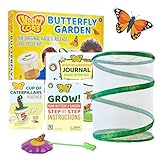
- Explore the Science of Metamorphosis: Bring science to life with a real butterfly metamorphosis experience. Live caterpillars are not included with the kit. Use the included voucher to redeem Painted Lady caterpillars and watch them grow, form chrysalises, and emerge as butterflies. An additional $10.95 redemption fee applies
- Science Kit Kids Can Watch: Give kids a close-up view of one of nature's most fascinating transformations! This hands-on science kit for kids encourages observation, curiosity, and discovery as the butterfly life cycle unfolds
- STEM Learning Through Nature: Explore the butterfly life cycle, growth, development, and metamorphosis through an interactive 3-week project kids can experience at home or in the classroom. A fun way to turn science concepts into hands-on learning kids can see happening in real time
- Raise, Observe, and Release: Includes a reusable butterfly habitat, feeding supplies, instructions, STEM Activity Journal and a voucher for live Painted Lady caterpillars. Additional fee applies for voucher redemption
- Educational Gift for Curious Kids: Make learning an adventure with a memorable science gift for kids who love animals, insects, nature, and discovering how things work. Great for birthdays, holidays, classrooms, homeschooling, or summer learning
Why butterflies are declining
No single cause explains every decline. Pressures differ by species and place, and they often reinforce one another.
Habitat conversion and degradation
Development, intensive land use, vegetation removal, and fragmented landscapes can eliminate or degrade breeding, migratory, and overwintering habitat. Losing host plants removes egg-laying and caterpillar food resources; losing flowering plants reduces nectar; isolated patches make it harder for populations to move and recover.
Rank #2

- Create unforgettable memories and embark on a captivating 3-week project with 10 baby caterpillars, where you'll witness the day-to-day metamorphosis of your very own Painted Lady butterflies!
- Included: 2 cups of caterpillars along with their food, a reusable 12-inch-tall mesh habitat, 2 Chrys-A-Lid holders, a Flower-shaped Feeder, sugar packets for nectar, STEM Activity Journal, Instruction Guide, and dropper.
- Dive into STEM learning with our engaging butterfly journal filled with exciting science, math, and writing activities. Perfect for your budding entomologist to explore the world of butterflies in an interactive way!
- Insect Lore has been trusted by families and educators for over 50 years. Caterpillars are raised on their California farm. Teach an appreciation for nature using live caterpillars from the inventors of the Butterfly Garden!
Pesticide exposure
Insecticides can affect butterflies directly and can reduce the plants and other resources they depend on. Exposure may occur in remaining habitat as well as in areas being managed for crops, roadsides, gardens, or public spaces. The U.S. Fish and Wildlife Service identifies insecticide exposure as a primary pressure on the two North American migratory monarch populations.
Climate change and severe weather
Changing temperatures and precipitation can shift the timing and location of plants and butterfly life stages. Droughts, heat, floods, storms, and wildfire can damage habitat or interrupt migration. Climate effects interact with habitat loss: a population with fewer suitable places to move or shelter has less flexibility when conditions change.
Do these 3 things before closing this tab:
1Scan for outdated or missing drivers - takes under a minute2Clear out junk files and repair common Windows errors3Fix the driver behind crashes, sound loss and screen glitchesRank #3

- CREATE A REAL BUTTERFLY HABITAT - Build the perfect butterfly habitat in the included mesh enclosure with see-through lid! Kids can decorate the feeder with the included stickers, and get ready to watch one of nature's most exciting metamorphoses!
- INCLUDES VOUCHER FOR 5 CATERPILLARS – With this kit you’ll receive a voucher for 5 baby caterpillars (S&H applies, caterpillars can be sent to mainland USA ONLY).
- WATCH CATERPILLARS GROW INTO BEAUTIFUL BUTTERFLIES - See nature in action as the caterpillars grow and eventually encase themselves into their chrysalises. They’ll develop inside until finally emerging as beautiful Painted Lady butterflies!
- LEARN ABOUT BUTTERFLIES - With National Geographic, learning is always part of the fun! The full-color Learning Guide in this kit teaches kids all about the butterfly life cycle, with a poster for documenting their own caterpillars' progress!
- HIGH-QUALITY EDUCATIONAL TOYS - We're proud to make the highest quality hands-on science toys, and all our products are backed by exceptional service. If your experience is less than stellar, let us know and we'll make things right!
Disease and invasive plants
Broader butterfly conservation overviews also identify disease and invasive plants as threats. Invasive vegetation can displace the native host and nectar plants that local butterflies evolved to use, while disease can add stress to already small or concentrated populations. Their importance is not identical for every species.
What butterfly declines can mean
Butterflies require functioning habitat throughout their life cycle, so a decline signals that parts of the landscape are becoming less suitable for at least some species. They are also part of ecological communities, but the available evidence here does not support a single numerical estimate for how butterfly losses change pollination, food webs, or human well-being. Different butterflies have different host plants, ranges, seasons, and ecological roles; effects therefore vary by species and place.
Rank #4

- GROW BUTTERFLIES & LEARN WITH HANDS-ON ACTIVITIES - Build the perfect butterfly habitat in the included mesh enclosure with see-through lid! Kids also get 3 glow-in-the-dark butterfly figures, a butterfly molding activity and more!
- AWARD-WINNING PRODUCTS - Blue Marble, winner of the Toy Association's prestigious Toy of the Year Award, proudly develops products that foster education, imagination, and creativity, with a U.S. support team to ensure a stellar experience!
What butterflies need
Effective habitat provides more than flowers. As Scott Black, executive director of the Xerces Society and a study co-author, put it: “Butterflies need host plants on which to lay eggs, wildflowers on which to feed, a refuge from pesticides, and sites to overwinter.”
- Host plants: plants on which adults lay eggs and caterpillars feed. Many caterpillars can use only particular plant species or groups.
- Nectar plants: flowers that provide adult butterflies with energy, ideally across the seasons when local species are active.
- Pesticide refuge: areas managed to avoid unnecessary insecticide exposure and preserve insects’ food plants.
- Overwintering and shelter: leaf litter, stems, vegetation, trees, or other suitable sites, depending on the species and climate.
- Connectivity: habitat patches linked through a landscape so butterflies can move between breeding, feeding, and seasonal sites.
How to help in a garden or community space
Choose plants for local species
Start with butterflies documented in your region and provide their known host plants as well as nectar plants. Select species suited to local soil, moisture, sunlight, and climate. If buying seed or plants, check the exact species, provenance, and regional suitability; a packet labeled “wildflower” or “pollinator” is not automatically native or appropriate everywhere.
Free tools Windows power users keep installed
One-click scans. No signup required.
Best Value

- Create unforgettable memories with this Insect Lore Butterfly Garden Kit with Live Caterpillars. Embark on a captivating 3-week project where you'll witness the day-to-day metamorphosis of your very own Painted Lady butterflies!
- Included: 5 baby caterpillars along with their food, a reusable 12-inch-tall mesh habitat, Chrys-a-lid Holding Log, Activity Journal, Flower-shaped Butterfly Feeder, sugar packets for butterfly nectar, Caterpillar Care Guide, and a feeding dropper.
- Insect Lore has been trusted by families and educators for over 50 years. Their caterpillars are proudly raised in the USA on their California farm. Teach an appreciation for nature using live caterpillars from the original source.
- The durable mesh habitat is reusable, and designed for effortless use, collapsing flat for convenient storage and reassembly. This live caterpillar kit provides a fun and engaging way to teach your little ones about nature using high quality materials and clear instructions!
- Live insect shipping notice - Please delay ordering if temperatures in your area are below 50°F or above 90°F. Live caterpillars can only be shipped to the continental U.S
Keep habitat usable through the year
Plan for overlapping bloom periods, leave some stems and leaf litter where they can provide shelter, and avoid tidying every area at the end of the season. Follow local guidance for managing vegetation around paths and buildings while retaining safe habitat elsewhere.
Reduce avoidable pesticide exposure
Use prevention, physical removal, targeted controls, and integrated pest-management practices before considering an insecticide. Read and follow the product label, avoid spraying open flowers or active butterflies, and prevent drift into neighboring habitat. A household garden action cannot reverse national trends by itself, but reducing local exposure protects the habitat you create.
Make small spaces count
Balconies, schoolyards, apartment courtyards, and community gardens can supply resources when plants are correctly chosen and maintained. Several connected patches generally offer more value than a single isolated planting, so coordinate with neighbors, parks, and local land managers where possible.
Actions on farms, roadsides, and public land
- Retain native host and nectar plants in field margins, hedgerows, drainage areas, and uncultivated corners where safety and production requirements allow.
- Schedule mowing or clearing to avoid destroying occupied habitat and peak flowering, using local species and seasonal guidance.
- Reduce broad-spectrum pesticide use and protect untreated refuge areas from drift.
- Restore native vegetation in roadsides, utility corridors, parks, and natural areas, while controlling invasive plants with methods that minimize harm to butterflies and caterpillars.
- Link habitat parcels across property boundaries so breeding and movement are possible at a landscape scale.
Support monitoring and conservation
Join a reputable local butterfly survey or citizen-science program, submit sightings using its identification and verification rules, and support conservation groups working on habitat and pesticide reduction. Monitoring helps reveal which species use a site, how timing changes, and where restoration is most useful. Keep records of plantings and observations so management can improve over time.
What’s actually slowing this PC down?
Pick the symptom - the matching free tool is one click away.
How to judge a butterfly-friendly action
| Question | Why it matters |
|---|---|
| Does it provide host plants, nectar, overwintering cover, or several of these? | Adult nectar alone cannot replace breeding or seasonal habitat. |
| Are the plants and timing appropriate for local species and climate? | Suitability depends on geography, habitat, and the butterfly’s life cycle. |
| Does it reduce pesticide exposure? | Protected plants can still be harmful habitat if contaminated. |
| Does it connect with other habitat? | Connected patches offer movement routes and more continuous resources. |
How to interpret alarming numbers without overgeneralizing
The 22% U.S. decline from 2000 to 2020 and the 2024 western monarch count are important but answer different questions. The first is a broad abundance estimate over two decades; the second is one annual count of one regional population at overwintering sites. Neither is a worldwide total, and neither identifies one universal cause. Species-specific trends, local habitat surveys, and longer time series are needed to explain what is happening in a particular place.
Quick Recap
Product prices and availability are accurate as of the date/time indicated and are subject to change. Any price and availability information displayed on Amazon at the time of purchase will apply.