Recommended Free Tools
Yes. Algae remover can kill fish through direct chemical toxicity or indirectly when a large amount of algae dies and decomposes, using up dissolved oxygen. Risk depends on the product and dose, the water’s chemistry, the size of the algae growth and the fish’s existing conditions—not simply whether a product is called “fish-safe.”
How algae remover can harm or kill fish
Direct toxicity from the treatment
Copper products can be toxic to fish and aquatic invertebrates. The U.S. Environmental Protection Agency’s 2025 label for No More Algae lists copper sulfate pentahydrate at 0.05% and diuron at 0.67%. It warns, “Copper, one of the active ingredients of this product, is toxic to fish and aquatic invertebrates.” The label says the product is not expected to be toxic to fish when used at the recommended rate; that qualification applies to this formulation and its labeled use, not to every algae remover.
Too much copper, or copper in unsuitable water chemistry, can narrow the margin of safety. The University of Florida IFAS, Merck Veterinary Manual and Texas A&M identify factors including alkalinity, pH, hardness, temperature, water volume and species sensitivity. Soft or acidic water is especially risky. The National Pesticide Information Center (NPIC) notes that trout, koi and juvenile fish are particularly sensitive to copper.
Oxygen loss after algae dies
A treatment can also harm fish without directly poisoning them: a heavy algae growth may die rapidly, then bacteria consume oxygen as they decompose it. EPA copper-sulfate labeling warns that treating after heavy growth has developed can lead to rapid decomposition, low oxygen and fish distress or death. EPA guidance on harmful algal blooms also identifies oxygen depletion from decay as a fish-kill mechanism.
Crashes, No Sound, or Screen Glitches?
Random freezes, missing sound and display glitches usually trace back to one bad driver. Find and replace yours safely.Free scan · under a minutePC Slower Than It Used to Be?
A free scan shows the junk files, broken settings and background clutter dragging Windows down - then fixes them in one click.Free scan · Windows 10 & 11#1 Best Overall
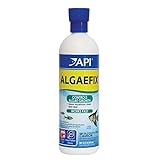
- Contains one (1) API ALGAEFIX Algae Control 16-Ounce Bottle
- Controls algae growth and keeps aquarium glass, ornaments and plants clean
- Fast-acting and effective on "green water" algae blooms, string or hair algae
- Will not harm fish and plants when used as directed
- Dose every three days until algae is under control then dose weekly
Concentrated patches and already-stressed fish
UF/IFAS warns that crystals or powder can sink and create concentrated areas if not dispersed as directed. Warm water, cloudy weather, heavy stocking and low oxygen can further reduce a pond’s safety margin, according to Merck Veterinary Manual. NPIC reports fish kills after copper-sulfate algae applications and identifies oxygen depletion and decaying algae among the causes.
Are aquariums and ponds at the same risk?
| Setting | Main concerns | Safety approach |
|---|---|---|
| Aquarium | Incorrect dose or an unsuitable formulation can expose fish and invertebrates to harmful chemicals. Copper is toxic to aquatic invertebrates as well as fish. | Use only a product whose current label explicitly covers the aquarium type and its inhabitants. Measure the actual water volume, dose exactly as directed, and maintain circulation and surface agitation. |
| Pond | Copper toxicity and oxygen loss from a large amount of dying algae can occur together. Heavy blooms, low oxygen, high temperature or heavy stocking make treatment more hazardous; Merck Veterinary Manual identifies these conditions as concerns. | Check conditions before treatment, keep aeration running and follow the product label’s pond-volume and application directions. Avoid treating a heavy bloom with a full-dose application. |
What a labeled aquarium dose does—and doesn’t—tell you
The EPA record for No More Algae gives a dose of one tablet per 10 gallons (40 liters). Its label’s recommended-rate qualification is not a blanket guarantee for other products, tank inhabitants or water conditions. Do not infer that another brand, active ingredient or formulation is safe at the same dose. Follow the current label that applies to the product in your location.
Rank #2

- POWERFUL ALGAE REMOVER FOR FISH TANK: MICROBE-LIFT Algaway 5.4 delivers fast-acting aquarium algae control; It eliminates green water, hair algae, and string algae to improve water clarity and reduce odor; EPA Registered for safety and reliability
- SAFE FOR FISH & PLANTS: This fish tank algae cleaner is safe for all freshwater and saltwater aquarium fish and ornamental plants; It enhances oxygen levels for improved fish behavior and reduced stress and helps maintain a balanced aquatic ecosystem
- FOR FRESHWATER AQUARIUMS & PONDS: This aquarium water treatment is an effective algae remover for aquariums, glass tanks, ornamental ponds, and fountains without outflow; Not safe for snails, shrimp, clams, or crustaceans in freshwater
- FOR SALTWATER AQUARIUMS: The algae eliminator for fish tank is safe to use in marine and reef aquariums; It will not harm corals, coralline algae, snails, shrimp, anemones, clams, or other invertebrates; Will not affect the function of protein skimmers
- EASY, REPEATABLE APPLICATION: For aquariums and small ponds with heavy algae growth, clean excess algae off sides and fish tank decor before use; Use near filter outflow; Repeat every 3 days until algae is controlled and then repeat weekly for maintenance
Be especially cautious if the aquarium contains shrimp, snails or other invertebrates: the cited EPA label specifically warns that copper is toxic to aquatic invertebrates. Don’t combine algae treatments unless the label permits it.
How to reduce risk before treating a pond
- Identify the setting and check the label. Confirm that the product is labeled for your aquarium, containerized pond or open pond, as applicable. Read its active ingredients, dose, species restrictions and environmental hazards.
- Measure before calculating. Use the actual water volume, not a rough estimate. If considering copper for a pond, measure or obtain alkalinity, pH and dissolved oxygen information.
- Assess the algae load and conditions. Don’t apply a full-dose treatment to a heavy bloom or an oxygen-stressed pond. Use staged treatment only when the label and local guidance allow it.
- Plan aeration first. Start or service pond aeration before treatment and have emergency aeration available. Keep aquarium circulation and surface agitation operating.
- Disperse and remove material appropriately. Apply formulated products evenly as directed; UF/IFAS warns that settled crystals or powder can create concentrated spots. Remove dead algae mechanically where practical to reduce the material left to decompose.
- Monitor after application. Watch fish behavior and oxygen conditions. If fish gasp at the surface, stop treatment and use appropriate emergency aeration or water-management measures.
- Prevent prohibited discharge. Keep treated water out of lakes, streams and other outflowing waters when the label prohibits discharge.
Why pond treatments may be staged
UF/IFAS cautions that “there is a thin line that separates effective treatment levels from overdoses, which can kill fish.” Its guidance recommends smaller doses over time or emergency aeration in relevant situations. An EPA copper-sulfate label from 1985 recommended treating one-third to one-half of the area and waiting 10–14 days between treatments. That interval is historical label guidance, not a universal schedule: use the current product label and local guidance rather than applying it automatically to a different product or pond.
Rank #3
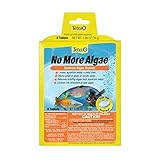
- CONTROLS ALGAE GROWTH: Removes existing algae from aquarium water and controls the formation of new algae in your tank.
- CLEAR WATER: Leaves aquarium water clean and crystal clear.
- USE IN FRESHWATER TANKS: Designed for both glass and acrylic aquariums.
- FIZZ TAB SYSTEM: Fish care made easy.
- USAGE: For regular maintenance, use once a month or as algae growth starts to appear.
Staging can limit how much algae dies at once, but it does not make an unsuitable product or water condition safe. If the label does not allow staged treatment, don’t improvise a schedule.
Independent reader supportYour contribution helps us test, update, and keep practical guides available for everyone.What to do if fish show distress
- Stop any further application.
- For a pond, start emergency aeration if available; maintain aquarium circulation and surface agitation.
- Check oxygen conditions and the product label’s directions for treated water. Use water-management measures only when appropriate for the product and setting.
- Keep treated water contained if the label prohibits discharge to natural waters or outflowing waters.
Gasping at the surface is a warning sign, not a diagnosis: both treatment-related toxicity and low oxygen can be involved. The product, its dose and the water conditions matter when deciding on next steps.
Quick Recap
Rank #4

- Contains one (1) API ALGAEFIX Algae Control 4-Ounce Bottle
- Controls algae growth and keeps aquarium glass, ornaments and plants clean
- Fast-acting and effective on "green water" algae blooms, string or hair algae
- Will not harm fish and plants when used as directed
- Dose every three days until algae is under control then dose weekly
Product prices and availability are accurate as of the date/time indicated and are subject to change. Any price and availability information displayed on Amazon at the time of purchase will apply.