Usually, no. A phone can look up a dog’s microchip number after a scanner has read it, but an ordinary iPhone or Android phone generally cannot detect the conventional implanted chip by itself. You’ll need a compatible pet microchip scanner, commonly available at a veterinarian, shelter, rescue, or animal-control agency.
What a dog microchip does—and doesn’t do
A conventional dog microchip is a tiny, rice-grain-sized, glass-encased, passive RFID transponder. It has no battery: a compatible scanner supplies radio energy, and the chip returns a unique identification number. The number identifies the chip; it does not contain the owner’s name, phone number, medical records, or the dog’s live location. AAHA explains what information a microchip stores, and its microchipping FAQs clarify that a microchip is not GPS.
That implanted chip is different from an NFC or QR-code tag attached to a collar, a Bluetooth tracker, or a GPS collar. Those devices may work with a phone in particular ways, but they are not interchangeable with a veterinary microchip.
Why phone NFC usually cannot read the implanted chip
NFC is a type of RFID, so it is too broad to say that phones have no RFID capability. The issue is compatibility: a phone’s built-in NFC hardware is not a universal reader for veterinary microchips. Pet chips used in the United States include different frequencies and formats. For example, PetLink’s microchip guide lists examples at 125 kHz and 134.2 kHz, including 15-digit ISO chips and older 9- or 10-digit formats. A dedicated animal-chip scanner is designed to work with these systems.
Do these 3 things before closing this tab:
1Clear out junk files and repair common Windows errors2Scan for outdated or missing drivers - takes under a minute3Repair Windows errors before they cause bigger problems#1 Best Overall

- 【Support Multipe Microchip Formats】Universal microchip scanner supports EMID / ISO11784 / ISO11785 / FDX-B(15 digit microchips). Please note, the microchip reader CAN NOT read Avid chips, and the 9-digit ID can not be recognized. Only the 15-digit international standard protocol can be recognized. Please check the format of the microchip before purchasing.
- 【Easy To Operate & Fast Scan】Our pet microchip scanner is easy to operate, one button to read. Our microchip scanner adopt advanced RFID technology, responsive and fast scanning, it can better improve the efficiency of work. Please note, if no label is scanned, the device will automatically turn off after 180 seconds, or you can press and hold the button for 3 seconds to turn off the device.
- 【 Large Data Storage】Our pet microchip scanner can save 128 animal chips. It can be transferred to a computer or mobile phone via a USB cable connection. Our pet chip scanner also features a data-erase function, refer to the user manual for instructions.
- 【Rechargeable Battery】Our pet chip scanner supports USB charging, eliminating the need for frequent battery replacements, it can last for more than one year after being fully charged.
- 【Easy To Carry】Our scanners are lightweight and compact, making them easy to carry and ideal for both indoor and outdoor use. The package includes one scanner, a USB cable, and a user manual.
As a result, holding a phone over a dog’s shoulder blades normally won’t reveal the chip number. That doesn’t mean a phone can never interact with any animal-related tag; a separately attached NFC tag or QR code may be readable if the phone and tag support it. It does not establish that the phone can read the implanted transponder.
What a phone app can—and cannot—do
Look up a number already read by a scanner
The AAHA Universal Pet Microchip Lookup Tool and registry search pages can help identify where to follow up once you have the number. They do not use the phone to detect the chip.
Rank #2

- [Support Multiple Protocols] - Support ISO11784(85)/FDX-B/EMID 10/15 digit microchips.Microchips in other formats cannot be read. Please confirm whether your microchip is compatible before purchasing.(Does not read AVID microchip).
- [Improved Recognition Performance] - Faster recognition speed and larger recognition range than older scanners. Upgraded the sensitivity of the scanner. It can better improve the efficiency of work.
- [Battery Performance Improvement] - Use high-capacity built-in lithium battery. With more battery capacity and faster charging speed. Greatly improved recognition range and sensitivity. Improved work efficiency.
- [Built-in Hardware Has Veen Fully Upgraded] - It uses the latest technology scanning chip compared to older scanners. Now the energy consumption is greatly reduced and the performance is greatly improved.
- [Data storage] - Storage capacity is equal to 128 sets of data.USB upload to computer.
Photograph or enter a scanner’s displayed number
PetLink says its PetLink Pro app can accept a number manually or by voice, or capture the number shown on a dedicated scanner’s LCD. The app is intended for animal professionals in the United States and Canada, including shelter and animal-control personnel. It is not a phone-only microchip scanner. The app is also listed on the Apple App Store and Google Play.
Check claims that an app scans the implanted chip
A camera can photograph a printed certificate, barcode, label, or scanner display; that is different from reading a transponder under a dog’s skin. Before relying on an app that claims to scan the implanted chip, check which chip frequency and formats it supports, whether it requires a separate reader, and what scanner hardware the maker identifies. An app cannot supply radio hardware a phone does not have.
Rank #3

- ❤ Supports Multiple Protocols – Compatible with ISO 11784/11785, FDX-B microchips for seamless reading with one-button operation. Does NOT support FDX-A or AVID chips. The 9-digit ID CANNOT be recognized. Only the 15-digit international standard protocol can be recognized.
- ❤ Efficient Data Management – Built-in storage holds up to 128 tags, eliminating redundant scanning and improving efficiency. The USB transfer feature allows seamless data upload to computers or mobile devices for backup, analysis, and sharing, making it ideal for pet owners, farms, and research institutions.
- ❤ Portable & Durable Design – Lightweight and easy to carry, suitable for both indoor and outdoor use. The robust casing provides strong impact resistance, ensuring stable performance in farms, field research, and rescue operations, even in harsh conditions.
- ❤ Built-in Rechargeable Battery – Eliminates the need for frequent battery replacements, with USB charging for convenience. Includes an auto-shutdown function after 180 seconds of inactivity or manual shutdown with a 3-second press.
- ❤ Support turn on/off the pet reader prompt sound. The pet reader is equipped with a speaker, when you scan successfully, the pet reader will "di" to indicate that the scan is successful. If your pet is afraid of the sound of the card reader, please check the instructions in the package and follow the instructions to turn off the sound.
How to get a dog’s chip number
- Ask for a scan. Take the dog to a veterinarian, shelter, rescue, or animal-control agency and ask staff to scan for a microchip. For a planned check of your own dog, you can ask at a routine veterinary visit. Availability and any fee depend on the organization and location; don’t assume every scan is free.
- Request the full number. Ask to see the scanner display or have the number written down. Common formats are 9-digit numeric, 10-digit alphanumeric, and 15-digit numeric. The AAHA lookup tool explains the formats it accepts.
- Enter the number in a lookup tool. Use the AAHA lookup tool or the relevant registry’s search page. Follow the form’s instructions; PetLink, for example, says to enter the full 9-, 10-, or 15-digit number without spaces or punctuation in its microchip search. Don’t substitute a rabies tag, collar-tag, or account number, and check easily confused characters such as zero and the letter O.
- Contact the registry listed. AAHA’s tool identifies participating registries associated with the number; it does not disclose an owner’s private contact information. Contact each listed registry and follow its process. If the dog is lost, ask the shelter or animal-control agency to submit a found-pet report and follow local lost-animal procedures.
A 15-digit number is the international standard under ISO 11784 and ISO 11785, but the United States has multiple chip technologies, frequencies, scanners, and registries. AAHA’s lookup tool primarily serves chips distributed in the United States and searches participating registries, so a result is not guaranteed for every chip or registry.
What if the scan finds no chip?
A negative scan is not conclusive proof that a dog has no microchip. Possible reasons include:
Rank #4

- Stores lost pets chip numbers
- Alerts the user that a pet is missing
- Rechargeable by plugging into a pc
- Reads most microchips in pets, dogs, cats
- The dog is not chipped, or the chip has migrated from its expected location.
- The scanner is incompatible with the chip’s frequency or format, or the scan did not cover the chip’s location.
- The chip or scanner has malfunctioned, or the displayed number was misread.
- A chip was detected but is not registered, or its registry is not included in the lookup tool.
AAHA notes that different frequencies exist and that no scanner is 100% effective at detecting every microchip. If no number appears, ask for a second scan with a different or universal scanner and have the operator scan the whole dog rather than only the area between the shoulder blades. If a number does appear, check the transcription and try the lookup again.
A successful scan also does not guarantee a reunion. The chip may never have been registered, the contact details may be outdated, or a registry may be unavailable. AAHA’s lookup guidance says some results may identify a manufacturer or distributor rather than a pet-specific registration. For chips associated with Save This Life, which ceased operations, AAHA advises owners to re-register the existing chip with another registry rather than automatically replacing it.
What’s actually slowing this PC down?
Pick the symptom - the matching free tool is one click away.
Best Value
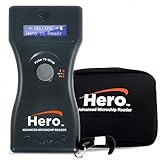
- UNIVERSAL MICROCHIP COMPATIBILITY: Reads all ISO microchips plus 9-, 10-, and 15-digit chips from any brand. Ideal for scanning horses, livestock, pets, and other animals in clinics, shelters, barns, or field settings.
- BLUETOOTH CONNECTIVITY FOR FAST, ACCURATE DATA TRANSFER: Easily sends scanned chip numbers to Bluetooth-enabled devices within a 25-foot range for quick syncing to computers, tablets, or shelter management software. Reduces manual data entry errors and speeds up check-in and intake processes—perfect for busy clinics or multi-pet facilities.
- BACKLIT LCD SCREEN WITH 15-MINUTE DISPLAY HOLD: Features a bright blue backlit LCD screen with bold white text displaying the full chip number on one line for easy reading—day or night. The 15-minute display hold gives ample time to record the scan without rushing, ideal for high-volume or field settings.
- RECHARGEABLE BATTERY WITH AUTO POWER-SAVE MODE: Includes a rechargeable 9V battery and charging unit for long-lasting performance. The auto shut-off function conserves power between uses—great for mobile vets, rescue teams, or animal control officers who need dependable scanning during long sessions.
- LIGHTWEIGHT, DURABLE DESIGN WITH PROTECTIVE CASE: This 7-inch handheld microchip scanner is compact, ergonomic, and easy to carry. Includes a protective carrying case to guard the reader during storage and transport. Built for dependable use in clinics, shelters, barns, or field settings.
If you found a dog
- Check for a collar and visible identification tag, and keep the dog safely contained and separated from resident pets.
- Contact a local shelter, veterinarian, or animal-control agency to arrange a scan. Ask staff to contact any relevant registry after they read the number.
- Use local lost-and-found channels while following applicable local rules. Don’t publish the full chip number publicly.
- Let a registry, shelter, veterinarian, or animal-control agency manage contact with a possible owner. A chip number alone does not prove that someone claiming the dog is the registered owner.
Can you scan your own dog at home?
Yes, with a dedicated handheld pet microchip scanner—not just an app. For a one-time check, asking a veterinarian or shelter is usually simpler. A home scanner may make sense for people who regularly handle multiple pets or found animals, but the number it displays still requires a registry lookup.
When comparing scanners, check for:
- Support for the chip frequencies and formats common in your region, including ISO 11784/11785 compatibility where relevant.
- Multi-frequency or “universal” capability, a clear display, and reliable number retention.
- Battery type, number-transfer options, manufacturer support, and warranty.
- Whether the device is intended for occasional home use or professional shelter and veterinary work.
AAHA recommends true universal scanners for veterinary professionals, shelters, and humane organizations while noting that detection limitations remain. A scanner reads an identifier; it does not provide access to private owner details. PetLink says owners can buy a scanner, but its scanner page does not establish a current price, so check the live listing before purchasing.
Microchip, collar tag, and GPS tracker are different tools
| Feature | Implanted microchip | GPS collar | Collar ID tag |
|---|---|---|---|
| Identifies the dog | Yes, through a unique number linked to registry records | May identify a device or account, depending on the service | Can display contact details directly |
| Shows current location | No | Yes, subject to its battery, coverage, and service | No |
| Needs a battery in or on the dog | No | Usually yes | No |
| Works if a collar is removed | Yes, if the chip can be scanned | No | No |
| How it is read | Compatible nearby pet-chip scanner | Tracker app or service | By looking at the tag |
| Main purpose | Persistent identification | Location tracking | Quick visible contact information |
A GPS tracker is a separate wearable product, not a way to scan or replace a microchip. A collar tag provides immediately visible contact details, while the implanted chip can still help identify a dog if the collar is lost.
Keep the chip useful after the scan
If you own the dog, confirm that the number is registered and that the registry has current contact details. Ask your veterinarian to check detectability periodically, and keep a collar with an up-to-date ID tag on the dog. Those steps address different failure points: the scanner must detect the chip, and the registry must be able to reach you.
The Tool Desk
Outbyte PC Repair FREERepair Windows errors before they cause bigger problemsFix Now →Outbyte Driver Updater FREEFix the driver behind crashes, sound loss and screen glitchesFind Drivers →Quick Recap
Product prices and availability are accurate as of the date/time indicated and are subject to change. Any price and availability information displayed on Amazon at the time of purchase will apply.




