Do these 3 things before closing this tab:
1Fix the driver behind crashes, sound loss and screen glitches2Clear out junk files and repair common Windows errors3Scan for outdated or missing drivers - takes under a minuteYes. Fishermen often return fish to the water, either by choice or because regulations require it. Fish may be released when they are undersized, out of season, over a catch or possession limit, protected, or unwanted. Commercial fishing also produces discards when a catch cannot be sold or legally retained.
Letting a fish go does not guarantee that it survives. Injury, exhaustion, air exposure, temperature changes, pressure damage and predators can cause immediate or delayed death.
Why do fishermen release fish?
Voluntary catch-and-release
In recreational catch-and-release fishing, an angler returns a fish immediately rather than keeping it. People may release a fish because they want to conserve the population, prefer not to eat it, are fishing for sport, or have no need for a meal. The decision can depend on the species, size, food value, household food supply and personal conservation concerns.
Release required by fishing rules
Regulations commonly require immediate release when a fish is below or above a legal size range, caught during a closed season, over the daily catch or possession limit, or belongs to a protected species. Some waters are designated catch-and-release only. Rules vary by species and jurisdiction, so anglers must check the current regulations for the specific waterbody.
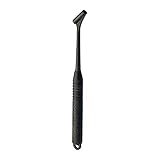
#1 Best Overall

- [Single Hand Operation] The ergonomic plastic handle can fit your palm perfectly. Nice for twisting wrist and single hand use
- [Remove Hooks Swallowed Deeply] Getting those troublesome hooks out , such as gut hook
- [More Protection] Don't worry about those fish with sharp teeth, such as trout and snapper etc, the hook remover will keep your fingers away from hooks
- [Less Harm] Remove most of hooks even the deep embedded hooks with less harm to the fish that allows angler to release fish to water
- [Anodized Aluminum] Anodized Aluminum has a good corrosion resistance to salt water, the ergonomics plastic handle provides comfortable and natural grip
For example, Ontario regulations require non-commercial fishers to return prohibited fish immediately and, if the fish is alive, release it in a way that causes the least harm. Ontario also states that targeting a species during its closed season is unlawful even when the angler intends to release it.
Commercial discards
Commercial vessels may release or discard fish that are not wanted, cannot be sold, fall outside market specifications, are caught with the wrong gear, or cannot legally be retained. These fish are often called bycatch or regulatory discards. Release is therefore not limited to recreational anglers.
Rank #2

- [Simpler and More Efficient] 7 inch dehooker is used for fish around 20 lbs very useful in hook remove and releasing without touching
- [Hook-out Simply]have the line wrapped around hand dangling fish,the other hand hold dehooker catch the hook and pull it directly away from each other,and just twist and they’ll come right out
- [Release on Time]what a important thing to fish is released back to water on time if you are not going to keep them.you can release fish very quickly without touching
- [No Harm]use this method to remove hook will cause no hurt to fish when landing or releasing,also you won’t get hurt by fish with sharp teeth and fins
- [Non-slip Grip] ergonomics handle design with unique notch spot for your thumb make grip more stable
Voluntary release, mandatory release and commercial discards
| Type of release | Why the fish is released | Typical fishery | Main concern |
|---|---|---|---|
| Voluntary catch-and-release | The angler chooses conservation, sport or personal preference. | Recreational | Survival depends heavily on hook placement, handling, air exposure, water temperature and depth. |
| Mandatory regulatory release | Law requires release because of size, season, limits or species protection. | Recreational or commercial | The fisher may have little choice, but must still use the least harmful legal method. |
| Commercial discard or bycatch release | The catch is unwanted, unsellable or illegal to retain. | Commercial | Capture methods, time out of water and repeated capture can produce substantial discard mortality. |
Do released fish survive?
Some do, but release is not harmless by definition. NOAA Fisheries describes deaths after release as “discard and release mortality.” A fish can die immediately from severe injury or predation, or later from stress, infection or internal damage that is not obvious when it swims away.
What causes release mortality?
- Hook injury: Deep-hooked fish may suffer damage to the throat, gills or internal organs.
- Exhaustion: A long fight can leave a fish unable to recover from exertion.
- Air exposure and handling: Dry hands, rough surfaces, pressure on the body or contact with the eyes and gills can remove protective mucus or damage tissue.
- Temperature stress: Moving a fish between water and air, or releasing it into markedly different conditions, adds physiological stress.
- Predation: A weakened fish may be easy prey before it regains normal swimming ability.
- Pressure change: Fish brought rapidly from deep water can suffer barotrauma, including bulging eyes, a protruding stomach, bloating and poor control of their buoyancy.
What does the available mortality figure mean?
An Ontario Ministry of Natural Resources and Forestry summary of literature reviewed in 2003 reported average catch-and-release mortality of 16.2% across 118 studies involving more than 120,000 fish. That is a cross-study average, not a fixed rate for every species, location or fishing method. Mortality changes with water conditions, depth, hook placement, fight duration, handling and species.
Quick wins for a faster PC:
Clear out junk files and repair common Windows errorsFree Scan →Scan for outdated or missing drivers - takes under a minuteDriver Scan →Rank #3
- DESIGN - Simply innovative tool capable of reducing fish mortality by eliminating netting and handling. Named it after the town this tool was designed in - Ketchum, Idaho
- SIZING - BIG BUG for fly sizes 6-10, ORIGINAL for fly sizes 12-16 and MIDGE for fly sizes 18-22. Keep in mind, newer large beadhead fly patterns may need a larger size than the hook requires.
- FISH PROTECTION - Protect fish from unnecessary handling, netting, and air exposure with a no touch release to protect a fish's protective coating.
- FLY PROTECTION - Less harmful to delicate fly patterns than using traditional hemostats that clamp down on flies.
- USE - Slide you leader/tippet through the slotted barrel and slide the tool down over the fly and twist to release. Helps keep hands dry in cold conditions.
How to release a fish more safely
Good technique cannot eliminate all risk, but it can reduce avoidable injury. NOAA Fisheries recommends the following approach:
- Choose release-oriented tackle. Use circle hooks where appropriate, or barbless hooks and hooks with crimped barbs. Match tackle to the target species so the fish can be landed promptly.
- Prepare before landing. Have pliers or a dehooker, a suitable landing net and any required measuring equipment ready. Avoid unnecessary photographs or delays.
- Keep the fish in the water. Handle it as little as possible. If it must leave the water, keep total air exposure below 60 seconds.
- Wet your hands first. Support the fish’s entire body, avoid the eyes and gills, and do not squeeze the abdomen or suspend a heavy fish vertically by the jaw.
- Remove the hook carefully. If a hook is deeply embedded and removal would cause major damage, follow local rules about cutting the line or leaving the hook in place.
- Account for barotrauma. For deep-water fish showing pressure injury, use a descending device, release weight or release basket to return the fish to depth. Do not puncture the swim bladder unless a trained authority specifically directs that method for the fishery.
- Resuscitate a tired fish. Hold it upright in the water and allow water to flow over the gills without pushing it backward. Release it only when it can swim away strongly.
When is releasing a fish required?
The exact answer depends on the jurisdiction, species and date. Before fishing, check the current rule book or official online regulations for:
Rank #4
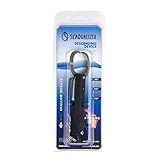
- NON-INVASIVE & REUSABLE FISH RELEASE TOOL: Safely return fish to their natural depth without barotrauma or injury. Unlike traditional upside-down hook methods, the SeaQualizer deep water descending device ensures a controlled release every time.
- ADJUSTABLE DEPTH SETTINGS: Choose the exact release depth for optimal fish survival. The SeaQualizer fish return device will not release until the preset depth is reached, eliminating premature escapes and increasing the chances of successful recovery for deep-sea by-catch.
- HEAVY-DUTY QUALITY: Marine-grade stainless steel and toughened plastic to withstand years of use. This rugged built fishing tool makes it one of the most durable descending devices on the market, ideal for both recreational and professional fishermen. MADE IN USA.
- EASY TO USE: Designed for hassle-free operation on any fishing boat. Just clip the fish, set your depth, and lower it overboard with no complicated setup required. The SeaQualizer fish descending device is the most effective and user-friendly descending tool available, making conservation effortless.
- SUSTAINABLE FISHING PRACTICES: Recommended by fishery managers and conservation groups, this descending device fishing tool helps ensure fish stocks remain healthy for future generations. By releasing fish as close to the bottom as possible, anglers can improve survival rates and support responsible, sustainable fishing.
- Minimum and maximum size limits
- Open and closed seasons
- Daily catch and possession limits
- Protected species and prohibited areas
- Gear restrictions, including hook requirements
- Special catch-and-release-only waters
Keep a fish only when the current local rules allow it and you intend to use it. If a fish is prohibited, return it immediately and in the least harmful manner required by local law.
Independent reader supportYour contribution helps us test, update, and keep practical guides available for everyone.Does catch-and-release count as cruelty?
Catch-and-release causes stress and can cause injury, so it should not be described as risk-free. Its welfare impact depends on how the fish is caught, handled and returned, as well as on species and environmental conditions. Following release practices that reduce hook damage, air exposure, handling and pressure injury gives the fish a better chance of surviving than careless release.
Best Value
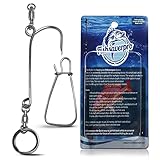
- Durable and Safe Design: Engineered to last with marine-quality stainless steel main components and nickel-plated copper ball bearing swivels; free from high carbon steel components.
- High Fish Survival Rate: Over 85% fish survival; NOAA studies highlight descending devices like FishSaverPro as the best recovery option for barotrauma, outperforming venting tools which are not NOAA reccomended or approved.
- Quick Weight Change Clip: Easily adjust weights based on fish size; only 20% of the fish's weight is needed to descend, reducing unnecessary heavy lifting.
- Compact and Reliable: Fits easily and safely in your tackle box; does not rely on mechanical or pressure release systems that can break or fail.
- No need to have to set release depth just attach the fish and send them down. Fish can swim free once recovered or if threatened by predators, minimizing mouth damage and predation.
In short, fishermen do let fish go—but the outcome depends on whether release is voluntary or required, how the fish was captured, and what happens during the first moments back in the water.
Quick Recap
Product prices and availability are accurate as of the date/time indicated and are subject to change. Any price and availability information displayed on Amazon at the time of purchase will apply.